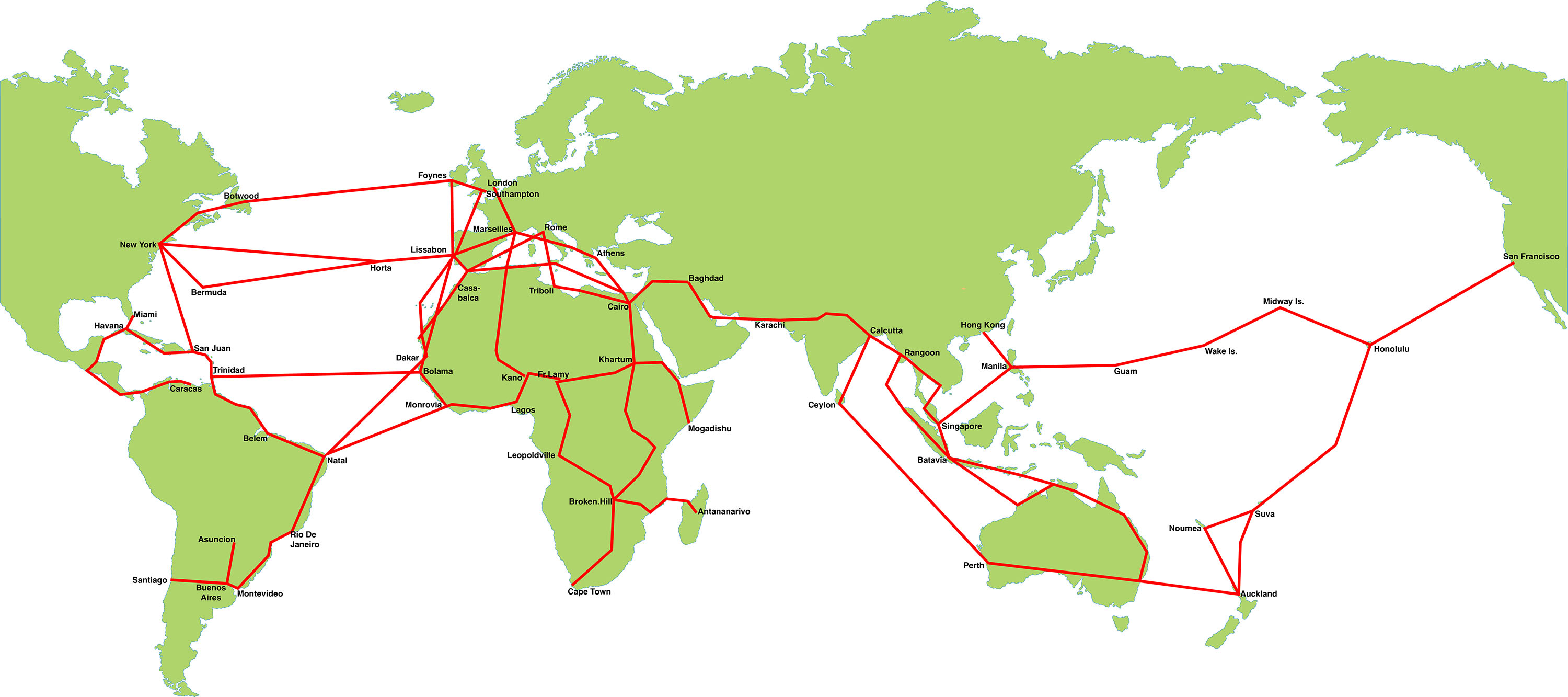
In this presentation, the continents are Eurasia, Africa, North America, South America and Oceania.
There are not (very) many intercontinental routes at all, but their stages are quite varied.
Click on the map to see it larger.
Petteri Hannula:
The Intercontinental Air Mail Route Network
until the End of WWII
Routes and phases -combinations
Continents are understood to be large, continuous, discrete masses of land, ideally separated by expanses of water. In this story, continents refer to geological continents, described in Encyclopædia Britannica and The Columbia Encyclopedia, and the continents are Euras Based on the literature research (see bibliography below), I have listed below all the intercontinental airmail routes and their phases (not all the changes of waypoints but all of them that are at least a little significant) from the period of the topic. The route to be included must therefore lead from one continent to another. A route phase refers to changes that have occurred on a route, related to Trial flights are included in the review if they are
|
|
In this presentation, the continents are Eurasia, Africa, North America, South America and Oceania. |
|
List updated 28.12.2025 |
|||
| # | Routes and their phases | Click on the image of the item to see it larger | |
A. BETWEEN EURASIA AND AFRICA | |||
 | |||
| A.1. British Imperial Airways Services1 | |||
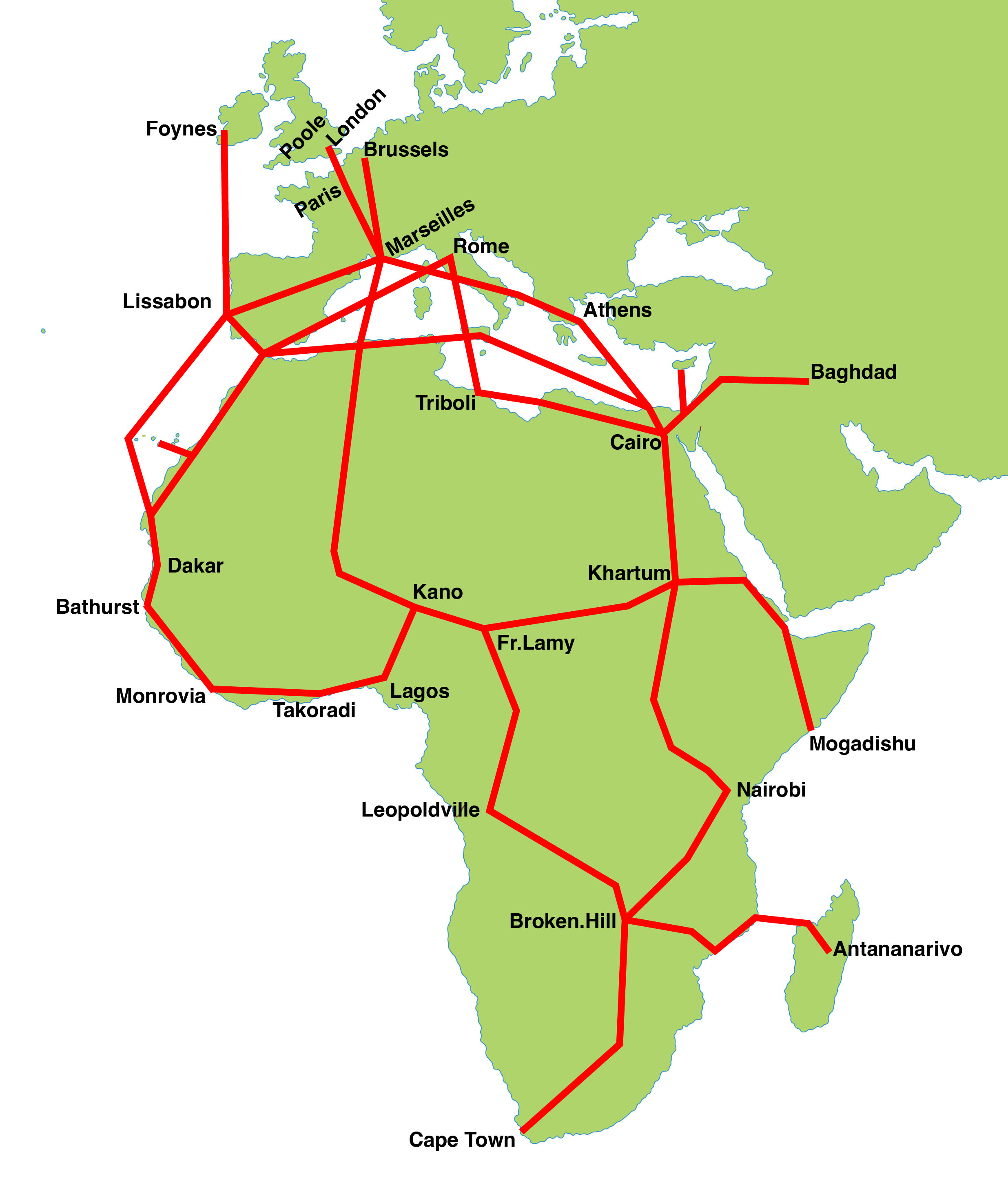
| 1 | There were a number of long distance flight by the RAF and some by private enterprise to South Africa in 1925 and round Africa in 1927. The first service actually left London on 28 February 1931 and the first return flight from Mwanza started on 11 March 1931. | 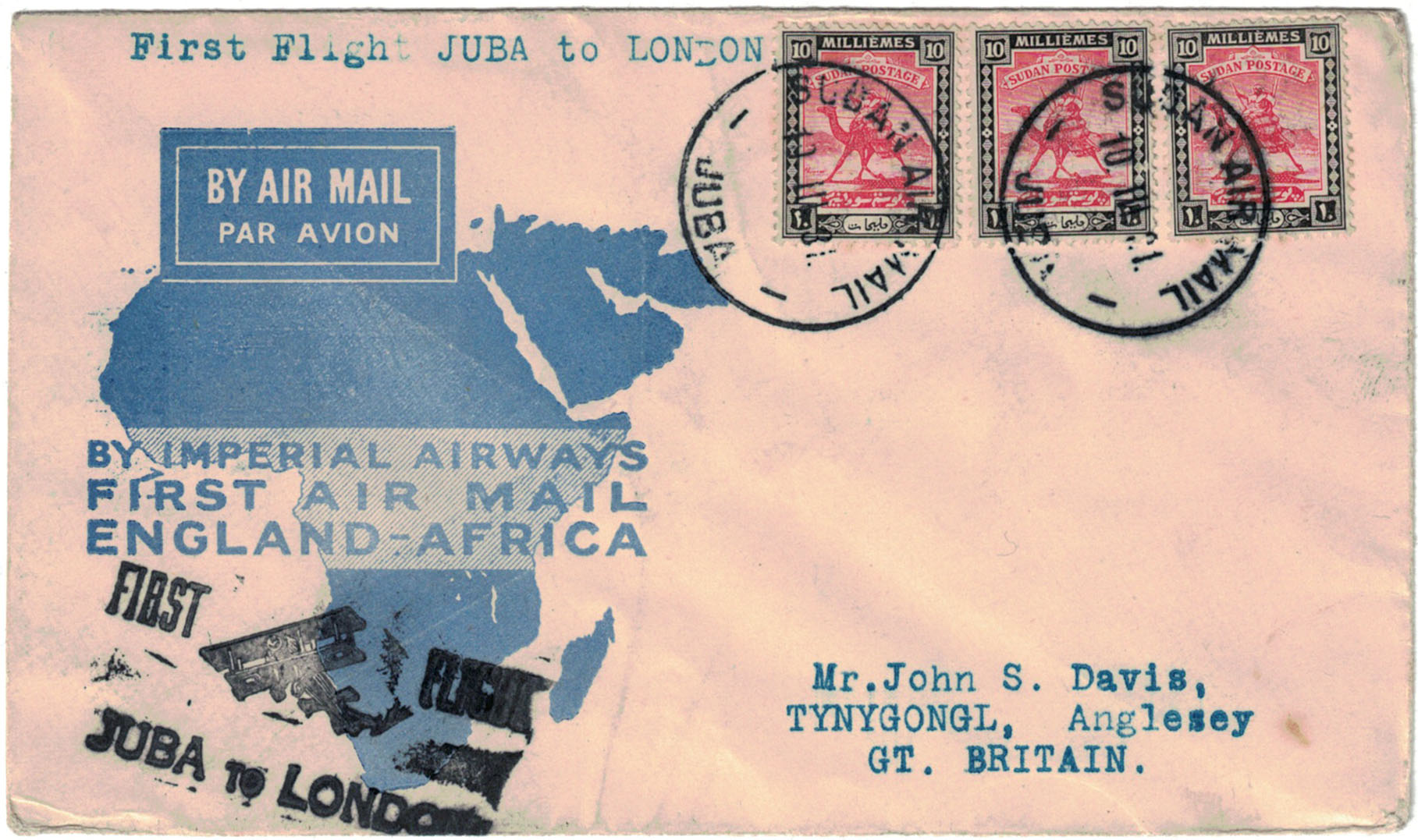 | |
| 2 | Imperial Airways inaugurated their first weekly air mail service from London to Cape Town on 20th January 1932. The entire trip was made in 11 days. The sections Paris to Brindisi and Alexandria to Cairo are made by rail. The final survey flight before the service opened had been made on 21 December 1931. | 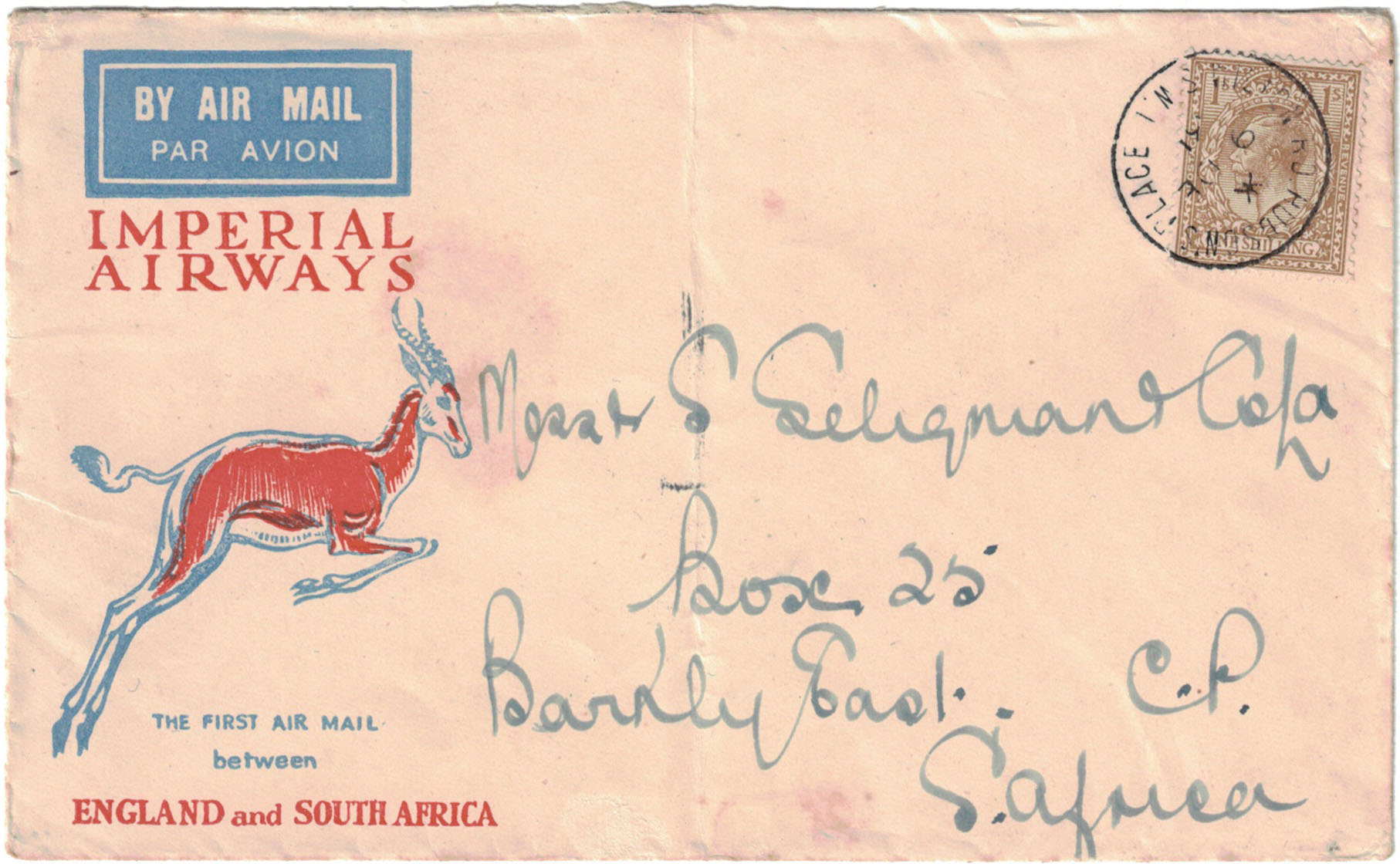 | |
| 3 | From the 6th of April 1933, IMPERIAL AIRWAYS rearranged its schedule and gained a day on the London - Cape Town route (10 days instead of 11) by removing the night stop at Wadi Halfa | 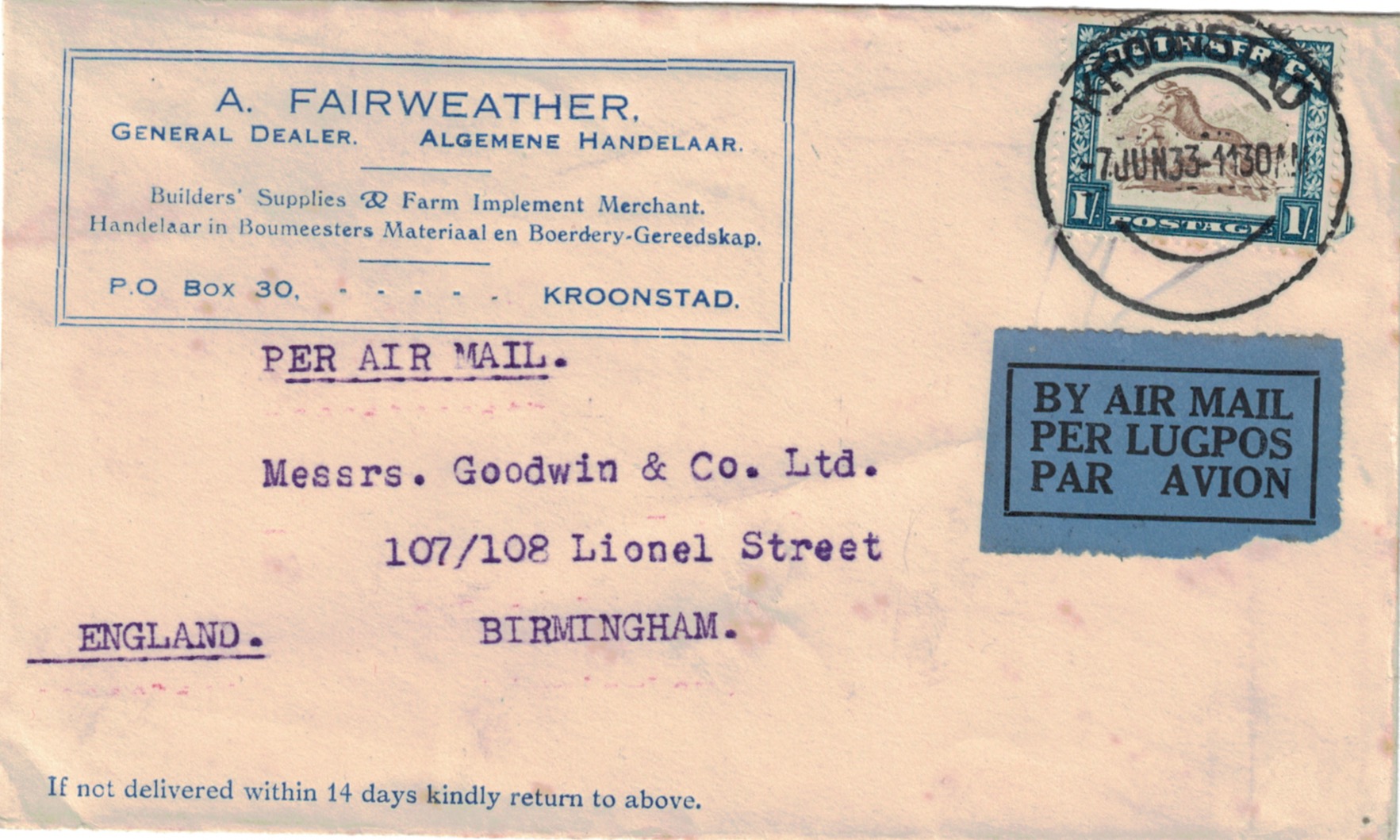 | |
| 4 | From April 11th, 1934, IMPERIAL AIRWAYS reorganized its schedules and gained one day on its London to the Cape route (9 days instead of10). By accelerating the transfer in Paris at the Gare de Lyon and at Brindisi they managed to eliminate the night stopover in Athens. | 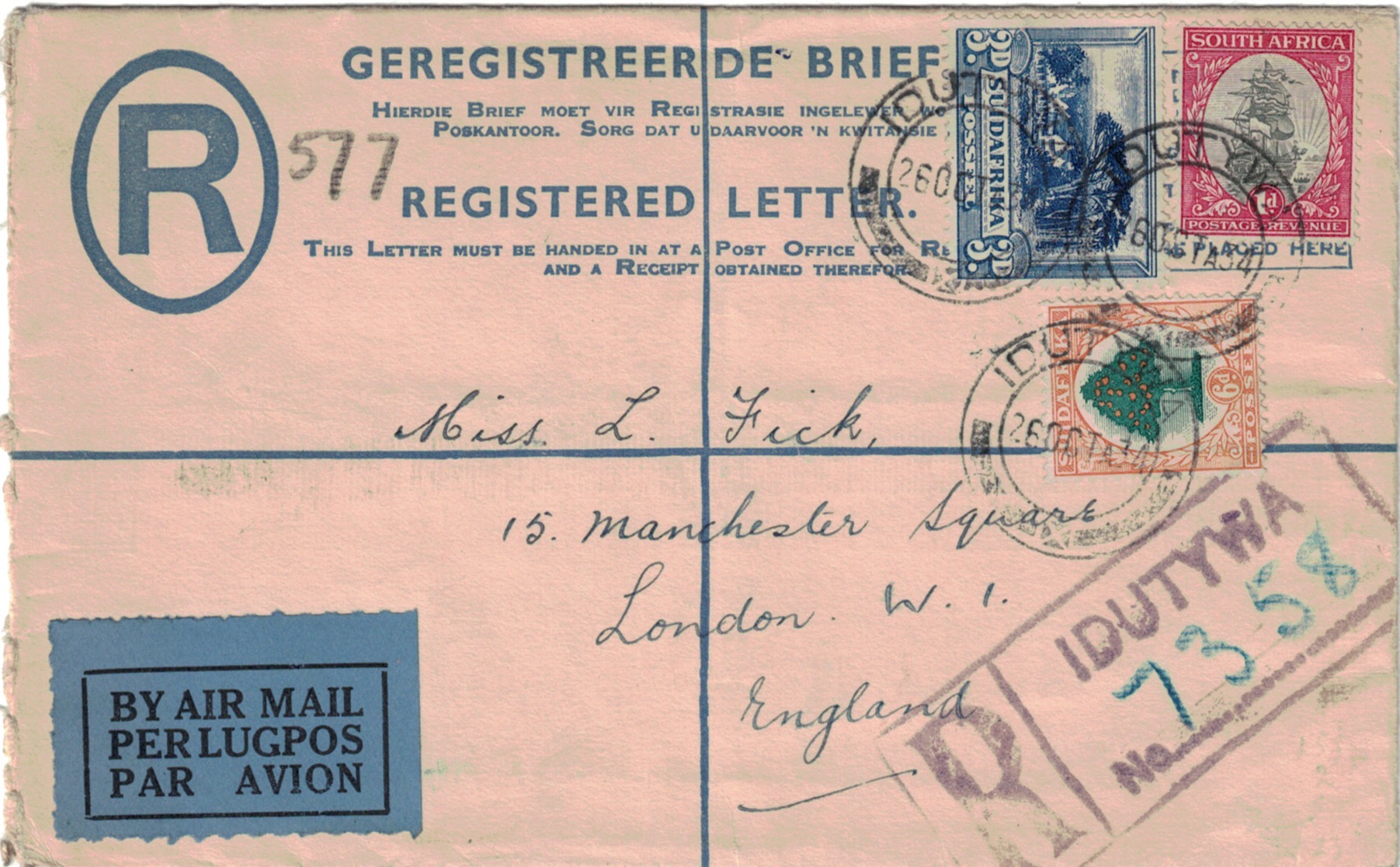 | |
| 5 | (1935) During the summer period, IMPERIAL AIRWAYS reduced the journey time of the South African mail by making the Brindisi - Paris part by air rather than by rail (from May 15th till October 2nd 1935). The journey London - Capetown was now of 8 days instead of 9. | 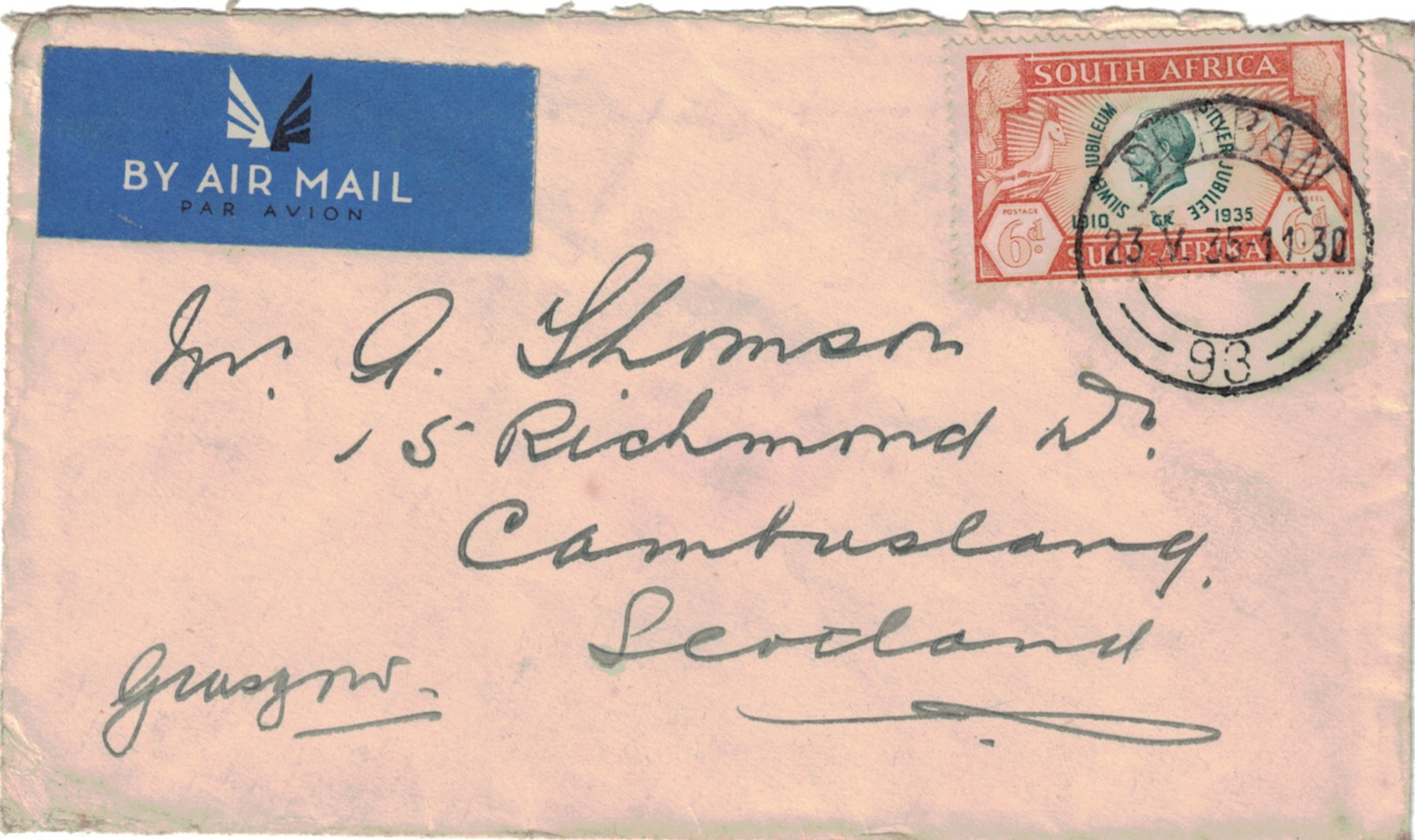 | |
| 6 | On 28 April 1935 Imperial Airways under agreement with the French and Italian Governments open a new supplementary service from London to Brindisi via Marseilles and Rome. From 1935 with Imperial Airways had some connections. - From Nairobi to Mombasa, Zanzibar, Dar-es-Salaam and Mwanza by Wilson Airways. | 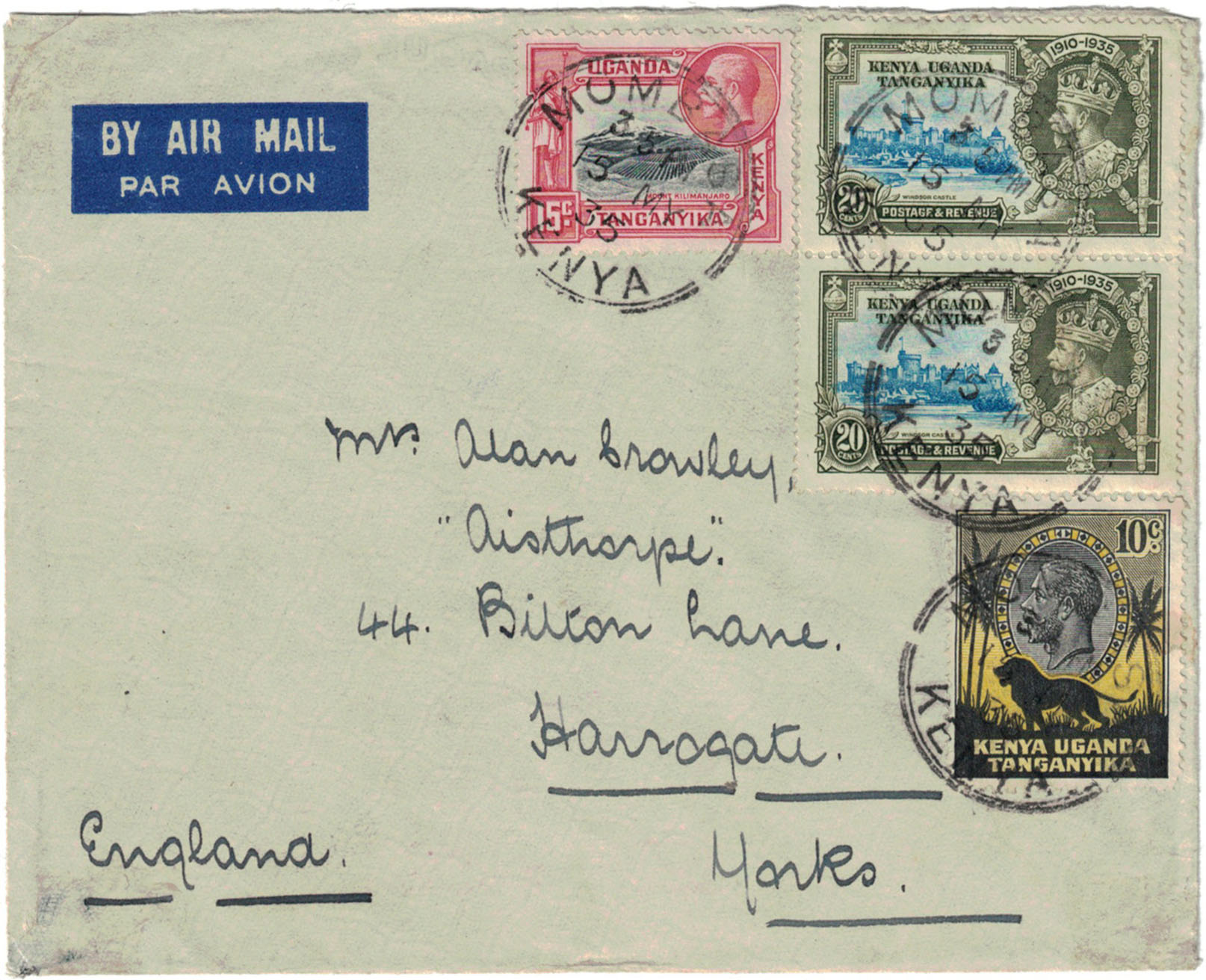 | |
| 7 | - From Johannesburg to Durban and Port Elizabeth byt South African Airways. | 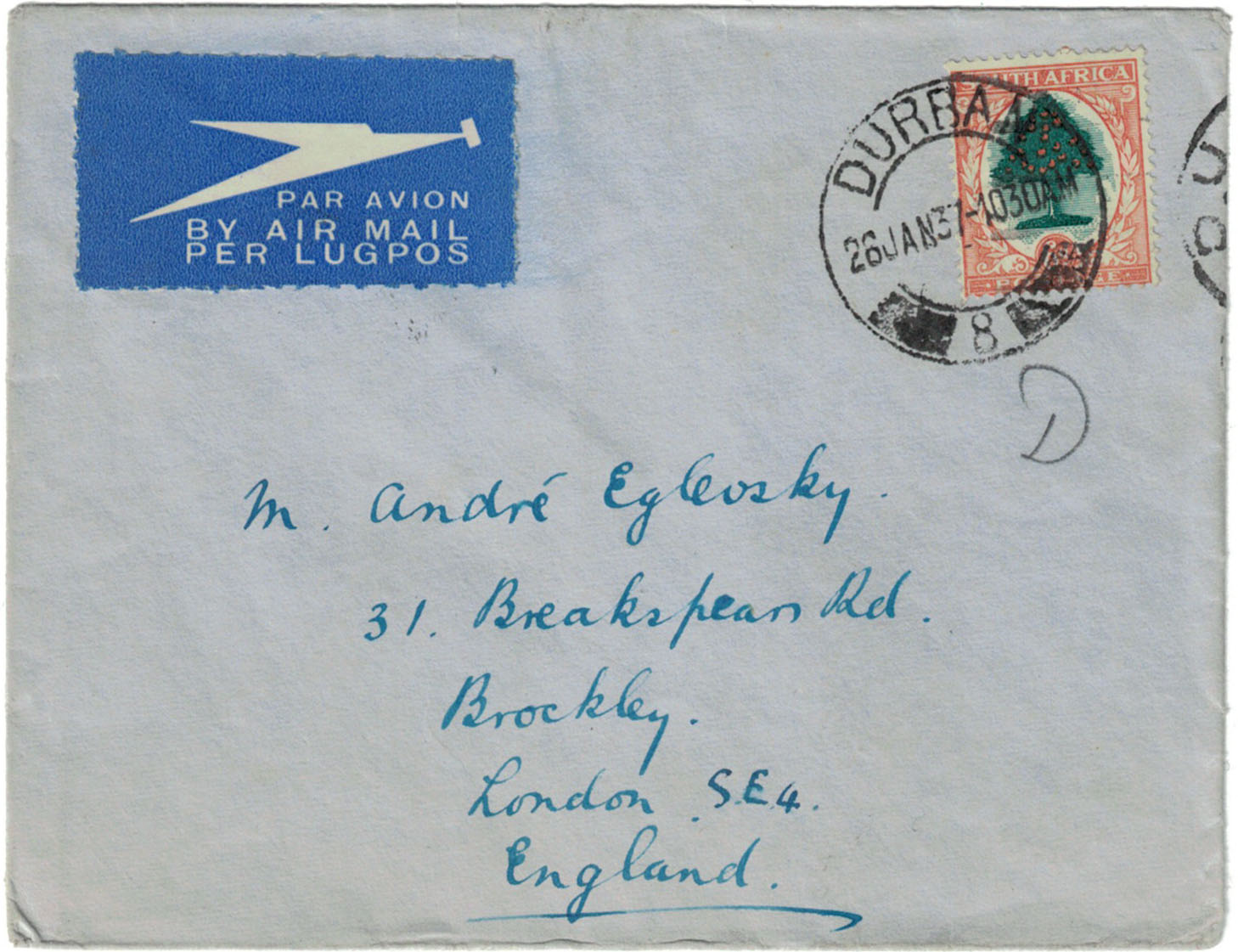 | |
| 8 | - From Livingstone to Broken Hill by Rhodesian and Nyasaland Airways. | 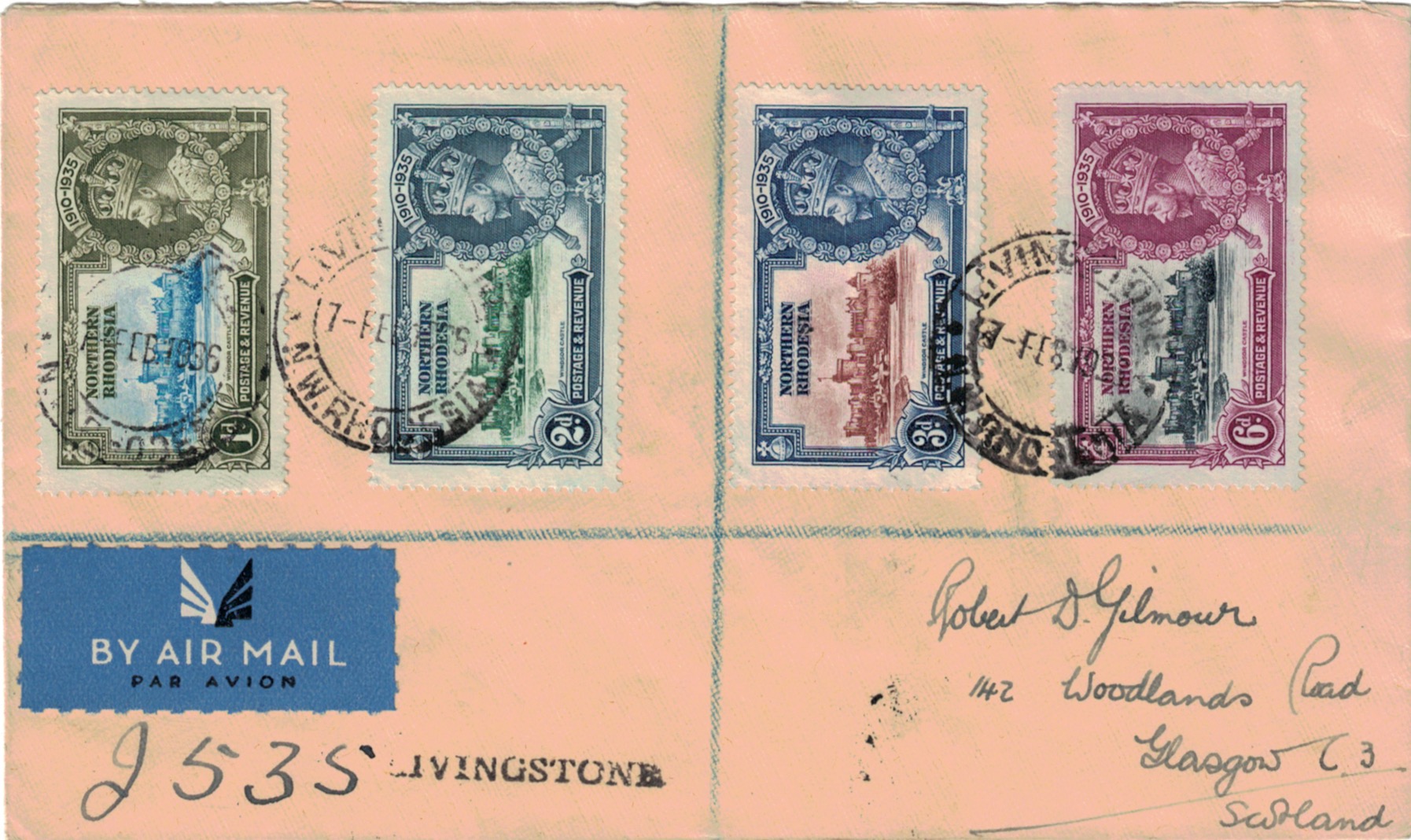 | |
| 9 | - From Kimberley to Windhoek by South African Airways. | 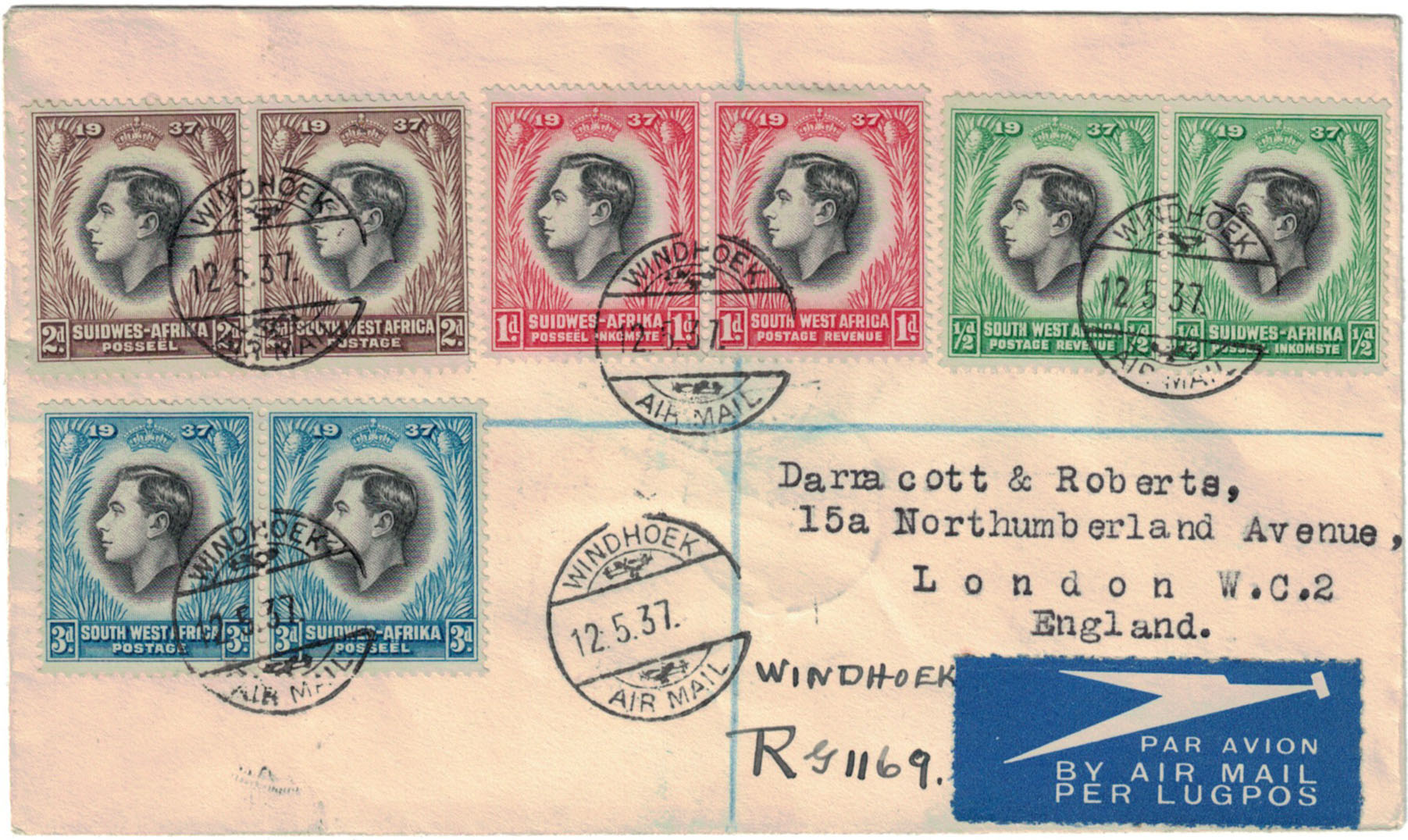 | |
| 10 | - From Eldoret to UK via Kisumu or Moshi by East African Airways | 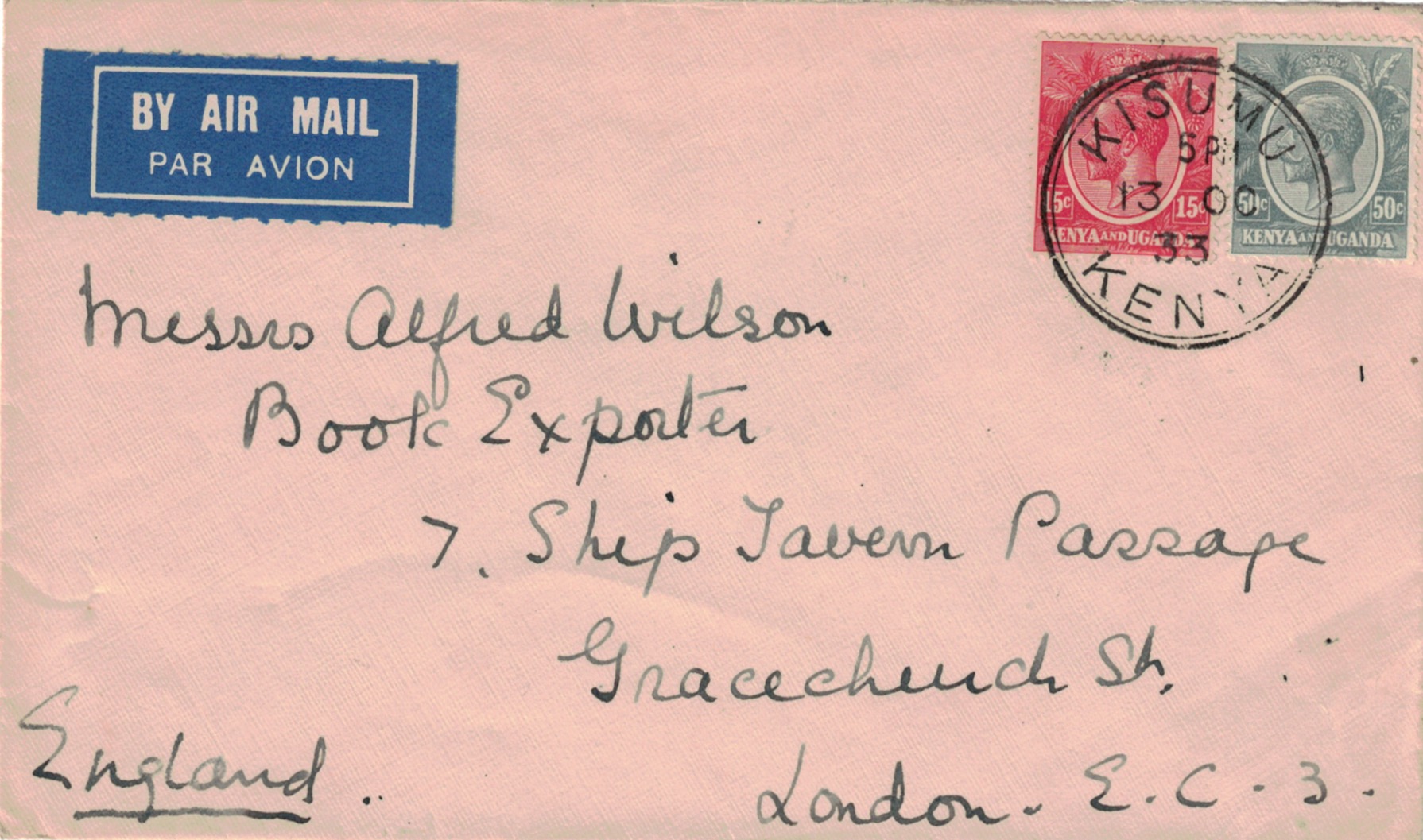 | |
| A.2. British Trans-Africa Services | |||
| 11 | Once weekly operations commenced in February, 1936, over the sector Khartoum-Kano; later in the year the service was extended to Lagos. | 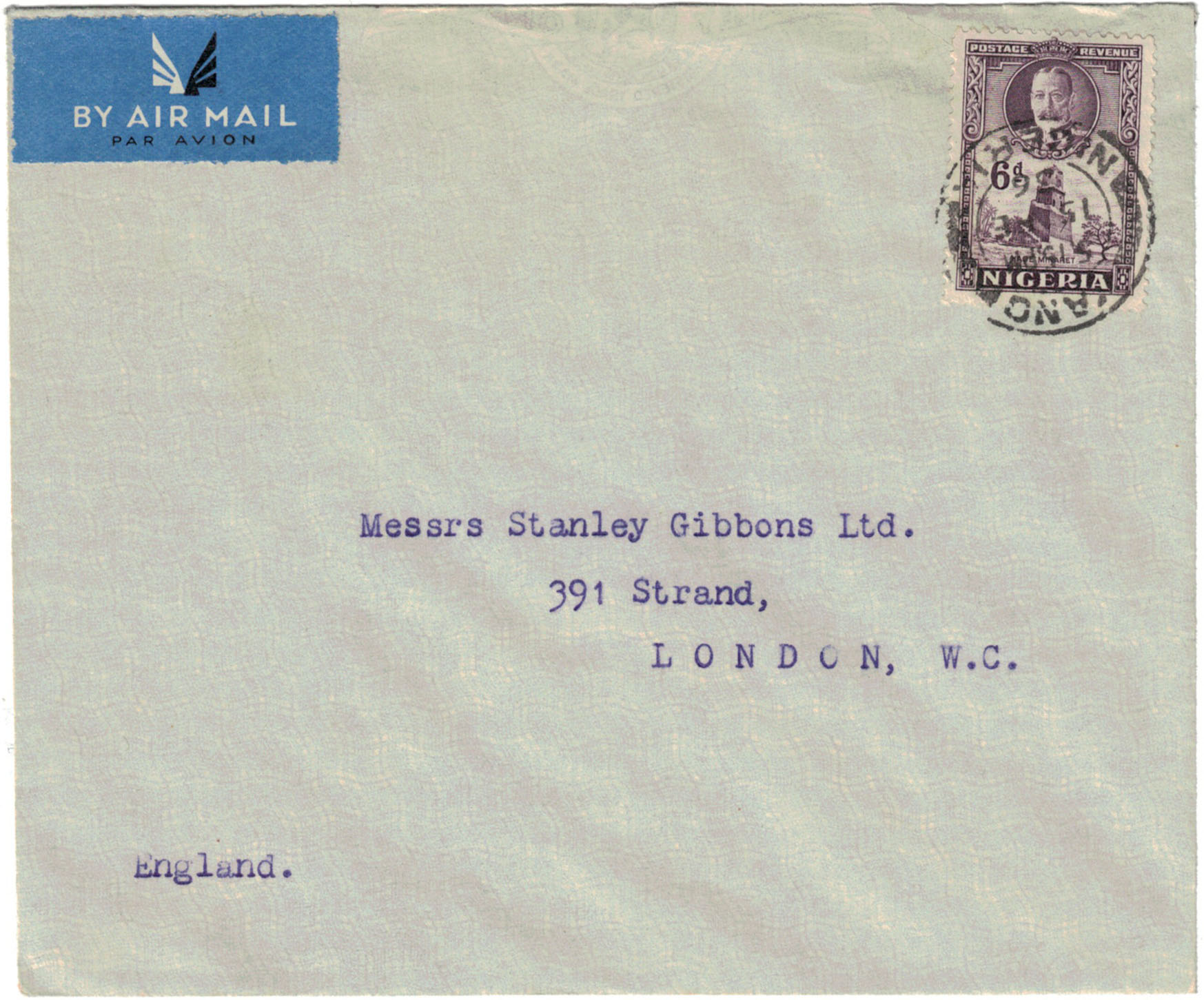 | |
| 12 | From October 1937, to May 1938, a series of extra flights were operated Lagos-Accra, thereafter operated regularly until April 1939, when the extension to Takoradi was effected. | 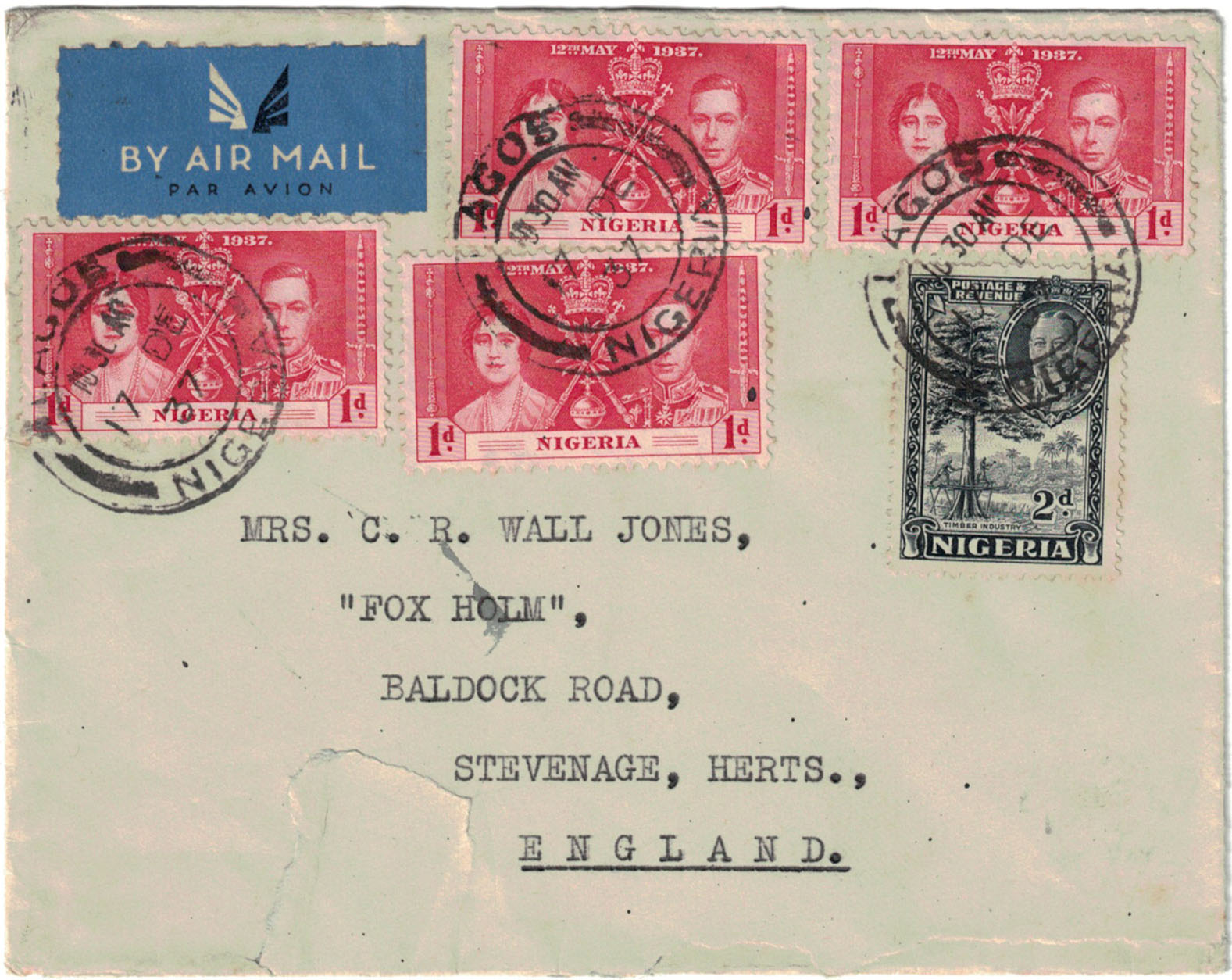 | |
| A.3. Air Mail Operations on the West African Coast Route | |||
| 13 | Owing to the closure of the Mediterranean due to Italy's entry into the war on 10 June 1940, airmail to West Africa was suspended by 4 July 1940. The urgent need for air communication to the Middle East etc. resulted in a decision to start a service on 18 October 1940 on the route Poole-Lisbon-Bathurst-Freetown-Lagos. | 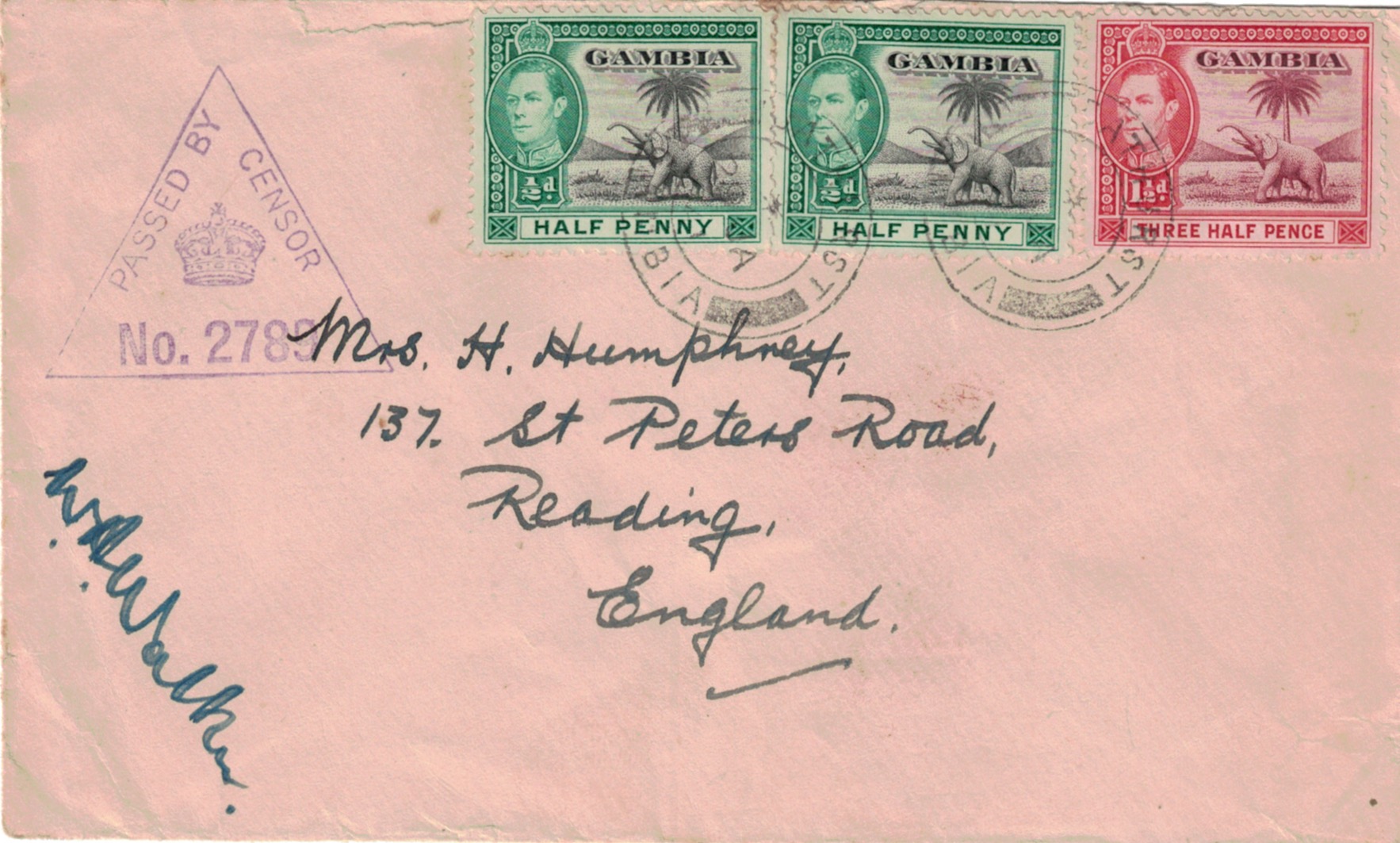 | |
| 14 | In May 1941, the northern terminal was moved from Poole to Foynes, Ireland. The Lisbon terminal was on the Tagus River, using the same anchorage areas as PANAM flying boats of the trans-Atlantic service. | 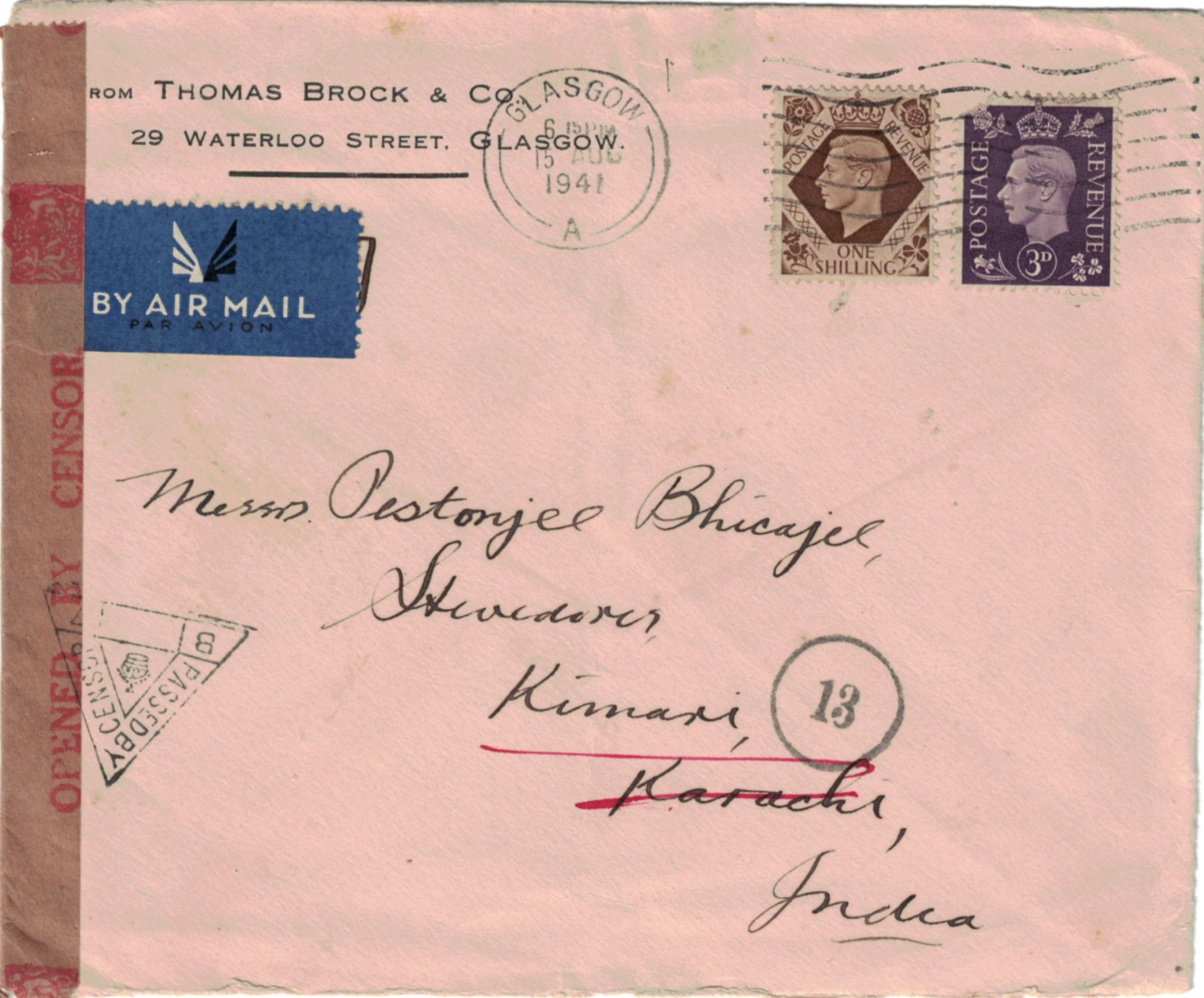 | |
| A.4. Boac U.K.- North Africa Services | |||
| 15 | In May 1942 an attempt was made to bring supplies and mail from Cairo to Malta by air. The attempt was successful and flights continued three times a week. Regular flights to Malta were temporarily stopped in October 1942. | 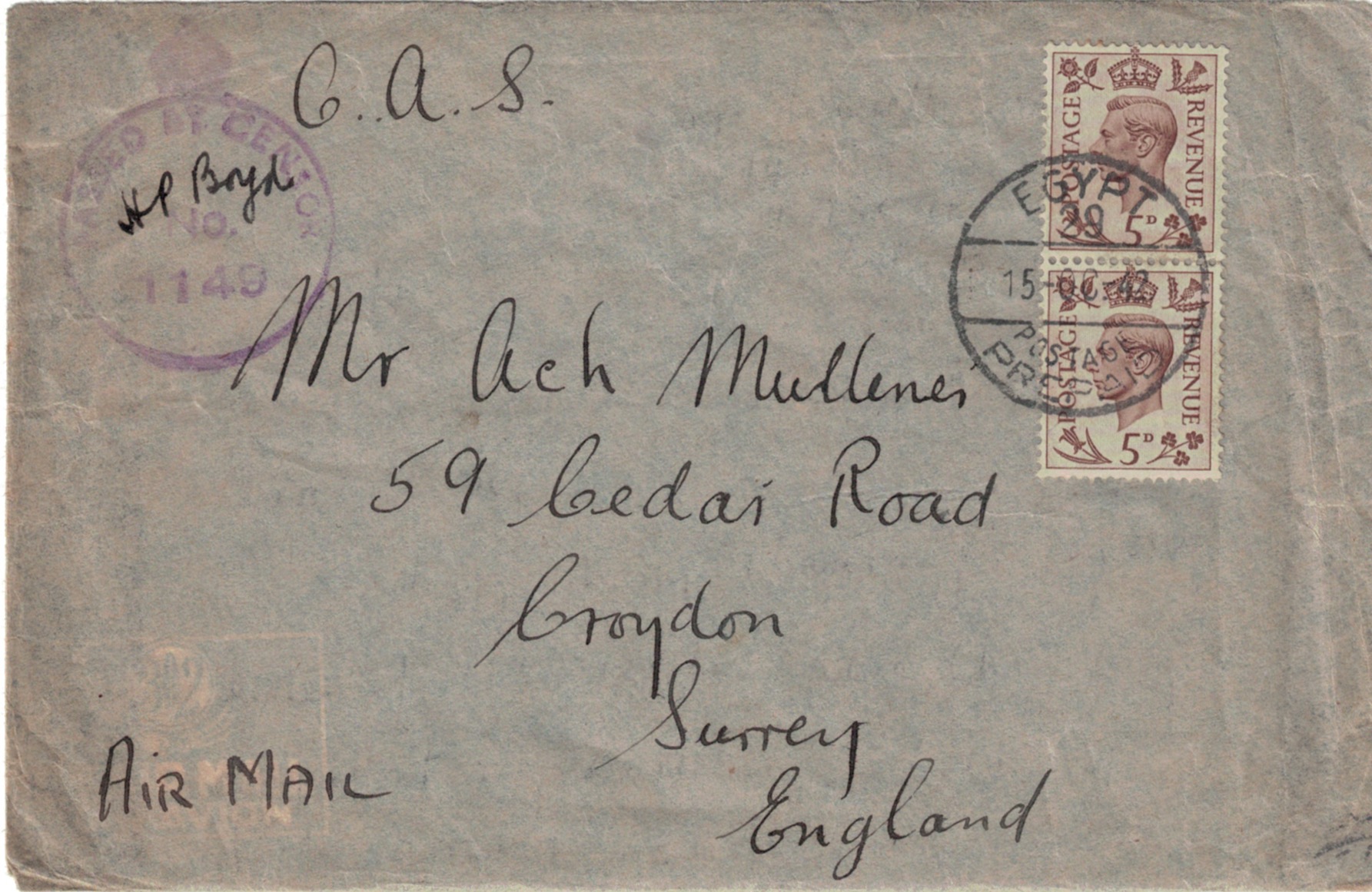 | |
| 16 | In October 1943 a new direct route between the flying boat base at Foynes and Cairo, via Gibraltar and Djerba, Tunisia, was opened by BOAC. | 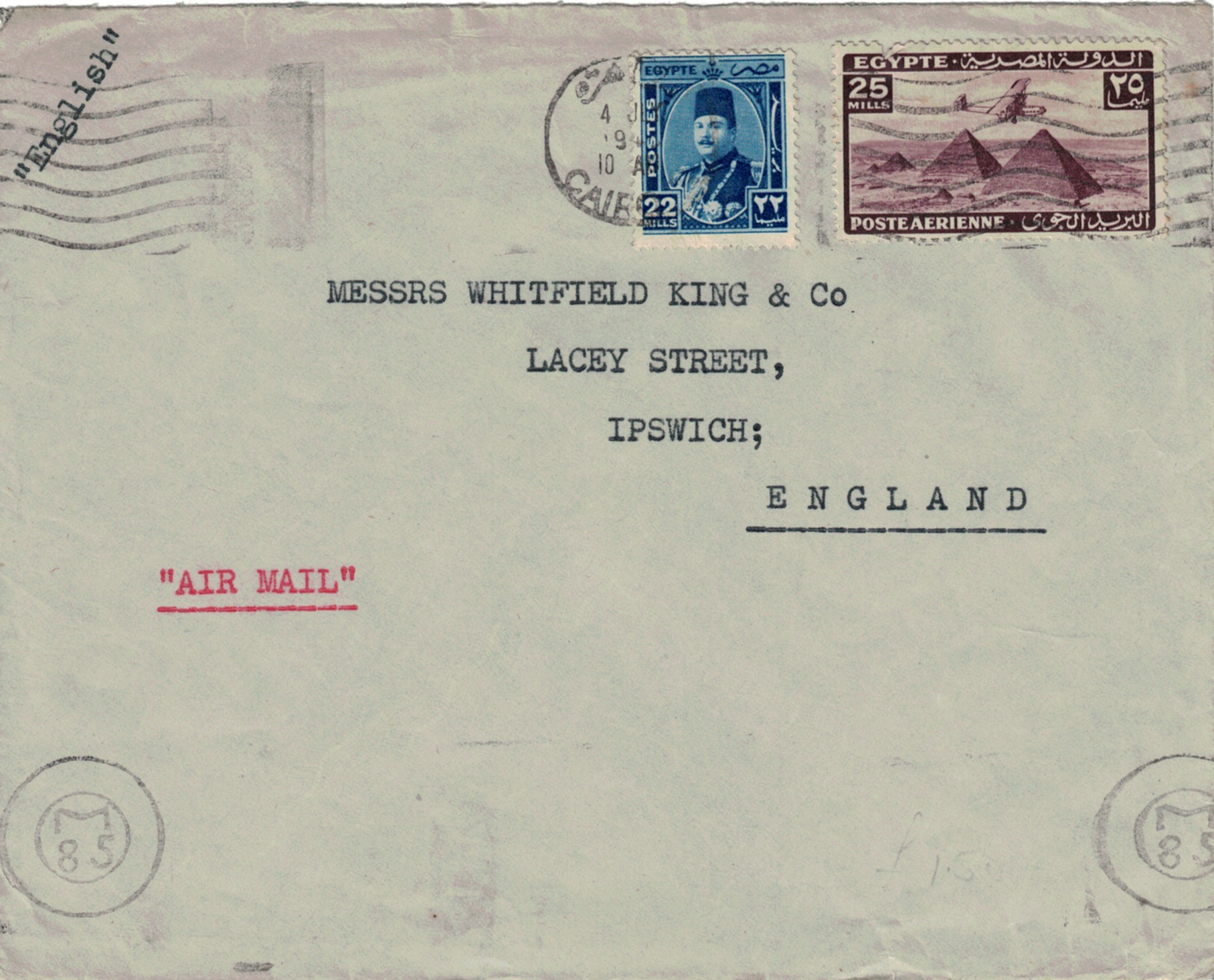 | |
| 17 | Civilian air mail going west to India and also to North America, was carried on this route instead of the longer combination route of the trans-Africa and West Africa coast routes. | 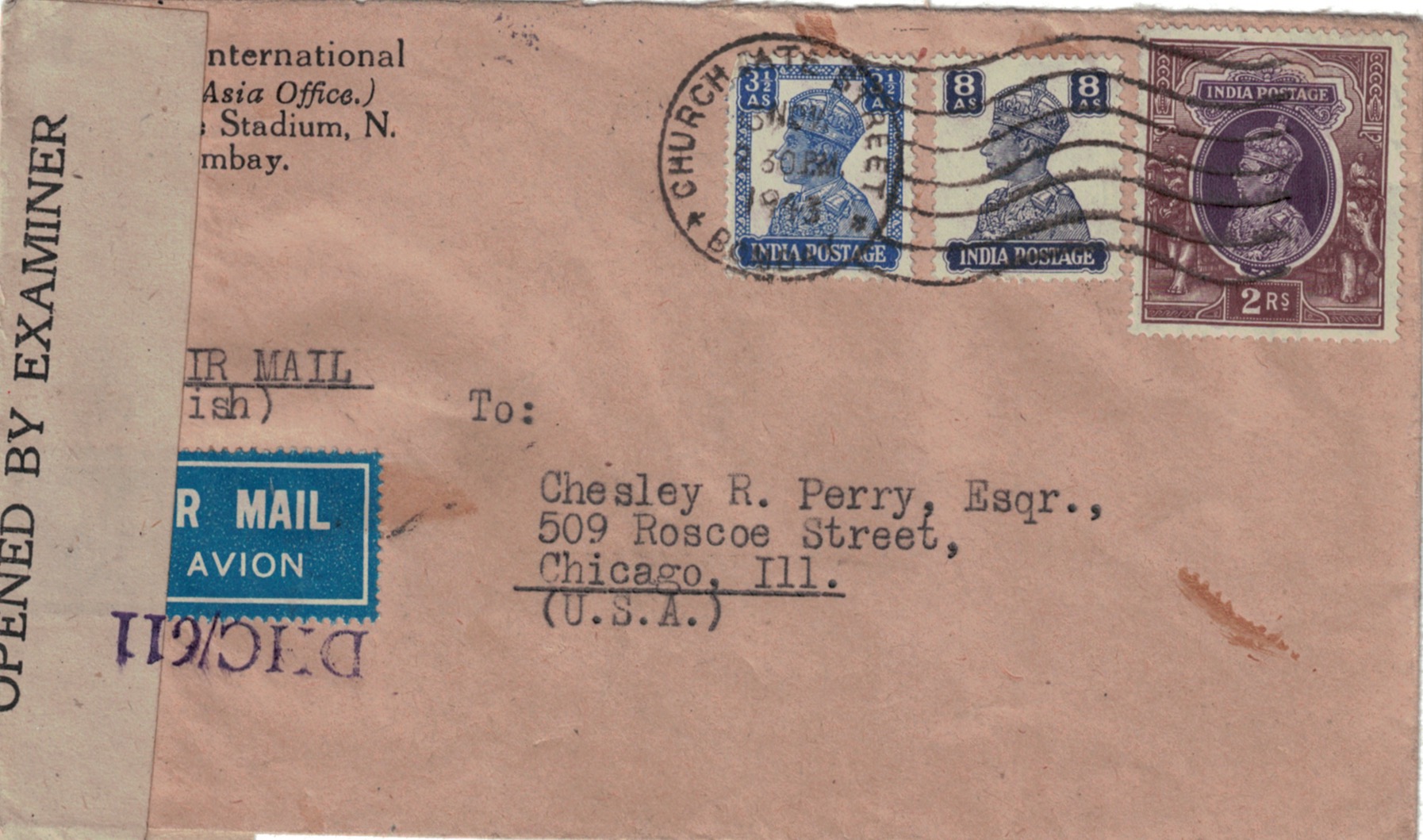 | |
| 18 | Despite that {viittaus edelliseen ”Civilian air …”} … In April 1944 BOAC inaugurated a new route from Lagos to Bristol using Douglas DC-3 landplanes. The route stopped at Accra and Takoradi, Gold Coast, Freetown, Bathurst, Dakar, Port Etienne, Rabat, and Lisbon. Civilian air mail was accommodated. | 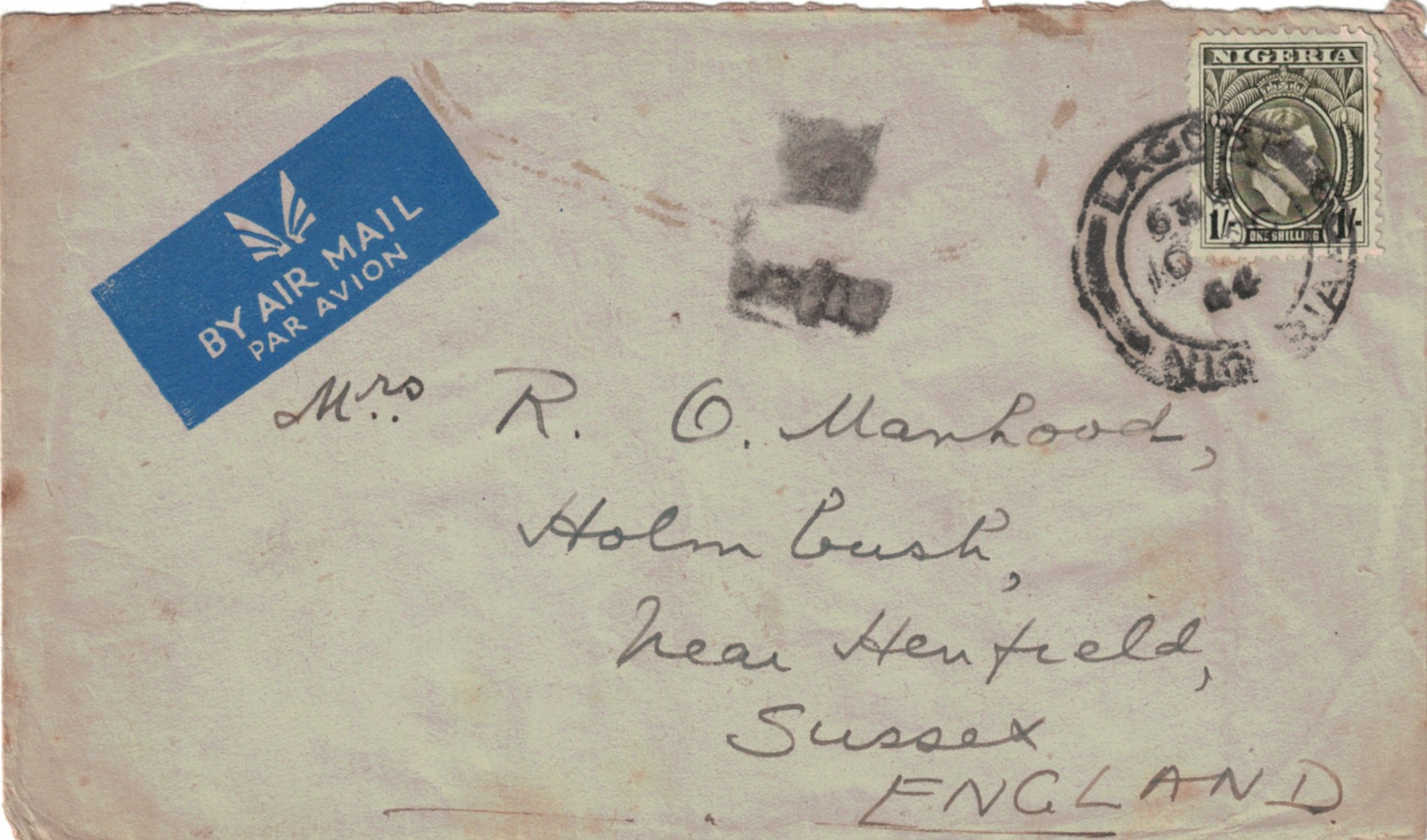 | |
| A.5. French Services | |||
| 19 | On 28 August 1919 the Spanish Government signed a convention allowing the Lignes Aeriennes Latecoere (LAL) to fly over part of its territory. Airmail was carried on the lien Toulouse - Rabat from 1 October. | 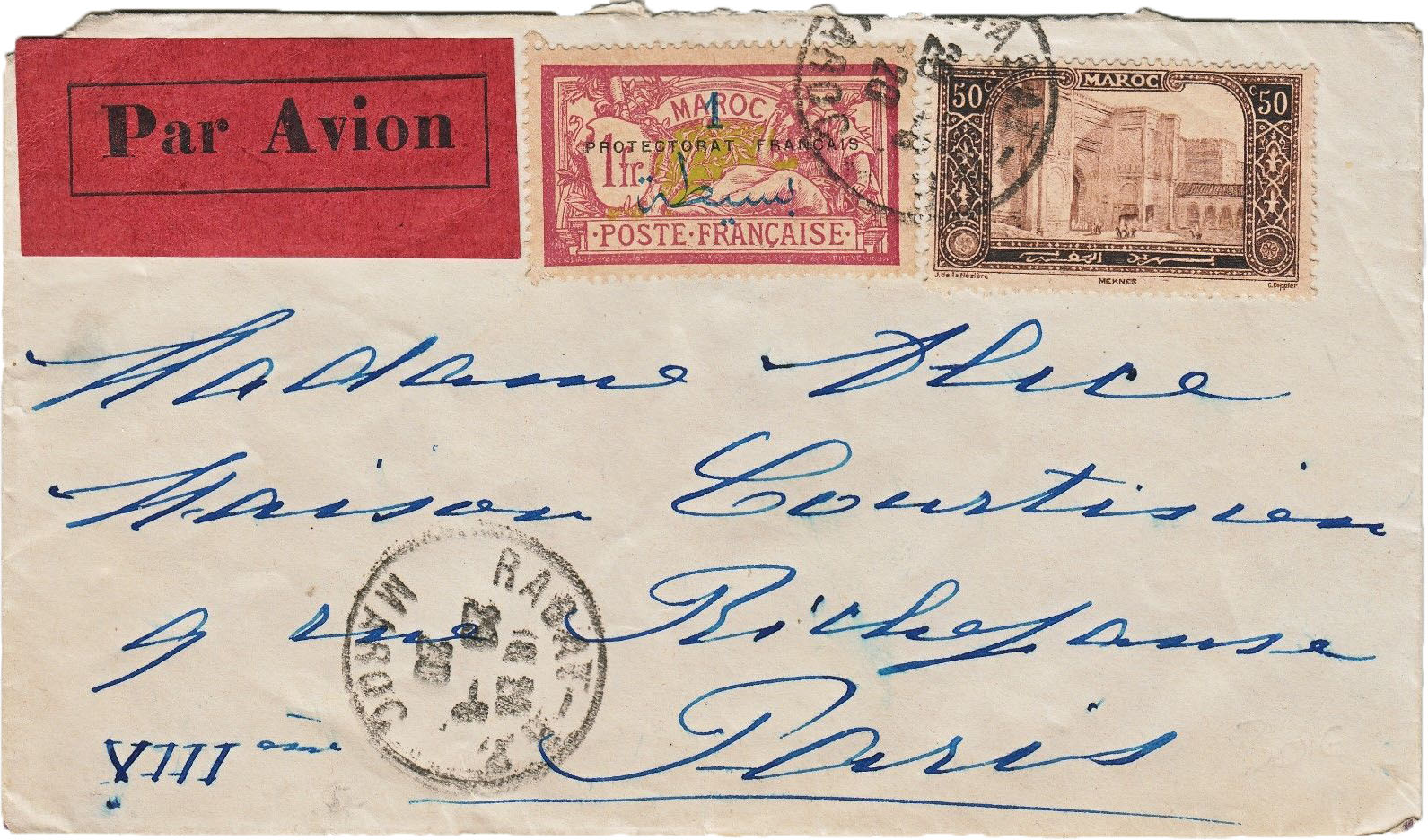 | |
| 20 | On 13 July 1920 the terminus in Morocco was officially moved to Casablanca. On 1 September 1922 the linen Toulouse - Casablanca became a daily service in both directions. | 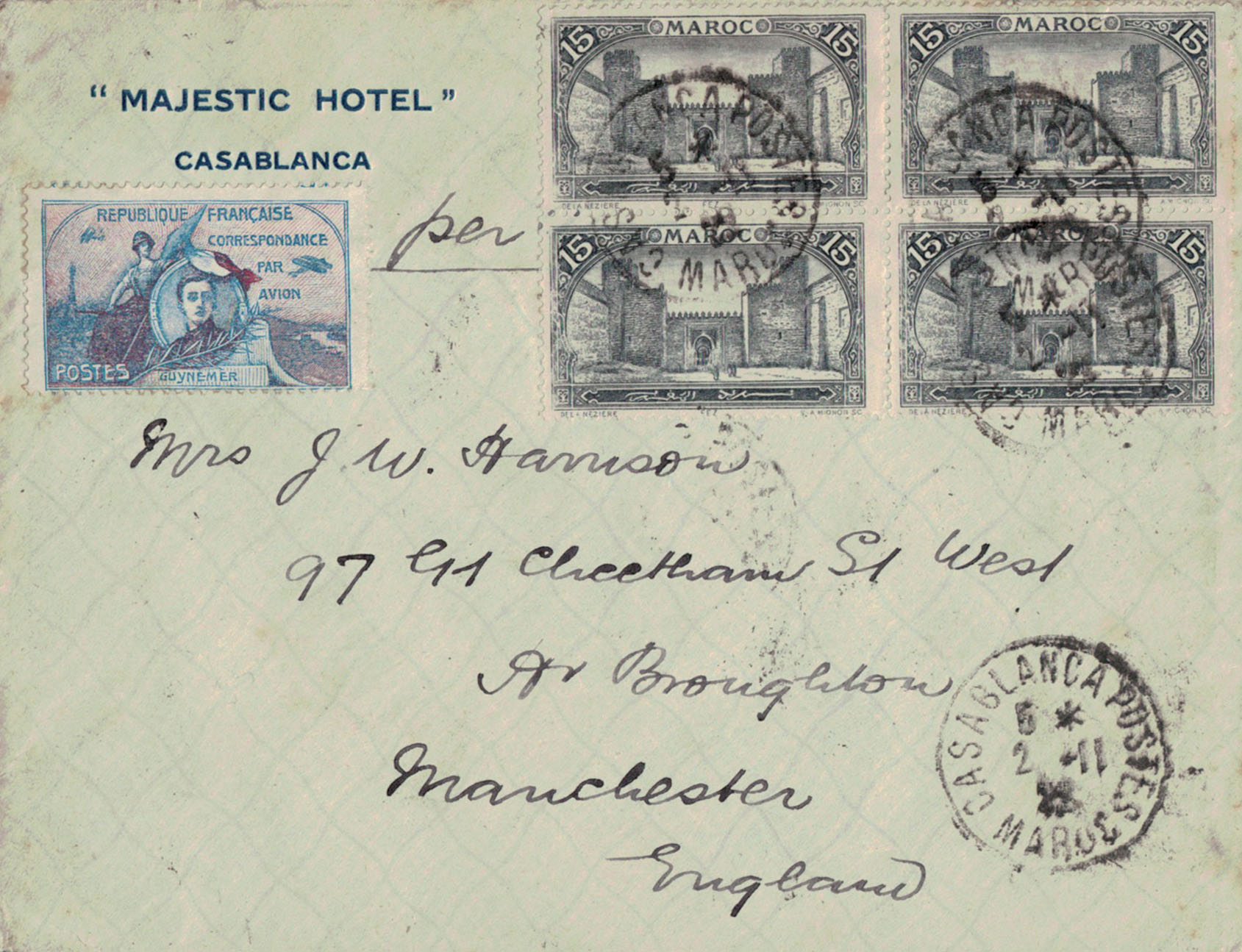 | |
| 21 | On 1 June 1925 the firts weekly service Casablanca - Dakar was established. | 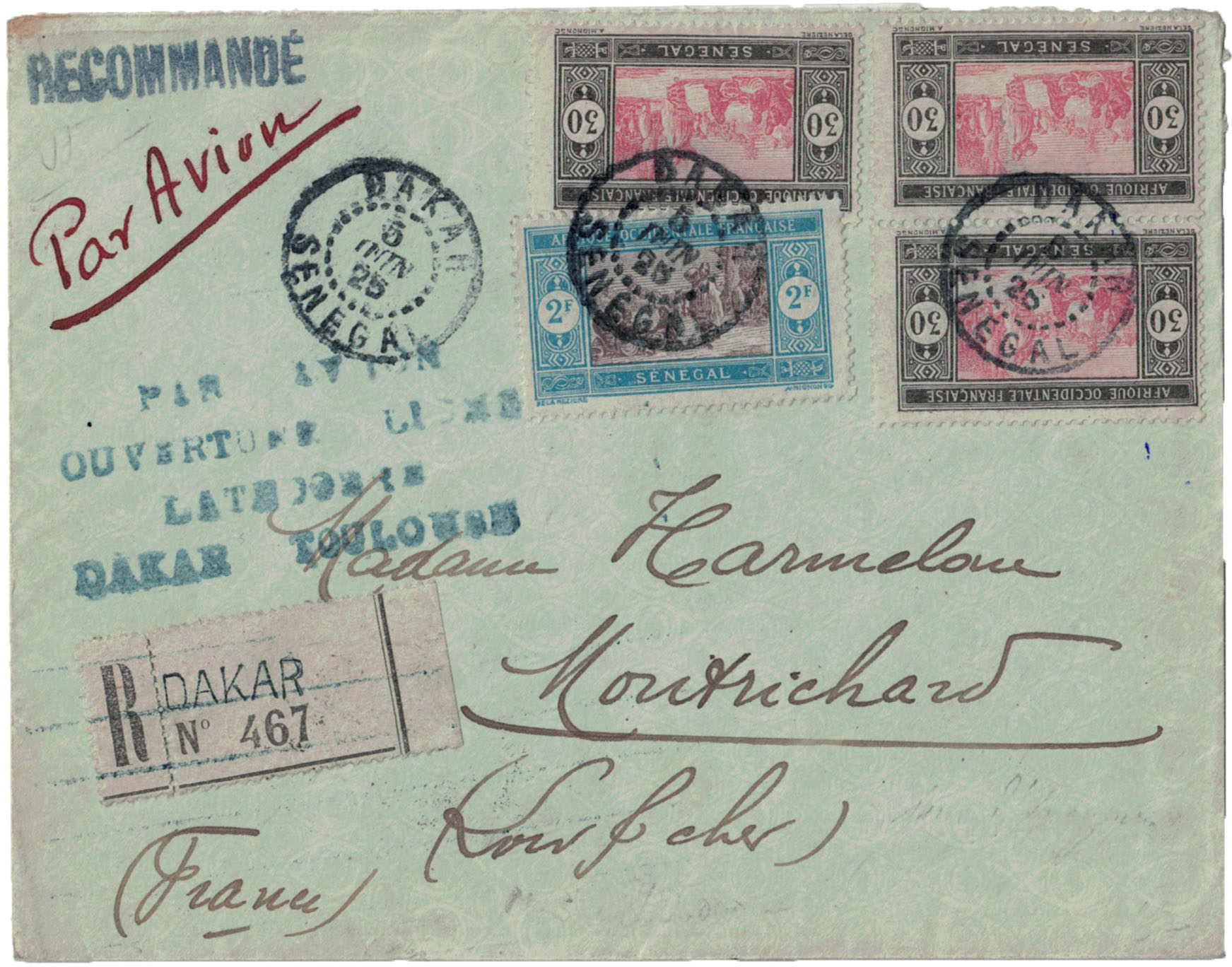 | |
| 22 | The route Dakar-Cotonou was opened on 1 March 1937. | 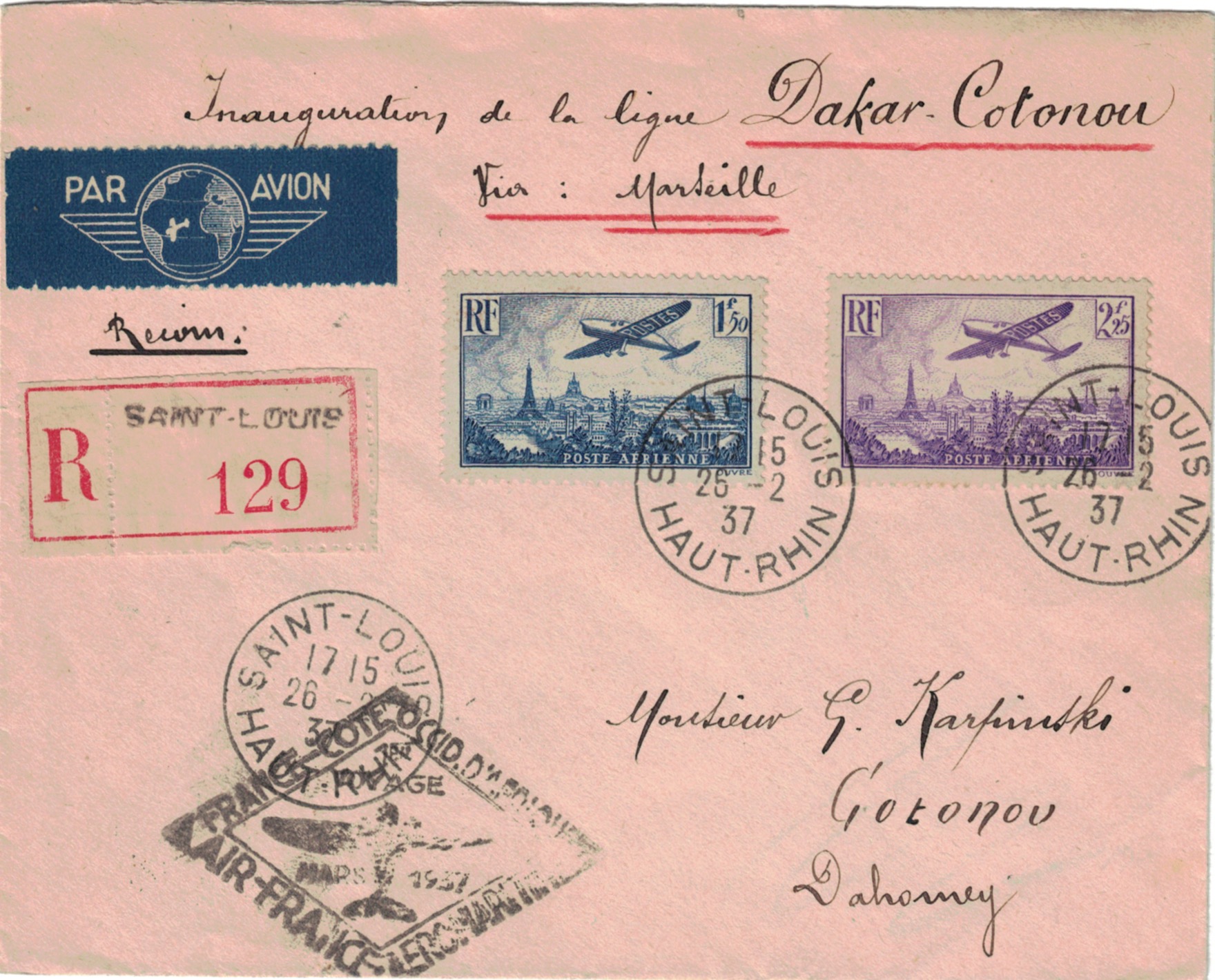 | |
| 23 | The route extended from Cotonou to Pointe-Noire on May 17th 1937. | 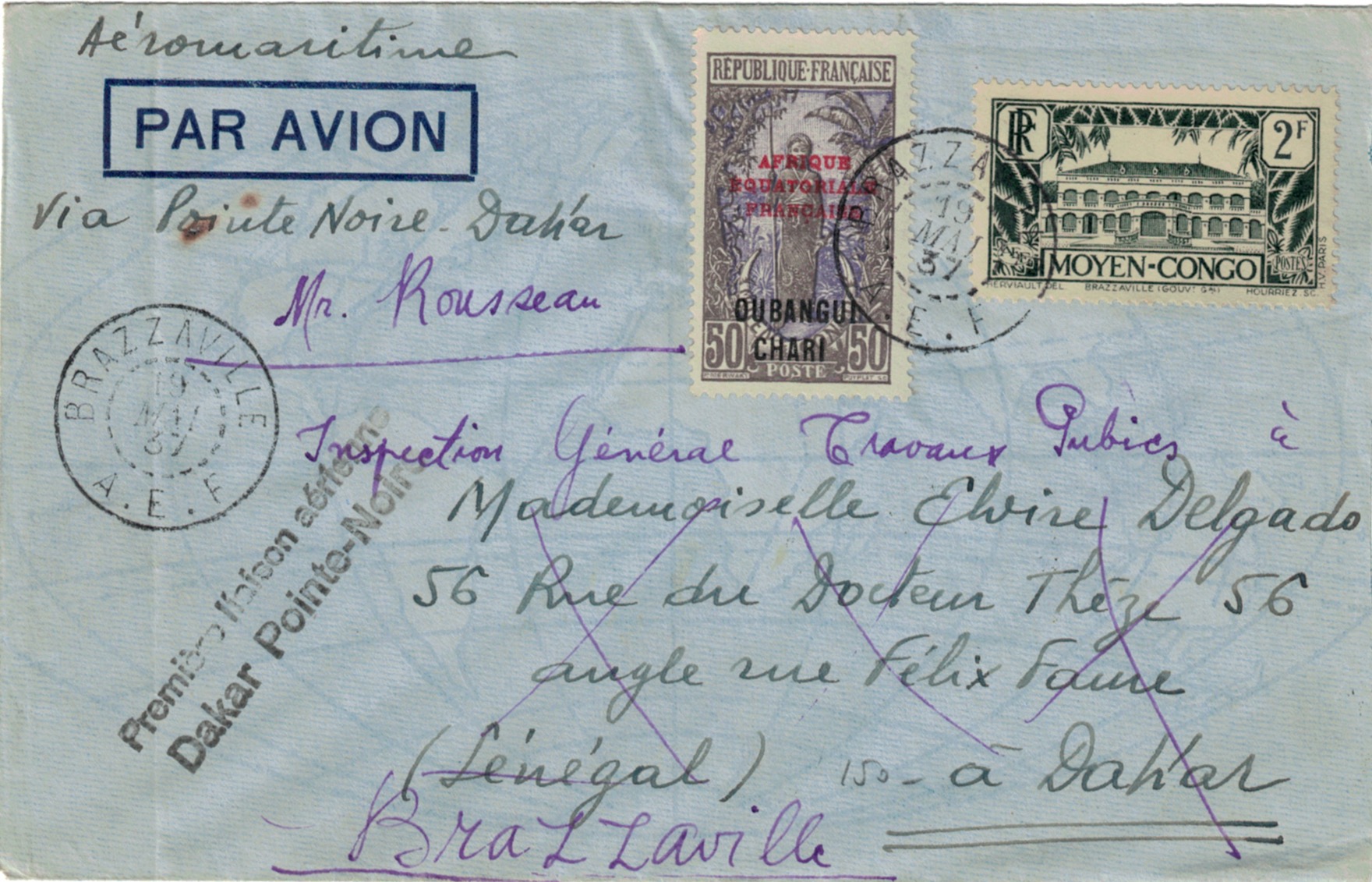 | |
| 24 | In October 1929 the service between Marseilles and Algiers began. The service stopped at the end of June 1940. | 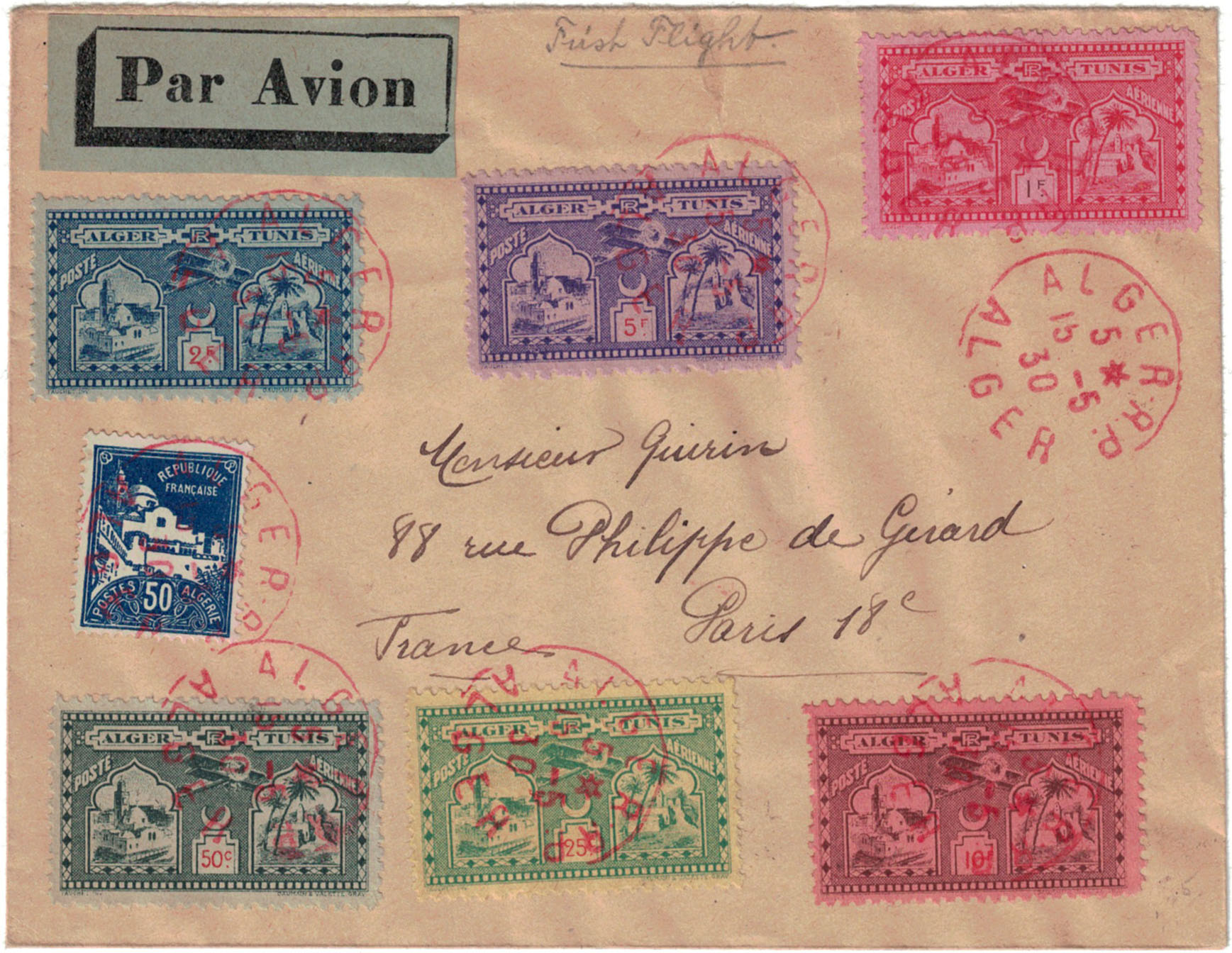 | |
| 25 | By 1929 a service using seaplanes had started between Marseilles and Tunisia, usually via Ajaccio and Corsica. It ceased at the end of June 1940. | 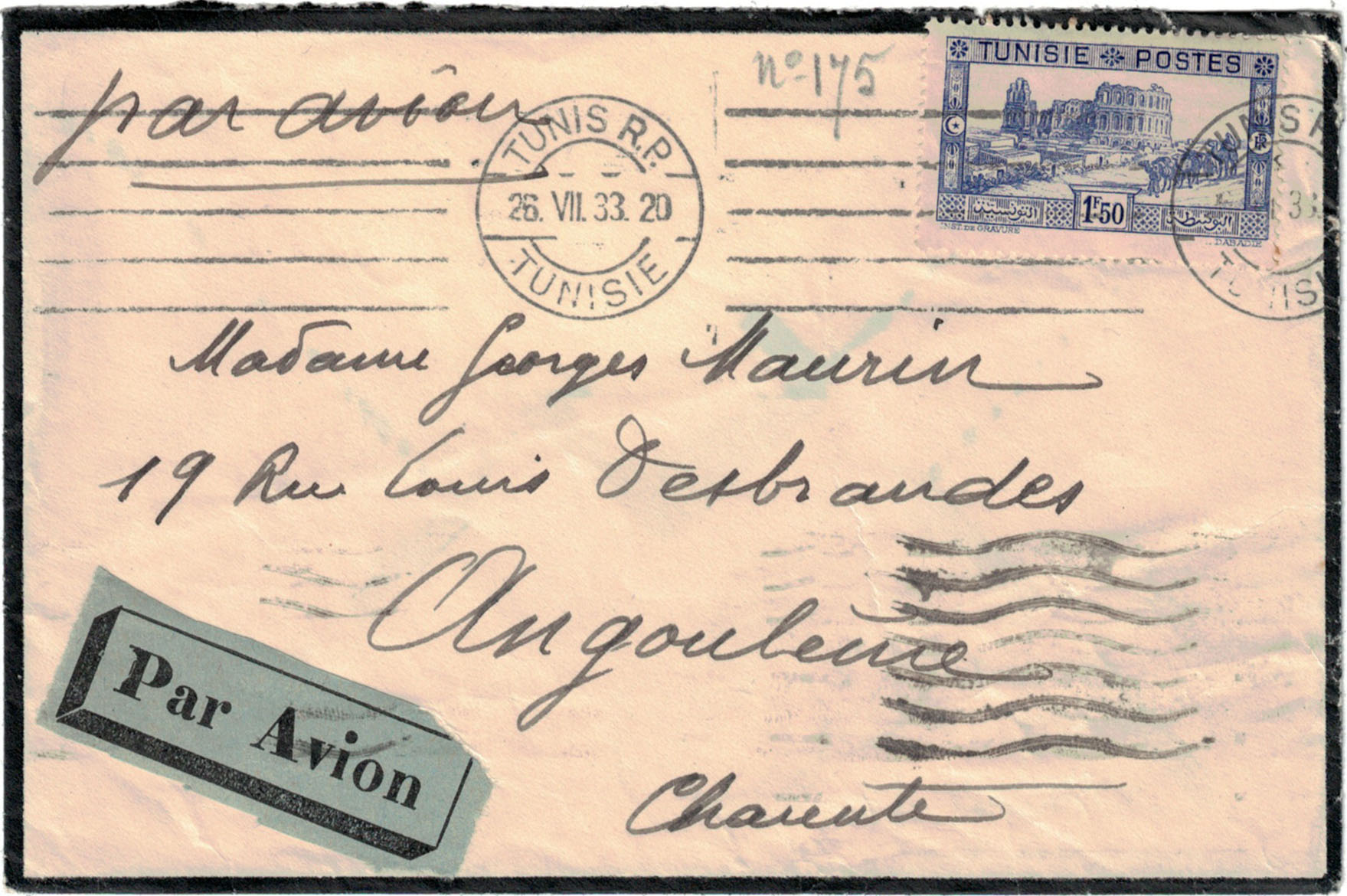 | |
| 26 | France started a shared service with Belgian SABENA in 1935 to Africa on alternate weeks. The Belgium service was between Brussels and the Belgian Congo, while the French service was between Algiers and the French Congo. | 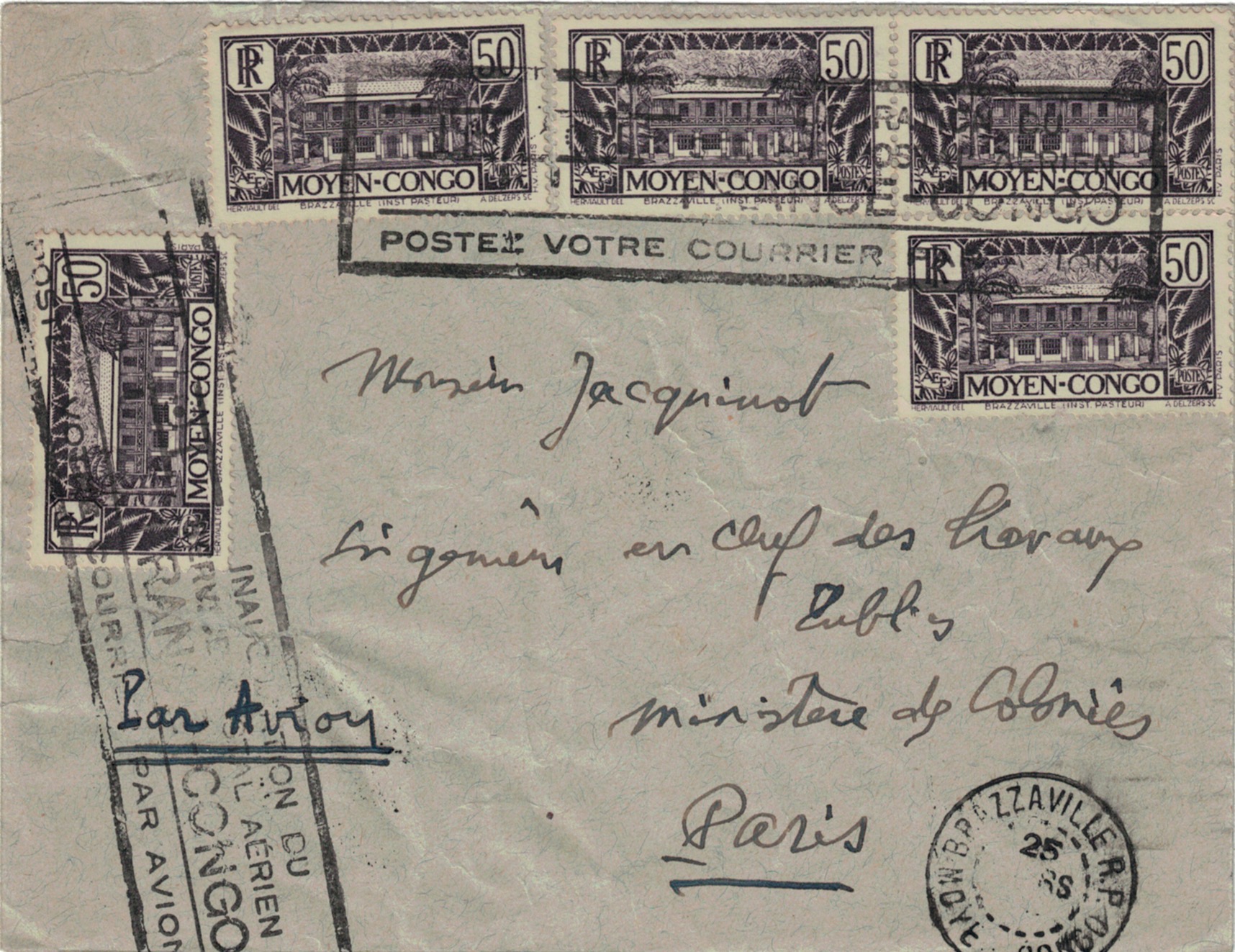 | |
| 27 | Madagascar arranged for an air service to link Madagascar with the Imperial Airways service at Broken Hill. | 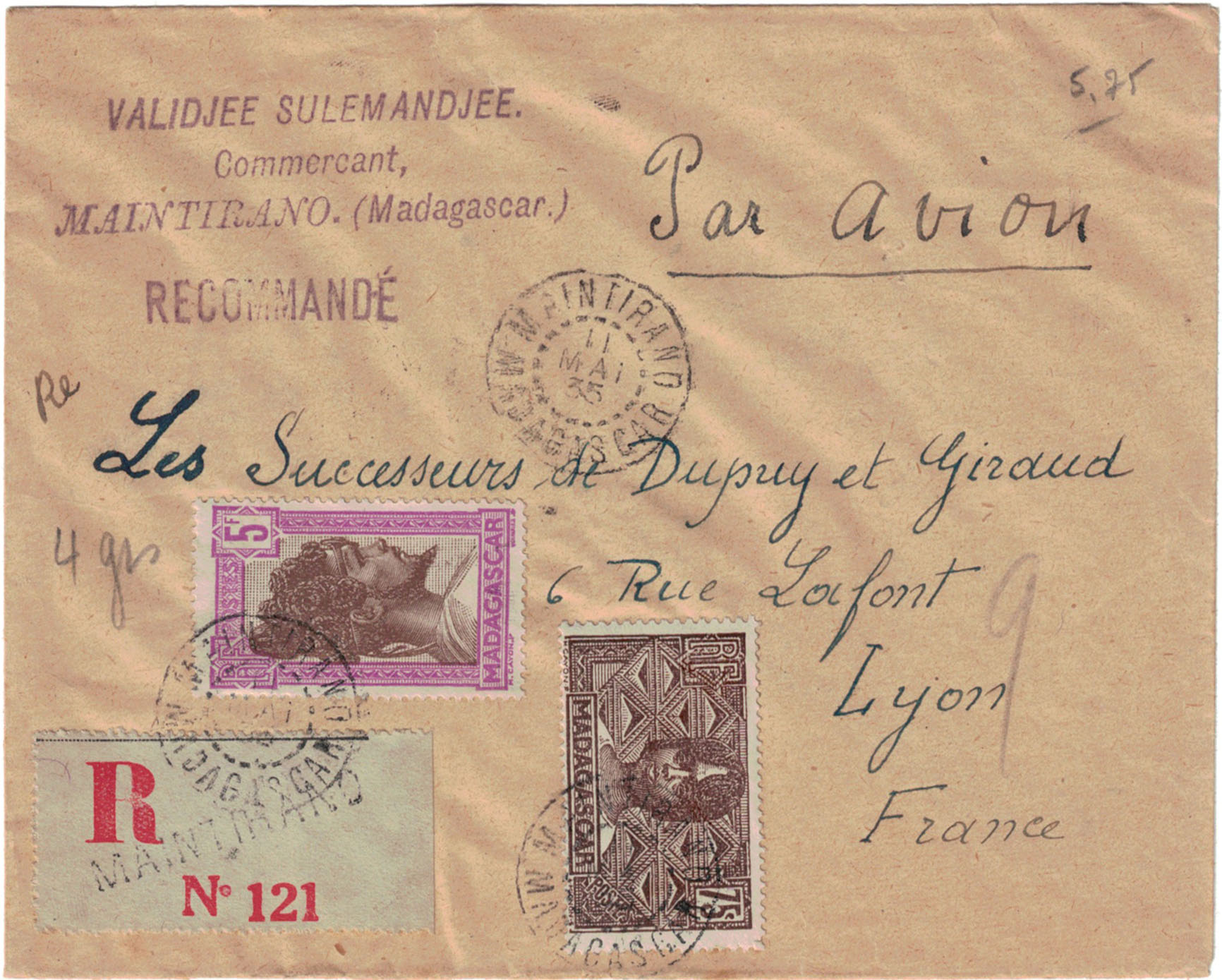 | |
| 28 | From November 1935 Air Afrique extended its service to Tananarive in conjunction with Air Malgache, which connected with the Sabena services at Elizabethville and flew on to Madagascar. | 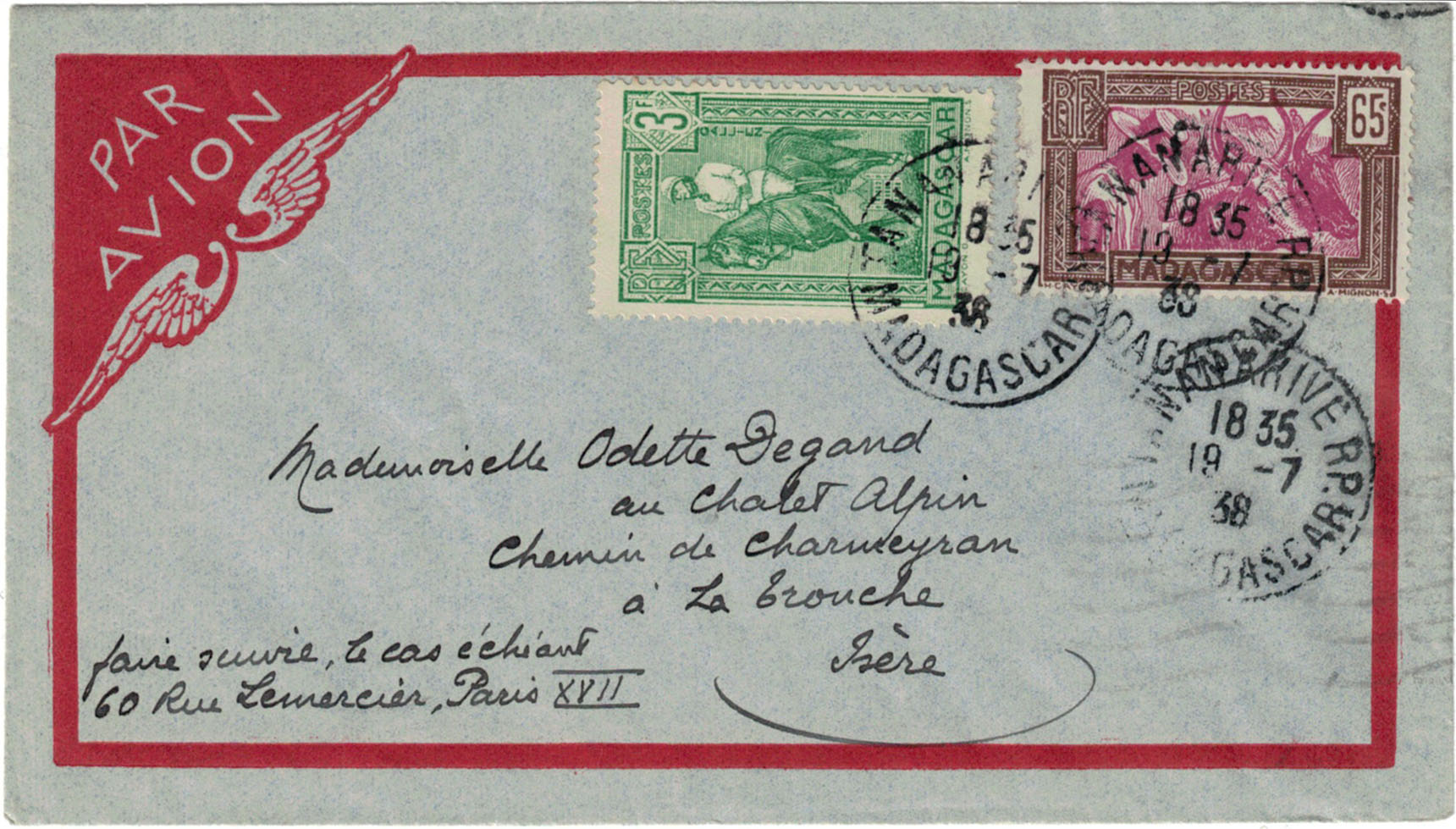 | |
| A.6. Belgian Services | |||
| 29 | SABENA had already operated on Boma-Leopoldville-Luebo- Elizabethville and Leopoldville-Coquilhatville-Stanleyville routes before. On 12 February 1925 the first SABENA flight to the Congo, flights were also made from Belgium in 1926, 1930 and 1931. | 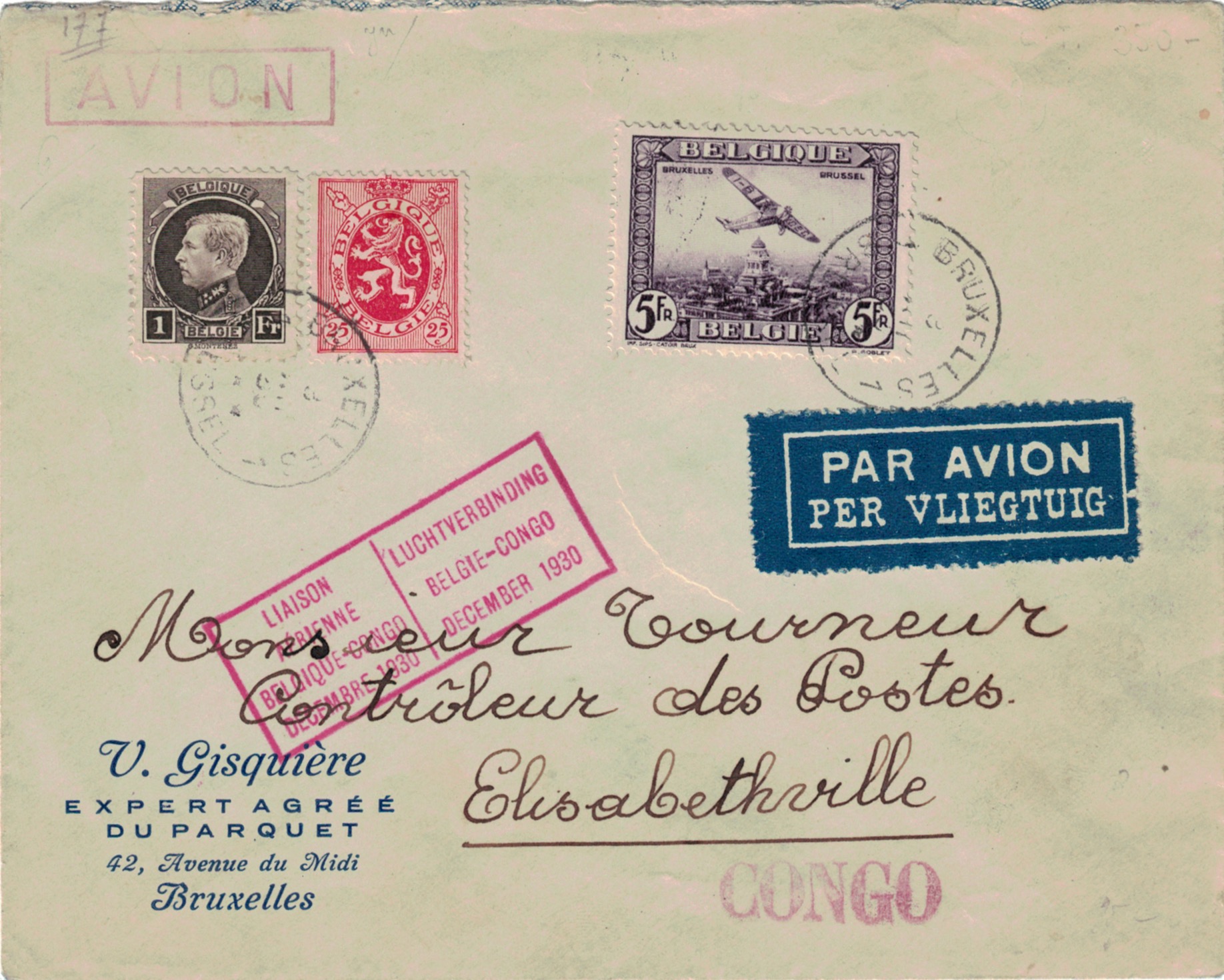 | |
| 30 | In 1934 was made a flight, which was the first to carry mail from the Belgian public. The flight was as follows: Antwerp 24.3.1934, Leopoldville 28.3.1934, left Leopodville 4.4.1934, Antwerp 11.4.1934. A special flight was made carrying Xmas mails from Brusels-Leopoldville 20-22- December 1934. Returning Leopoldville-Brussels 26-28 December 1934 with New Year mail. | 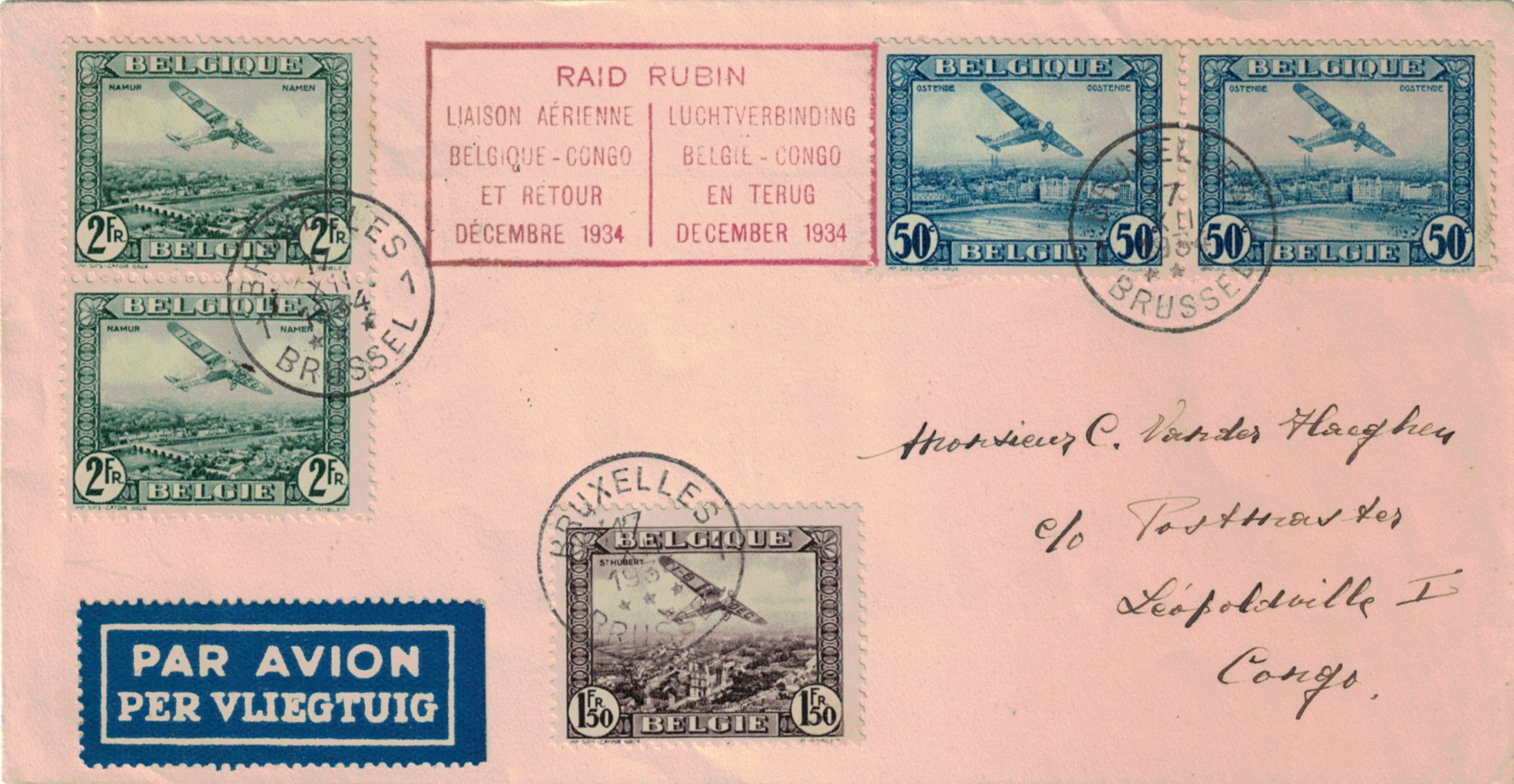 | |
| 31 | The Belgian company for a long time wanted to have link with the Congo, which came true in February 1935. After lengthy negotiations, the French government gave its agreement to use the facilities recently established in Algeria and the Sahara. On 23 February 1935 a regular service by Sabena started between Belgium and the Congo. | 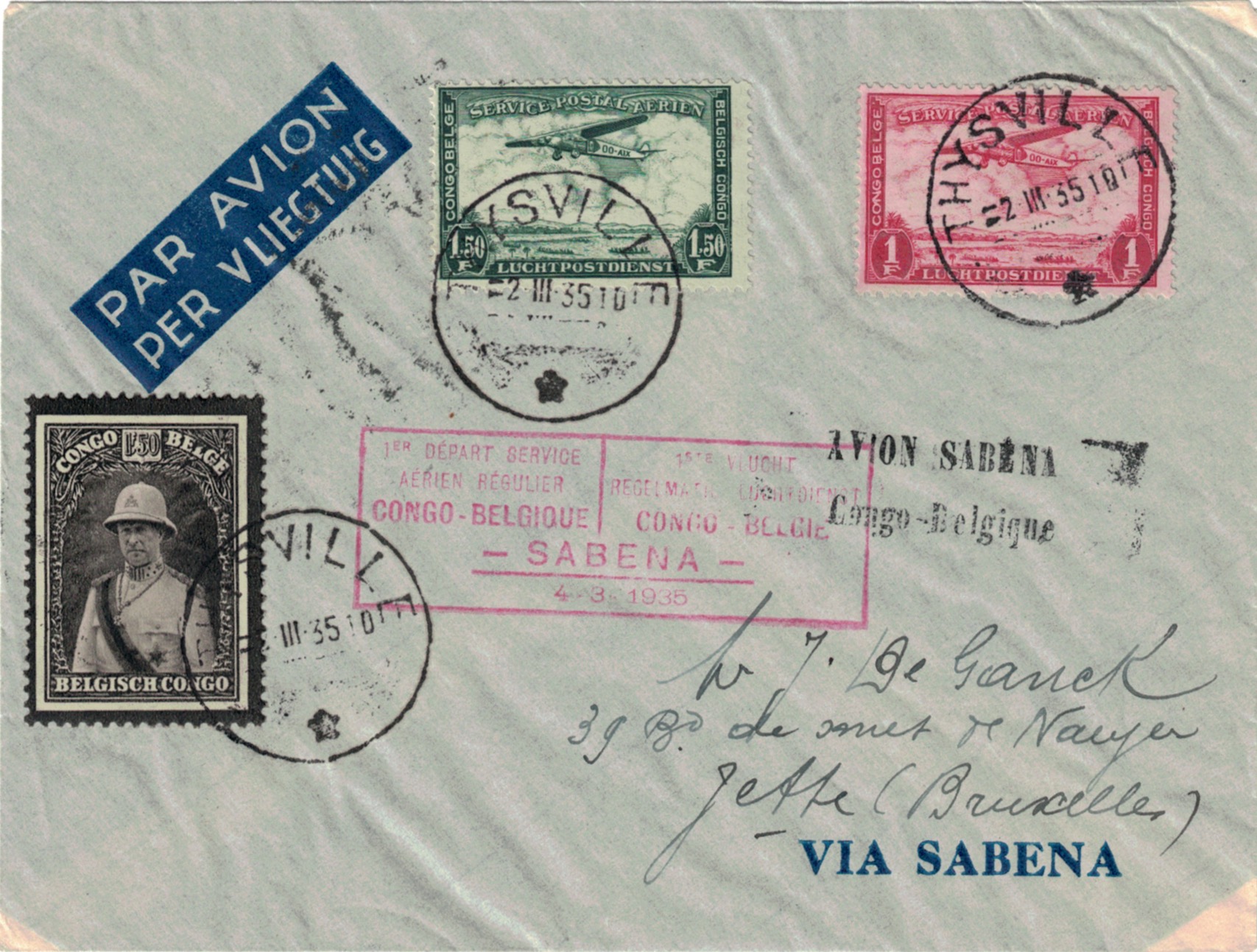 | |
| 32 | On the 15 November 1935 it was extended to Elizabethville. | 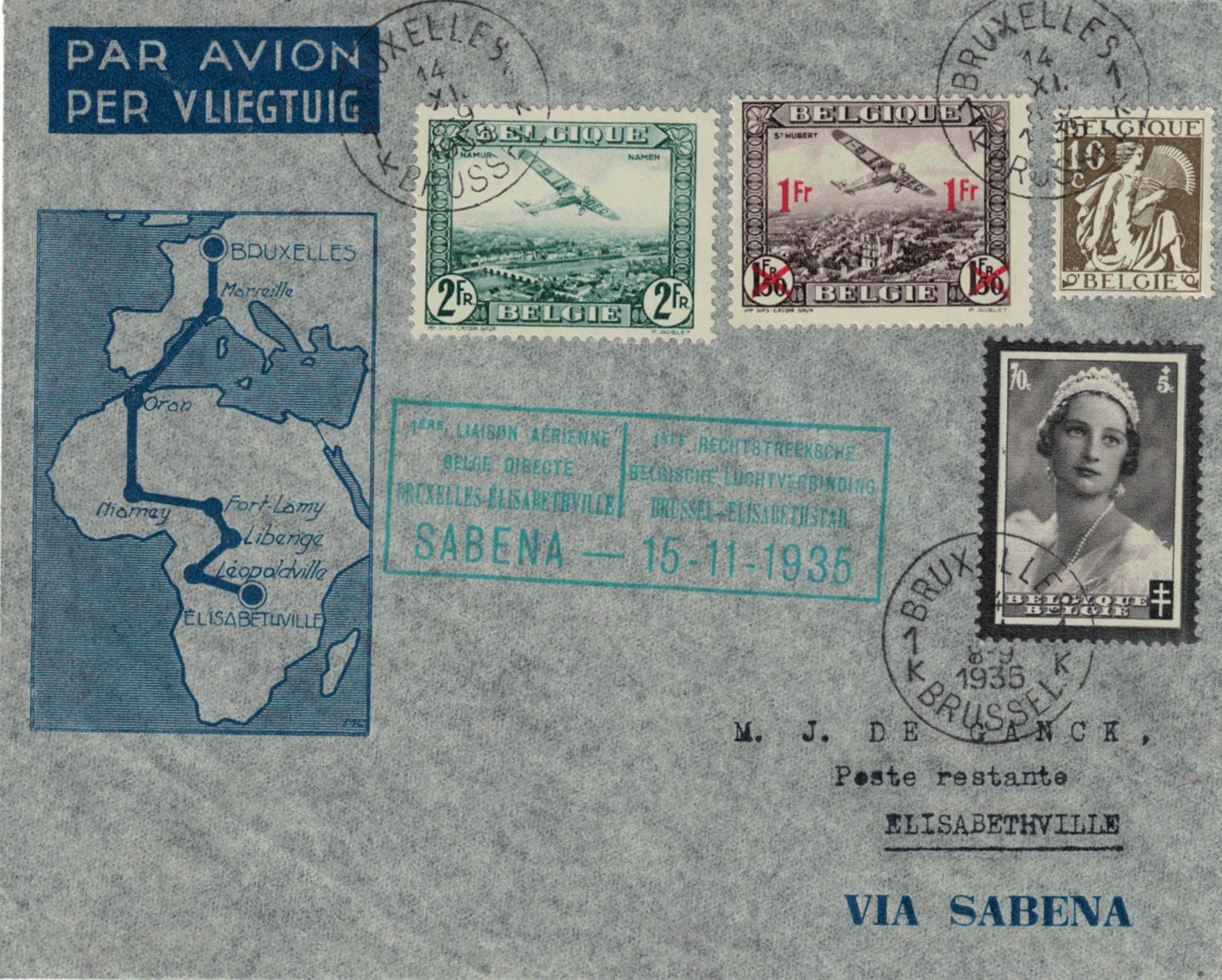 | |
| 33 | From June 2nd 1937 the route did not pass through Brazzaville, but Stanleyville. | 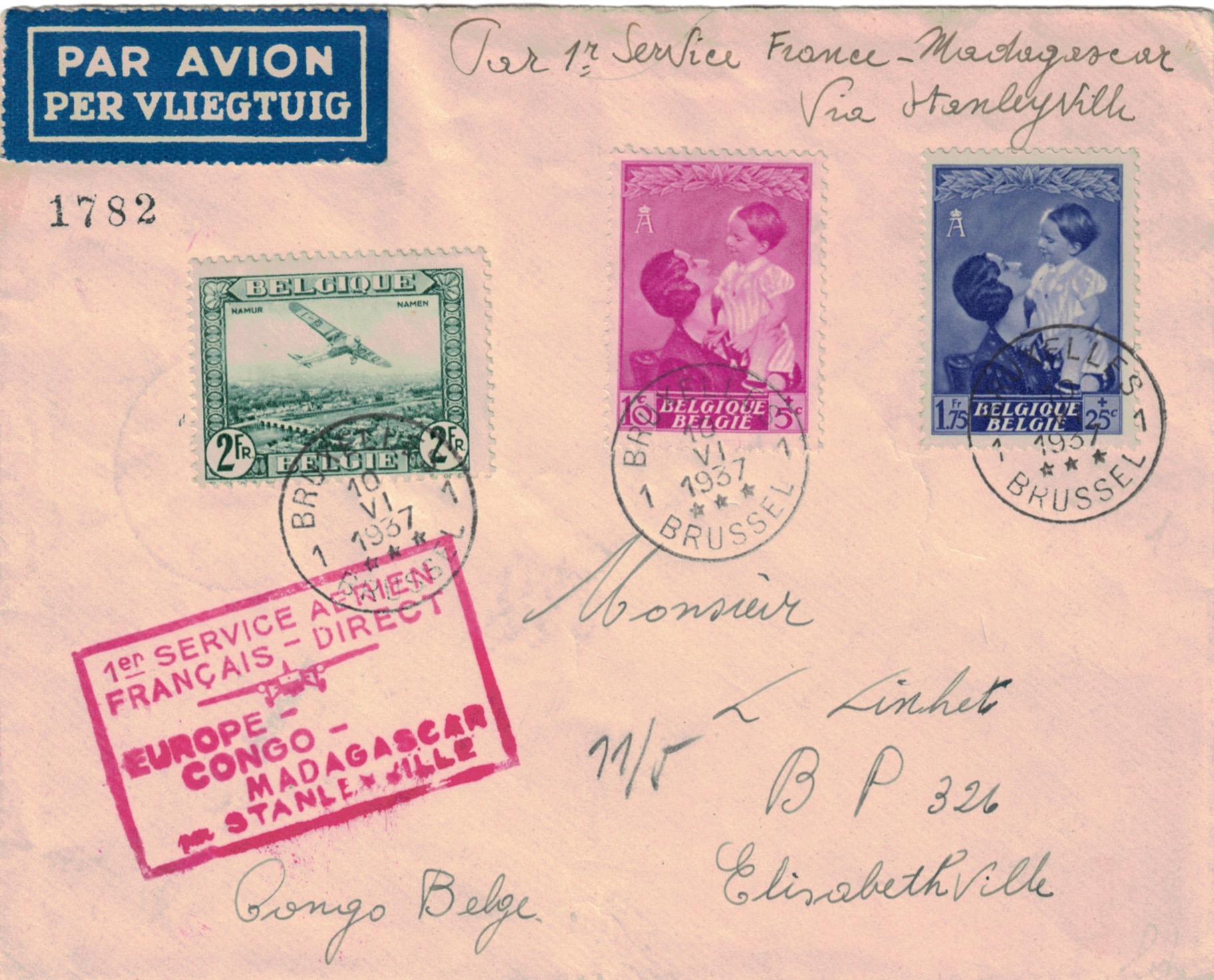 | |
| 34 | Shortly after the declaration of war, Sabena negotiated with Air France to move its terminus to Marseille, which was in place from February 9th 1940. All activity ceased after the armistice, Sabena's fleet in Algiers airport was confiscated by the Vichy Government and handed over to the Italians. | 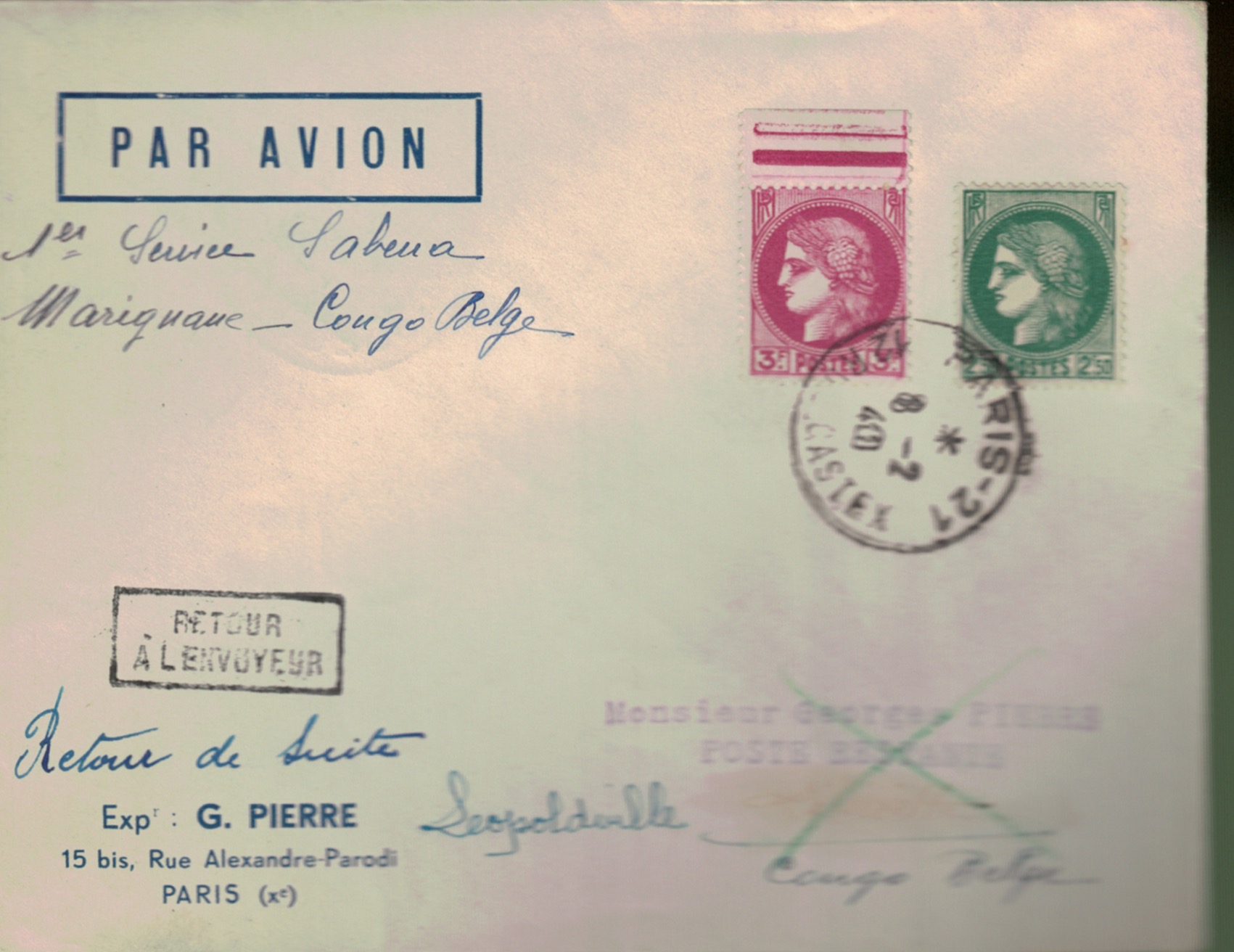 | |
| A.7. Italian Services | |||
| 35 | On 28 October 1928 SANA started a service between Rome and Tripoli via Syracuse. | 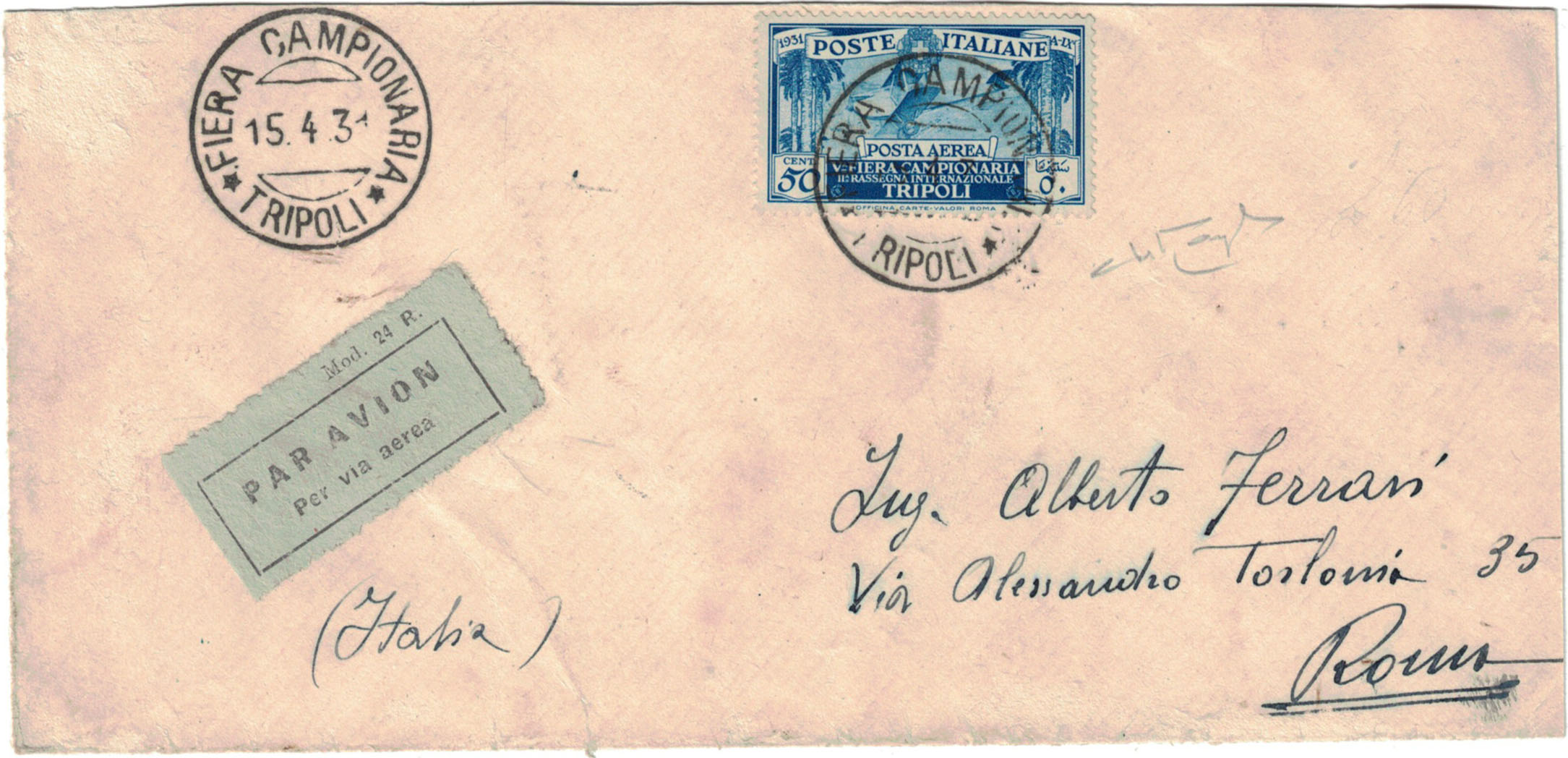 | |
| 36 | On 10 December 1929 the company opened a line from Rome to Tunis. | 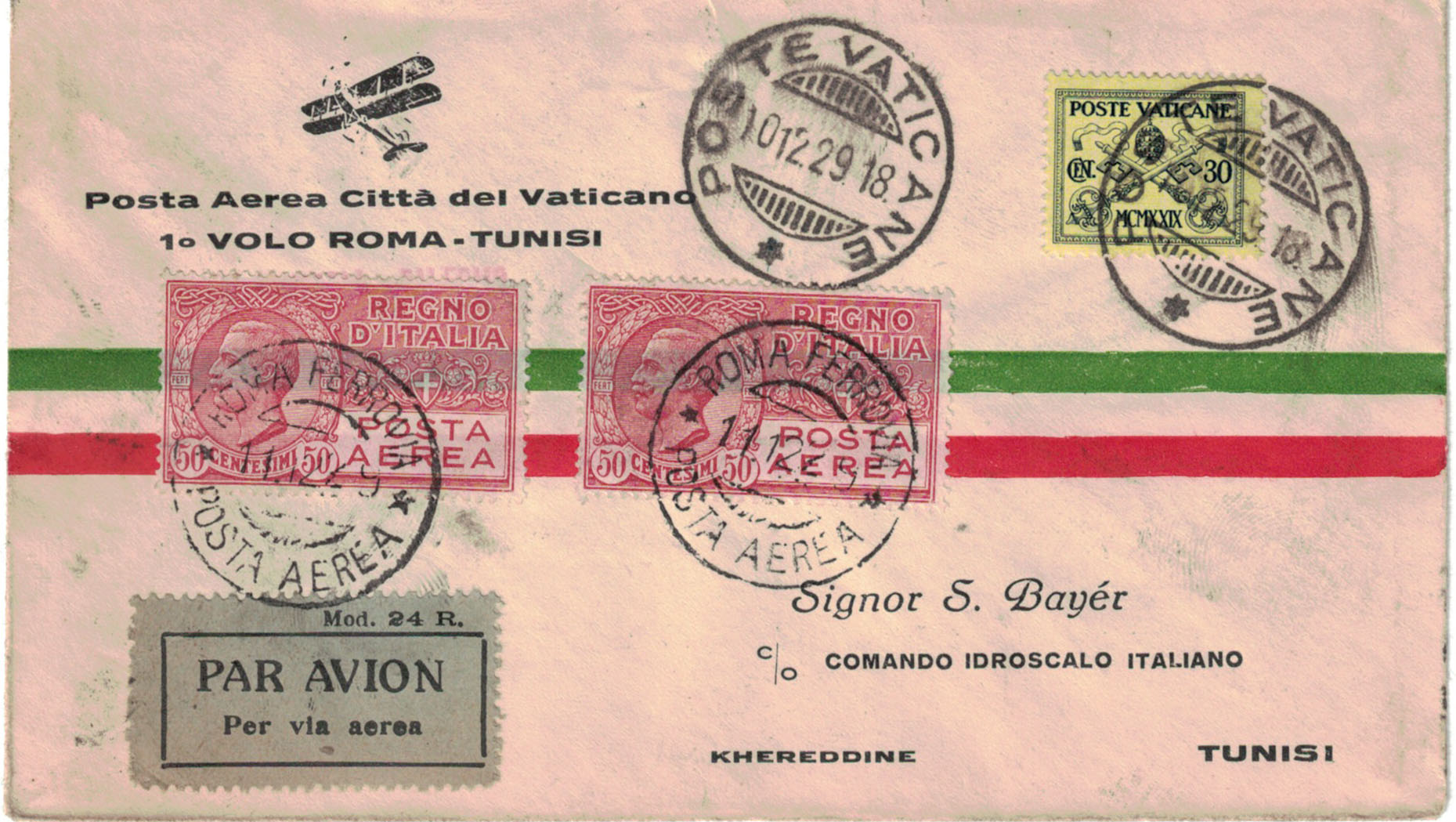 | |
| 37 | On November 10th 1934, the new Italian airline Ala Littoria opened routes Rome - Tobruk (Cyrenaica) - Massawa (Eritrea) - Mogadishu (Italian Somaliland). | 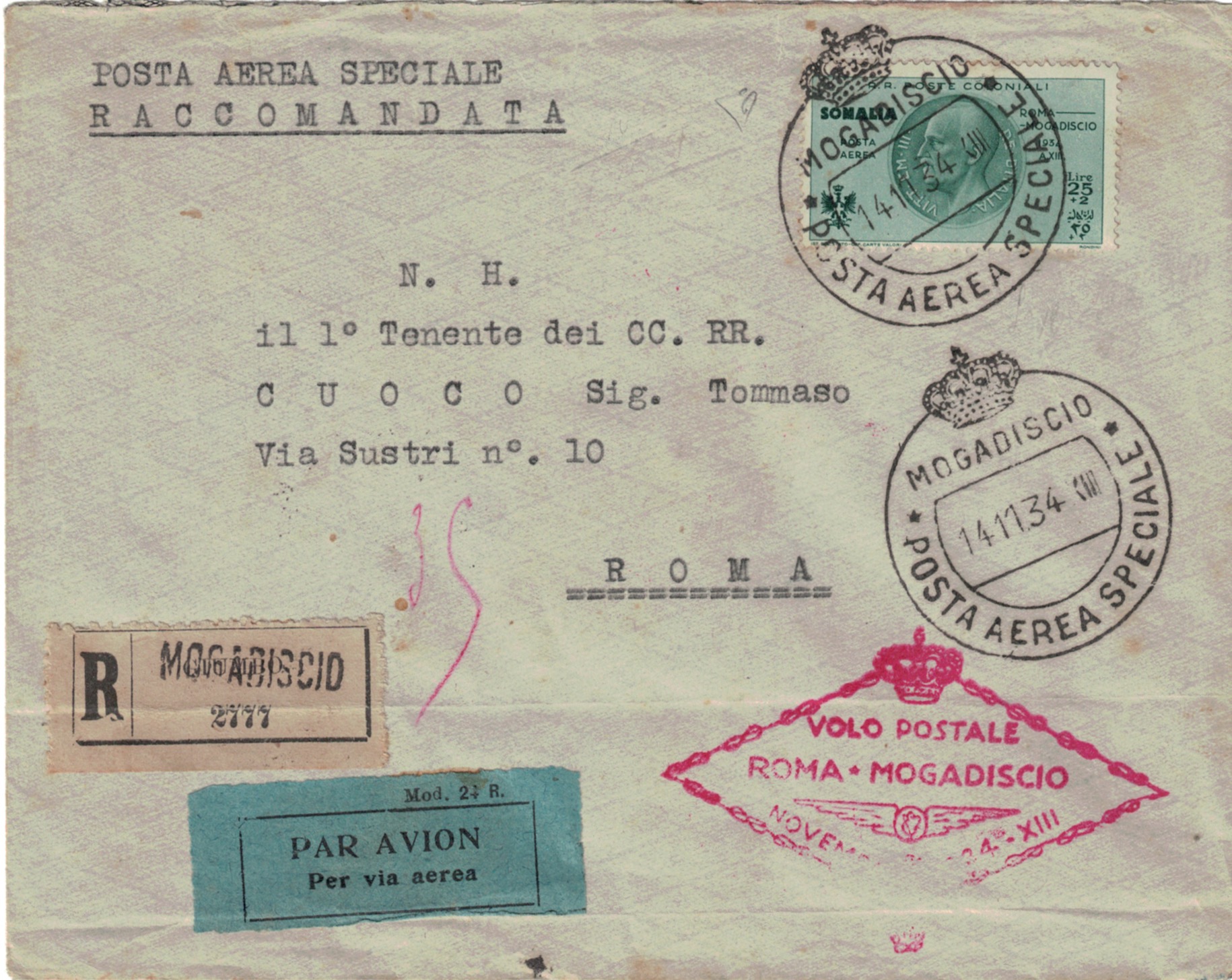 | |
| 38 | In Italian East Africa only a feeder service, Asmara-Kassala- Khartoum, operated from 23 July 1935. This provisional route was extended in November 1935: Khartoum-Kassala- Asmara-Djibouti-Mogadishu. | 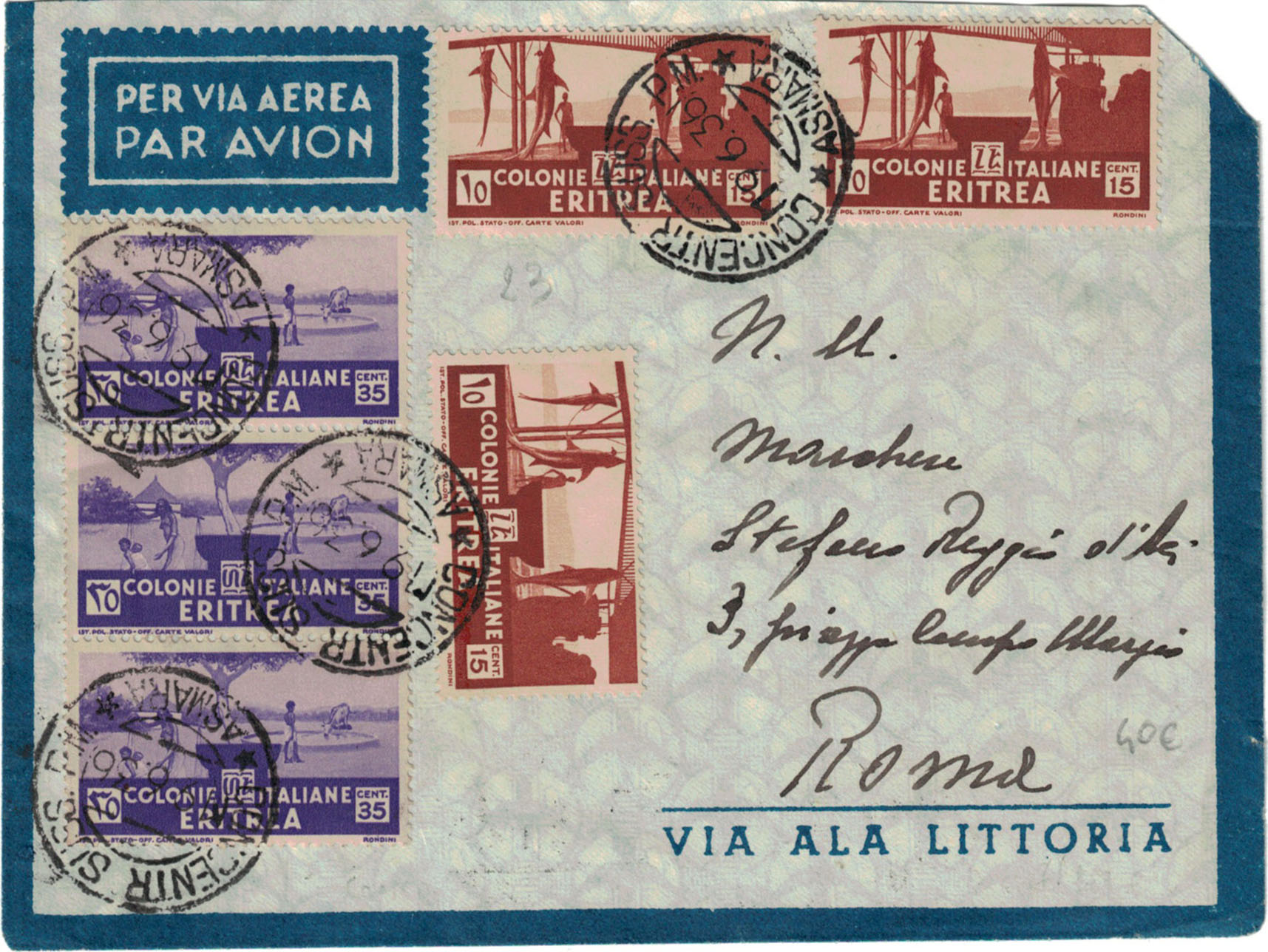 | |
| 39 | The route Djibouti-Rome-Paris was opened on November 14th, 1935. | 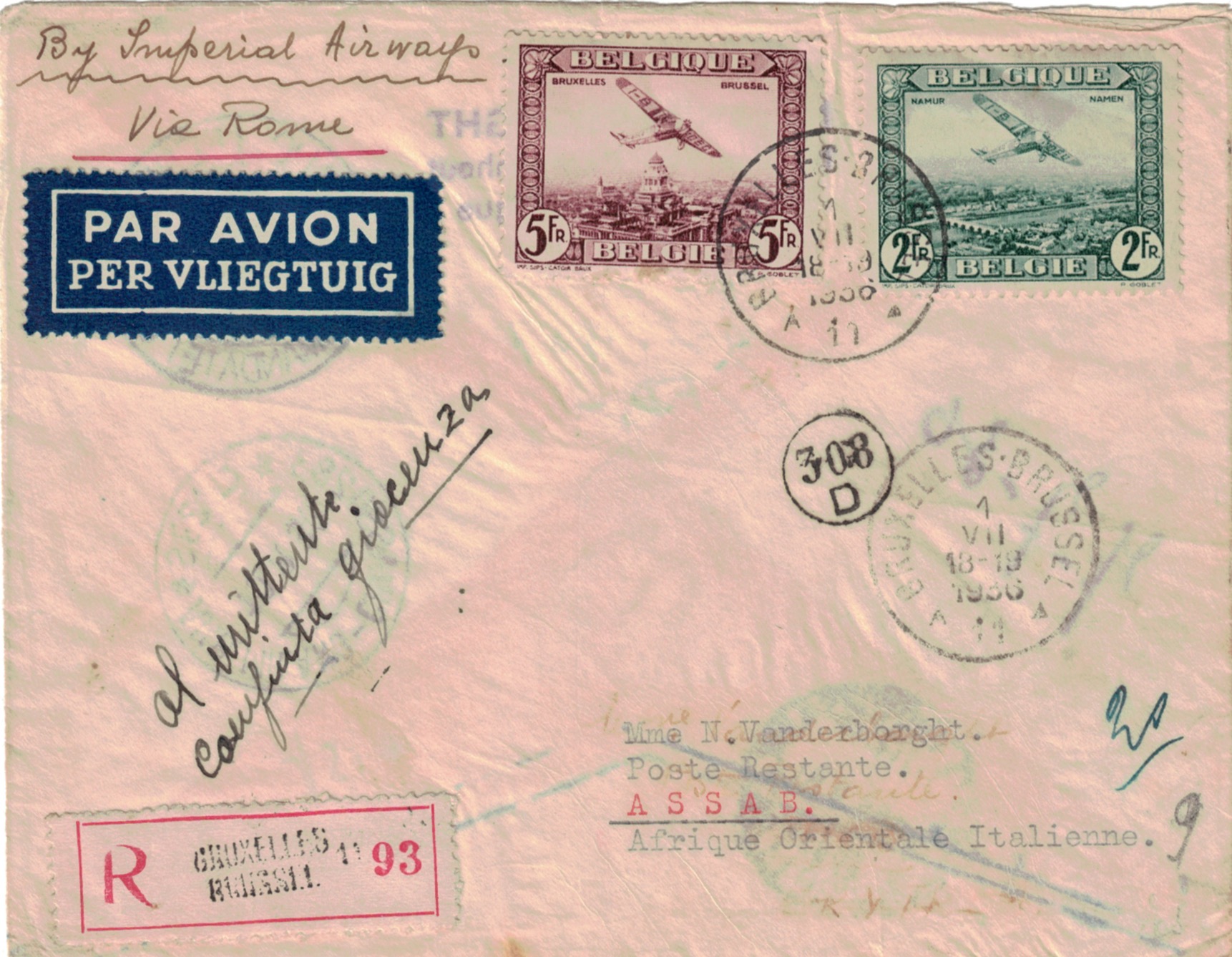 | |
| 40 | On 7 December 1936 the Rome-Majorca service was extended to Cadiz via Melilla, Morocco. | 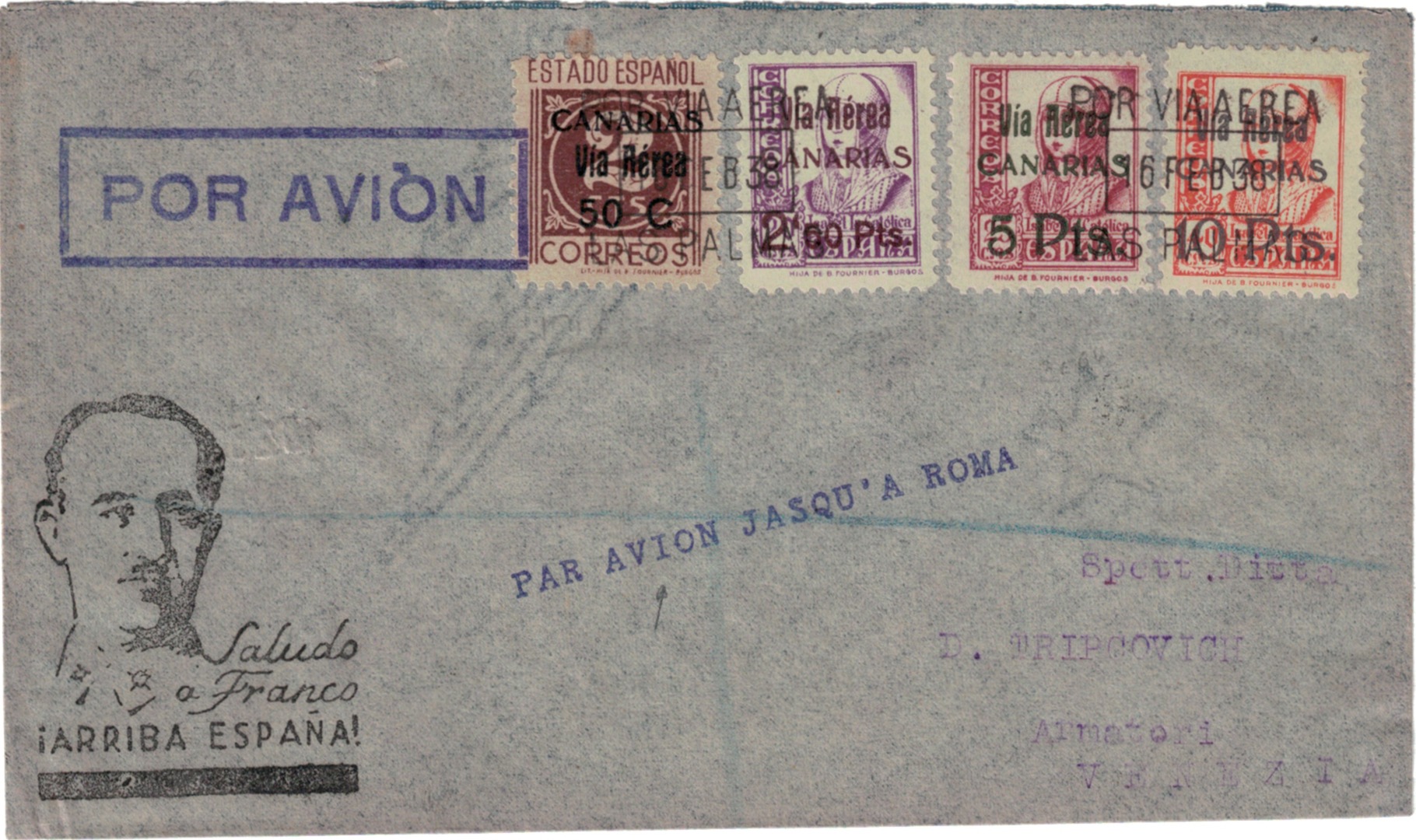 | |
| 41 | On 27 May 1937 a service was mentioned ads starting Cairo-Benghazi-Tripoli. | 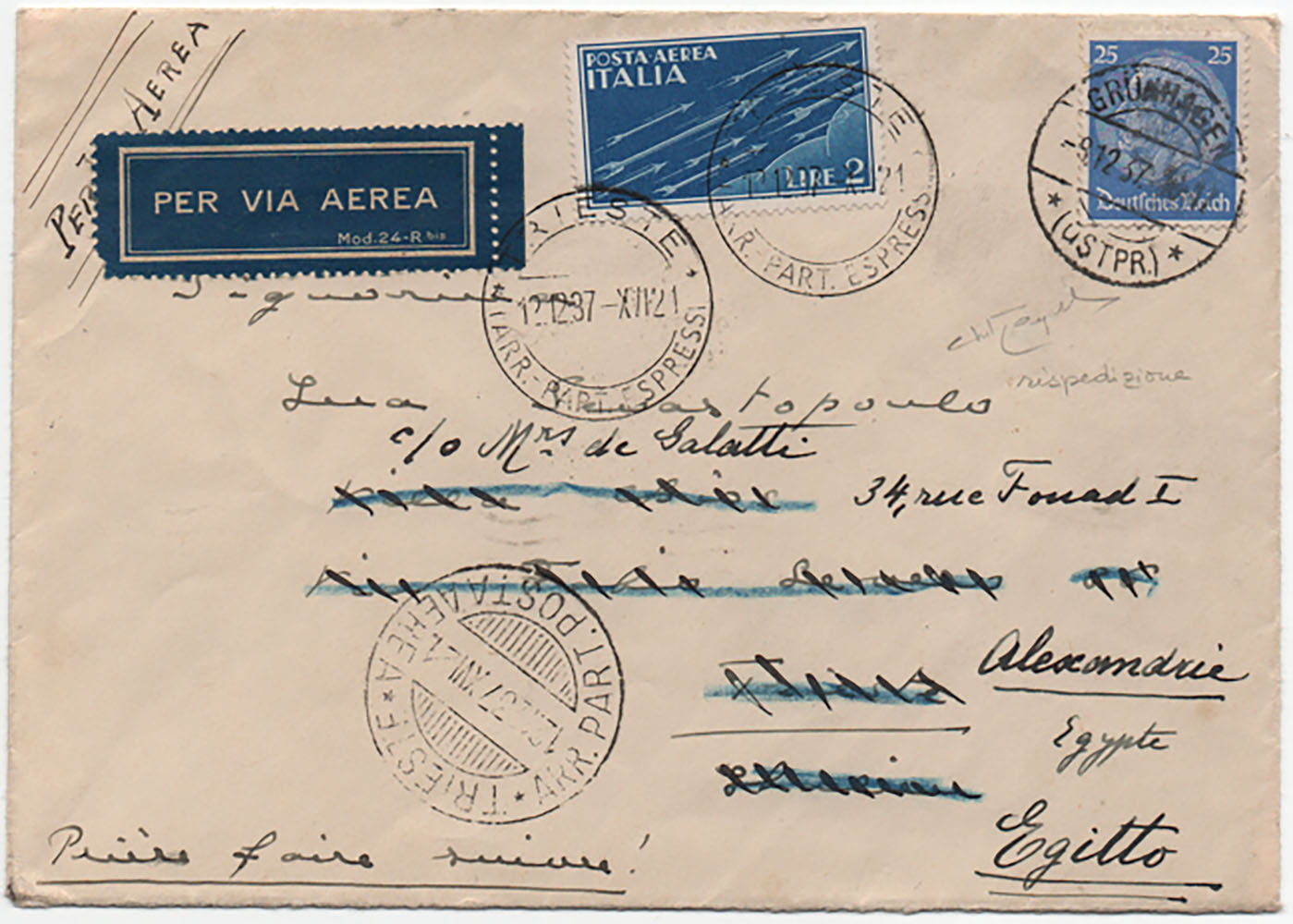 | |
| A.8. Spanish and Portuguese Services | |||
| 42 | A line operating between Seville and Larache was opened on 15 October 1921. | 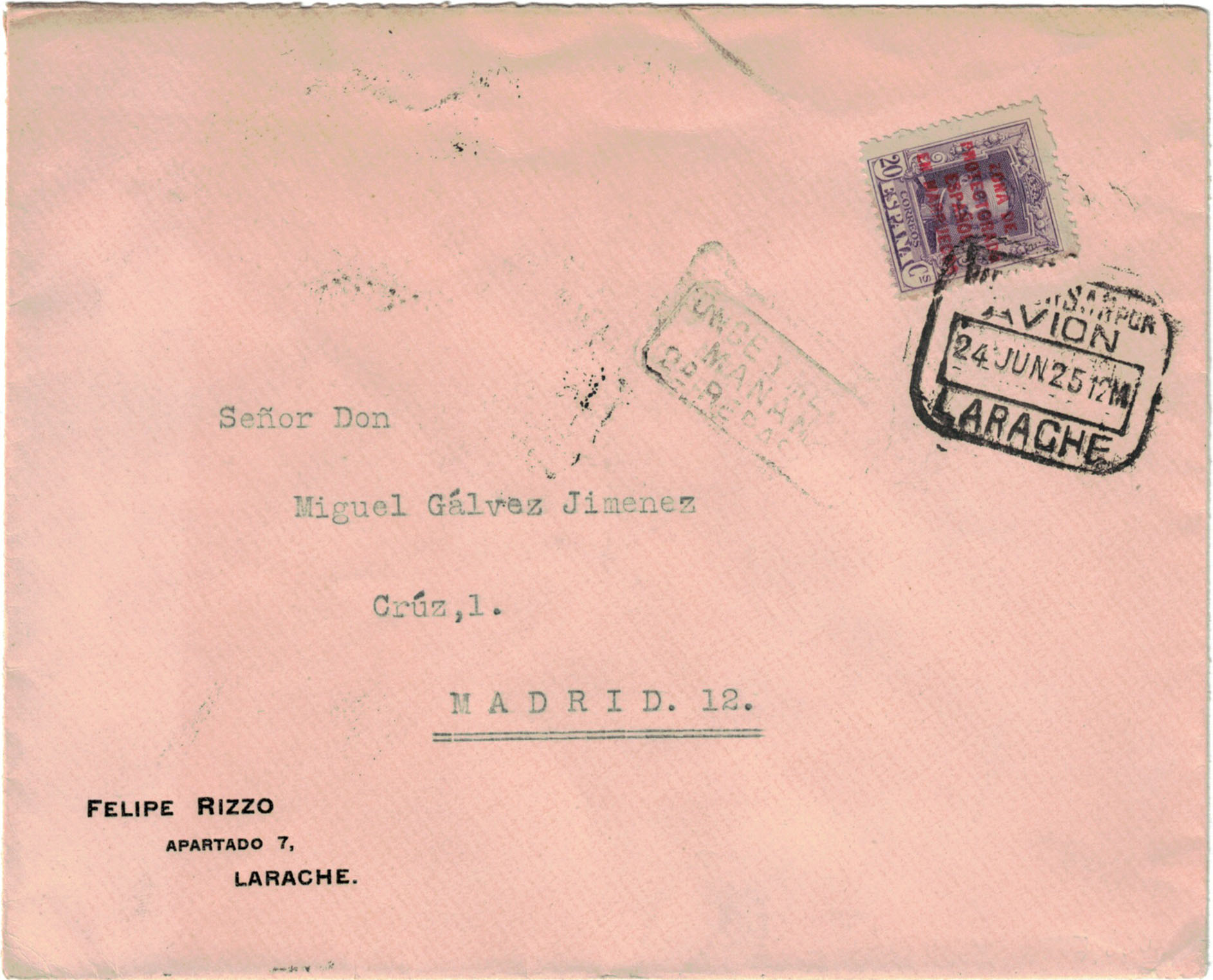 | |
| 43 | The line extended to Las Palmas via Casablanca and Cape Juby on 8 April 1932. | 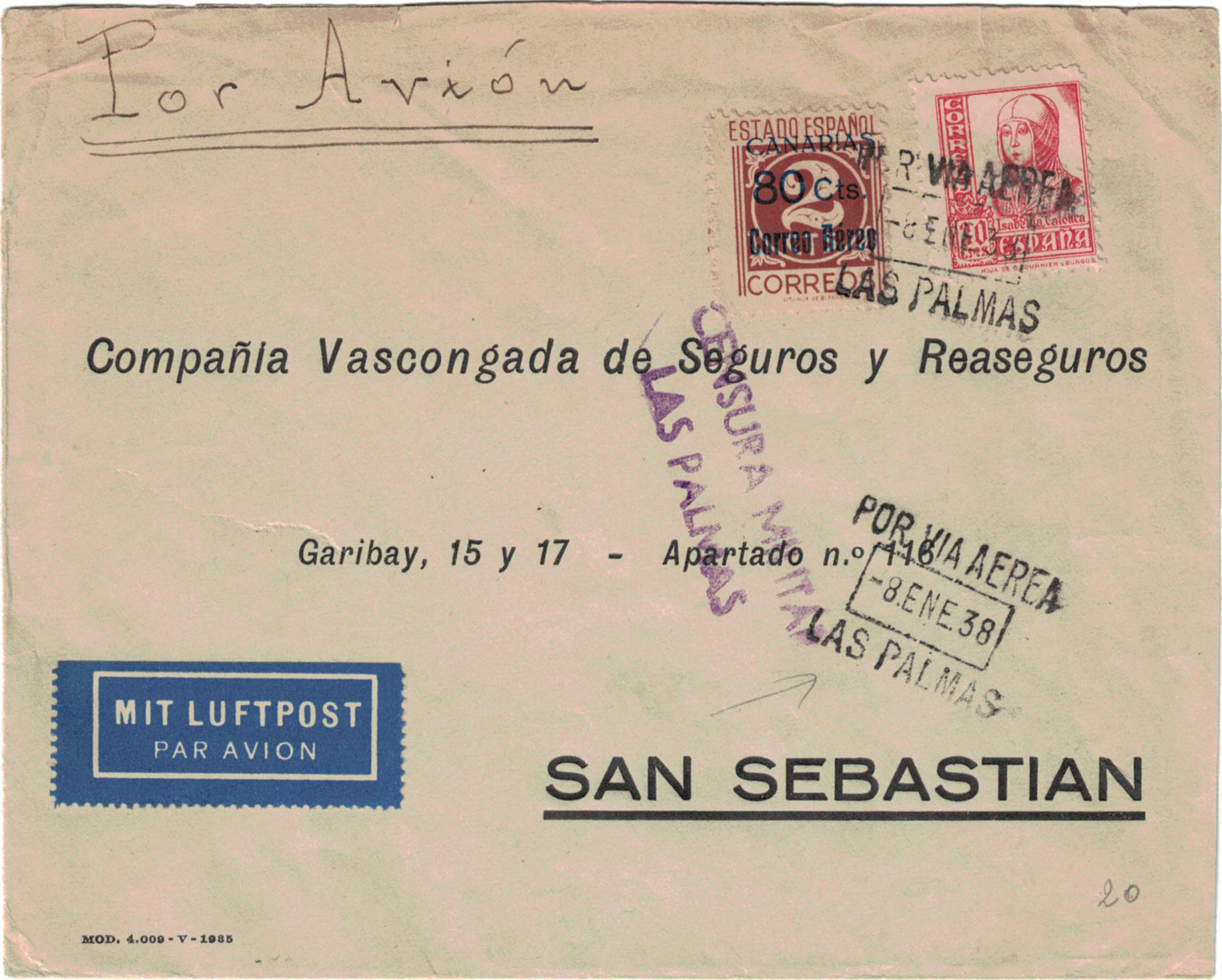 | |
| 44 | Services extended to Bata and Fernando Po by May 1941. In March 1943 Iberia Suspended all services for lack of fuel. |  | |
| 45 | In 1934 Aero Portuguesa started a service between Lisbon and Tangier, party to connect with the French South American Services. | 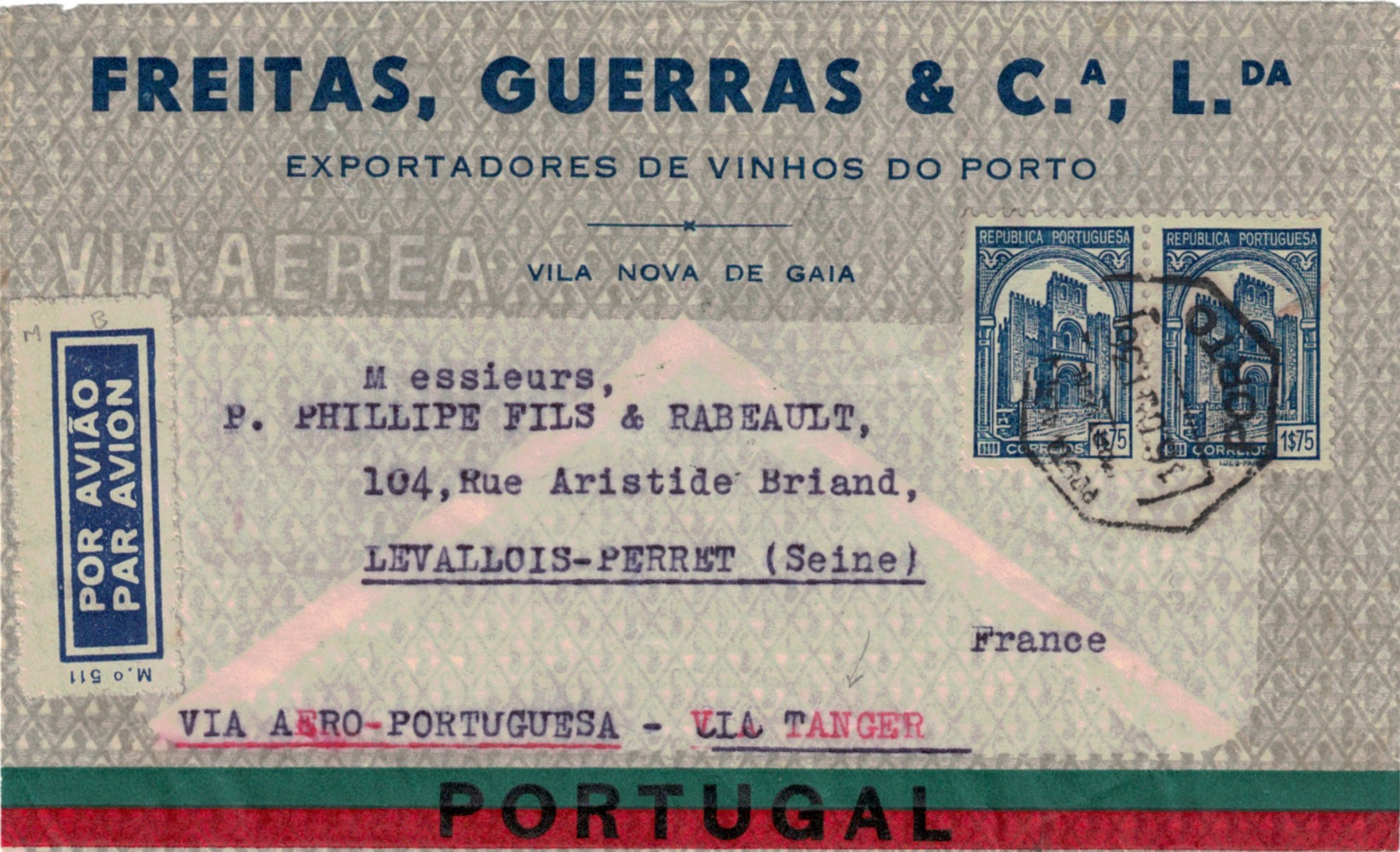 | |
| A.9. The Middle East was located on two continents | |||
| 46 | Misr Airwork was formed 7 May 1932 by Banque Misr. Intemal services began in July 1933, between Cairo, Alexandria, Port Said and Upper Egypt. | 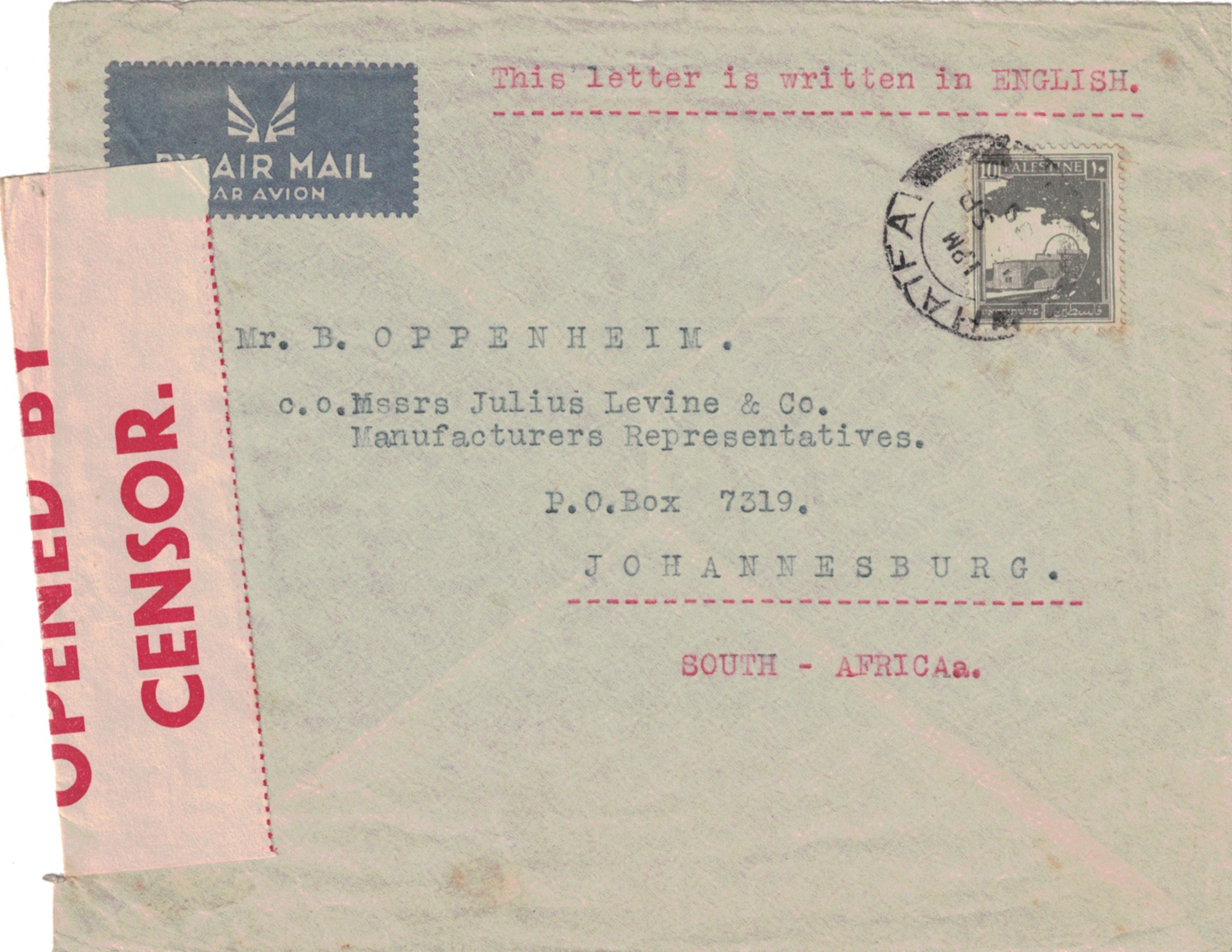 | |
| 47 | Later the international services were started, gradually expanding to Cyprus, Jerusalem, Damascus and Baghdad. | 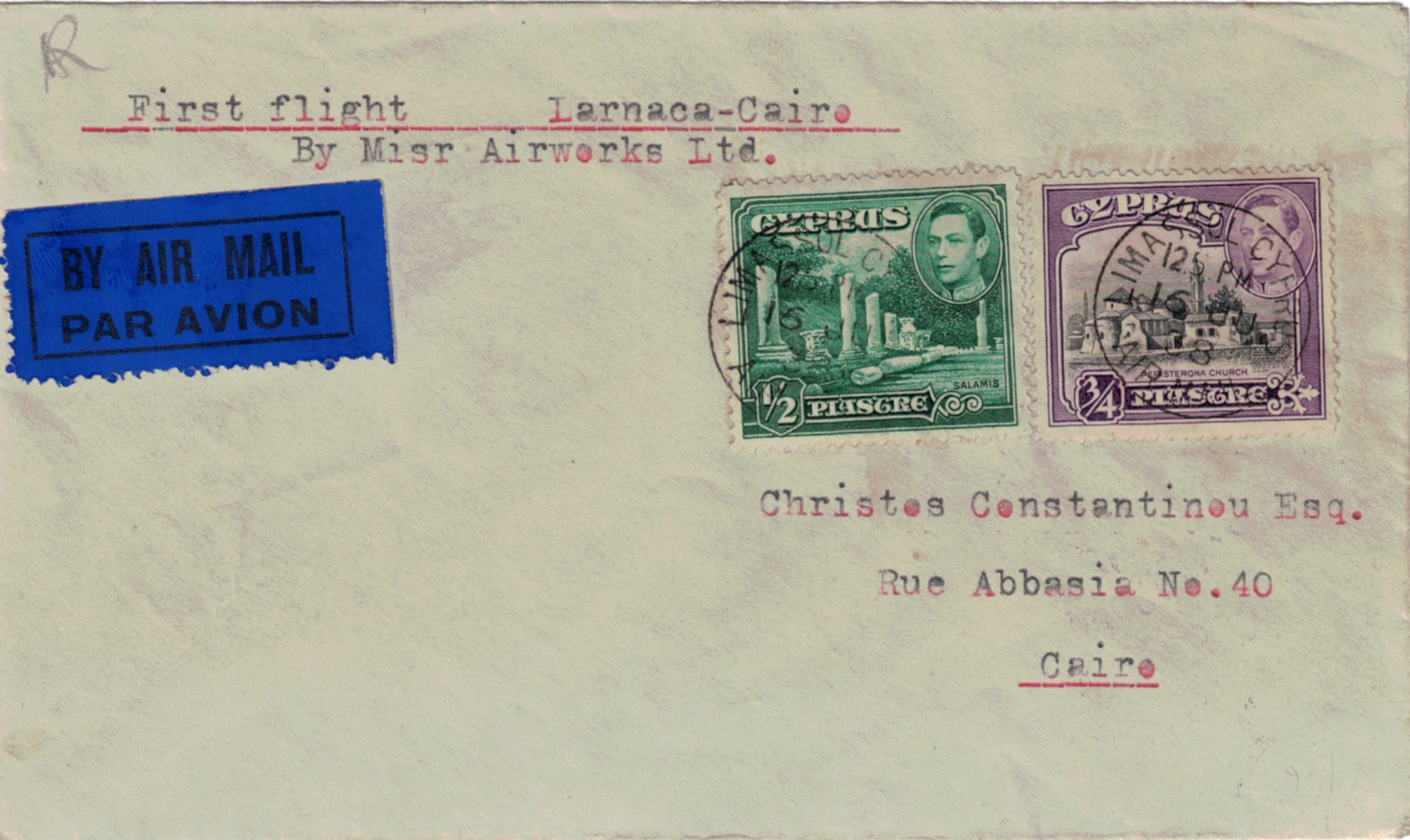 | |
| 48 | The Cairo - Haifa service started 15 February 1934, by 15 February 1935 there was a daily service to Palestine, Haifa - Lydda - Port Said - Cairo. | 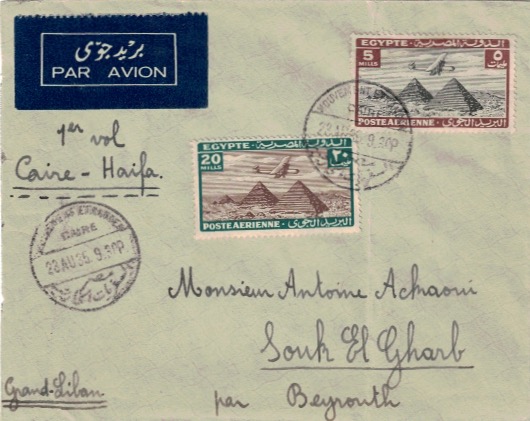 | |
| 49 | The route was extended to Baghdad, Iraq, by May 1936 until 3 September 1939. | 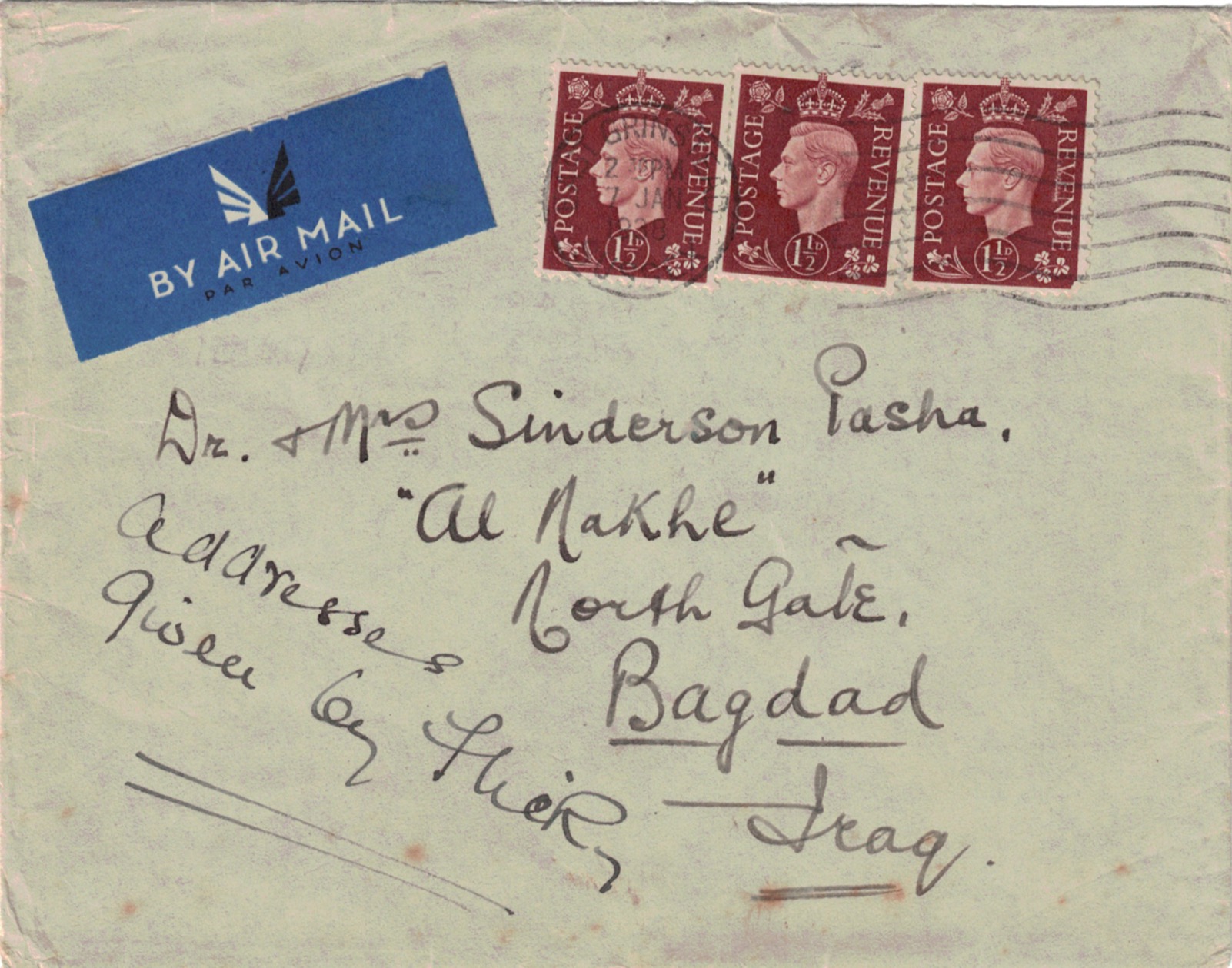 | |
| 50 | The service Cairo - Haifa - Larnaca was extended to Adana (Turkeys) 23 August 1940, which was suspended between 20 May 1941 - 12 August 1941 due to the Allied invasion of Syria. | | |
| 51 | On 9 September 1941 the Cairo - Lydda - Beirut - Larnaca service was restarted, being to Lydda daily and to Cyprus weekly. | 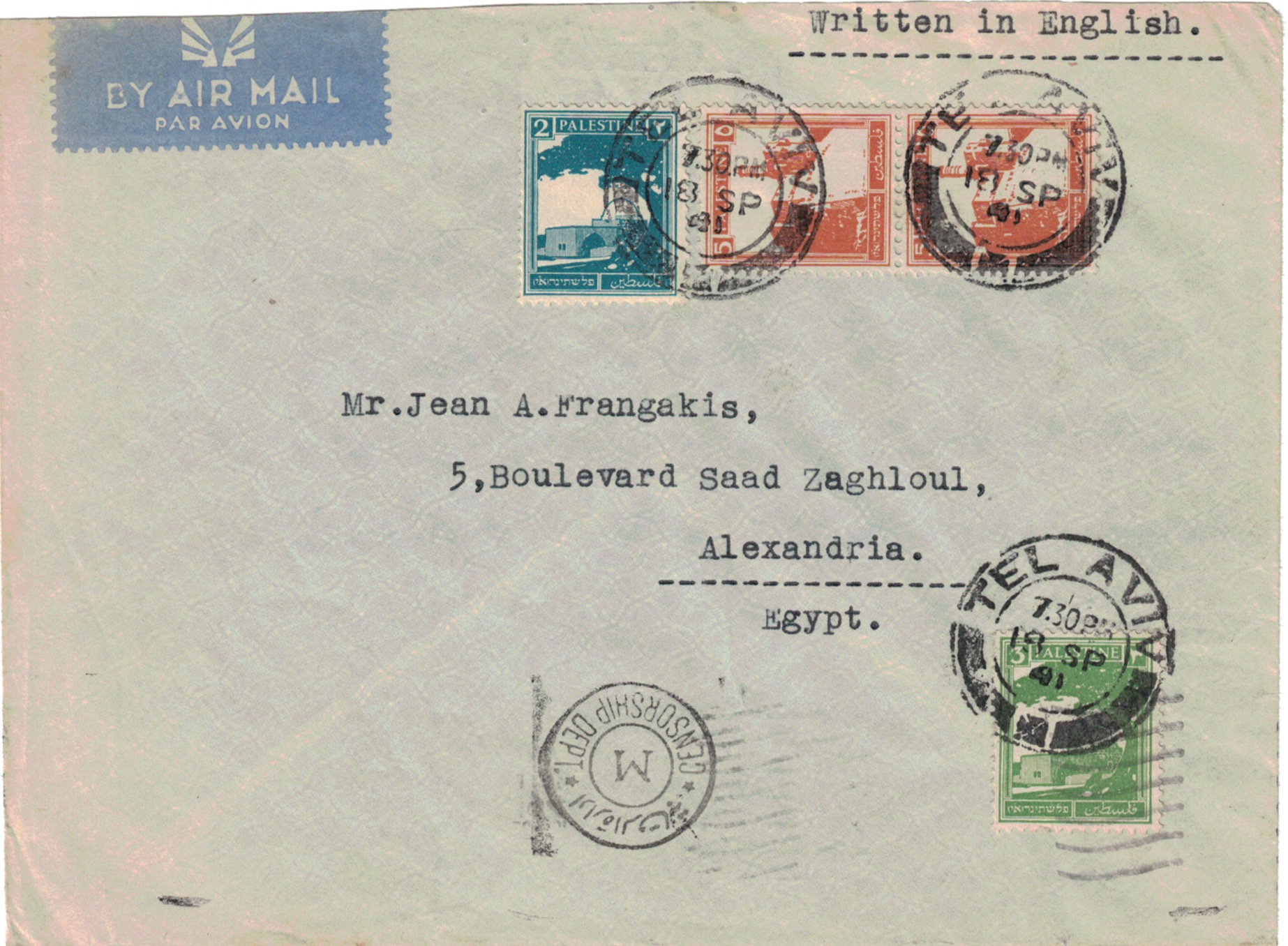 | |
| 52 | BOAC started a weekly service on 3 November 1941 from Cairo to Teheran via Lydda and Baghdad. | 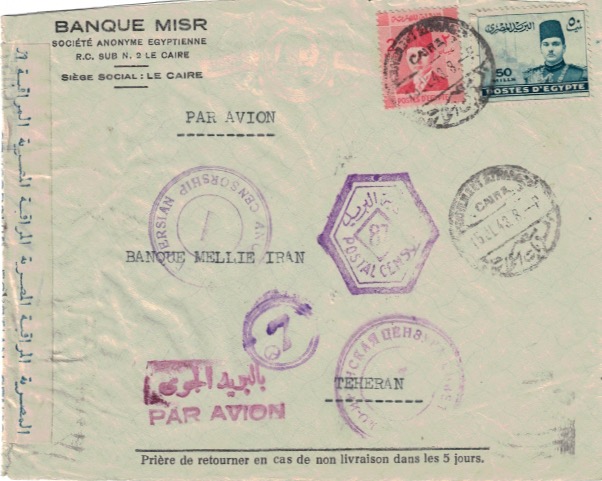 | |
| 53 | The service between Cairo and Beirut was increased from three to four times a week in October 1942. | 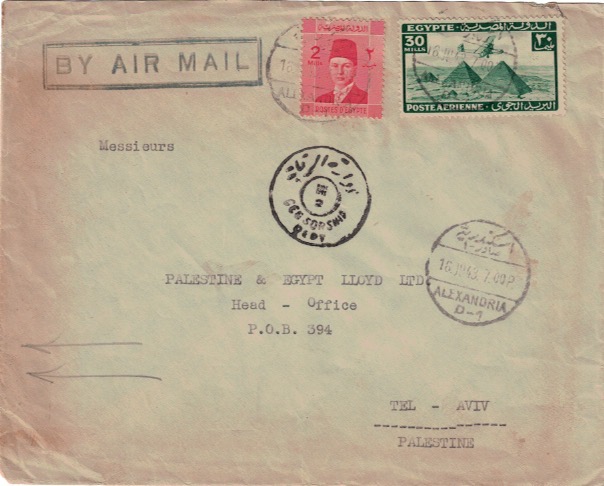 | |
| 54 | BOAC started a weekly service between Cairo and Adana (Turkey) from 3 September 1942. This replaced the service which had been suspended due to the Allied invasion of Syria. | 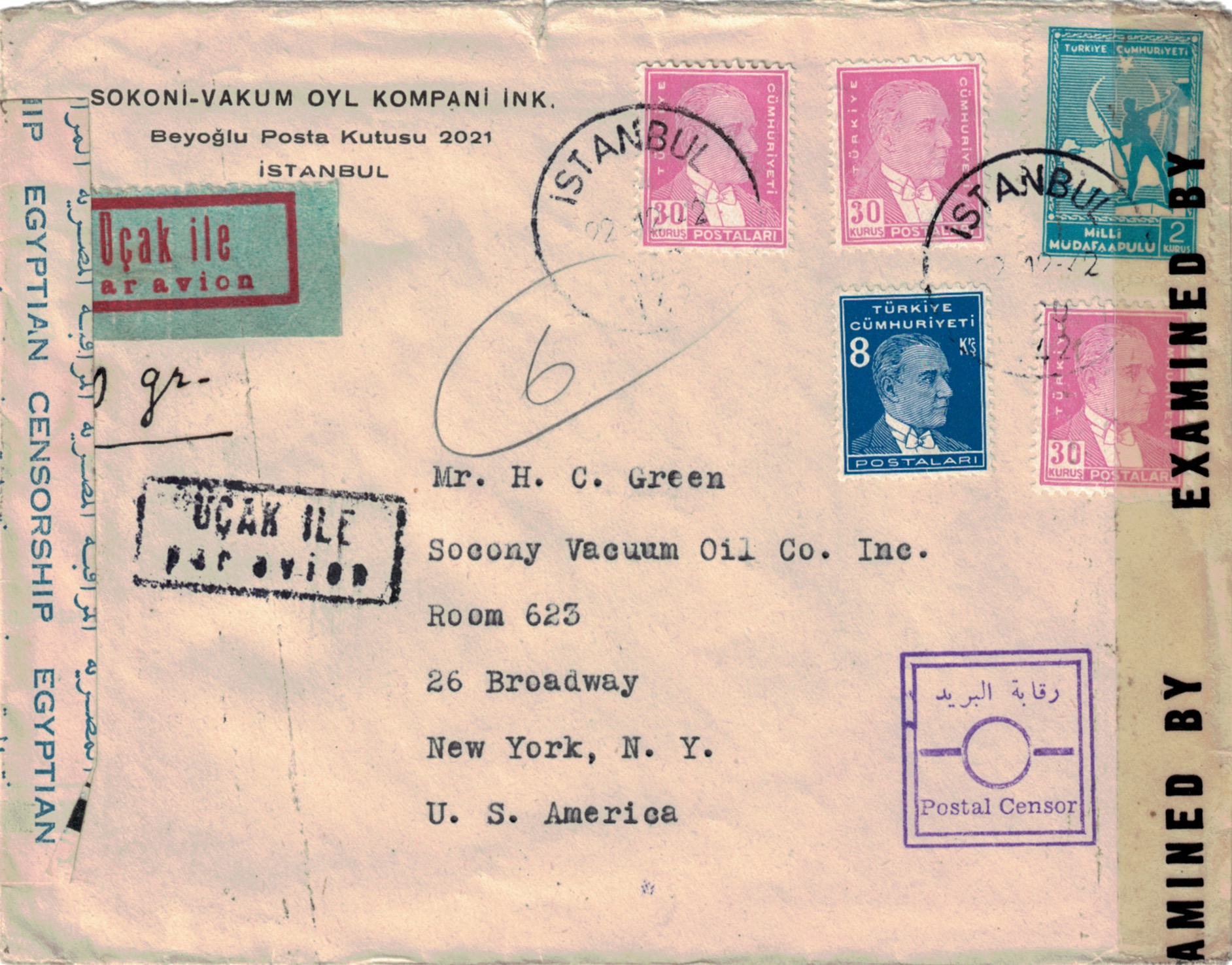 | |
| 55 | On 11 November 1944 changed to Cairo-Nicosia-Adana-Ankara. | 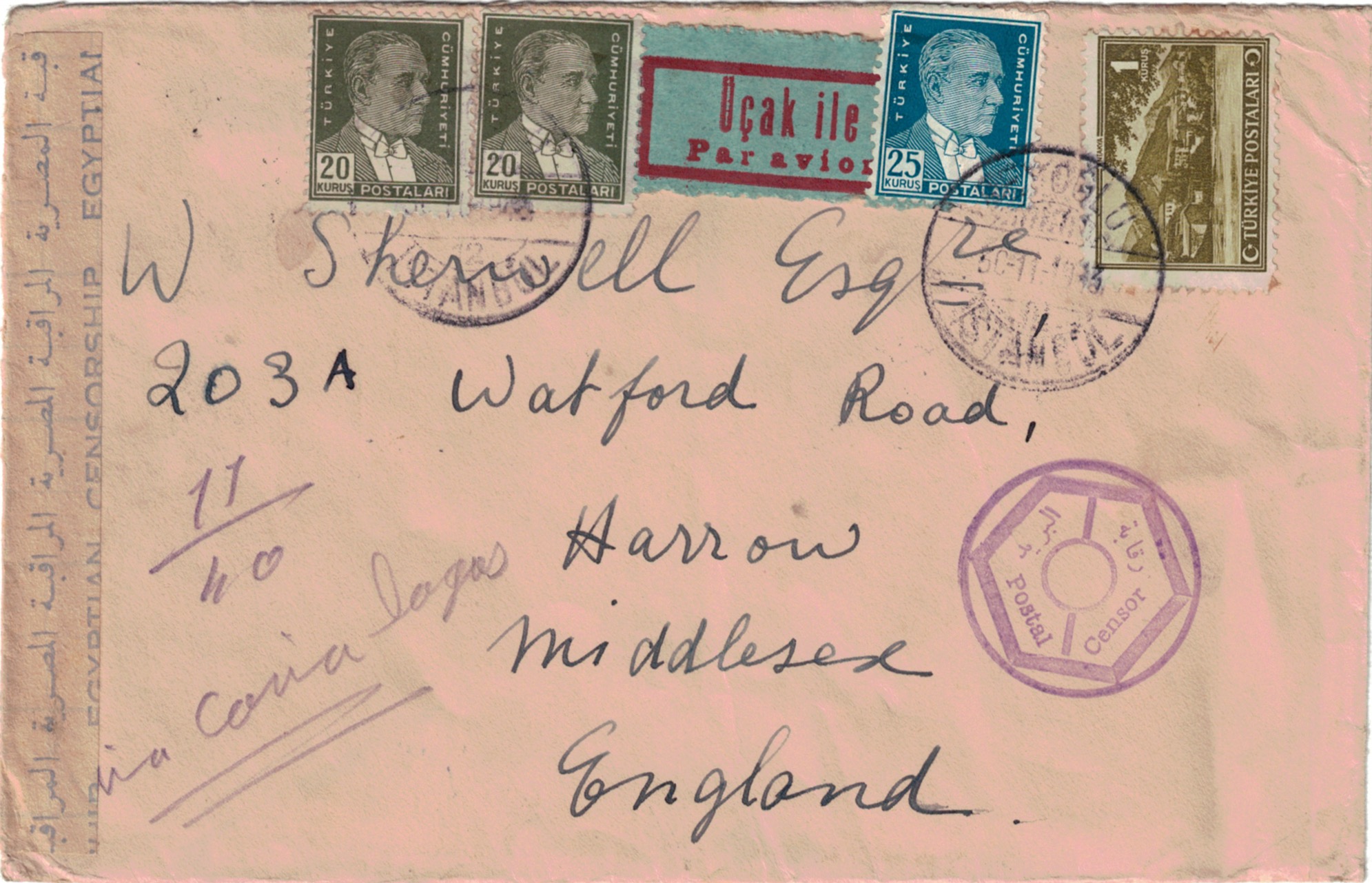 | |
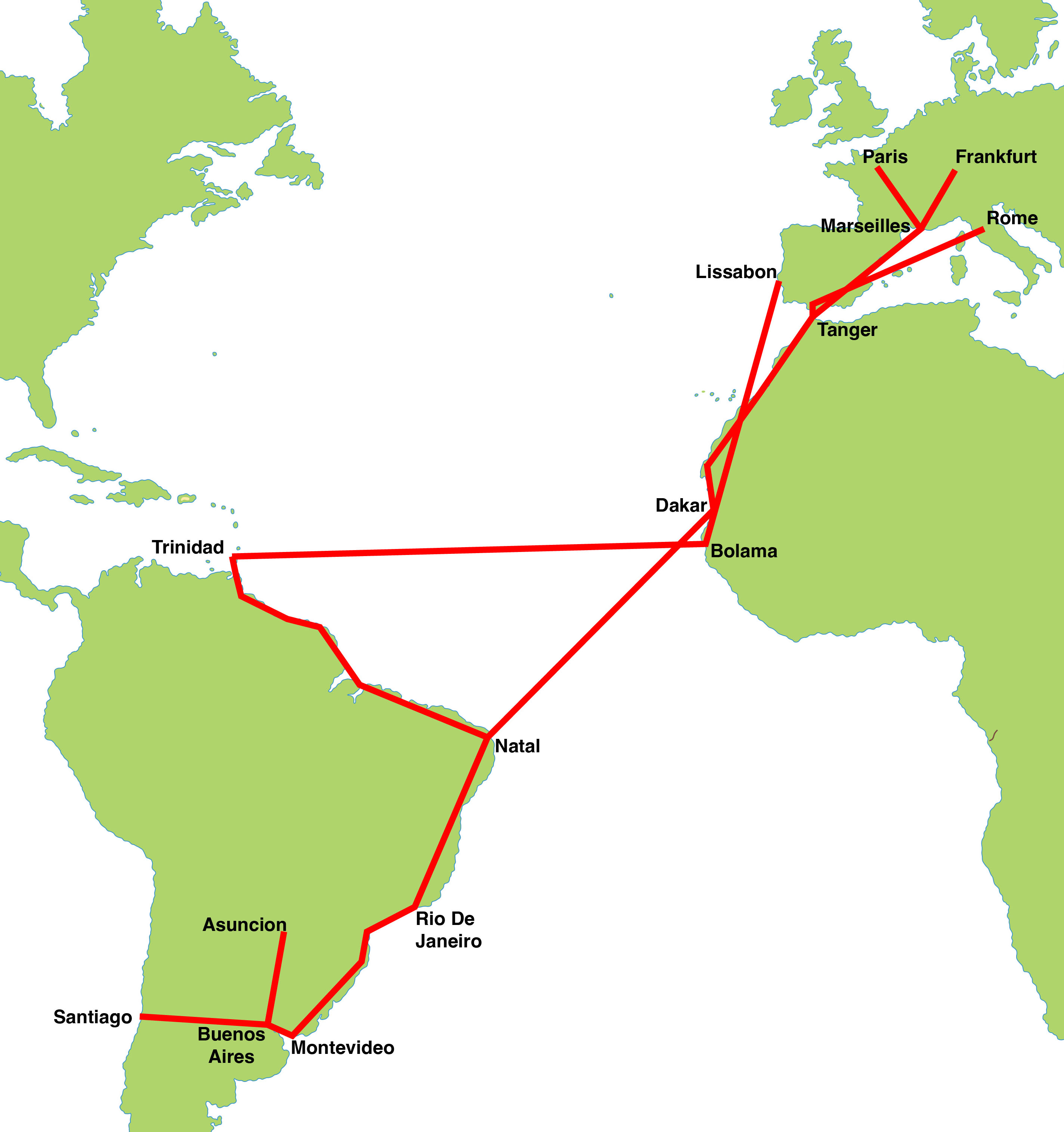
| 56 | In April 1945 changed to Cairo-Nicosia-Istanbul. | 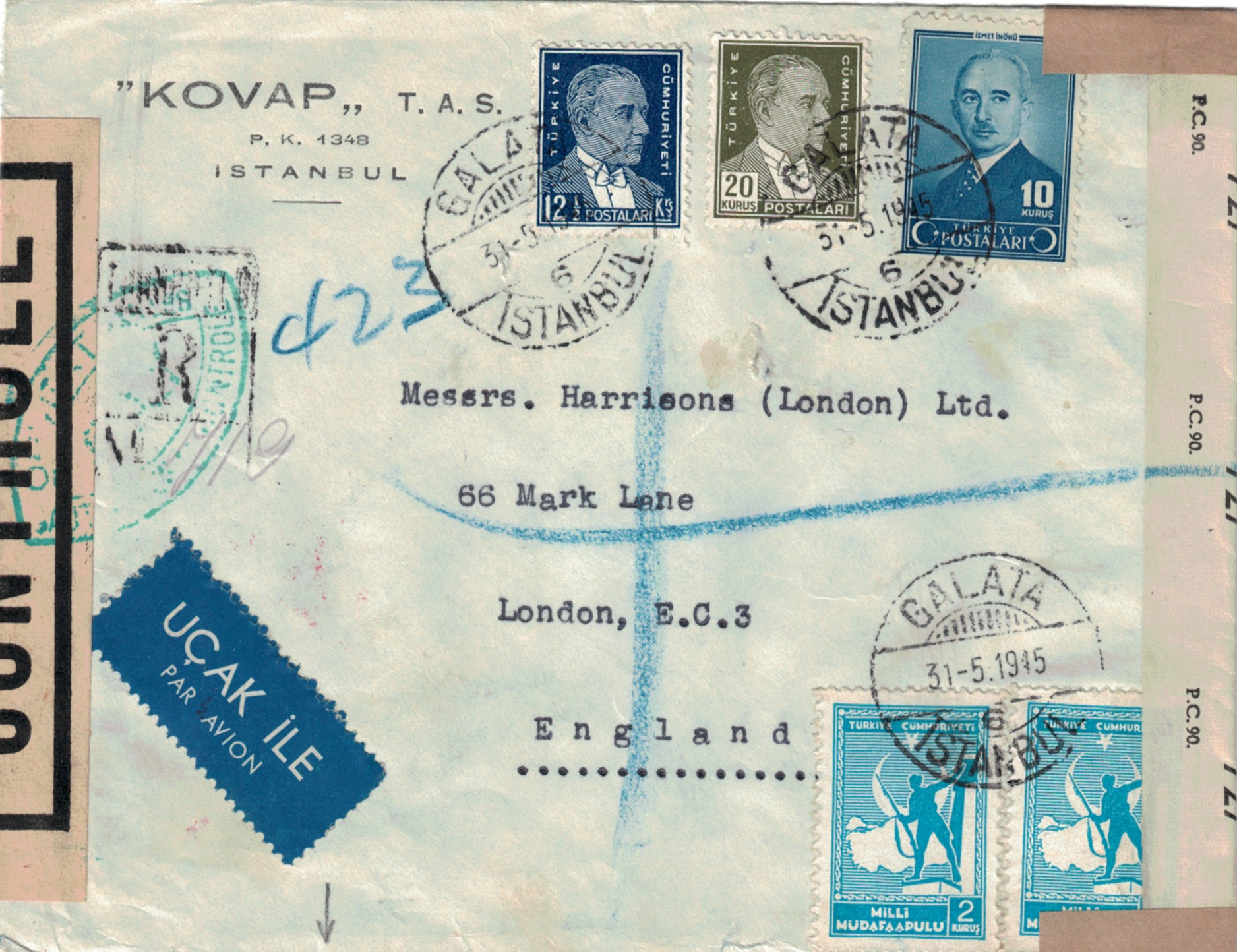 | |
| 57 | In November 1942 the winter schedule was Cairo - Port Said - Lydda, once daily, Cairo - Port Said -Lydda - Beirut, four times weekly and Cairo - Port Said - Lydda - Beirut - Cyprus, once weekly (from twice weekly in the summer from June - November). | 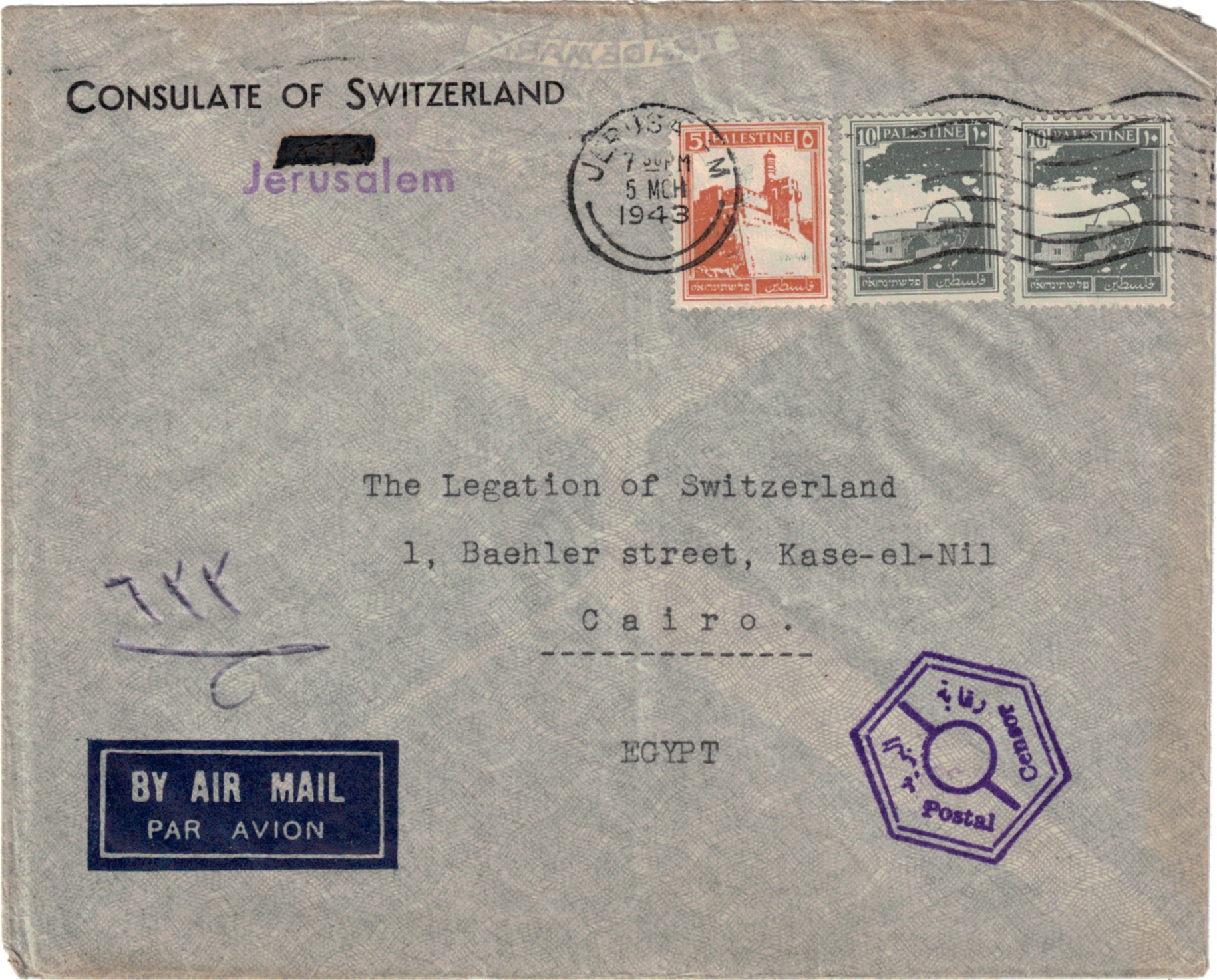 | |
| 58 | On 29 June 1944 the Free French subsidized Ligne Aérienne Militaire began service with three trips between Damascus and Cairo. | 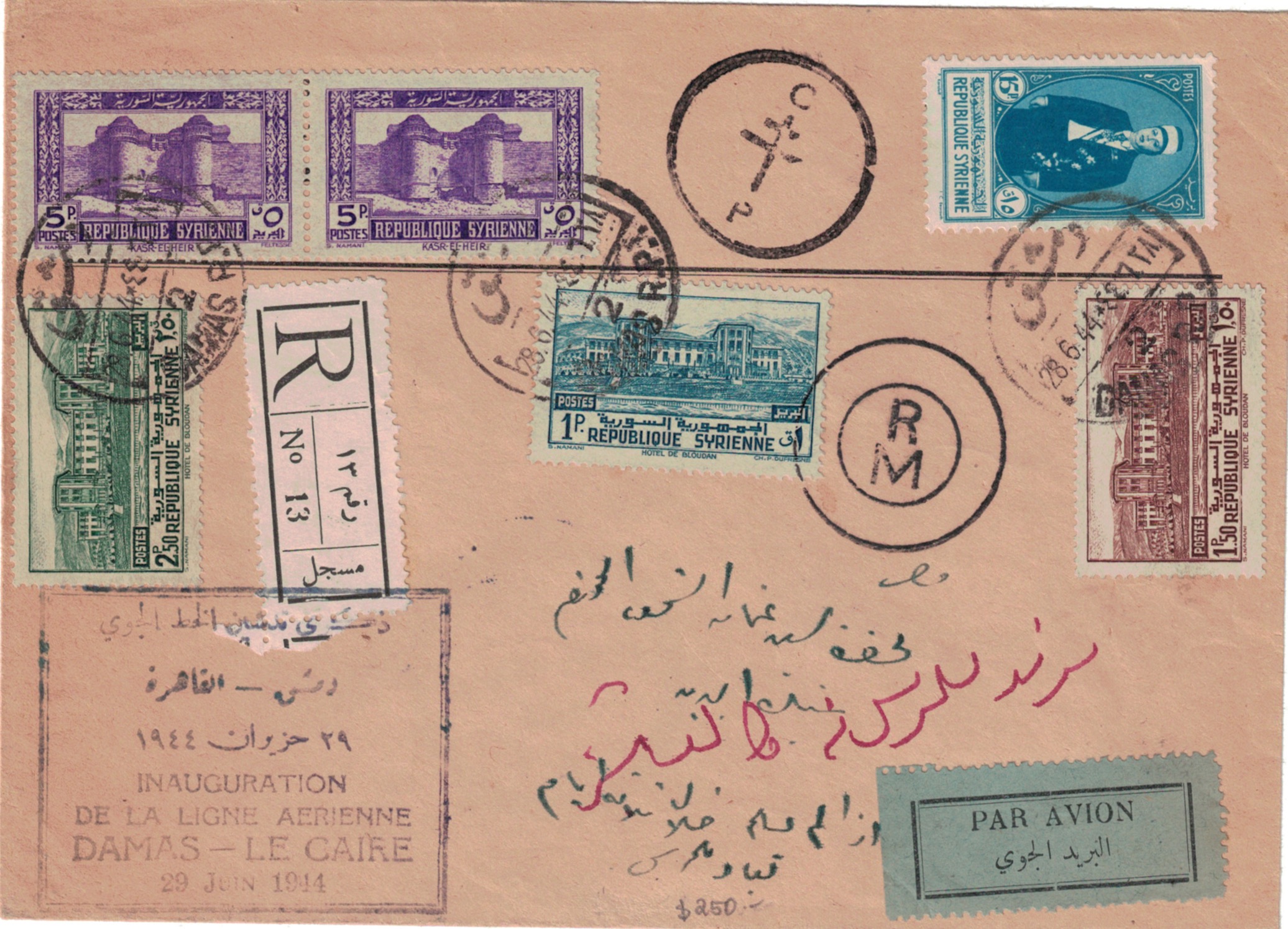 | |
| 59 | From 1 November 1944 Misr operated a twice weekly service between Cairo and Haifa. | 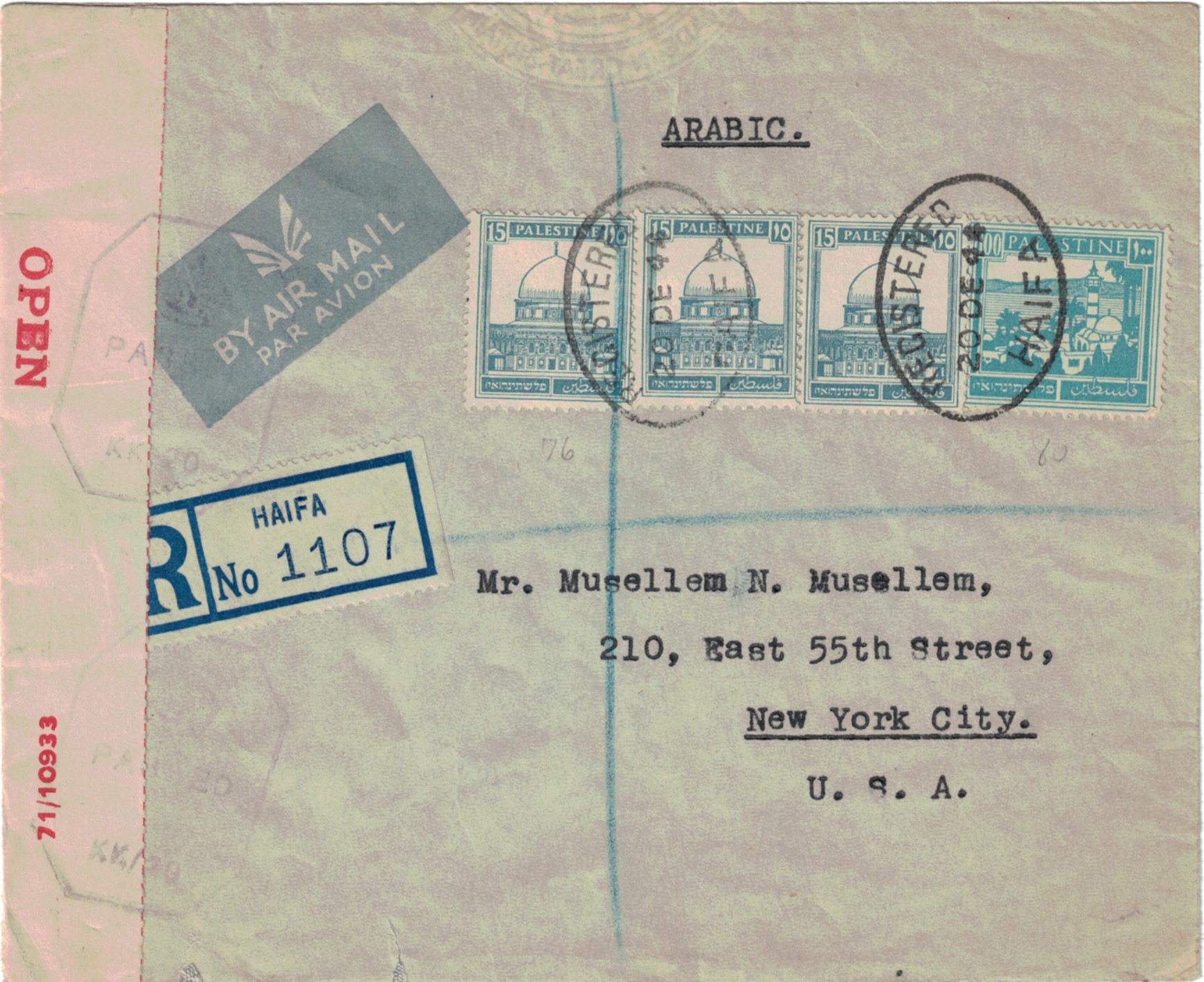 | |
| A.10. Dutch service to Southeast Asia via Africa | |||
| 60 | In 1934 KLM opened route from Amsterdam to Batavia via Athens, Alexandria, Lydda, Baghdad, Karachi, Calcutta, Bangkok and Singapore. Prior to World War II, KLM's Amsterdam-to-Batavia route was very successful because the route was a little faster than those of Air France or BOAC due to the use of more modern equipment. | 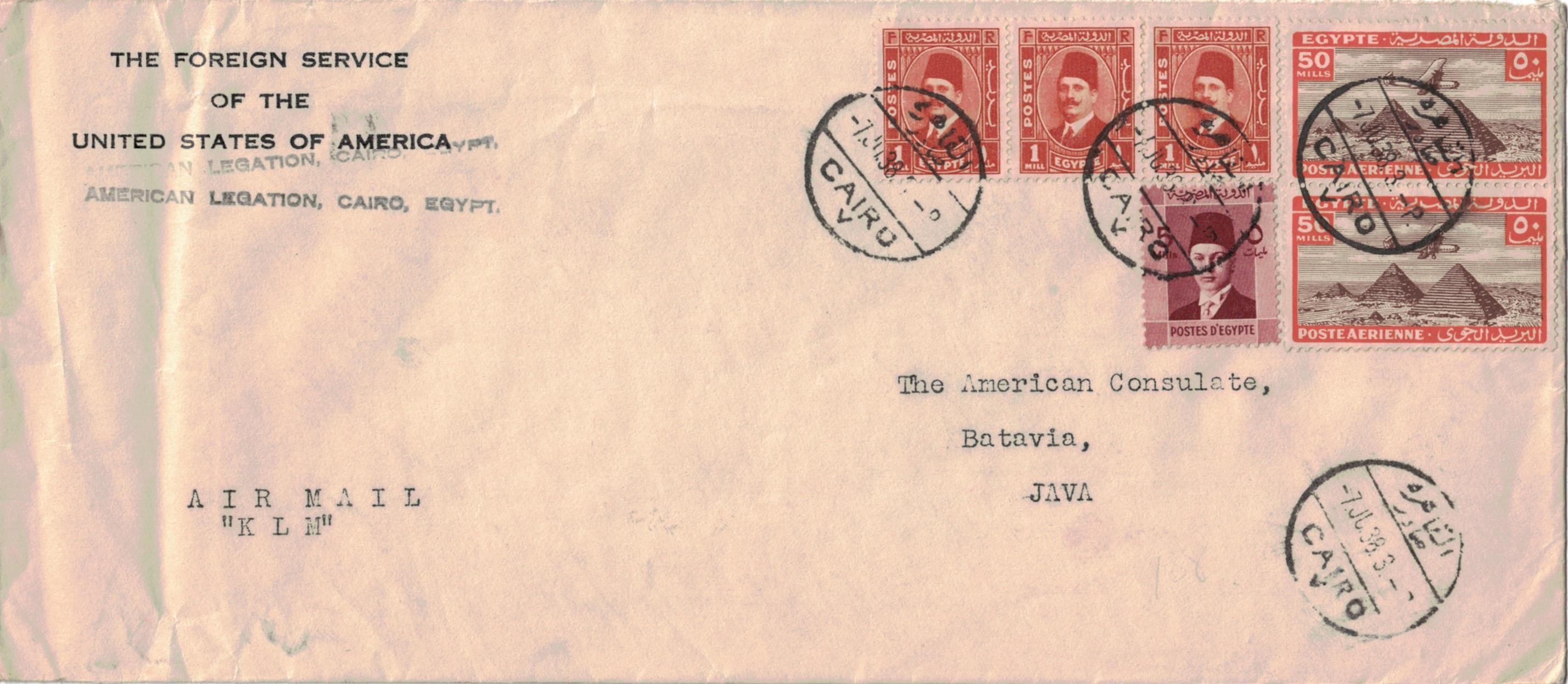 | |
| 61 | On 16 September 1939, the European terminal was transferred to Naples, connecting to Amsterdam by train. | 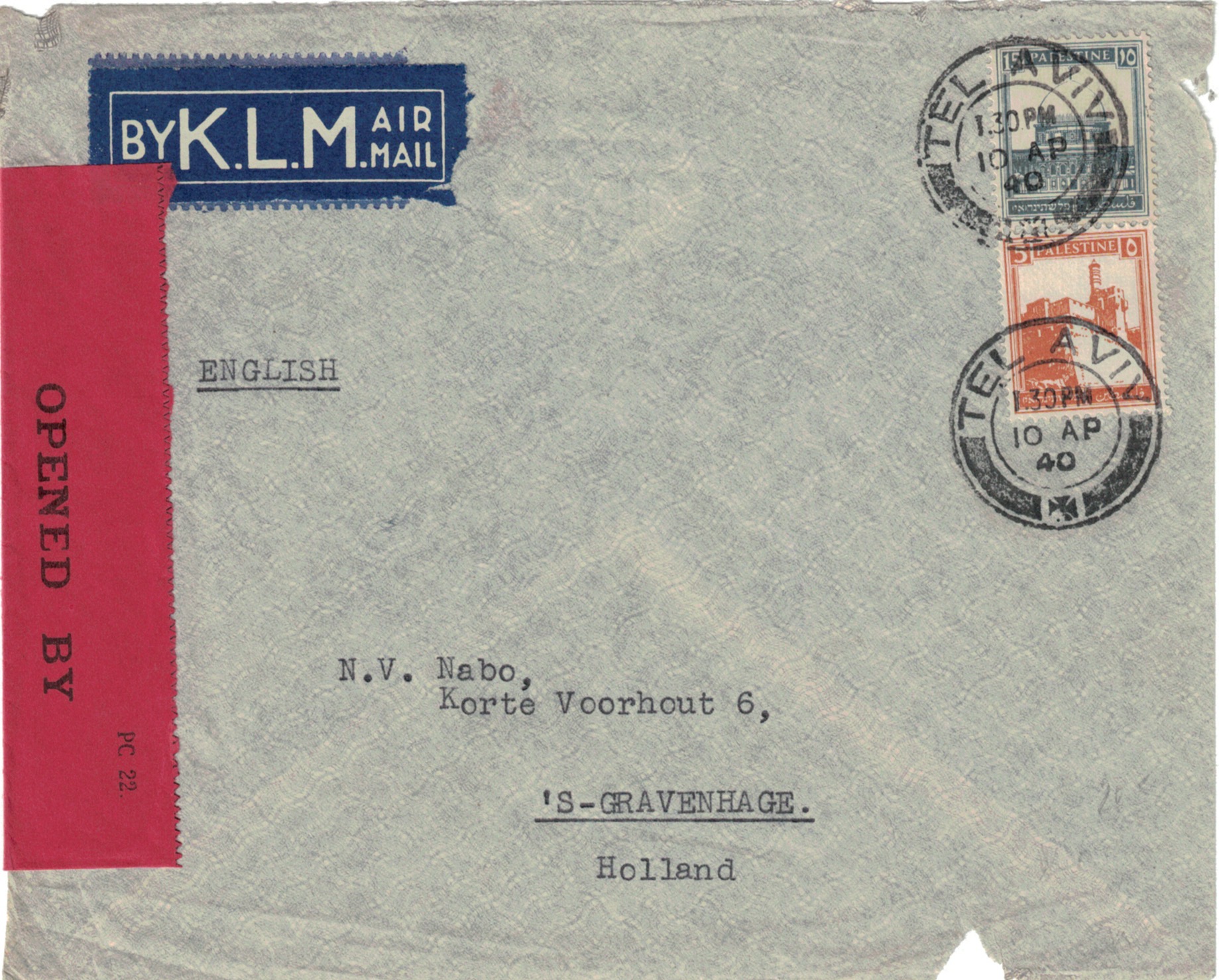 | |
| 62 | When Italy joined the war in June 1940, KIM transferred the western terminal of the Indies route to Lydda, Palestine. | 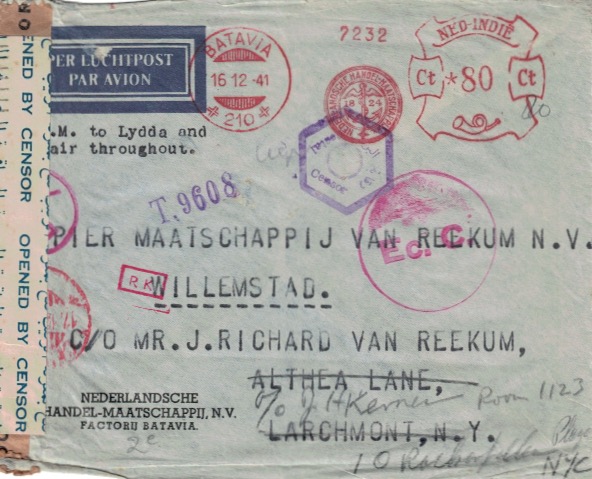 | |
| A.11. Vichy France African Services | |||
| 63 | With the signing of the armistice between France and Germany and Italy in June 1940, the regular air service between France and the overseas territories was severed. | 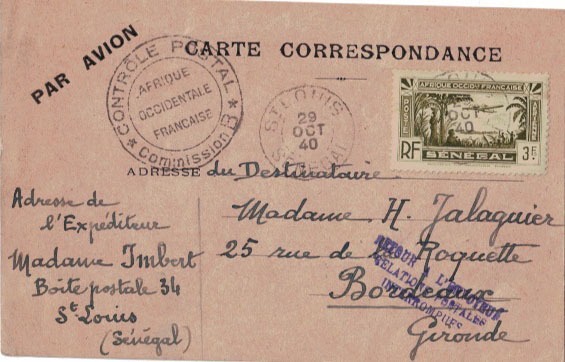 | |
| 64 | The Vichy government established the airline Reseau Aerienne Francaise (R.Ae.F.). The first to resume was between France and Algiers on 21 August 1940. This became the only air route between France and Africa and linked with the other African services. | 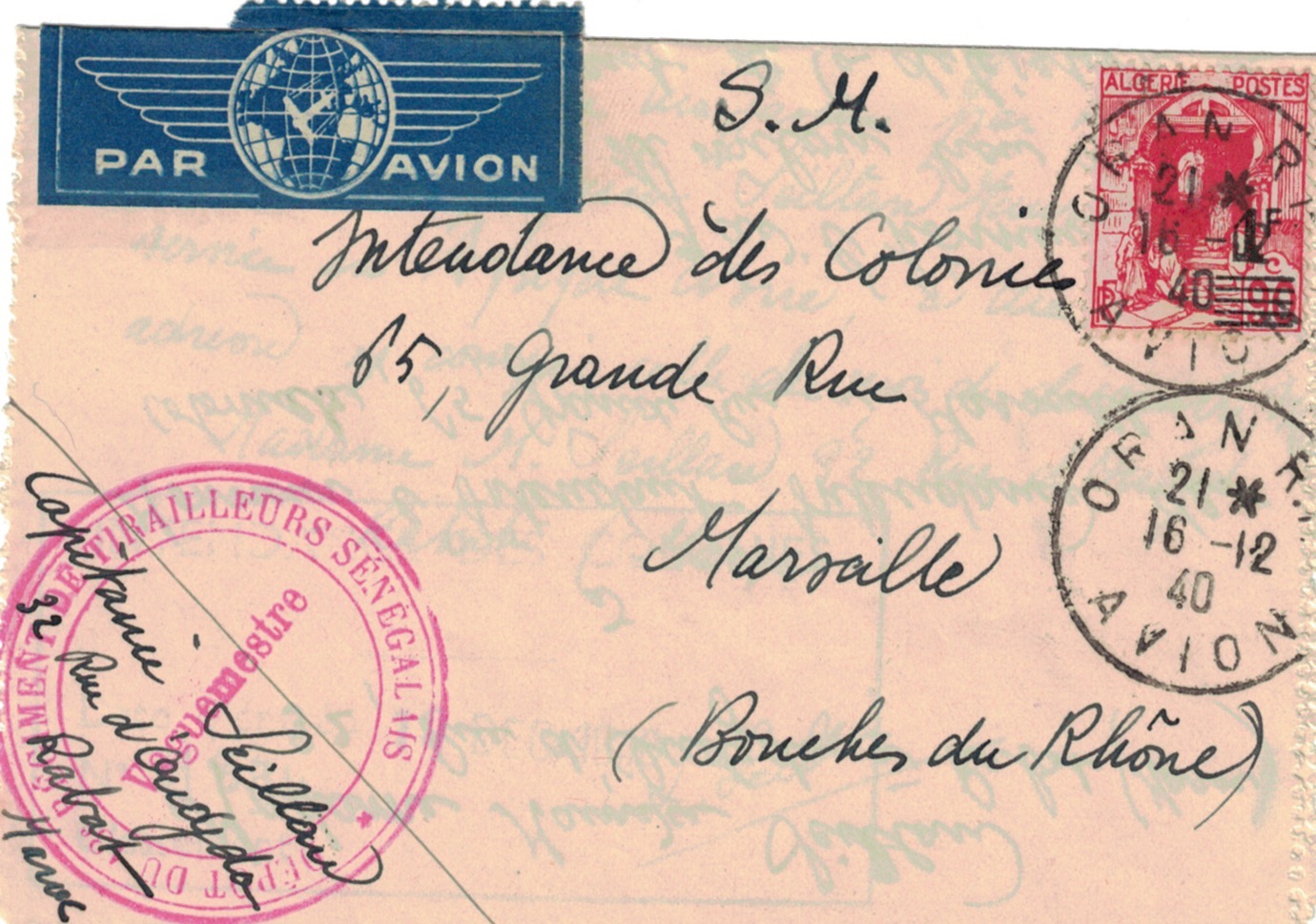 | |
| 65 | Vichy resumed the following services: Tunis - Bone - Algiers - Oran - Casablanca, thrice weekly. | 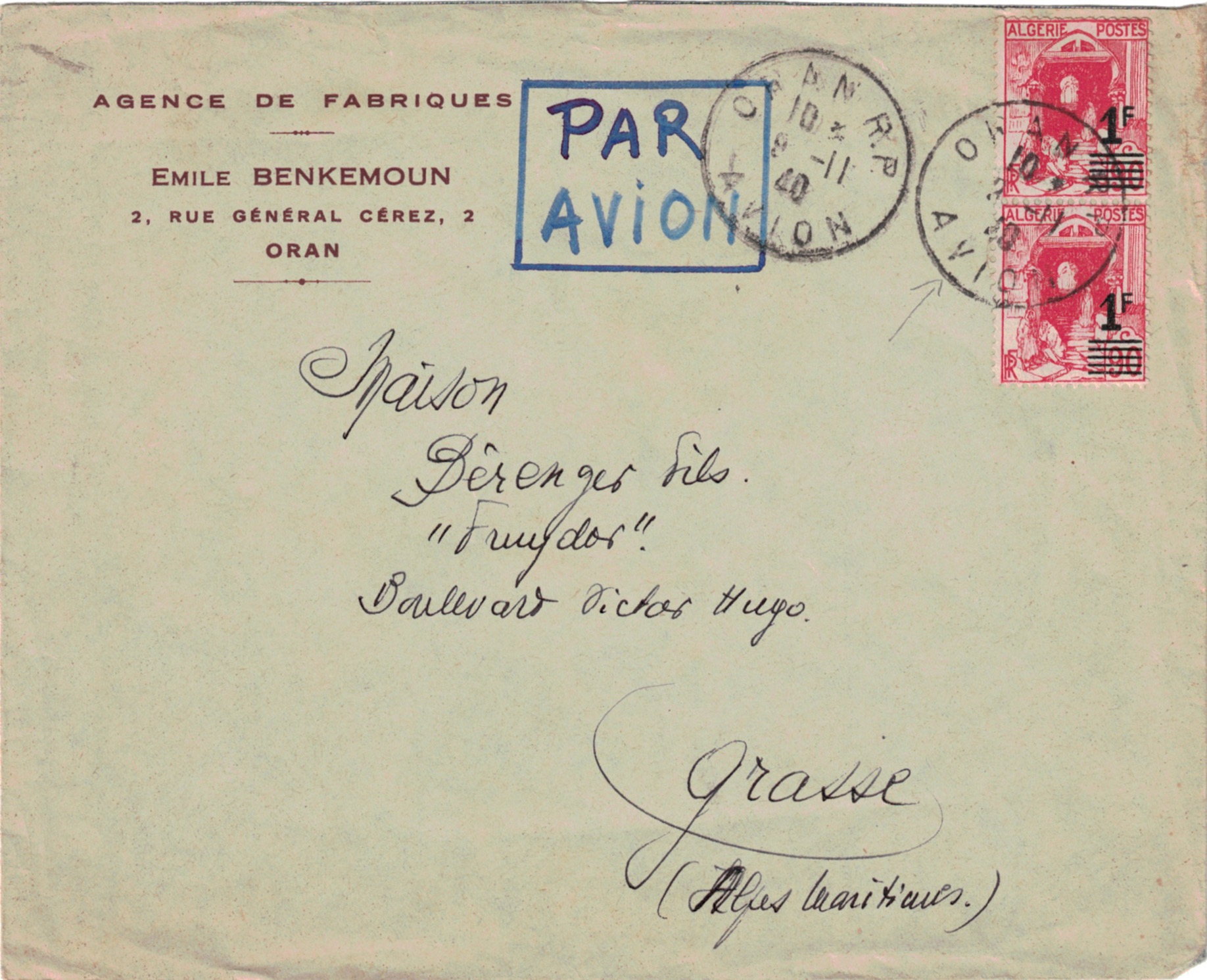 | |
| 66 | Marseilles-Algiers-Dakar, twice weekly. | 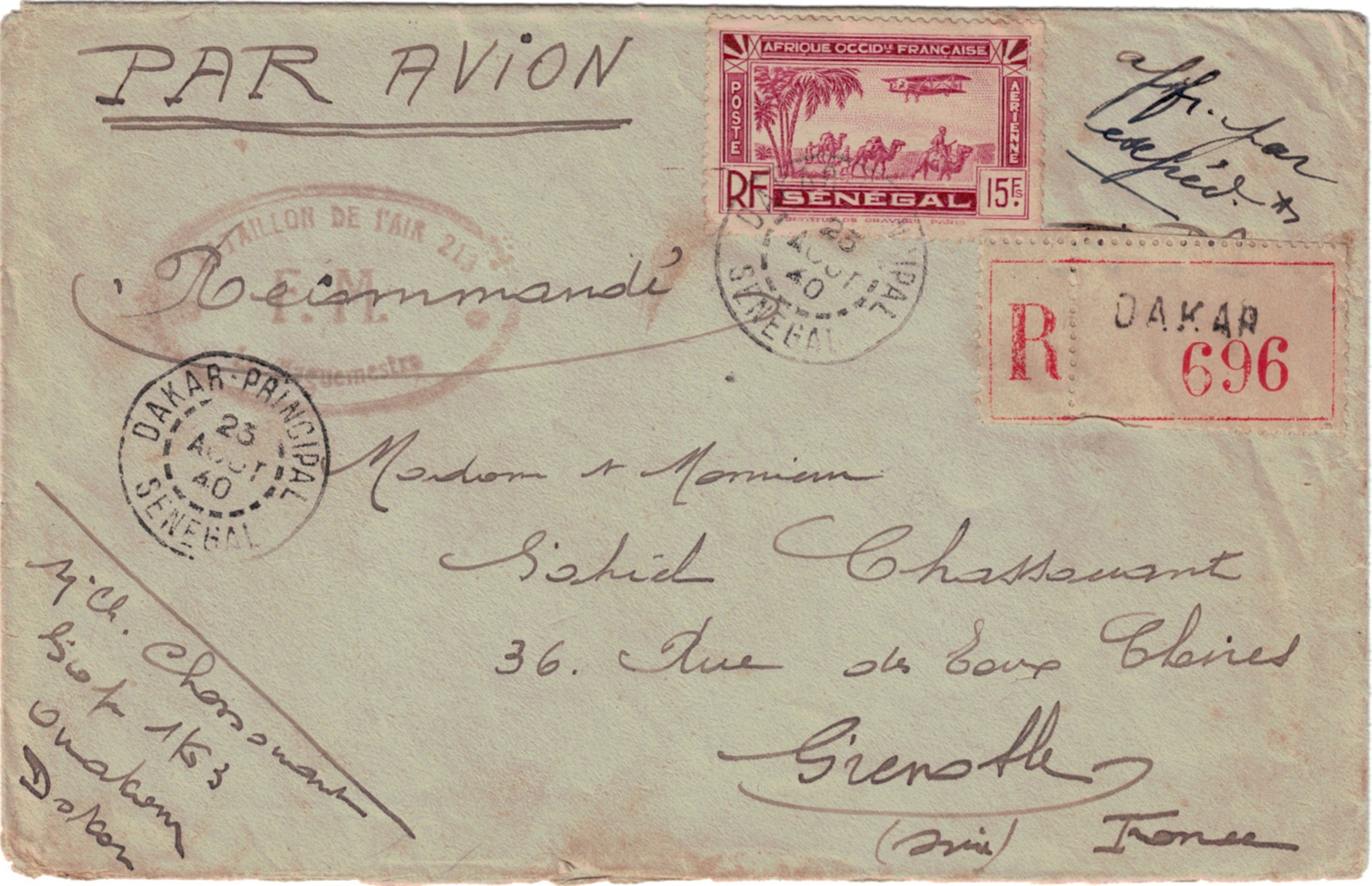 | |
| 67 | Marseilles - Algiers - Gao - Brazzaville, weekly. | 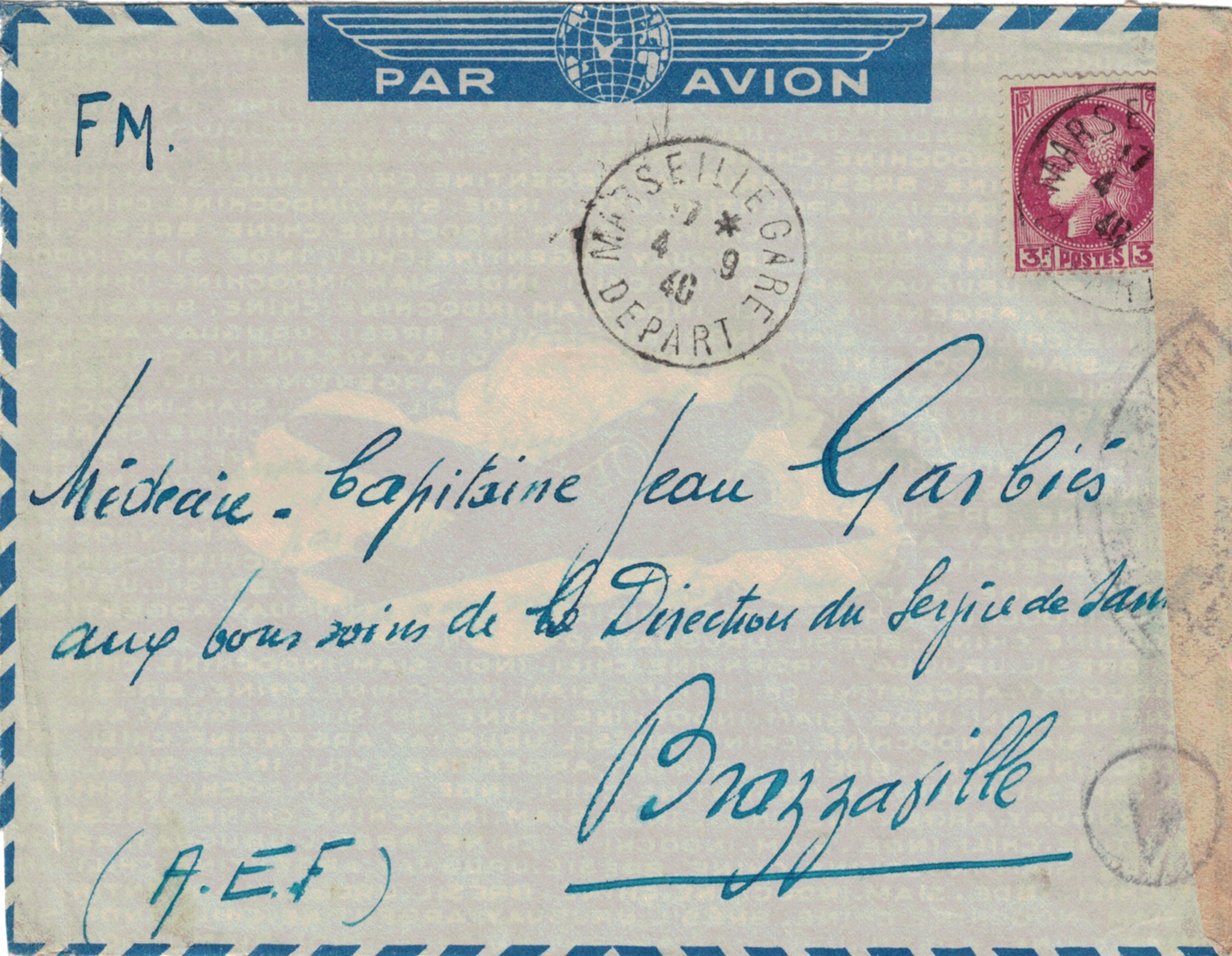 | |
| 68 | In May 1942 all North African air services were reduced owing to lack of fuel. | 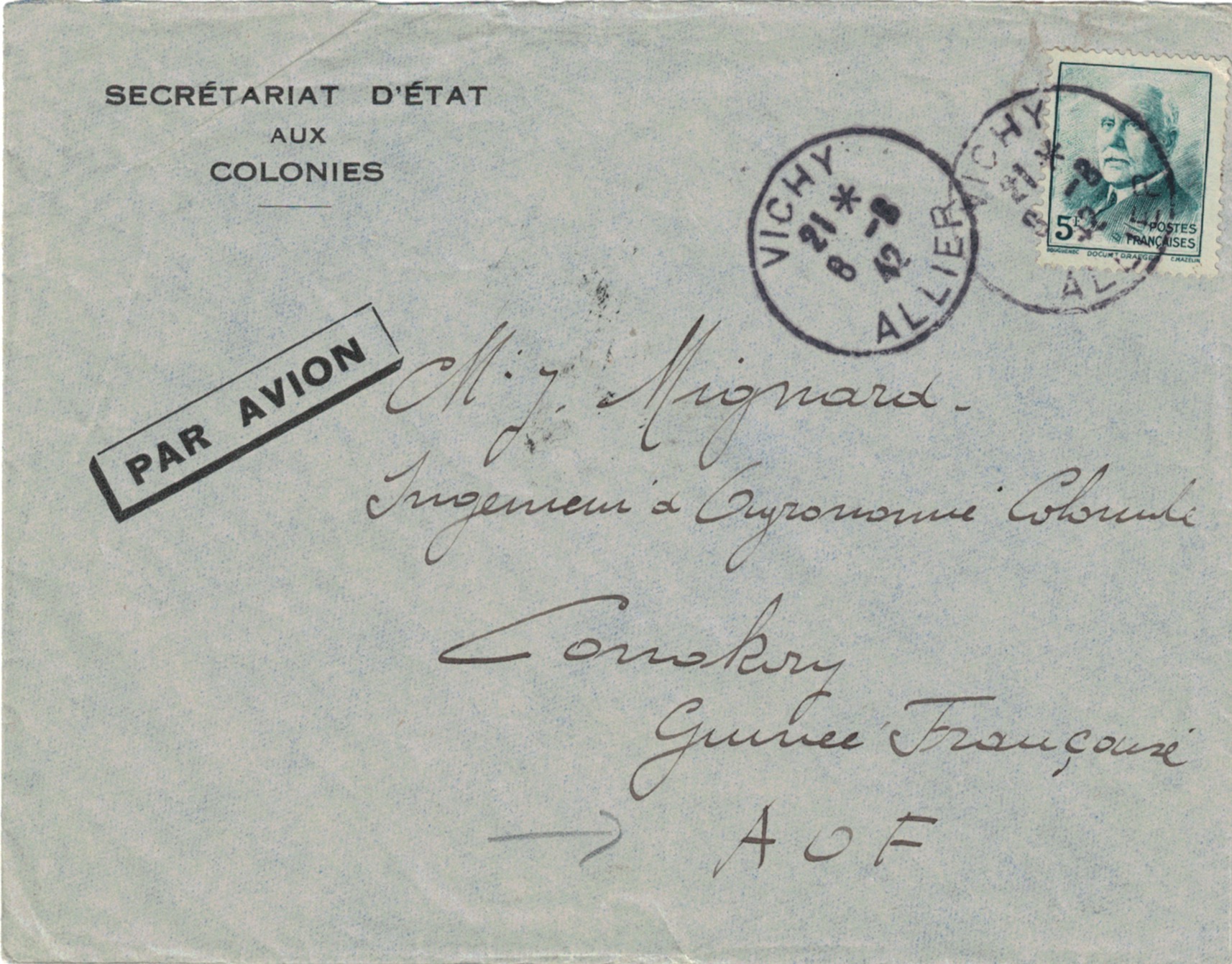 | |
| 69 | All Vichy African air services were stopped on 8 November 1942 due to Allied invasion of Morocco and Algeria. | 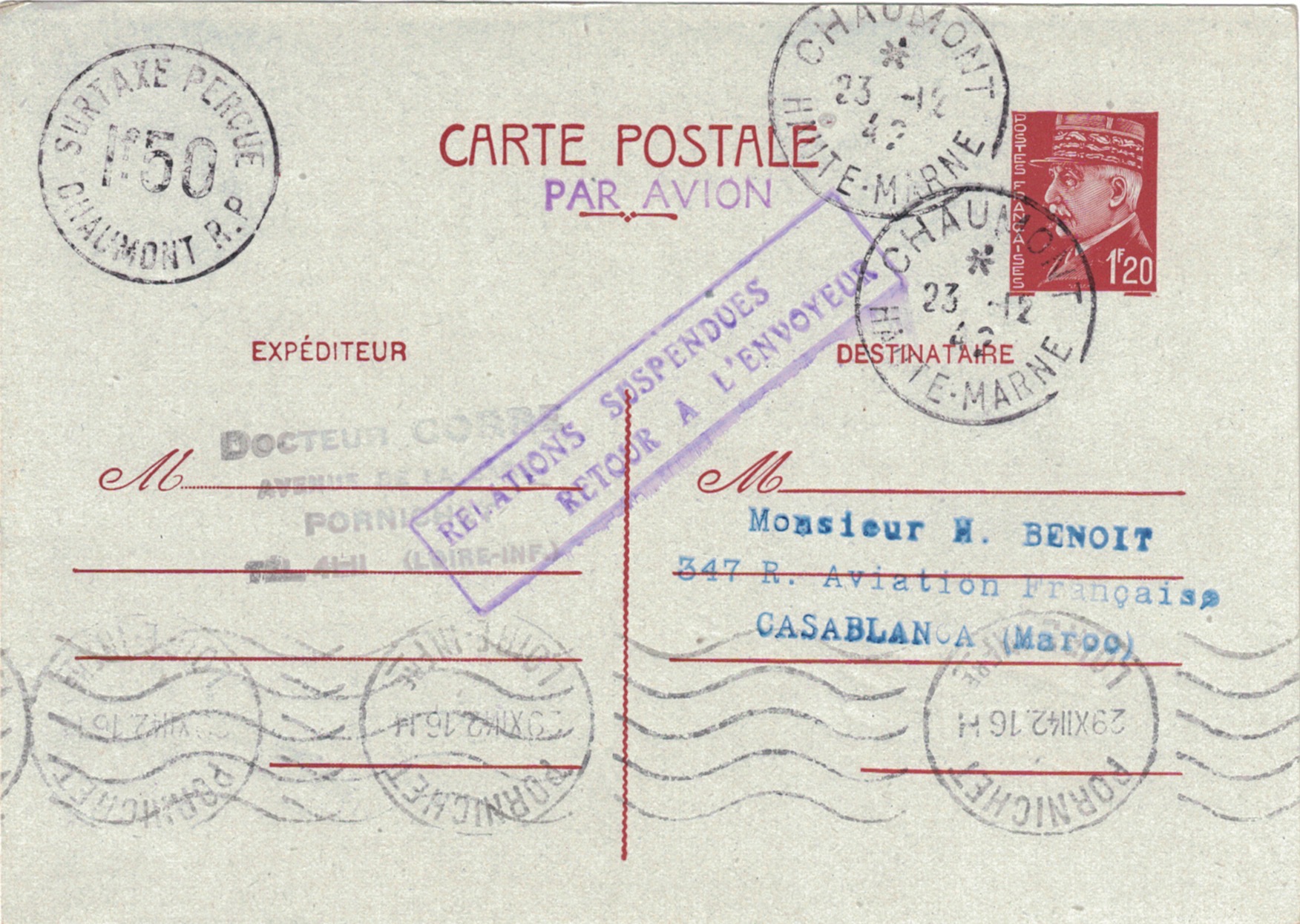 | |
| 70 | Djibouti and Somali Coast never had air mail service by a French airline during the pre-war period. Between 7 November 1940 and November 1942, there were 16 flights between France and Djibouti primarily to transport air mail, medicine, and urgently needed supplies. Principal routes were 1) Marseilles; Bizerte, Tunis; Tripoli; Syria; Djibouti nad 2) - Marseilles; Athens, Greece; Djibouti. | 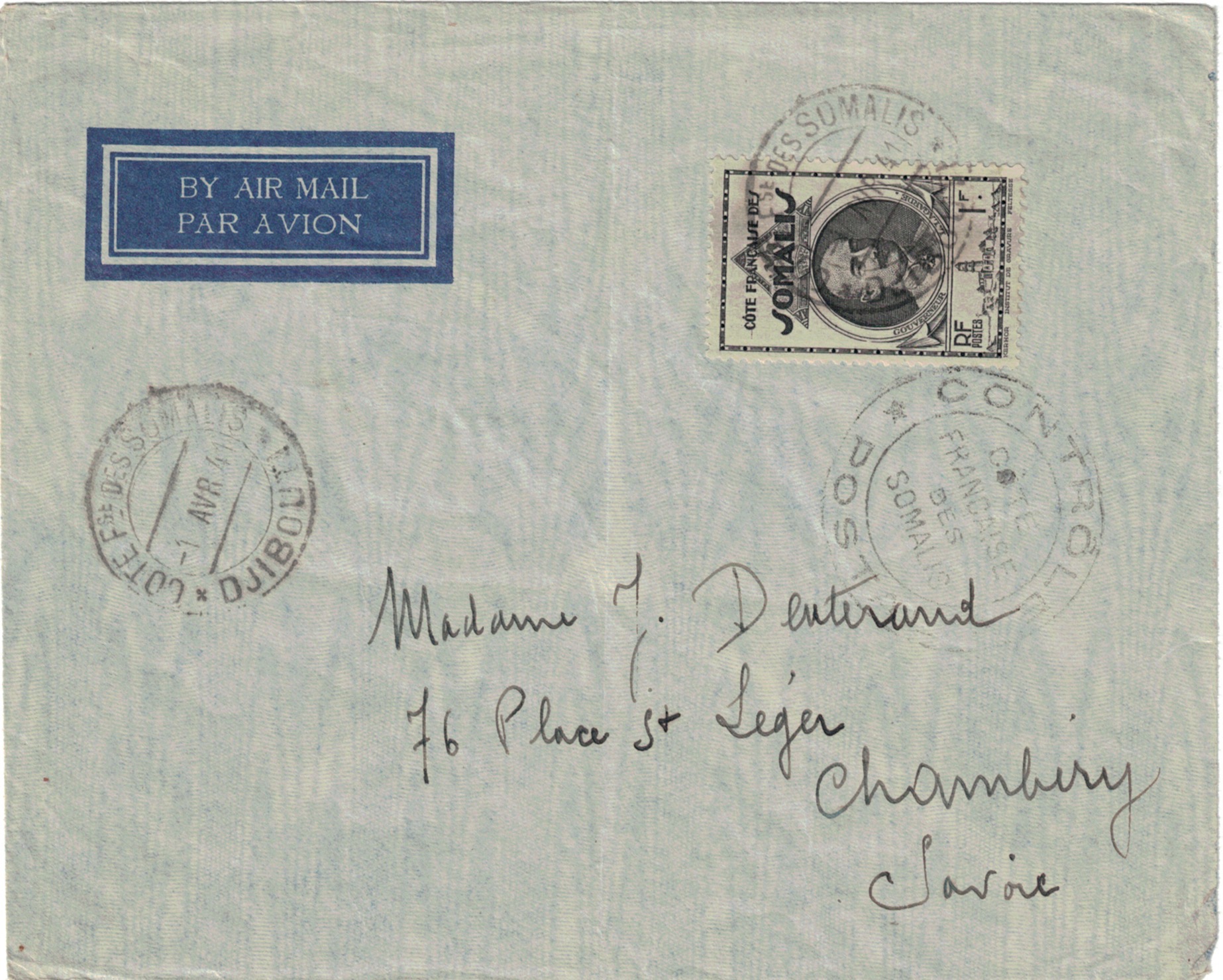 | |
B. BETWEEN EURASIA AND SOUTH AMERICA | |||
 | |||
| B.1. Lufthansa South Atlantic Service | |||
| 71 | Although the first crossing by the Zeppelin was made between 29.10. and 1.11.1918, this was across the North Atlantic, it did not cross the South Atlantic until 1930 when it carried mail to Pernambuco and Rio de Janeiro on a flight starting from Germany on 18 May. | 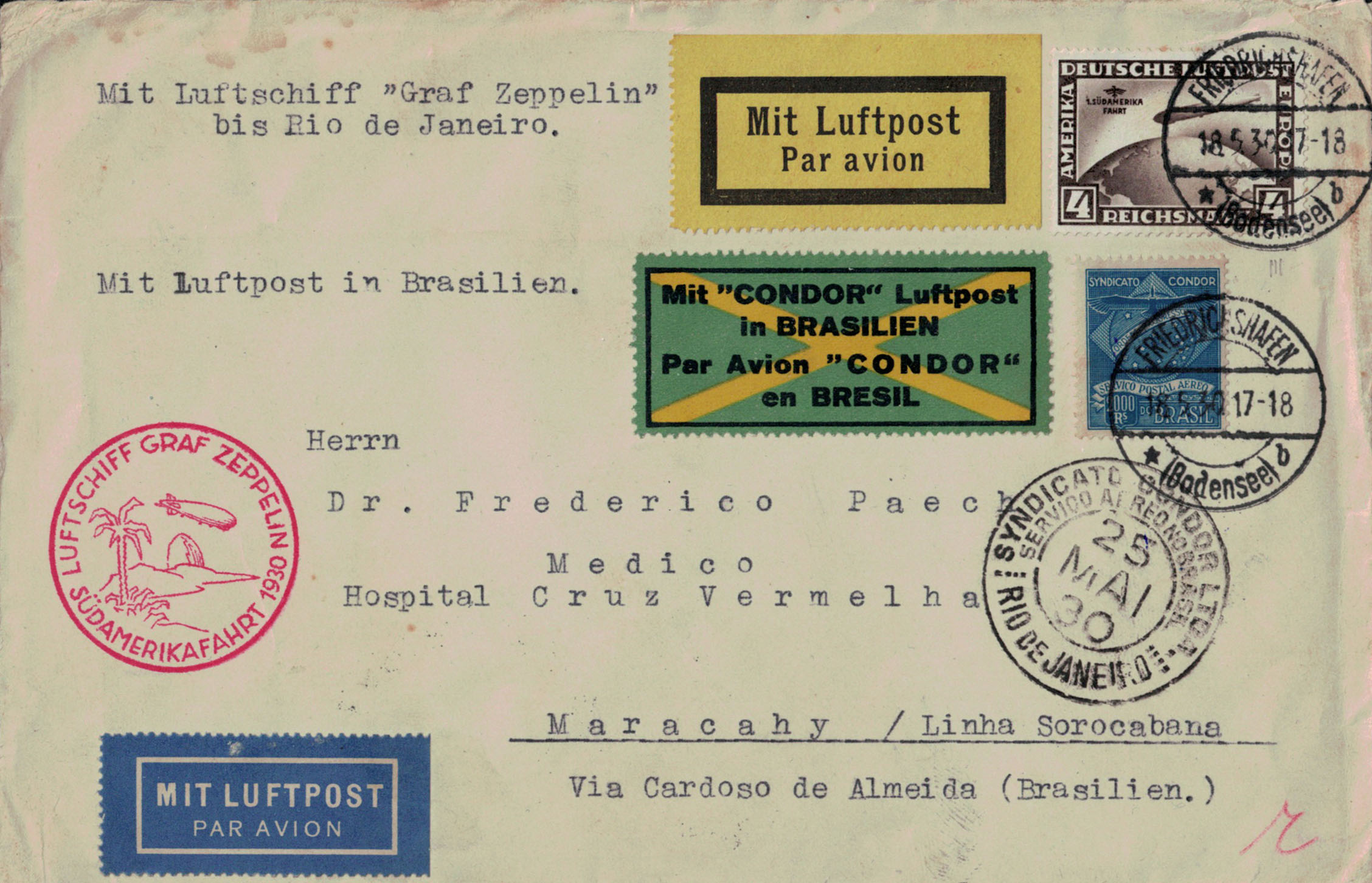 | |
| 72 | The Germans had used a Flying Boat (Dornier Wal) of Syndicato Condor as an experiment to speed up the European mail from South America by flying it from the Brazilian mainland to a rendezvous off Fernando Island. | 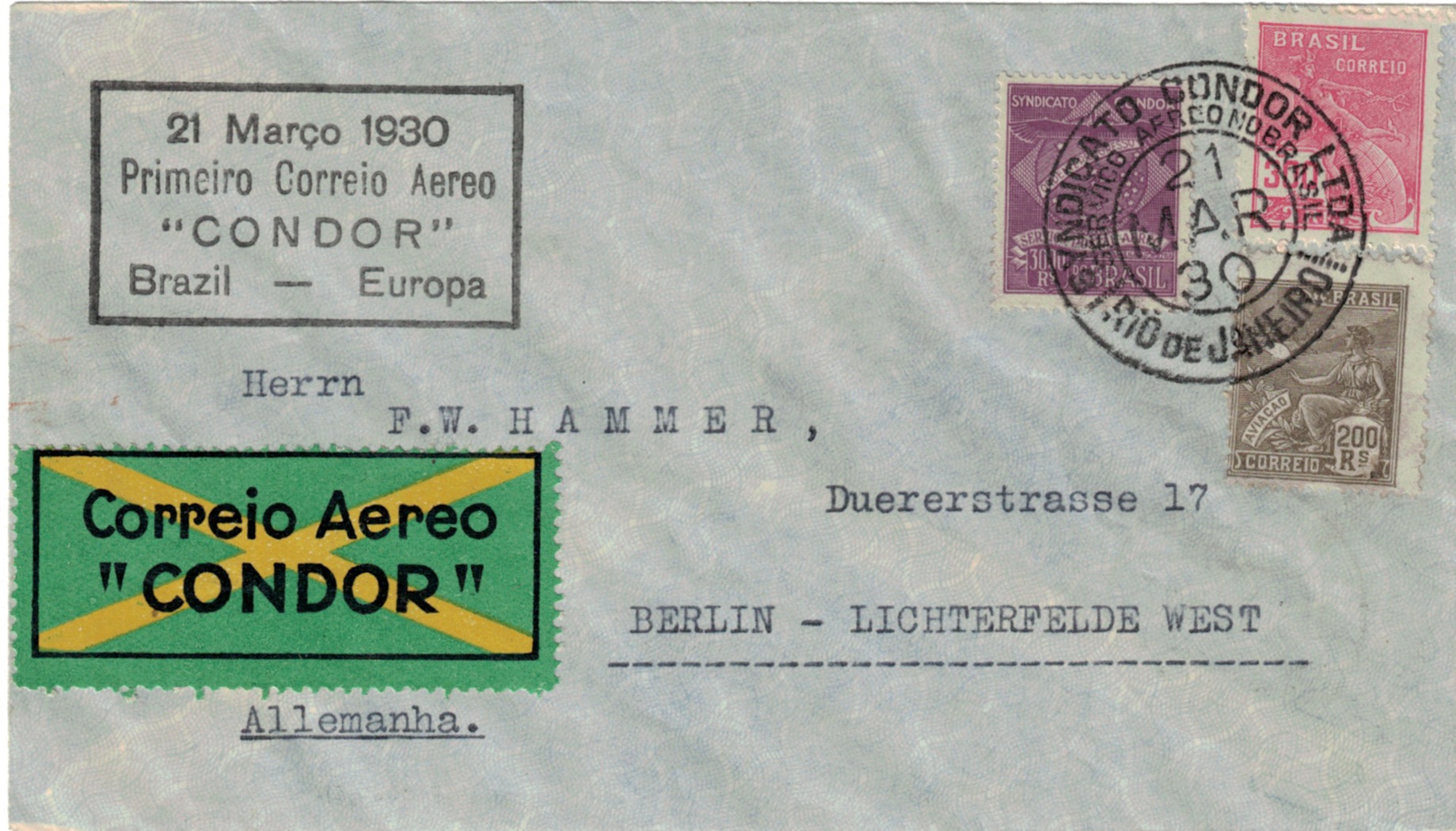 | |
| 73 | In 1932 the Germans started a regular service to South America with the Graf Zeppelin, which flew to Brazil always landing at Recife, where the German airline Syndicato Condor took over then mail for other South American countries. | 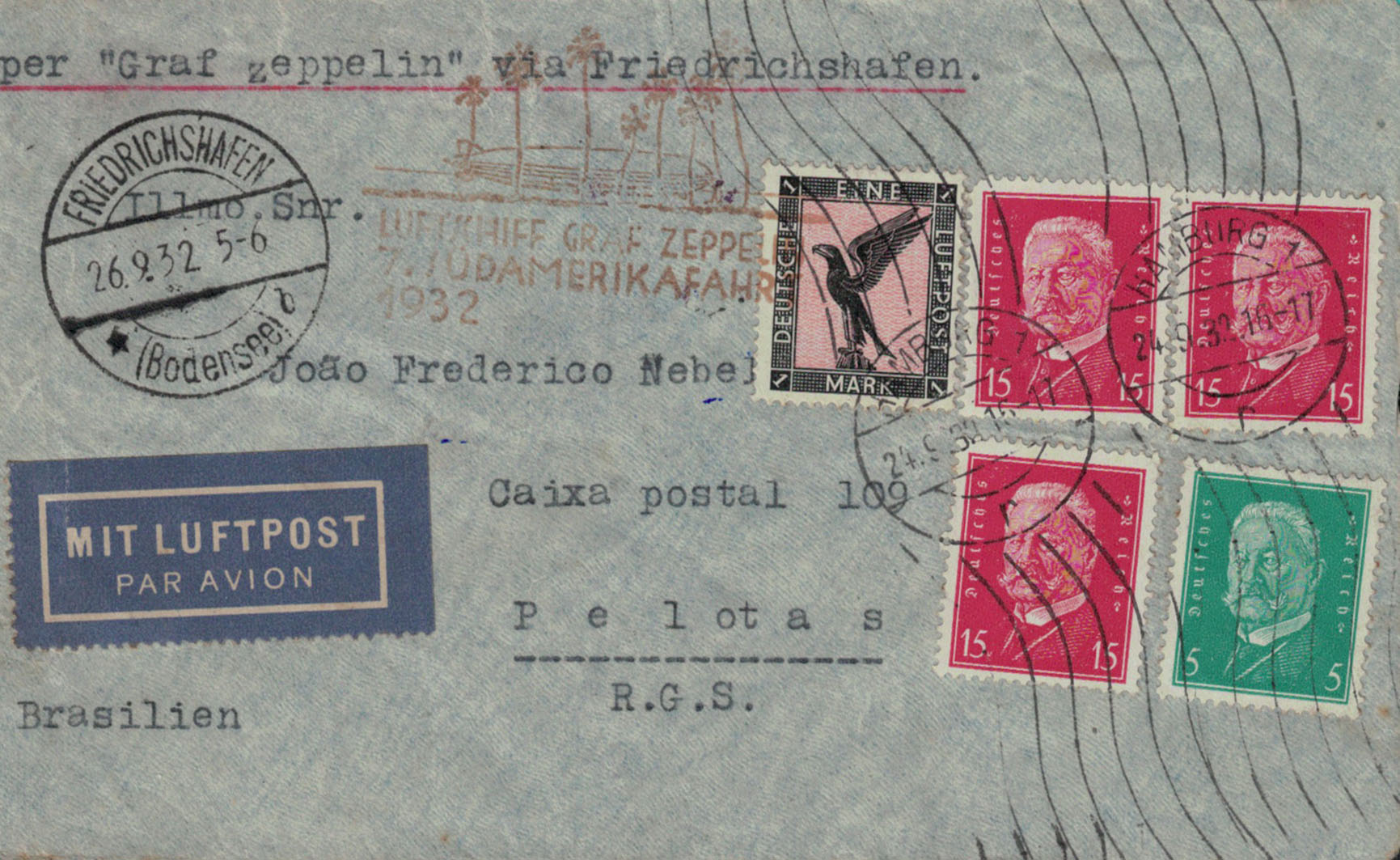 | |
| 74 | British acceptance for this service only began on 4 April 1934. | 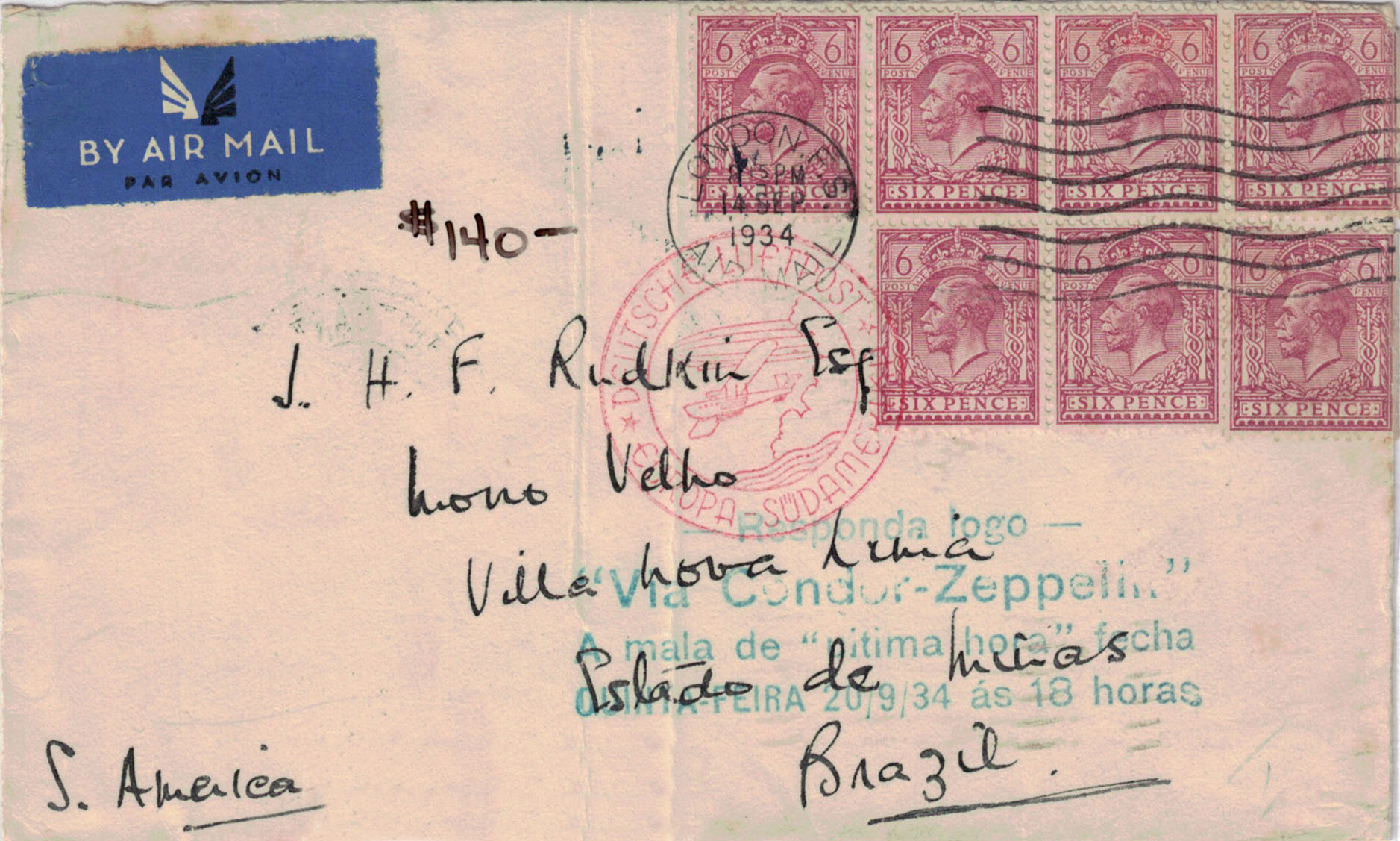 | |
| 75 | The flights by Syndicato Condor connected 1) Recife to Rio de Janeiro, which also connected with flights calling at Maceio, Penedo, Aracaju, Bahia, Lheos, Belmonte, Caravallas and Victoria; | 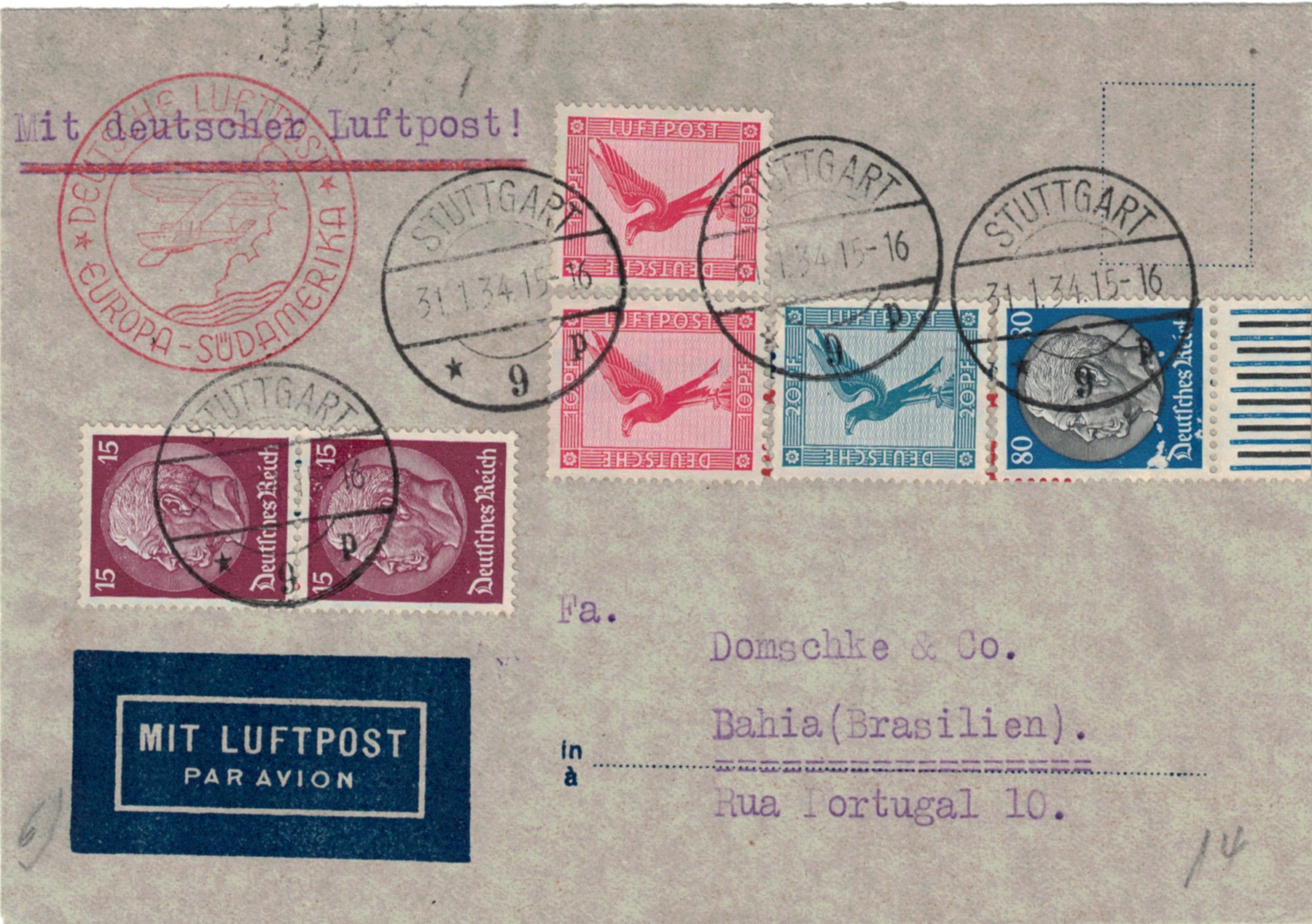 | |
| 76 | 2) Rio de Janeiro to Buenos Aires via Santos Porto Allegre, Rio Grande and Montevideo with flights connecting with Paraguay, San Francisco and Florianopolis. | 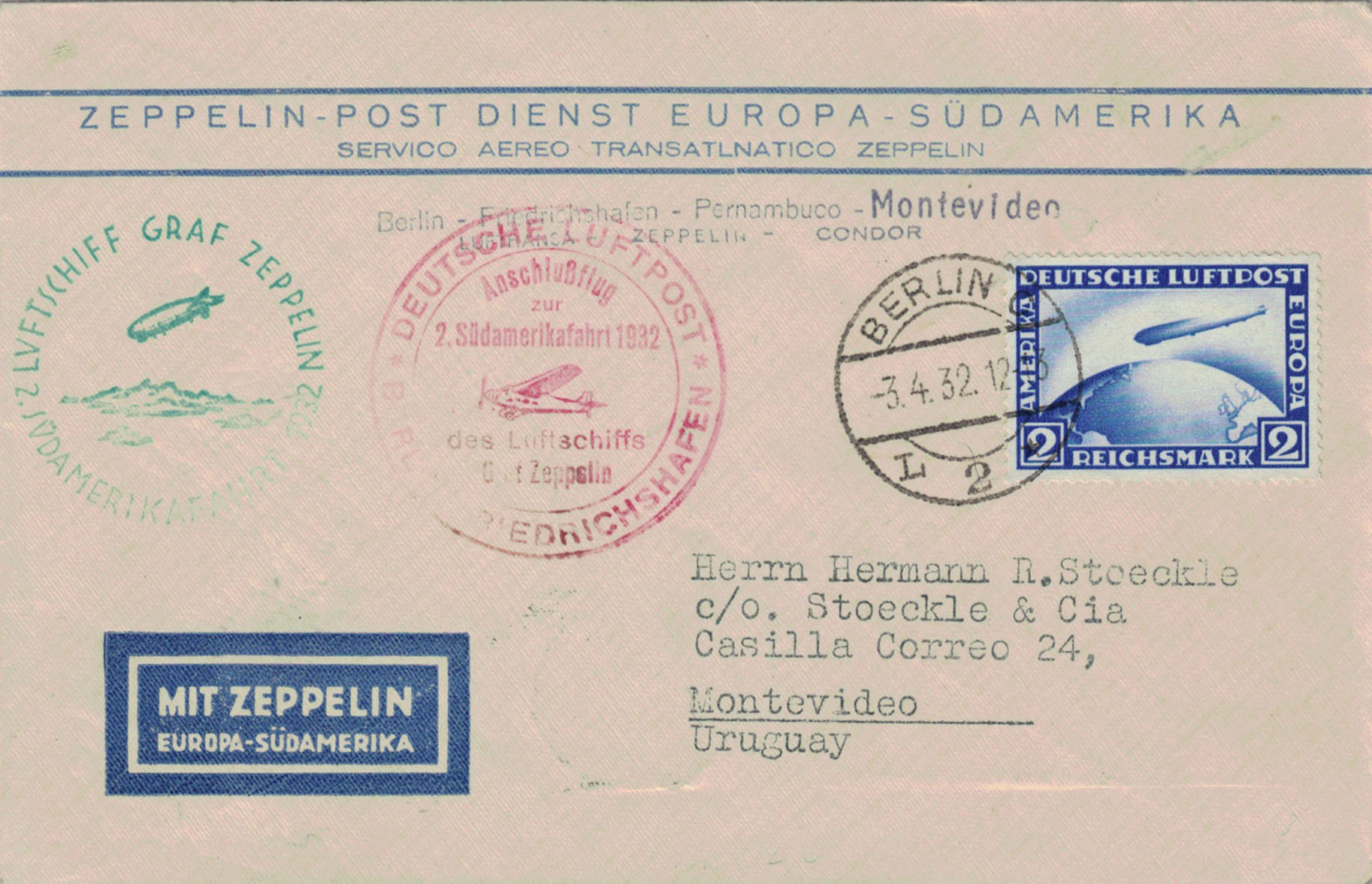 | |
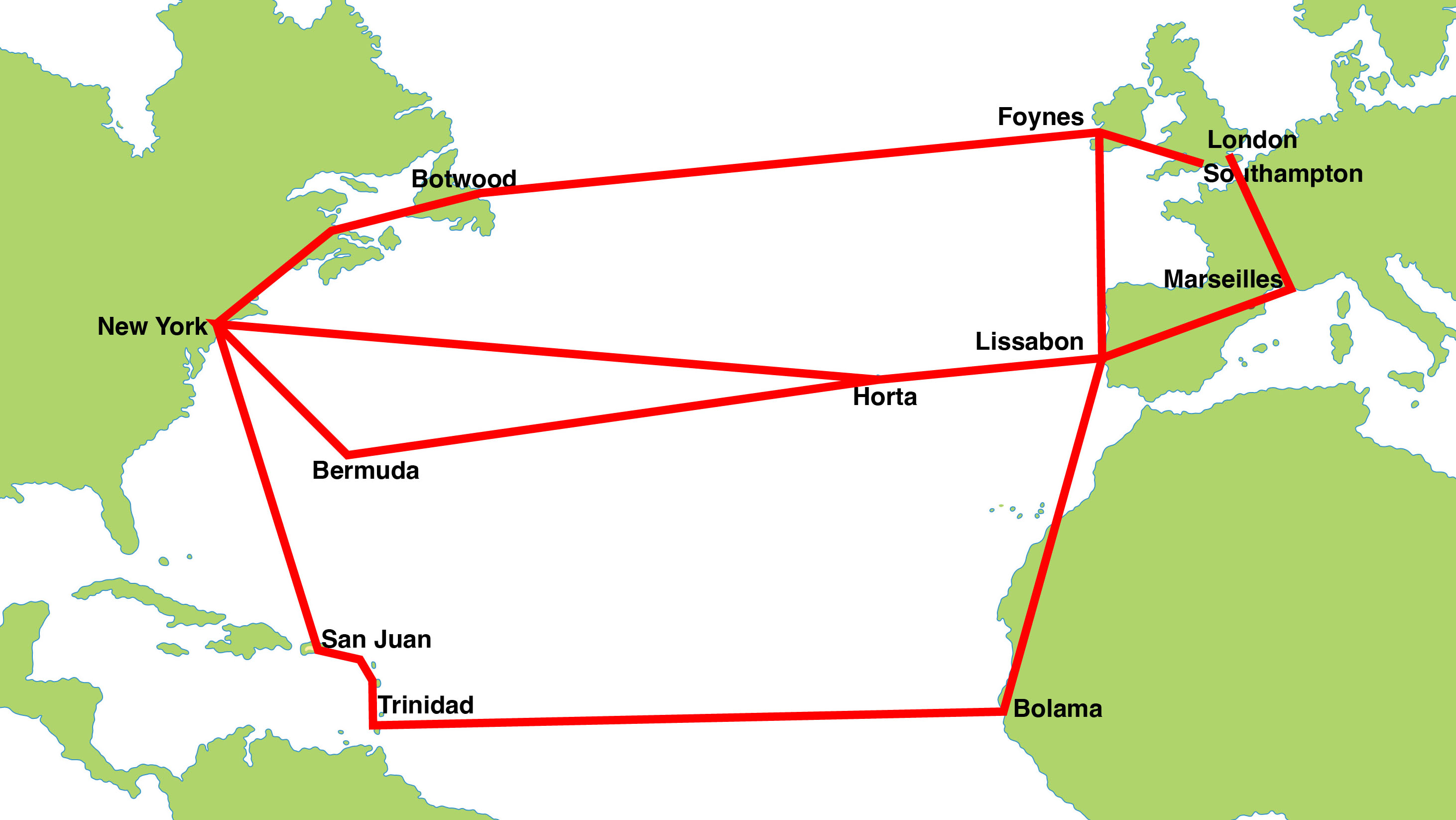
| 77 | On February 1934 Lufthansa started the fortnightly air service. | 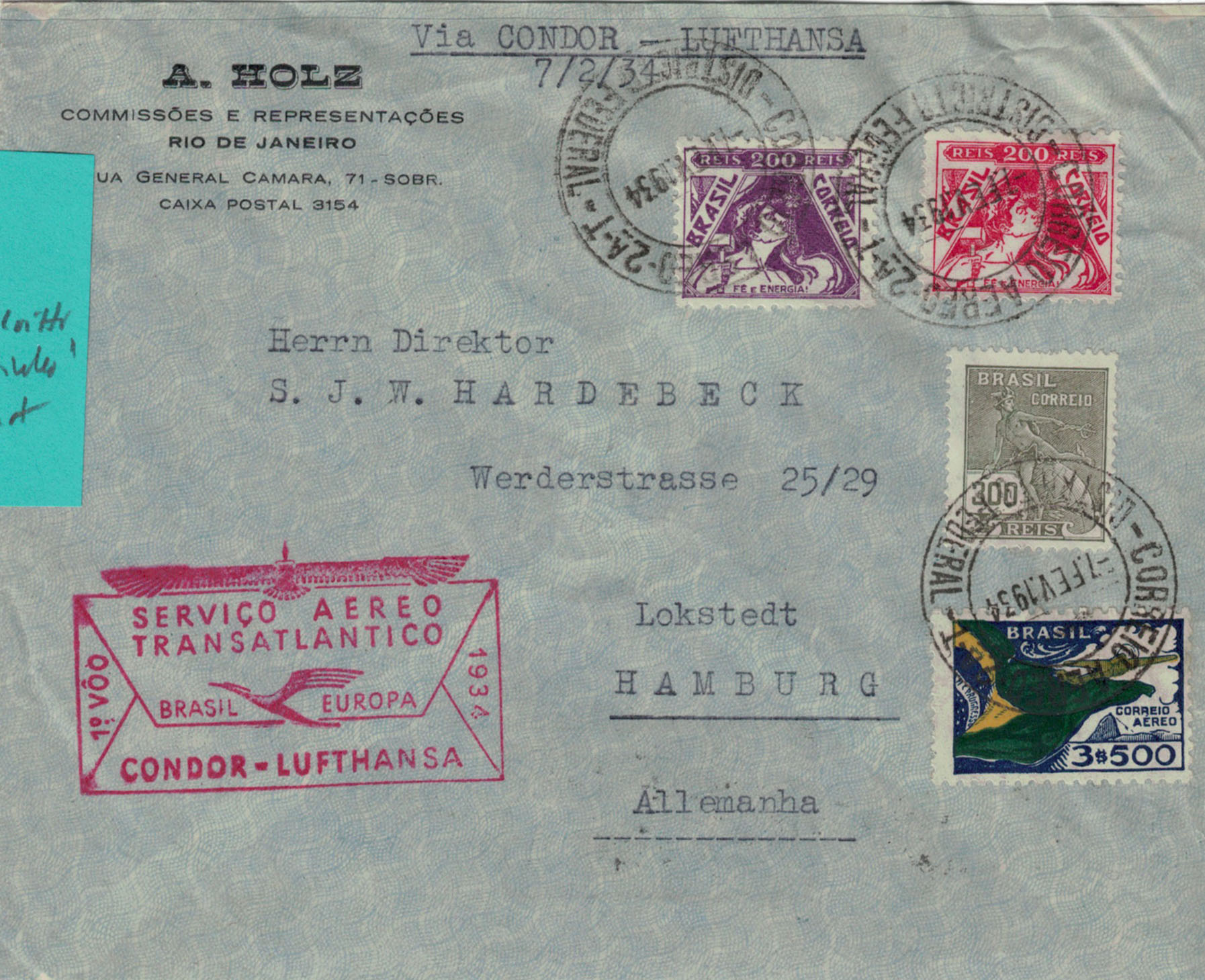 | |
| 78 | As from July 1936 Frankfurt am Main became the terminal for all transatlantic flights. | 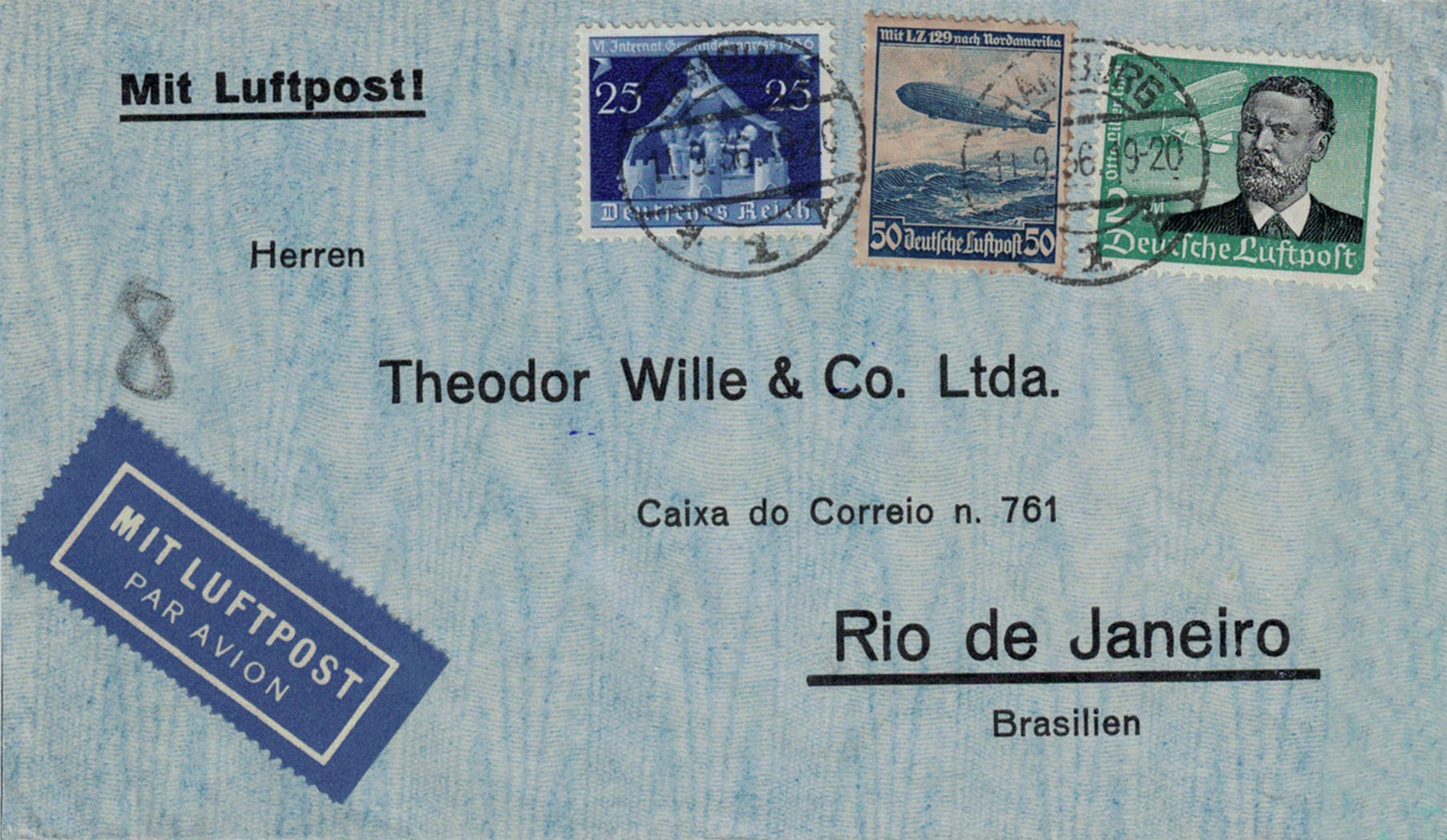 | |
| 79 | The German service ceased a few days before the outbreak of war 3 September 1939. | 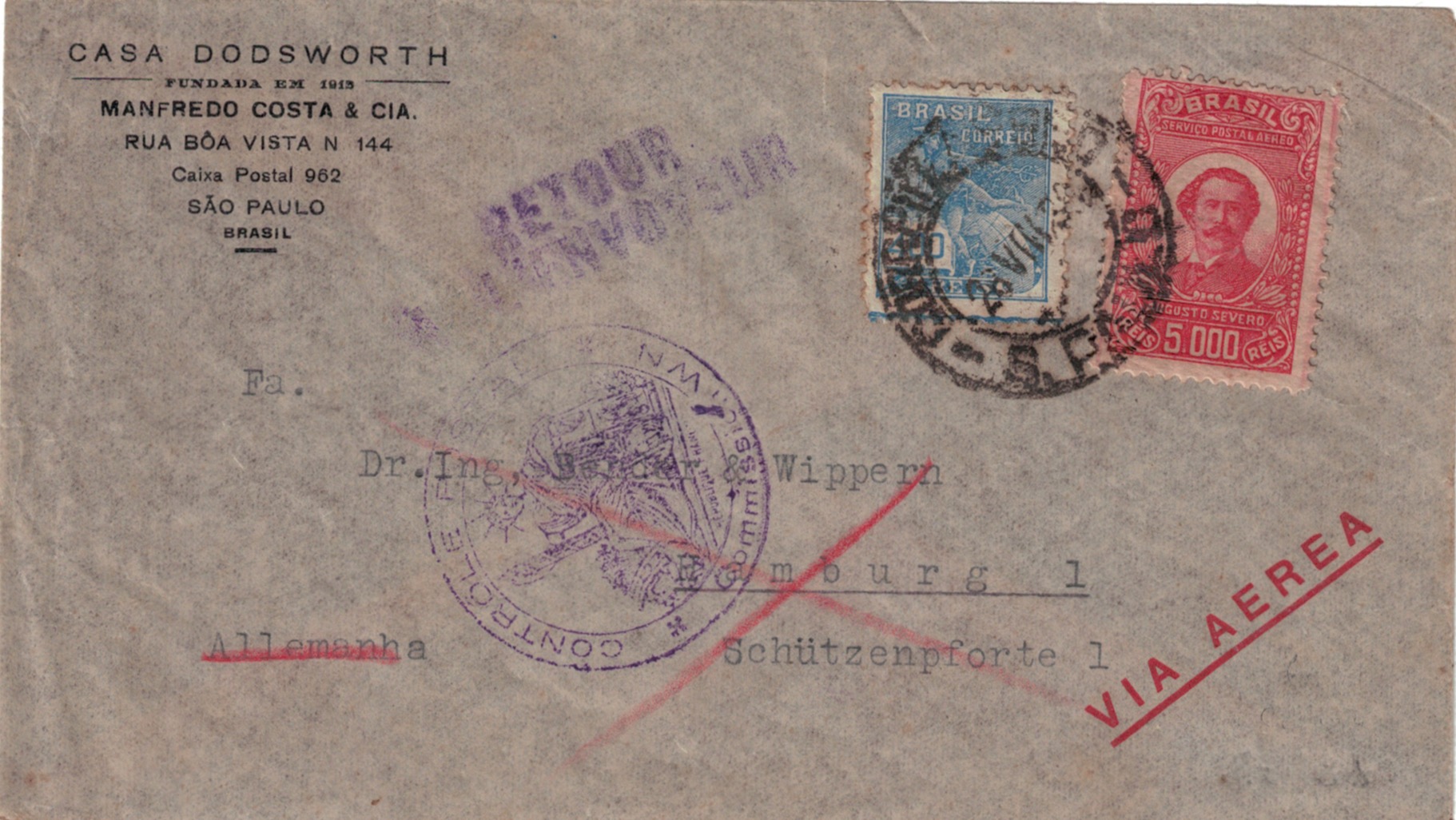 | |
| 80 | On 16 May 1935 Air France and D.L.H. agreed to co-ordinate their flight times from 1 July 1935 so that for the public there were two flights per week, the mail being carried on the firts available flight and the airmail rates being made the same. | 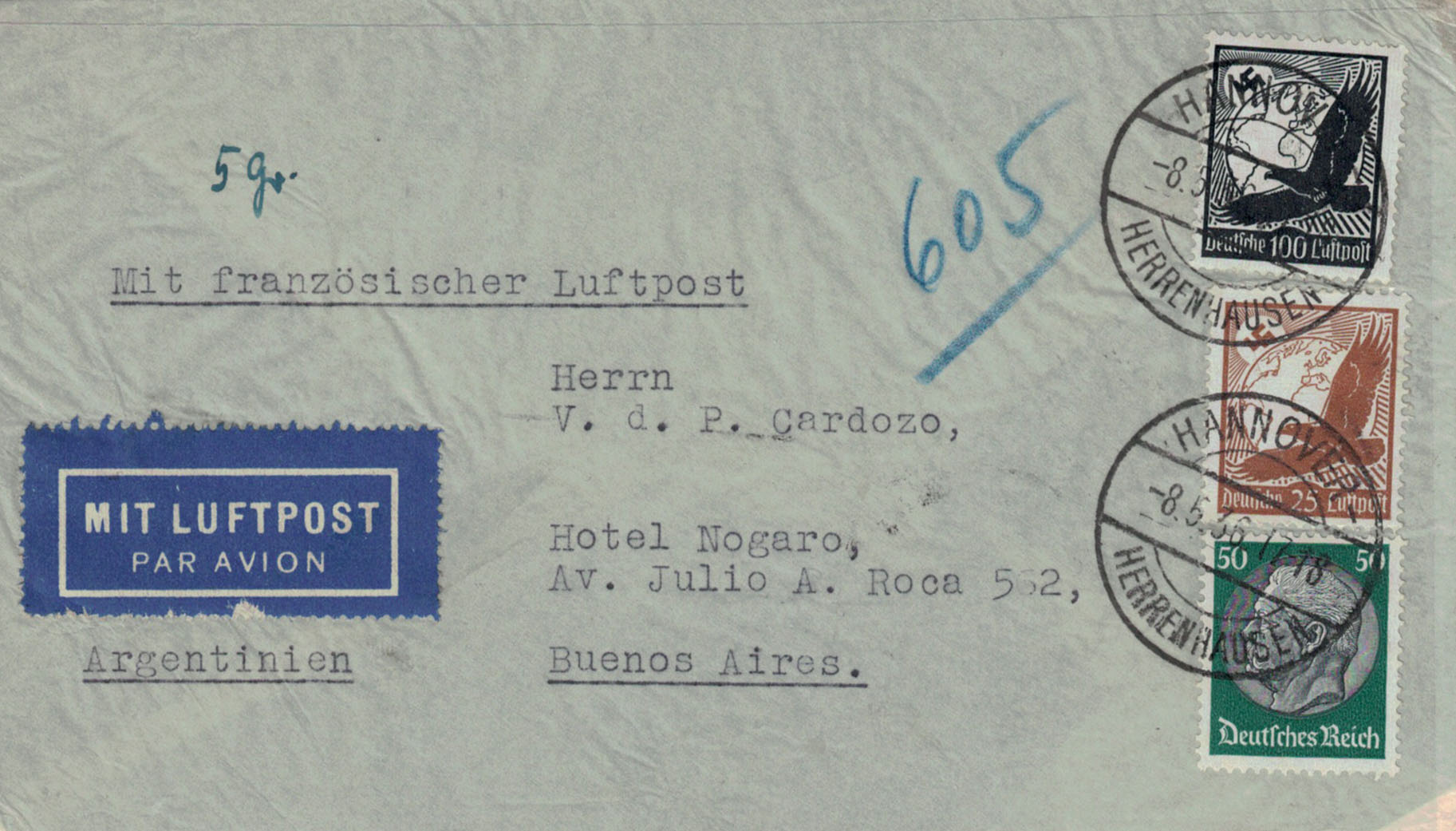 | |
| B.2. French South Atlantic Service | |||
| 81 | Following on from the French West Africa route. On 10 July 1927 a contract was signed with Argentina to carry airmail to Brazil, Africa and Europe. A similar postal contract was accepted by Uruguay on 16 July 1927 and 5 September 1927 Aeroposta Argentina was formed to operate airmail services in South America. | 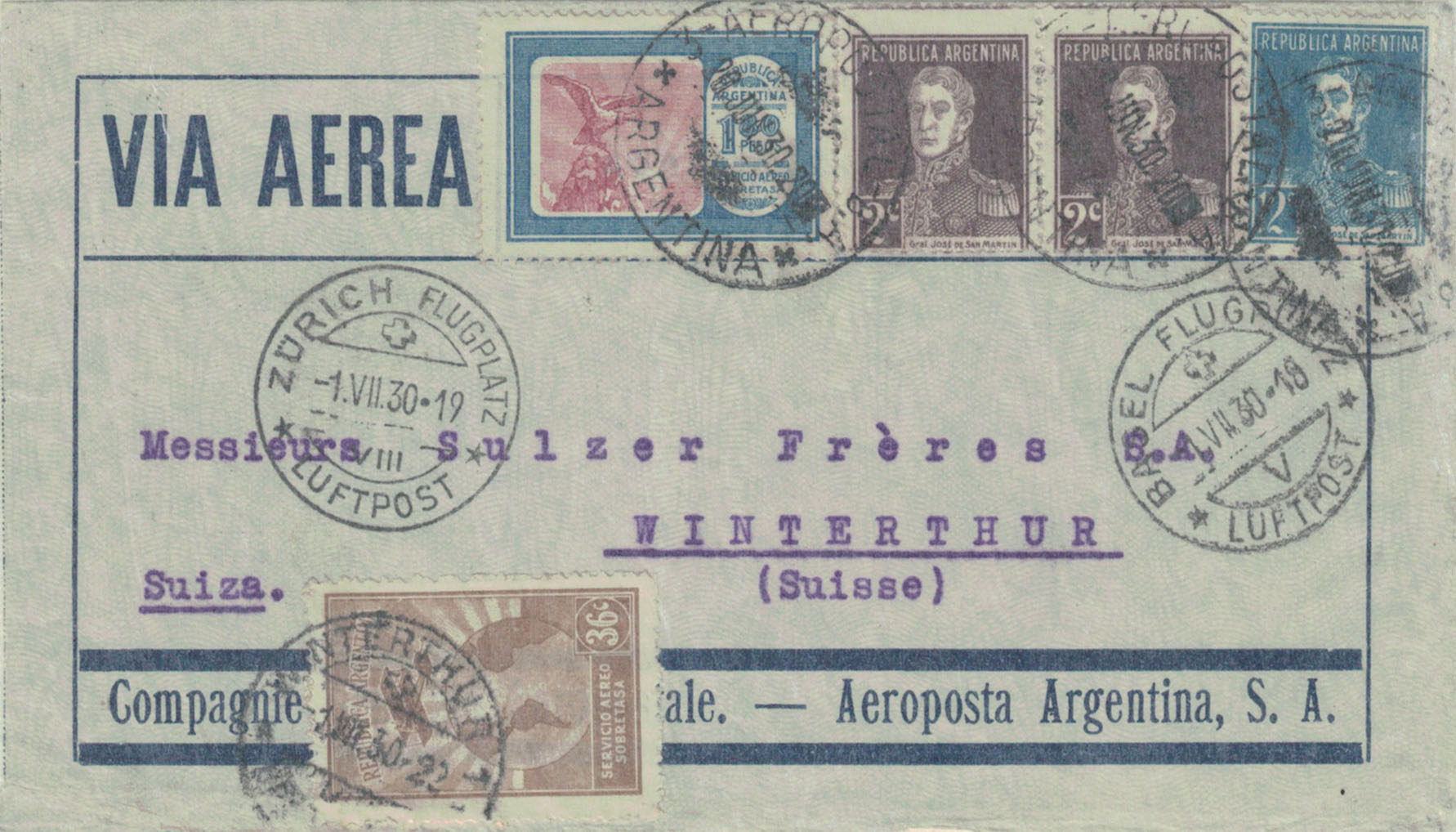 | |
| 82 | The first airmail carried completely by air was Paris - Santiago in May 1930, by seaplane from Saint Louis (Senegal) to Natal (Brazil). | 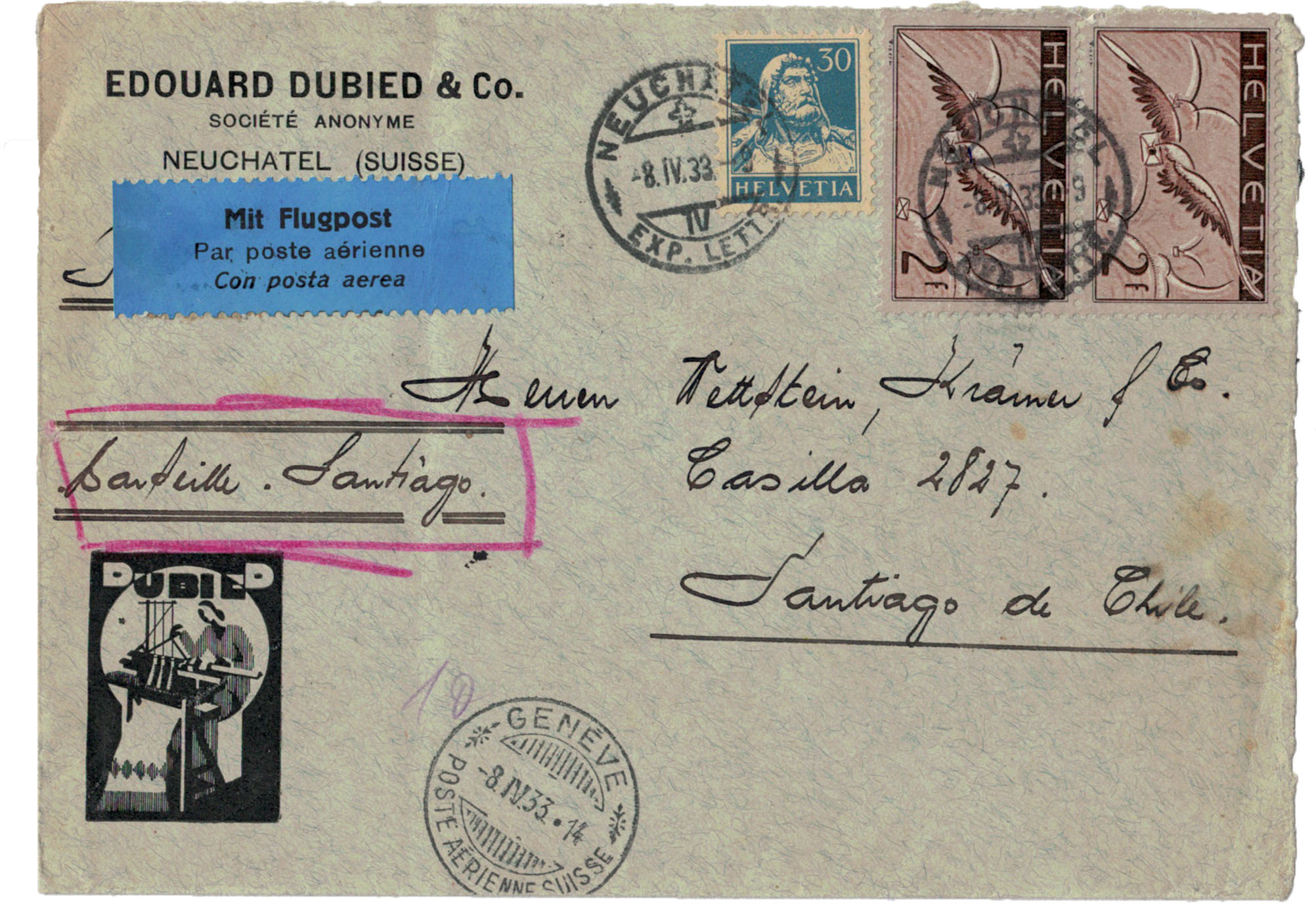 | |
| 83 | On 6 January 1936 a weekly service Europe - South America all the way by air was started. | 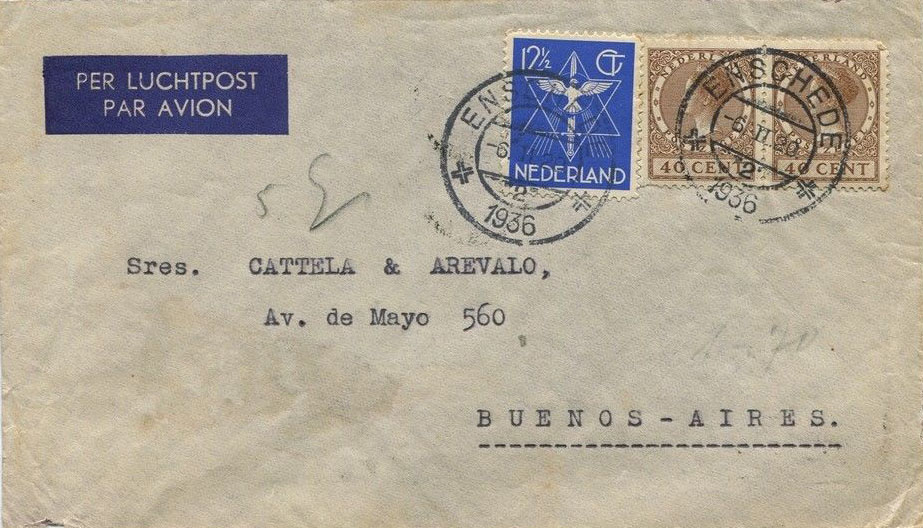 | |
| 84 | From September 1937 mail was accepted for Central America and the West Indies. It was carried to Natal and the by P.A.A. | 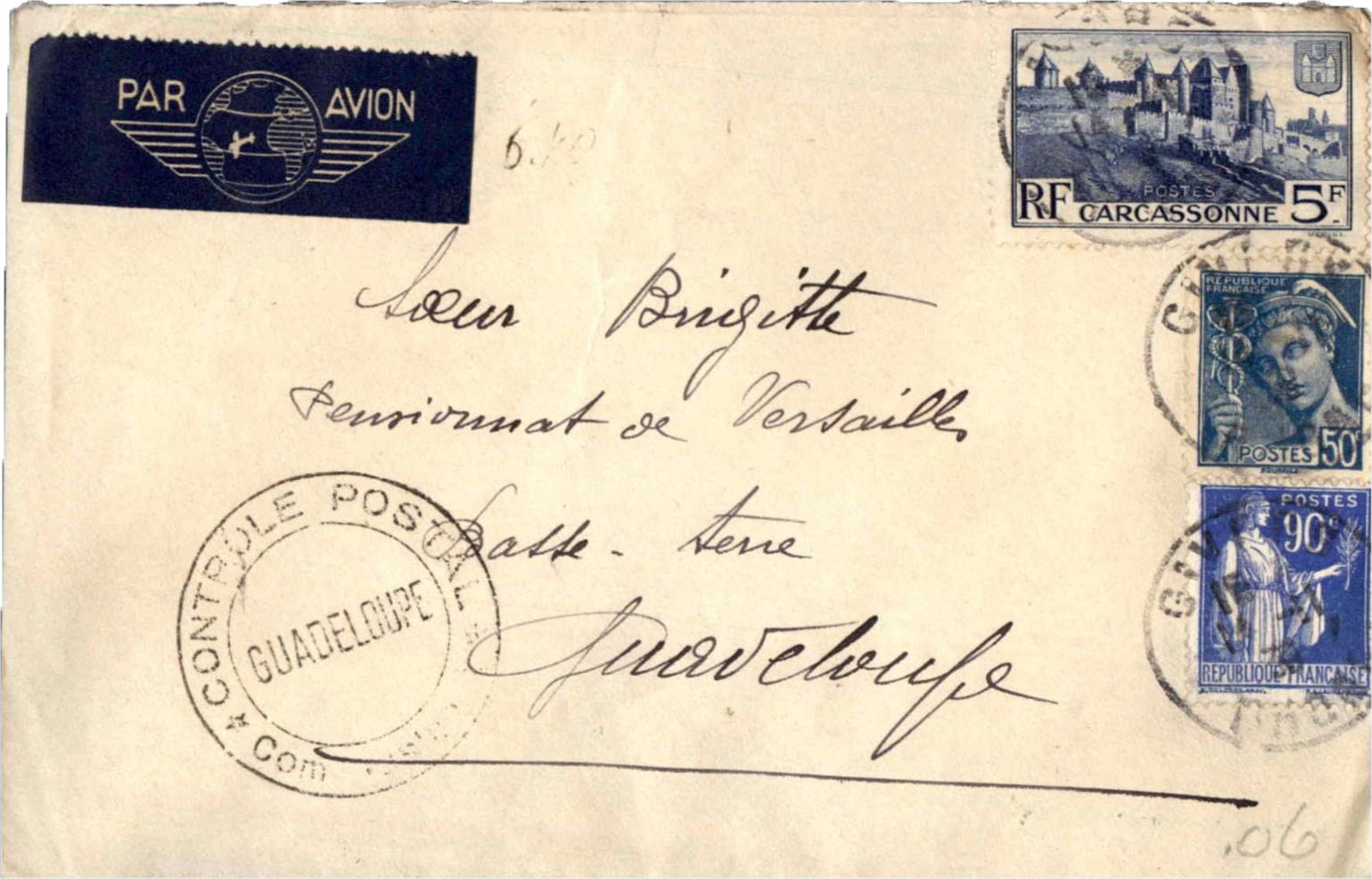 | |
| 85 | On 2 July 1940 the last South Atlantic crossing was made, as all flights had been forbidden aftre the armistice. | 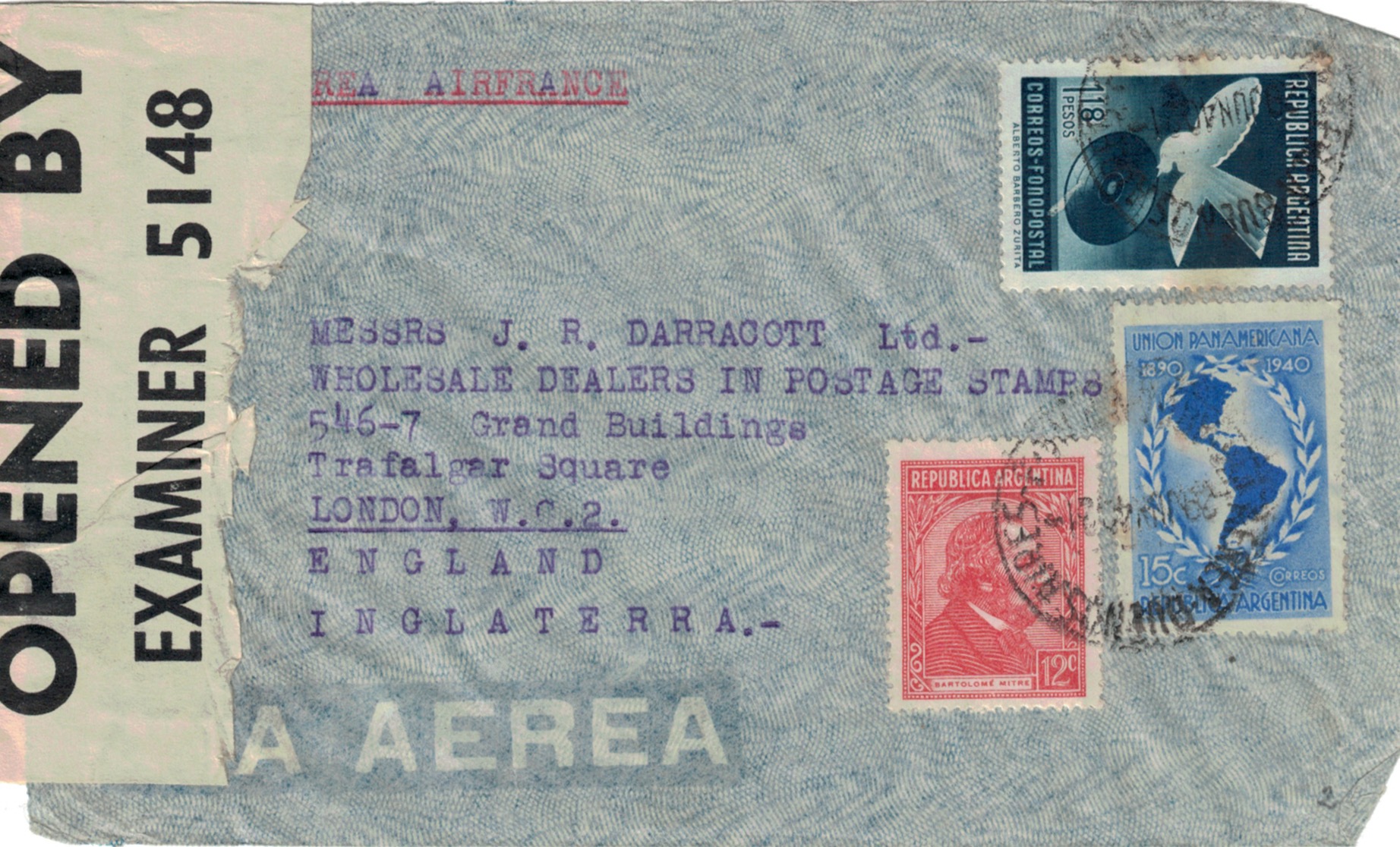 | |
| B.3. Italian South Atlantic service | |||
| 86 | Linee Aeree Transcontinentali Italian (LATI, the Transatlantic division of Ala Ligoria) opened mail service across the South Atlantic on 21 December 1939 after two experimental flights in November and December. The route was via Seville, Villa Cisneros, Sal Island, Natal and Recife. | 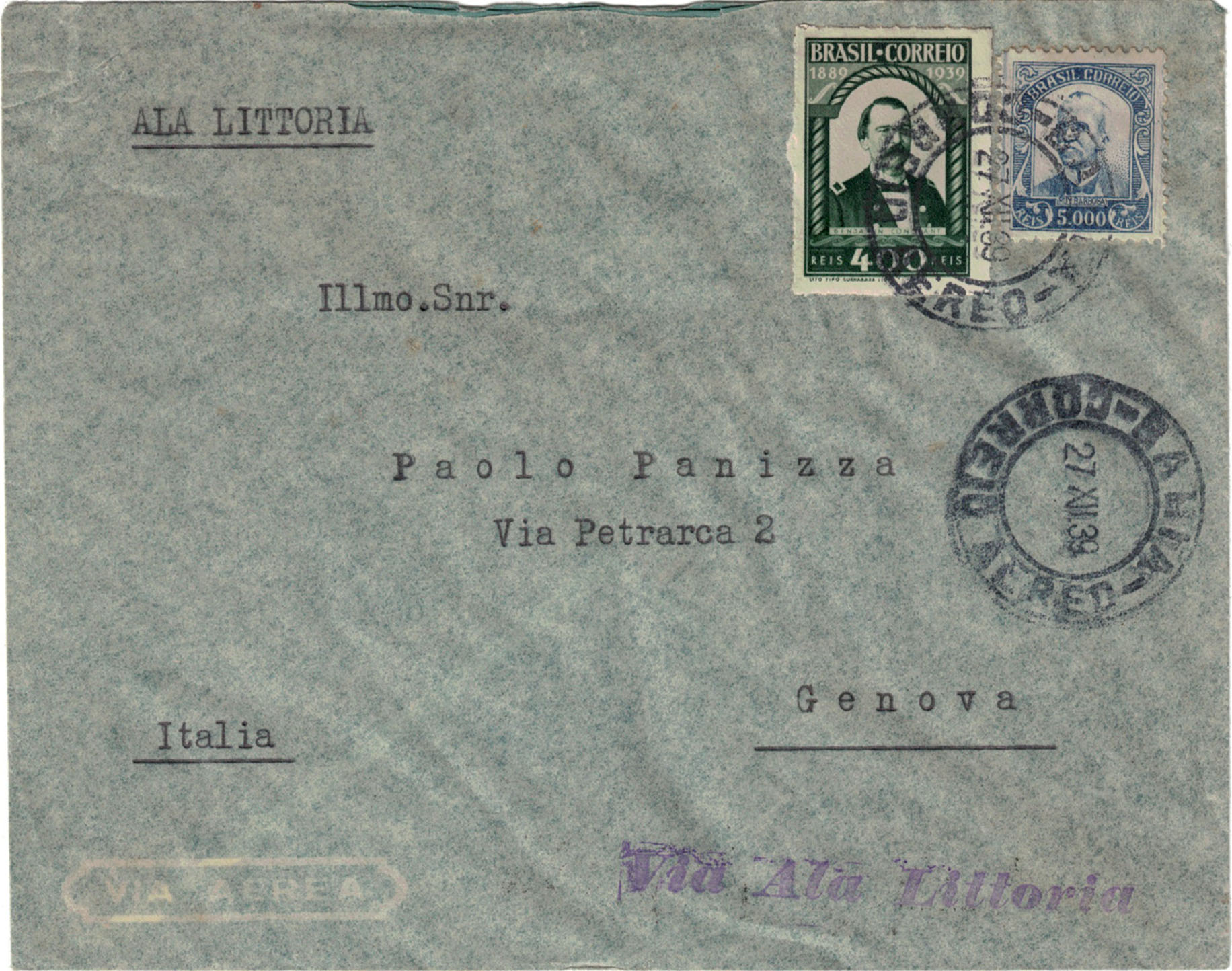 | |
| 87 | The route extended to Buenos Aires in September 1940. | 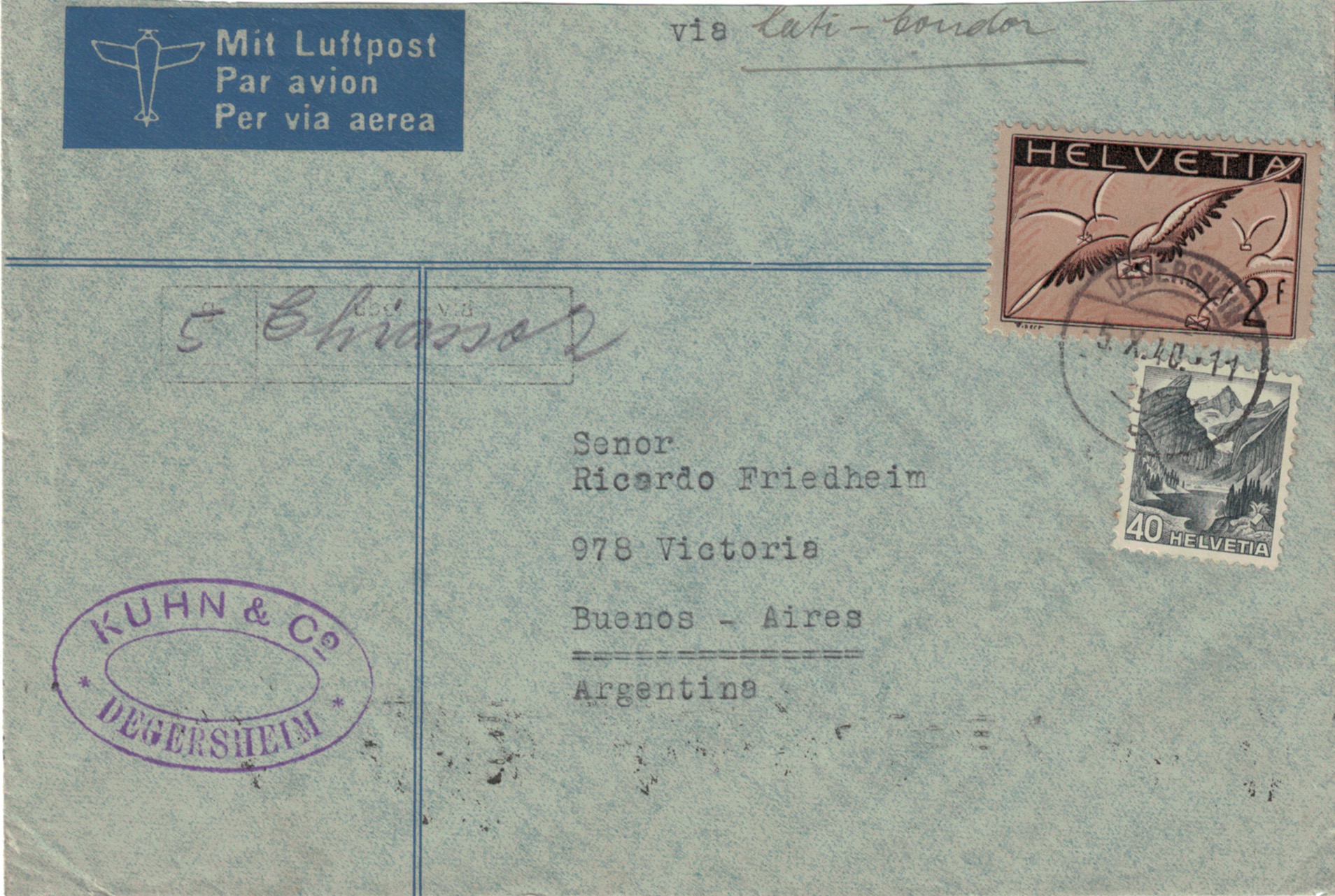 | |
| 88 | On 11 December 1941 the United Sates cut off fuel supplies and on 22 December LATI ceased operations. | 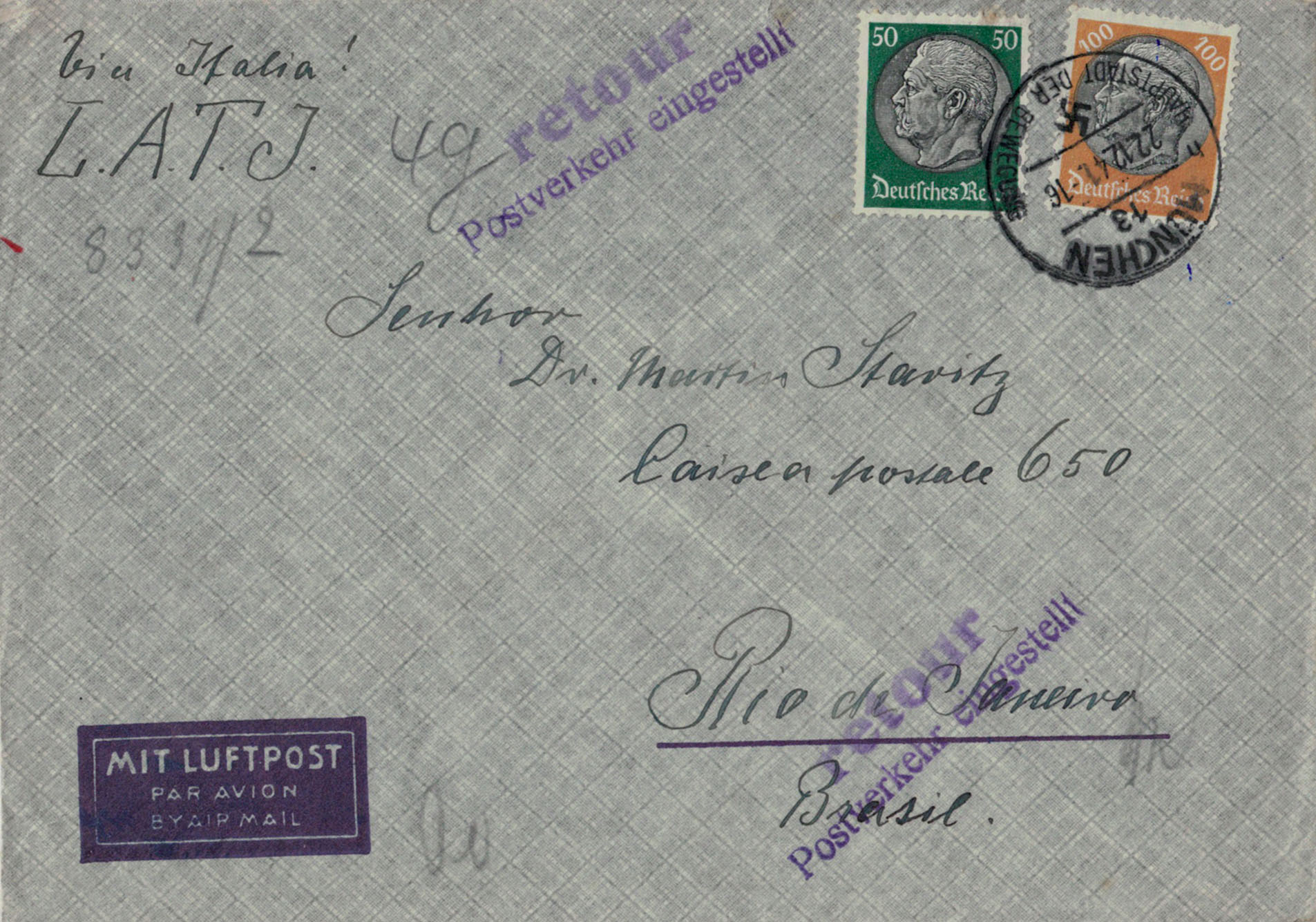 | |
| B.4. PAA South Atlantic service | |||
| 89 | After the cessation of Lufthansa, French and Italian services, the PAA’s North Atlantic route (via Lisbon) was the only way to send airmail between Europe and South America from January to April 1942. | 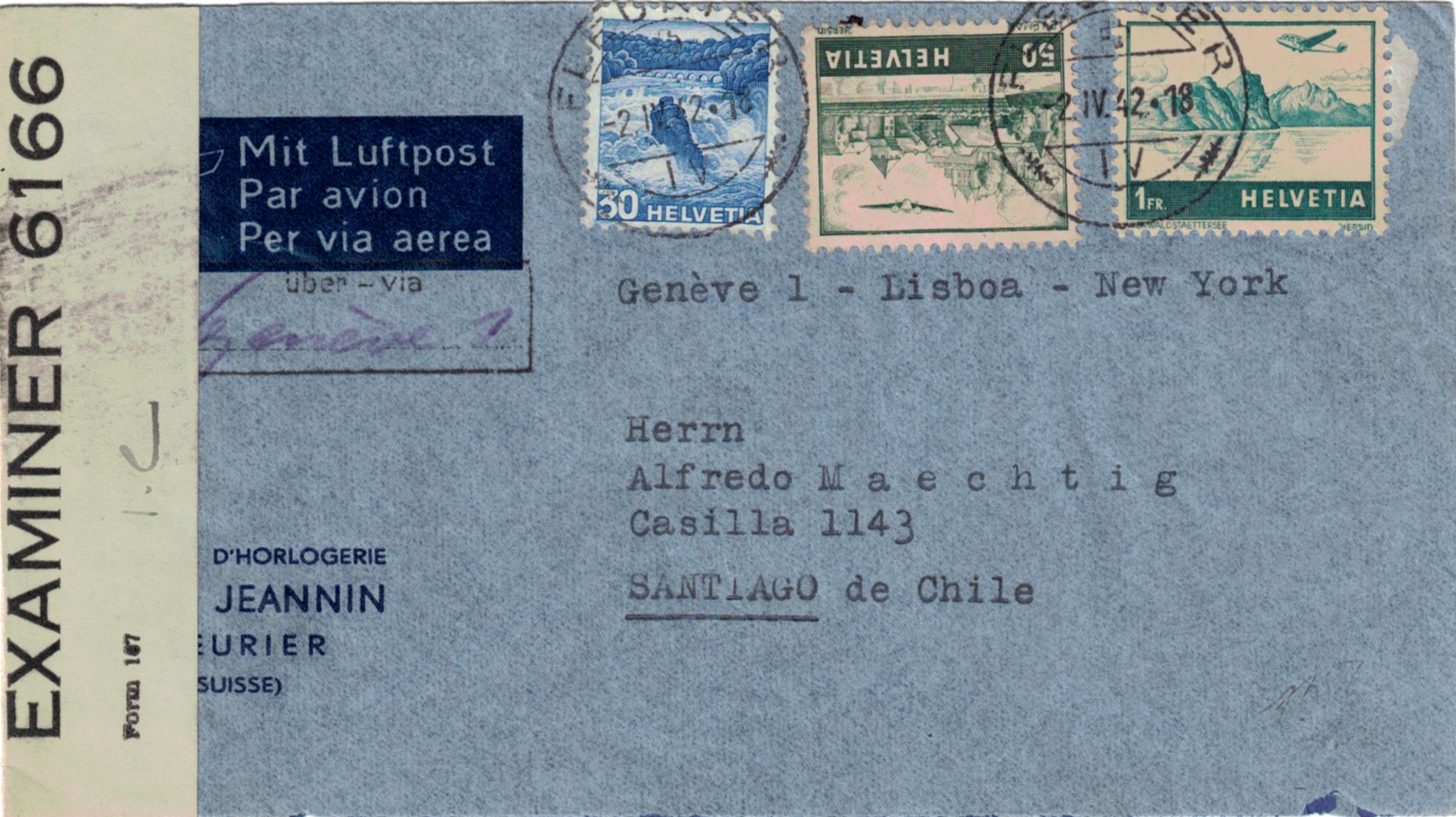 | |
| 90 | From May to July 1942. Europe southbound to South America: Lisbon - Bolama - Trinidad - Natal. | 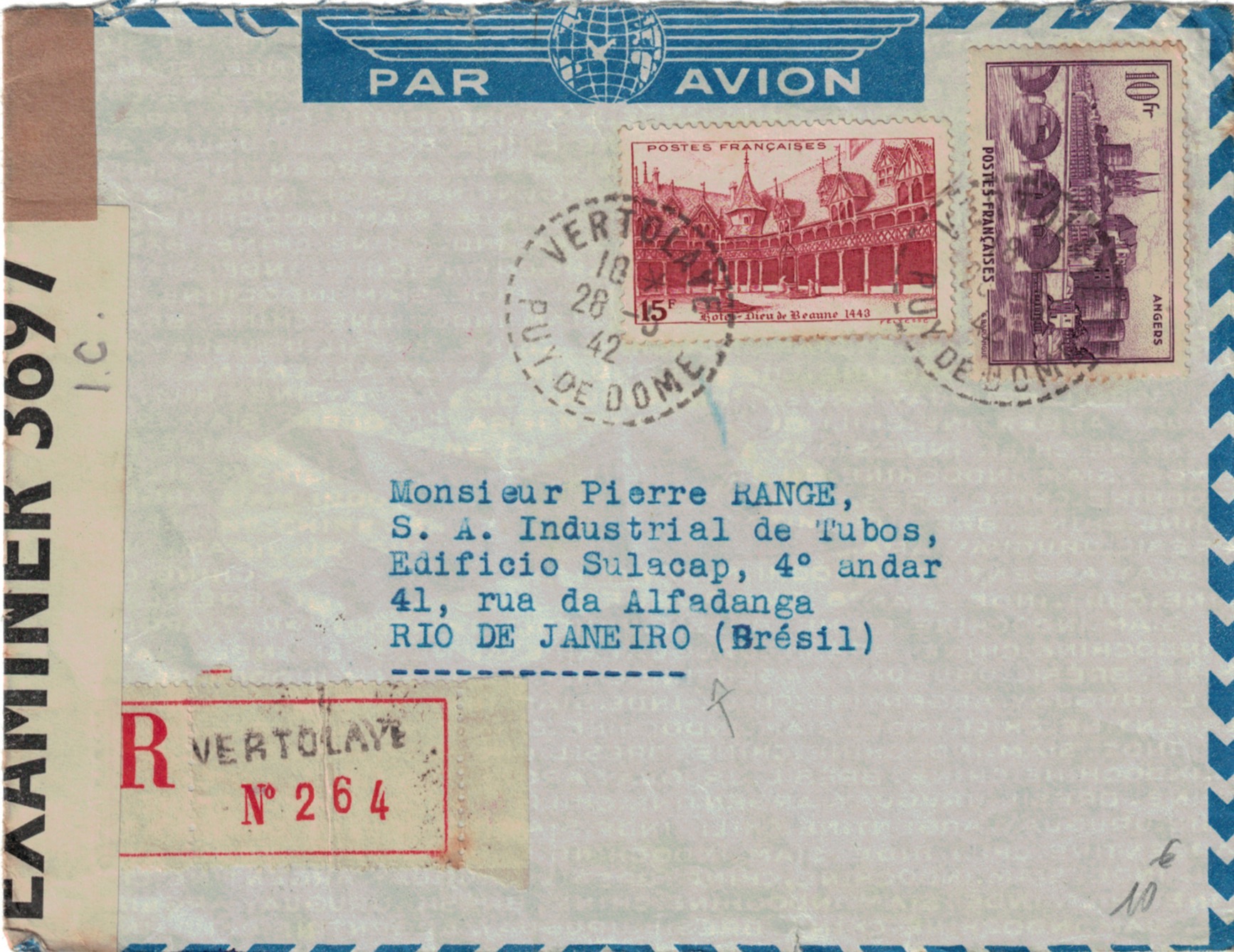 | |
| 91 | From August 1942 to July 1945. Europe southbound to South America: Lisbon - Bolama - Natal - San Juan; then San Juan -Natal by local service FAM-6 after censorship. | 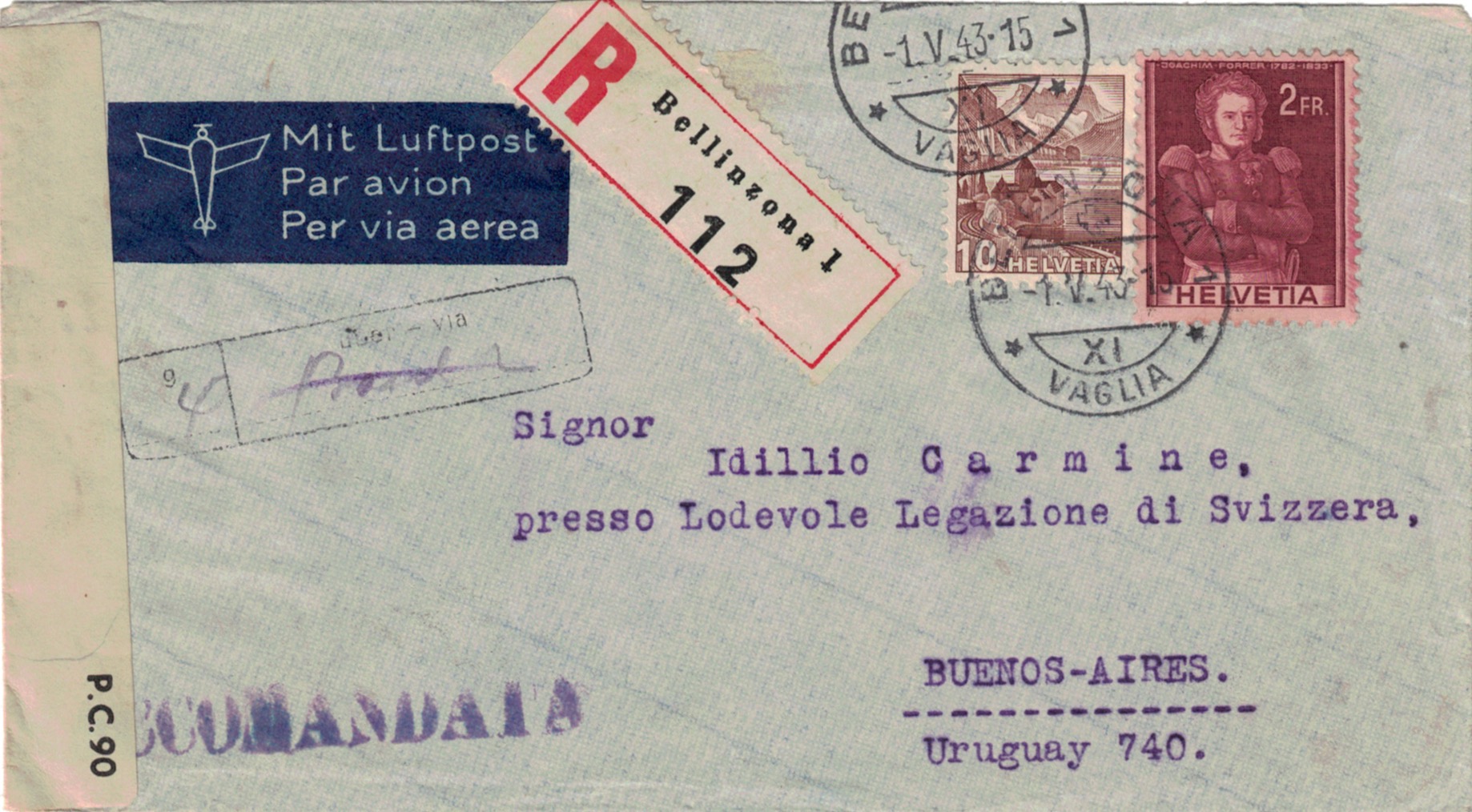 | |
| 92 | From July 1945. Europe southbound to South America: Lisbon - Horta - Bermuda - New York - San Juan - Natal. | 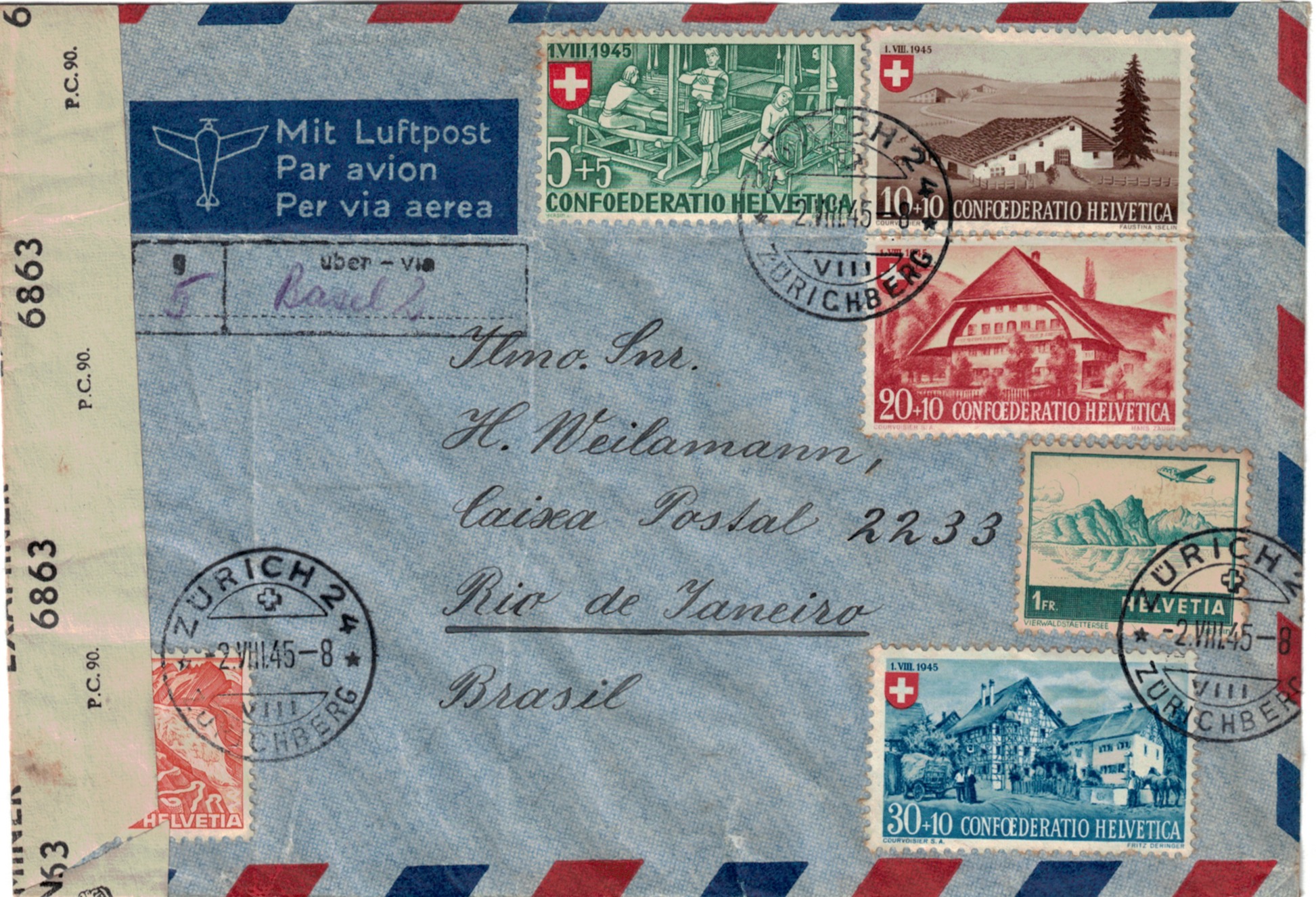 | |
| 93 | South America northbound to Europe there were two alternative routes. The other was Natal - San Juan - Bermuda - Horta - Lisbon. This has been in use throughout May 1942. | 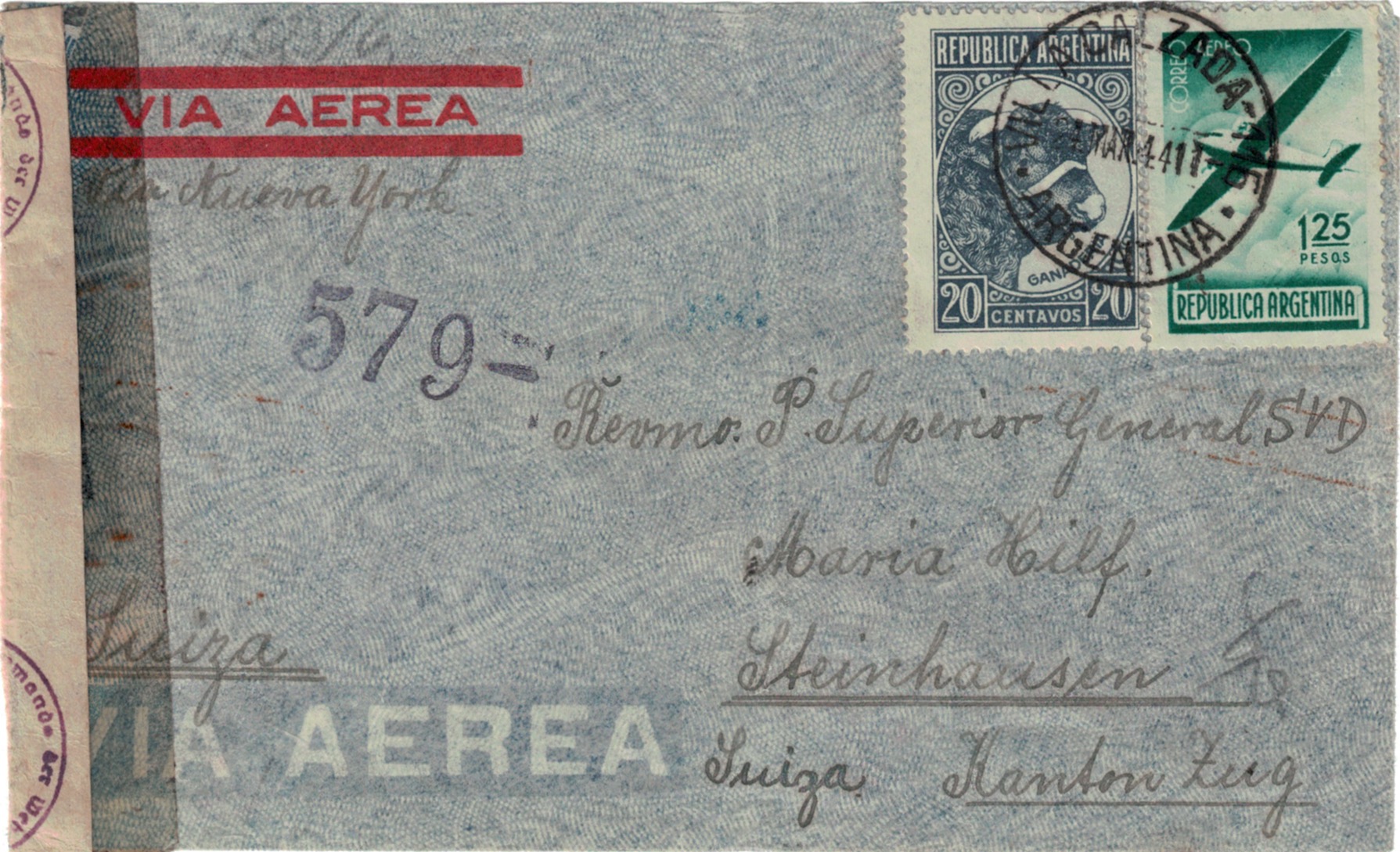 | |
| 94 | The other was Natal - Bolama - Lisbon. This route was used in the following periods: May to end July 1942, May to October 1944 and May to July 1945. | 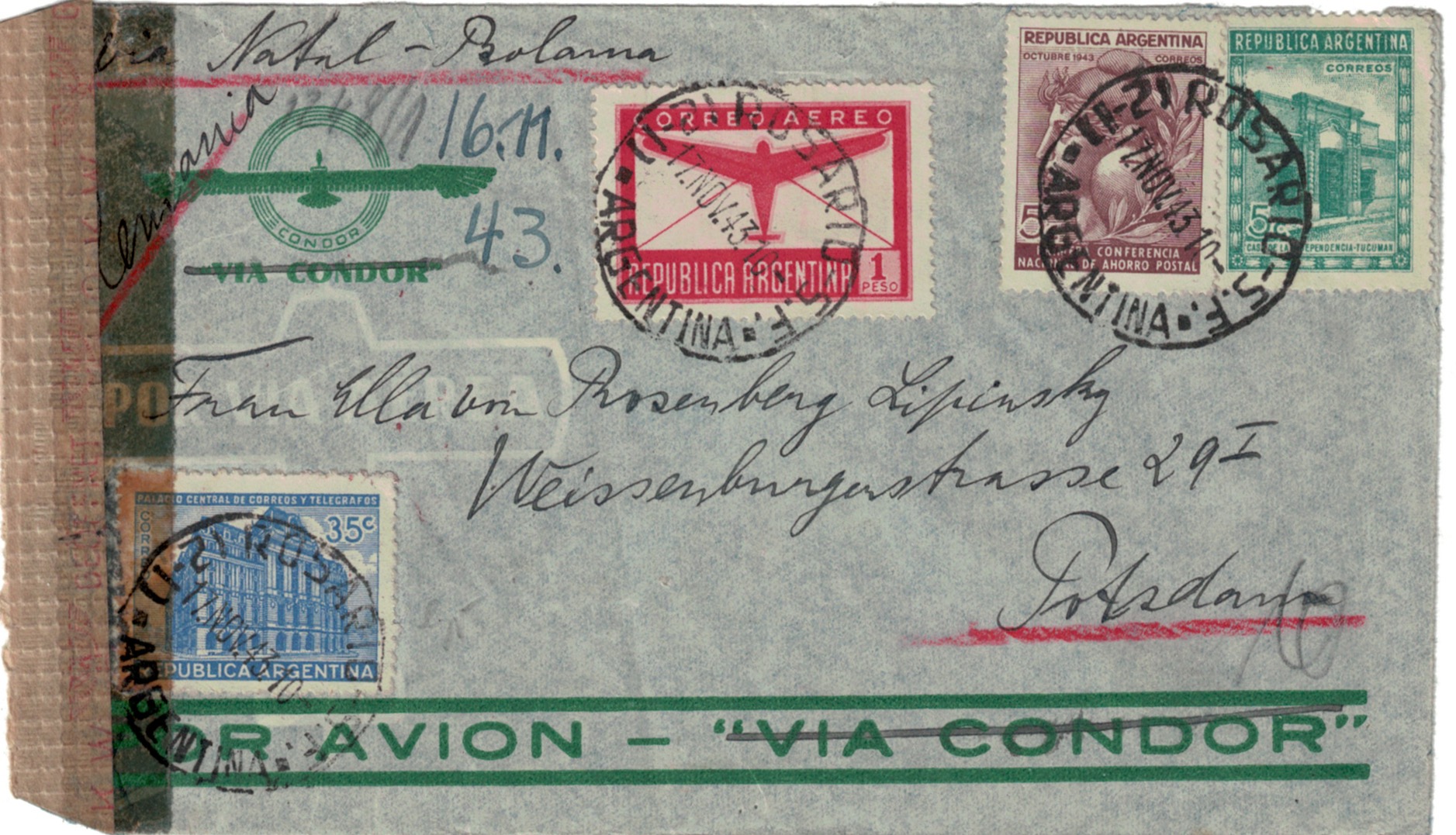 | |
C. BETWEEN NORTH- AND SOUTH-AMERICA | |||
 | |||
| C.1. Foreign air mail route 5 | |||
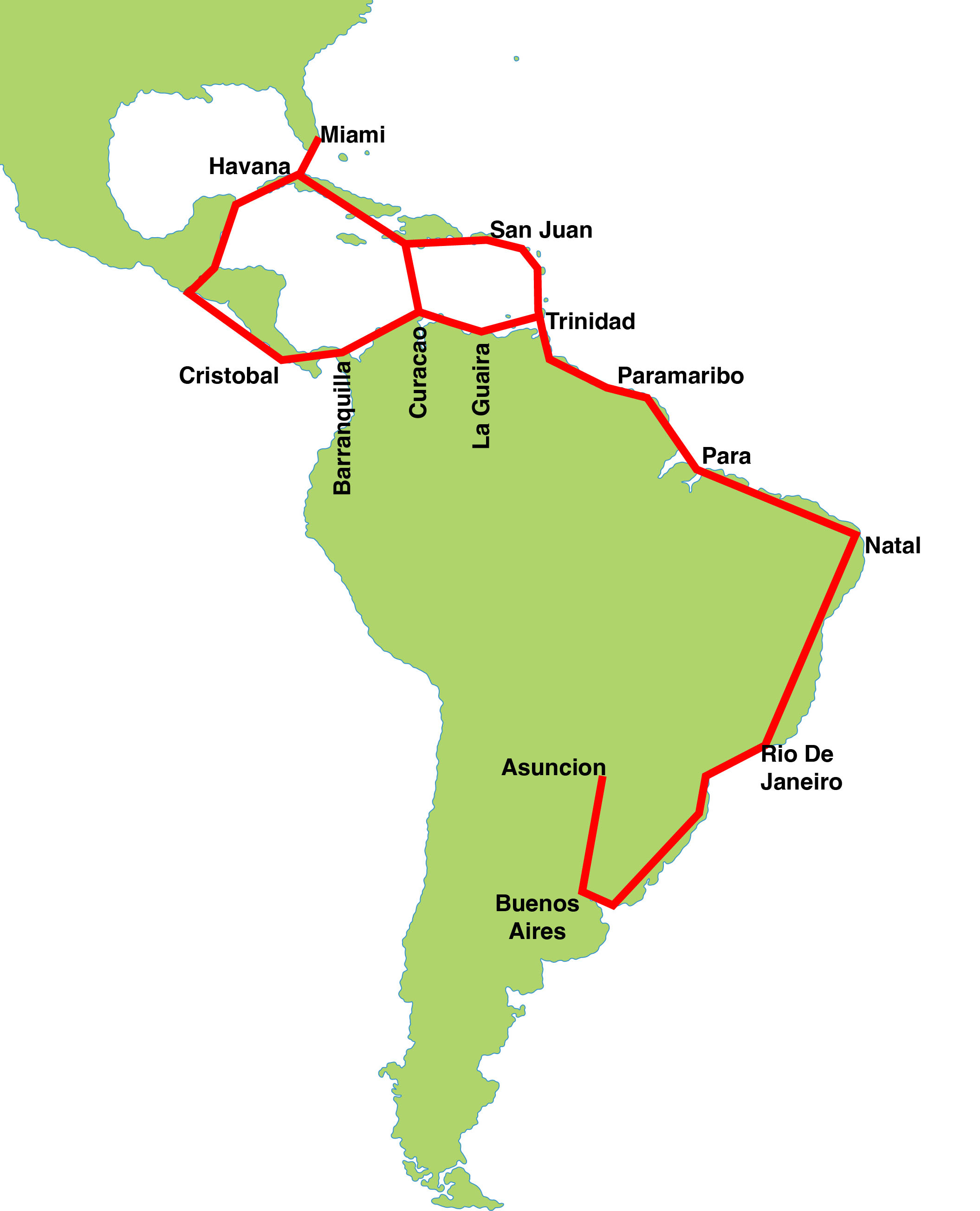
| 95 | Officially for the first time, an airmail route reached from North America to South America, when the route from Miami to Colon (Panama) was extended to Maracaibo and Puerto Cabello (Venezuela) on May 3, 1930. | 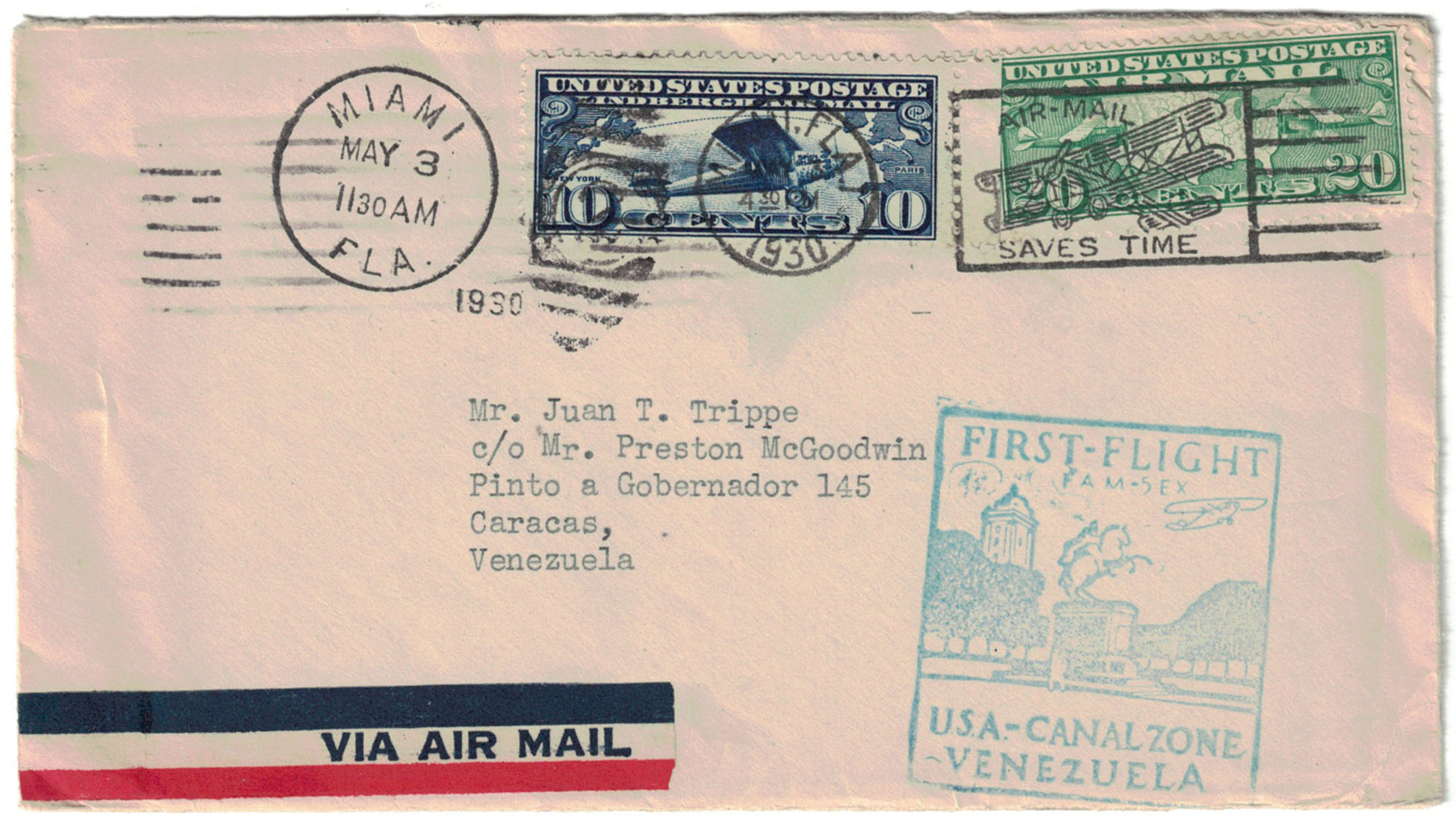 | |
| 96 | PAA plane had been flying to La Guaira, Venezuela since October 1930, but it was not until the flight departing Miami, December 2, 1930, to connect with the flight from Cristobal on December 4, that this point was designated as the new FAM-5 terminal on the USPOD schedule. The route of flight at this time Beca Barranquilla - Maracaibo - Curacao - La Guaira. | 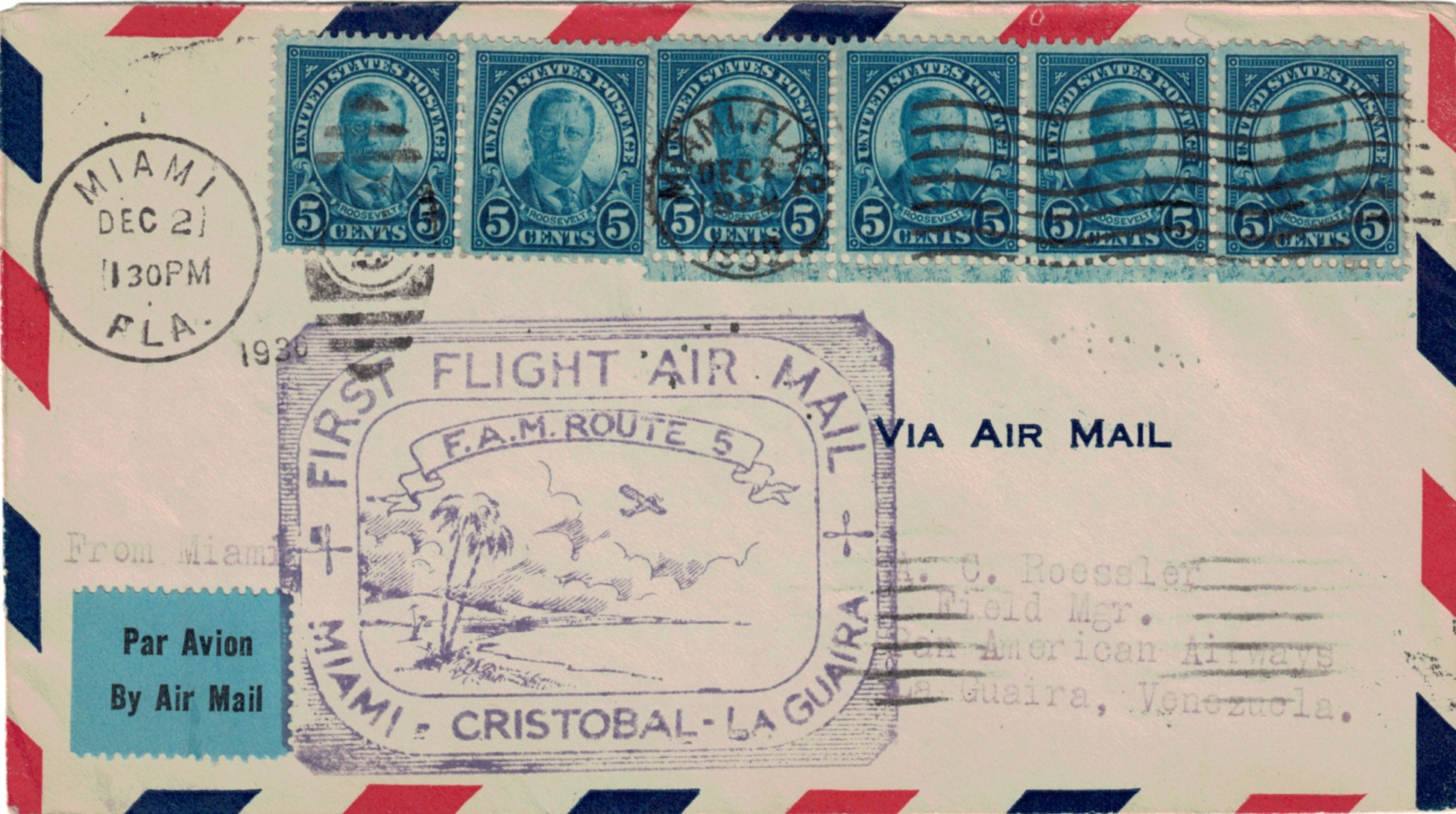 | |
| 97 | The extension to Port of Spain on February 10, 1931 also completed the North Coast segment of FAM-5. | 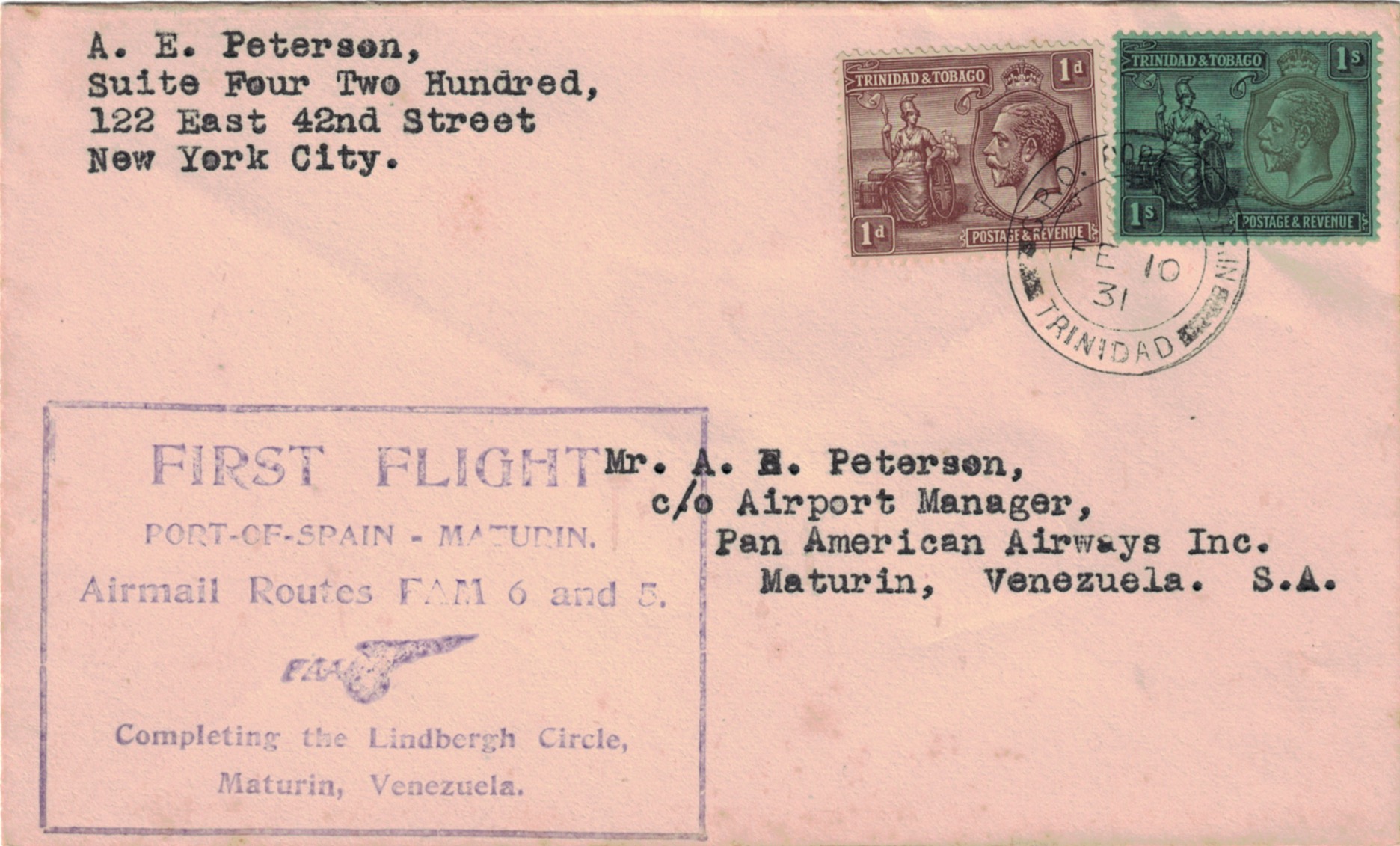 | |
| C.2. Foreign air mail route 6 | |||
| 98 | When inaugurated on January 9, 1929, the flight path was Miami - Habana - Port au Prince - San Juan. In addition to being a significant step in the expansion of air mail service, the extension of FAM-6 from San Juan to Paramaribo, Dutch Guiana was also a festive occasion. The first flight was made between September 20 and September 28, 1929. | 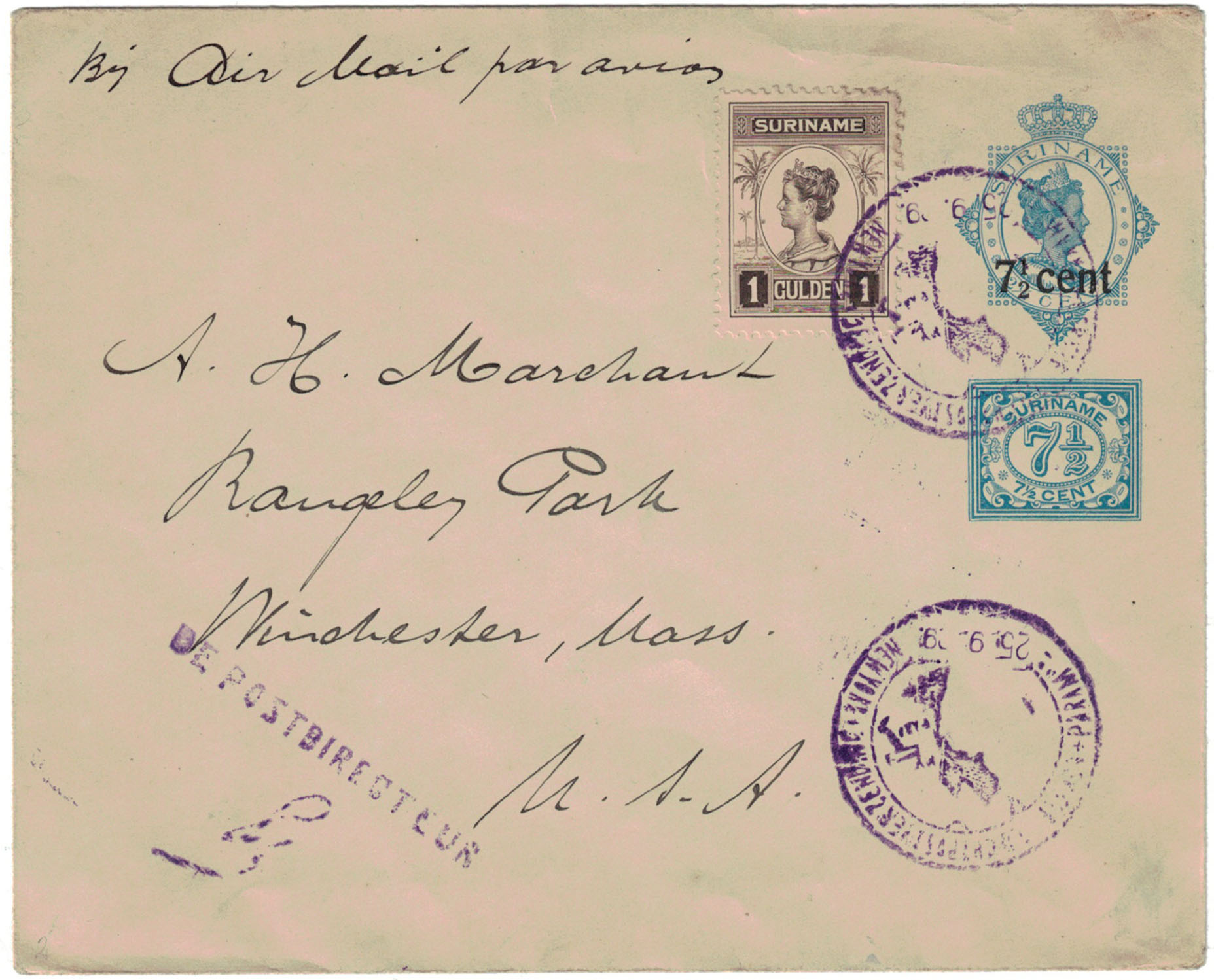 | |
| 99 | The extension to Rio de Janeiro had been originally scheduled for October 20, 1930, and was postponed due to revolutionary activity. The first part of this extension was inaugurated in early November from Paramaribo, Dutch Guiana to Cayenne, French Guiana and Para, Brazil. | 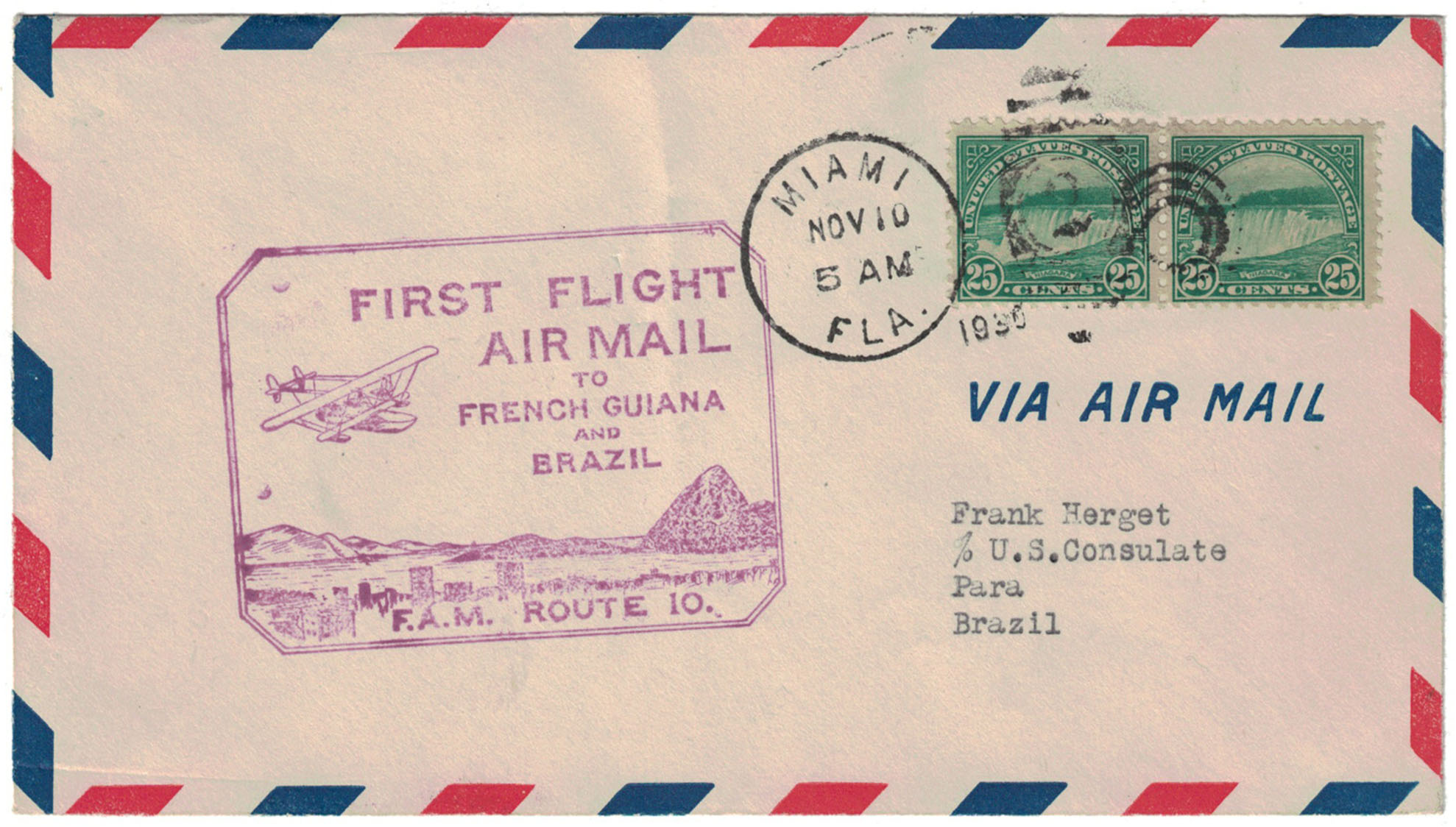 | |
| 100 | The target of PAA was to link the capitals of all nations in the western hemisphere. The extension to Buenos Aires happened on October 26, 1931. | 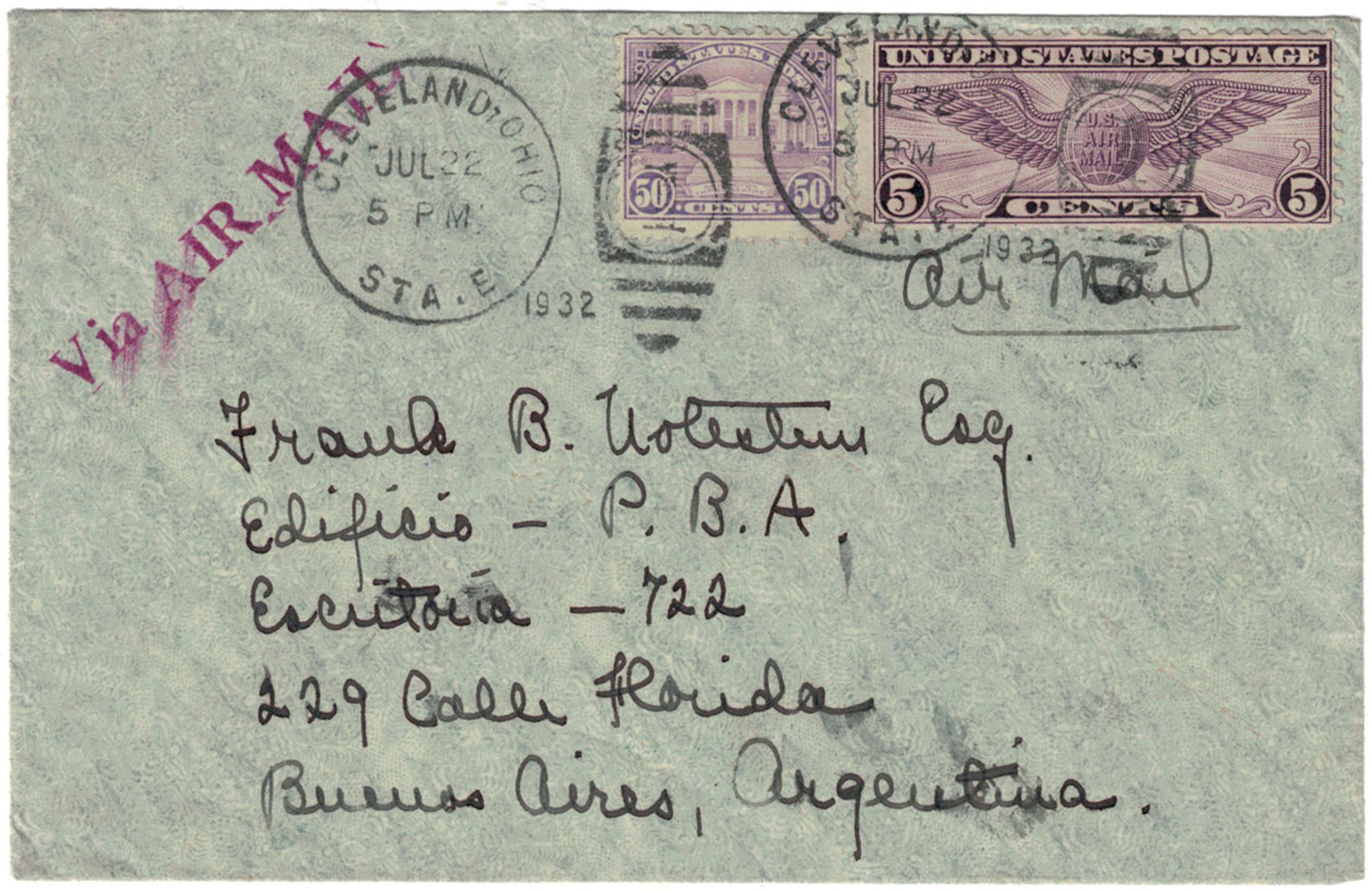 | |
| 101 | First service to Asuncion, Paraguay, connecting via Buenos Aires, was by a plane that left Miami on July 15, 1937. | 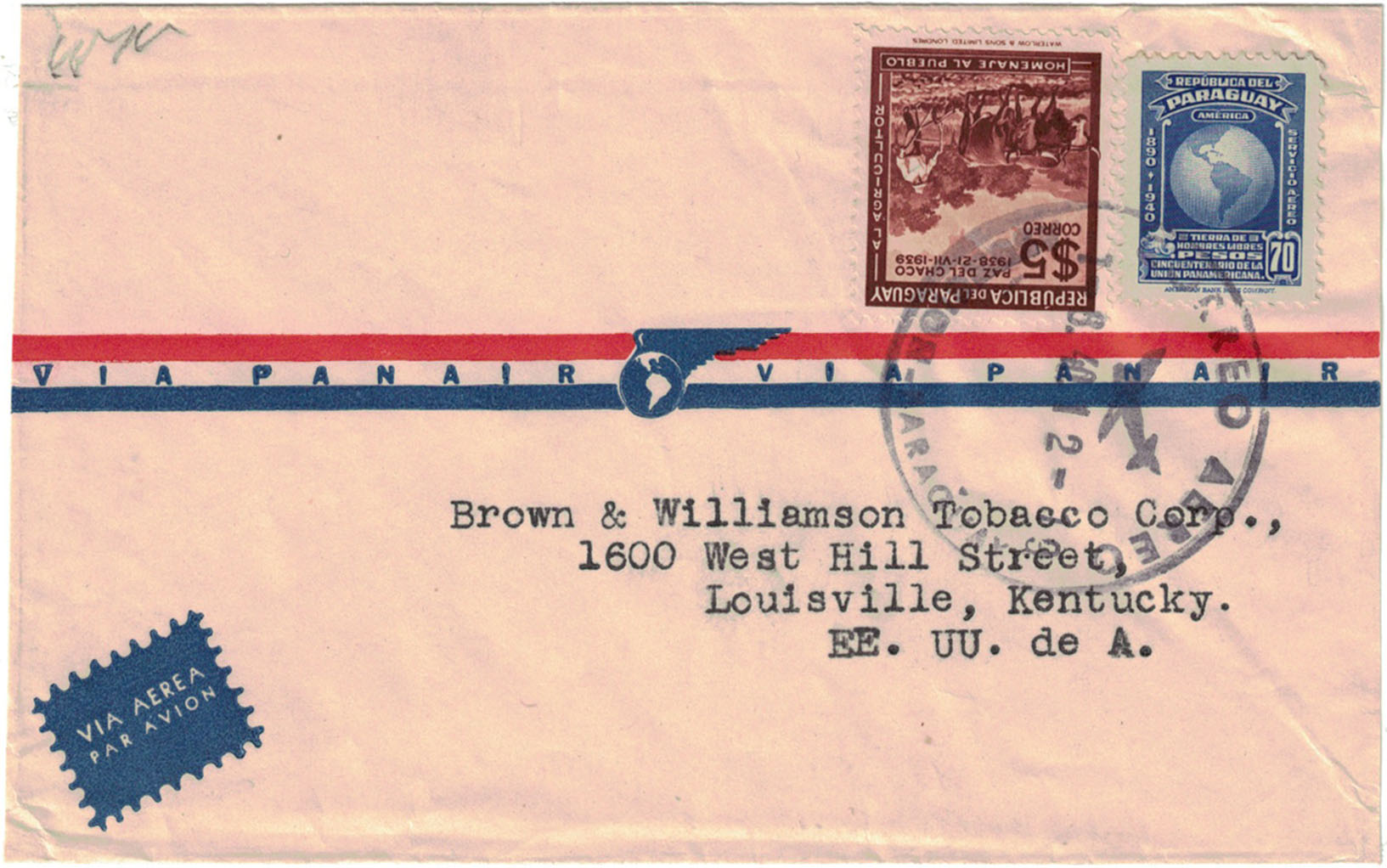 | |
| C.3. KLM West lndies Division | |||
| 102 | Service to Miami, via Haiti and Cuba, began 16 August 1943. A first flight cover for the air mai1 service to Miami is shown in Figure 250. Covers mailed from Willemstad, Curacao had cachets applied in deep blue, and those from Oranjestad, Aruba, were green. The covers were censored. | 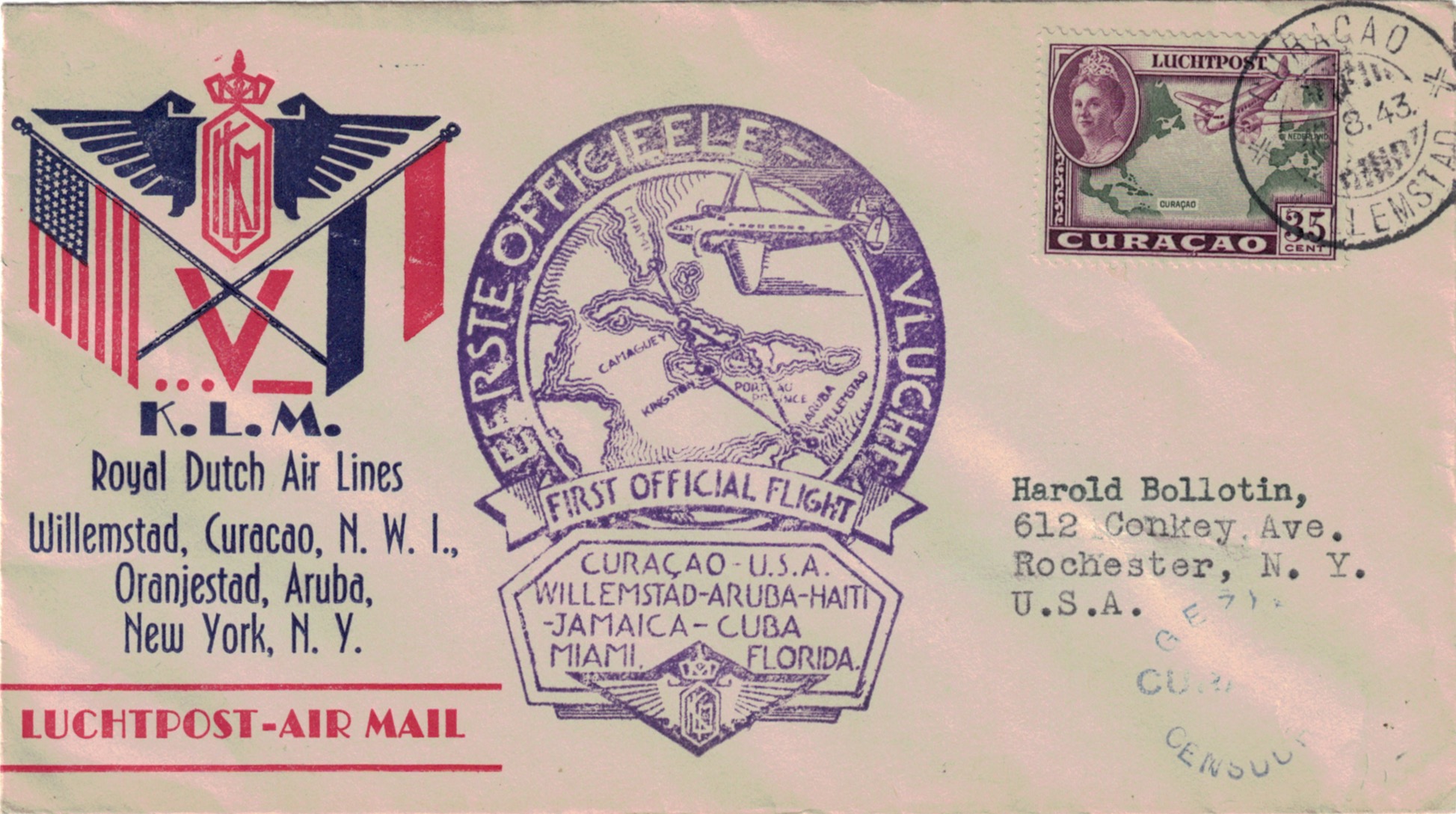 | |
| 103 | After August 1943, air mail could be flown all the way from Paramaribo to Miami by KLM West Indies Division. | 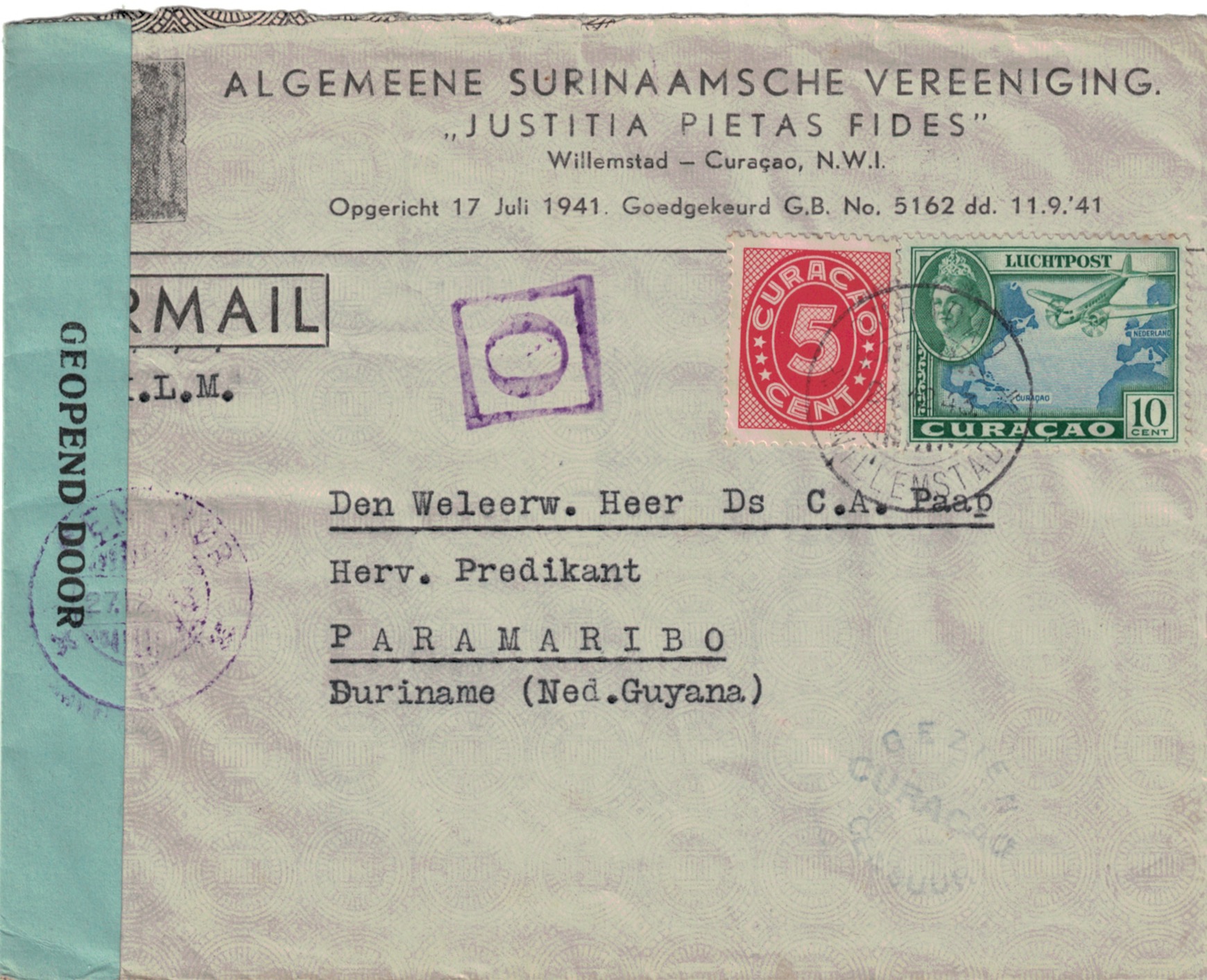 | |
D. BETWEEN EURASIA AND NORTH-AMERICA | |||
 | |||
| D.1. German North Atlantic Service | |||
| 104 | In 1930 as part of the preparations for an airship service between Germany and South America the Graf Zeppelin carried out a triangular flight leaving Germany on 18 May for South America and then flying on to the USA, returning across the Noth Atlantic, arriving back on 6 June. | 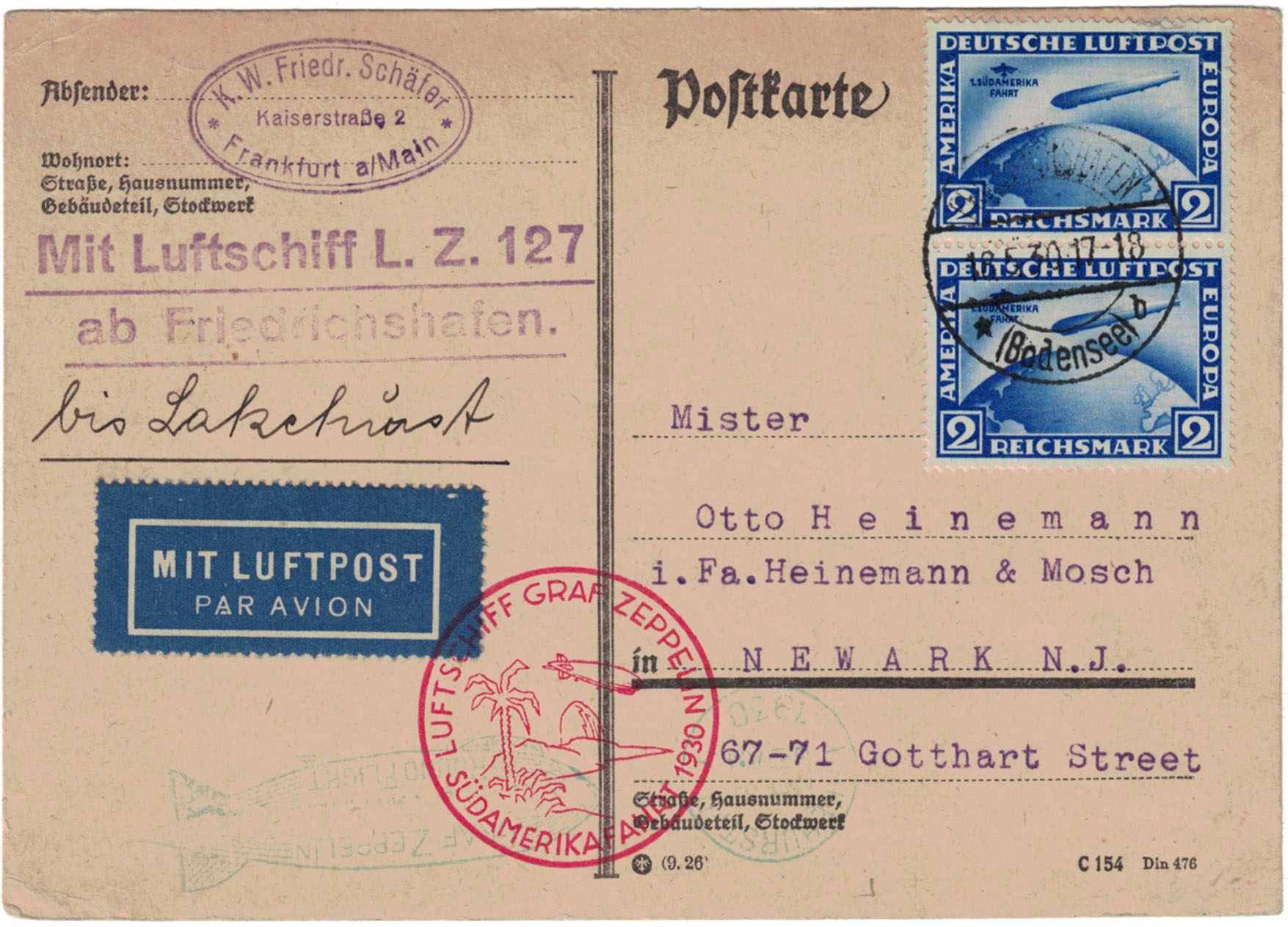 | |
| 105 | After Hitler came to power a new company the “Deutsche zeppelin Reederai or DZR” was founded and government money contributed to building a lager and faster airship which was completed in March 1936 and named the Hindenburg. This was put into service on both the North Atlantic and South Atlantic Lines. | 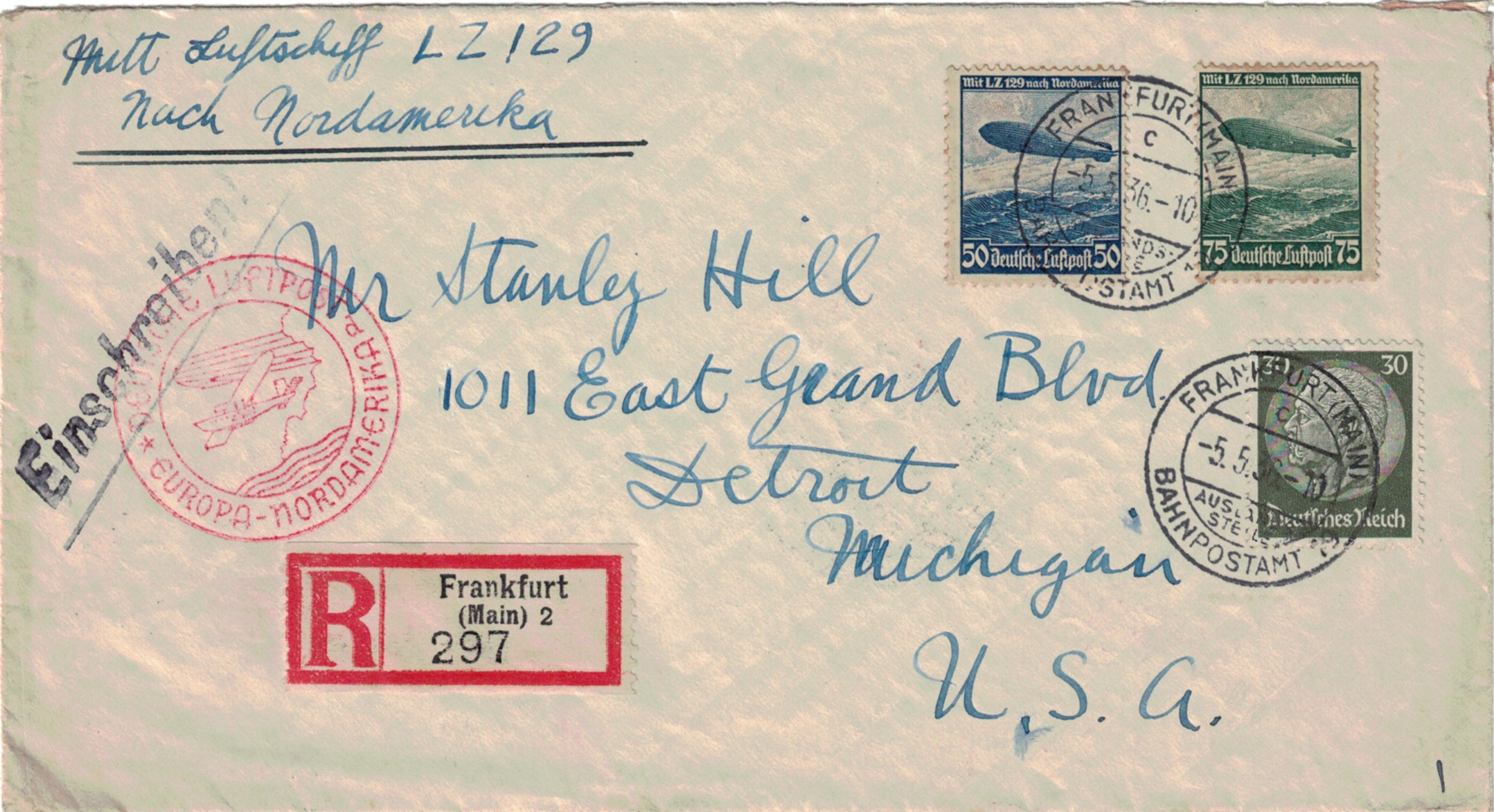 | |
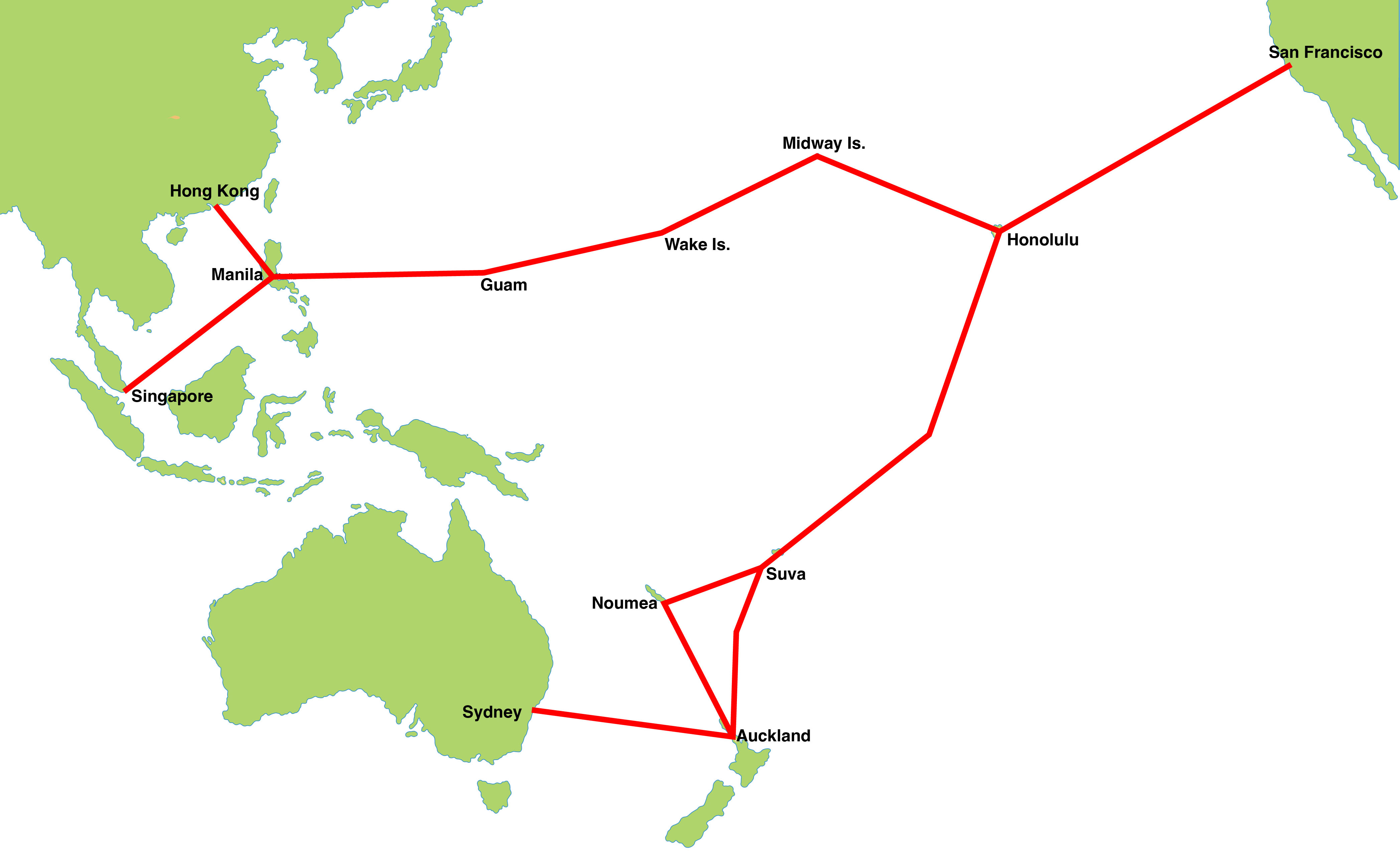
| 106 | In 1927, the Reich Transport Ministry sought to speed up trans-Atlantic mail service to America. To do so, they entered into agreements with the Norddeutscher-Lloyd shipping line, Lufthansa, and the Reichspost. Under these agreements, the NDL liners Bremen and Europa would be equipped with catapults and floatplanes, allowing delivery of mail to shore while the liners were still 500-800 km from port. The first catapult fight was launched from the Bremen on 22 July 1929, and the service was discontinued in 1935. Main terminals are New York (westbound) and Southampton (eastbound). | 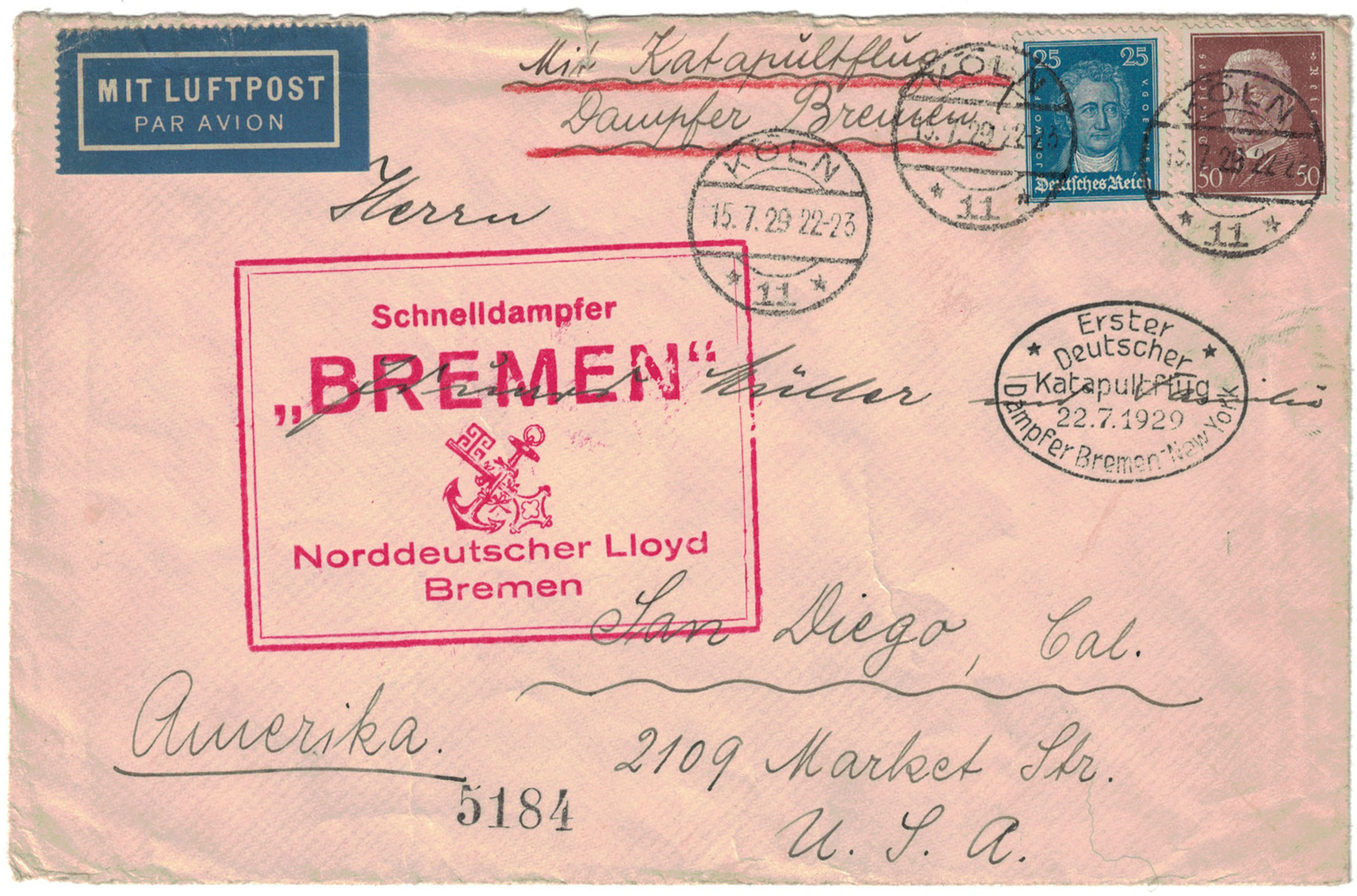 | |
| D.2. Routes between the USA and mainland Europe | |||
| 107 | The first trans-Atlantic route -- New York to Marseilles, France via Horta, Azores Islands and Lisbon, Portugal -- took place on May 20, 1939. However, a month later, when the second, more northerly New York - Southampton route was inaugurated, New York - Marseilles camo to be as the ‘southern’ route. | 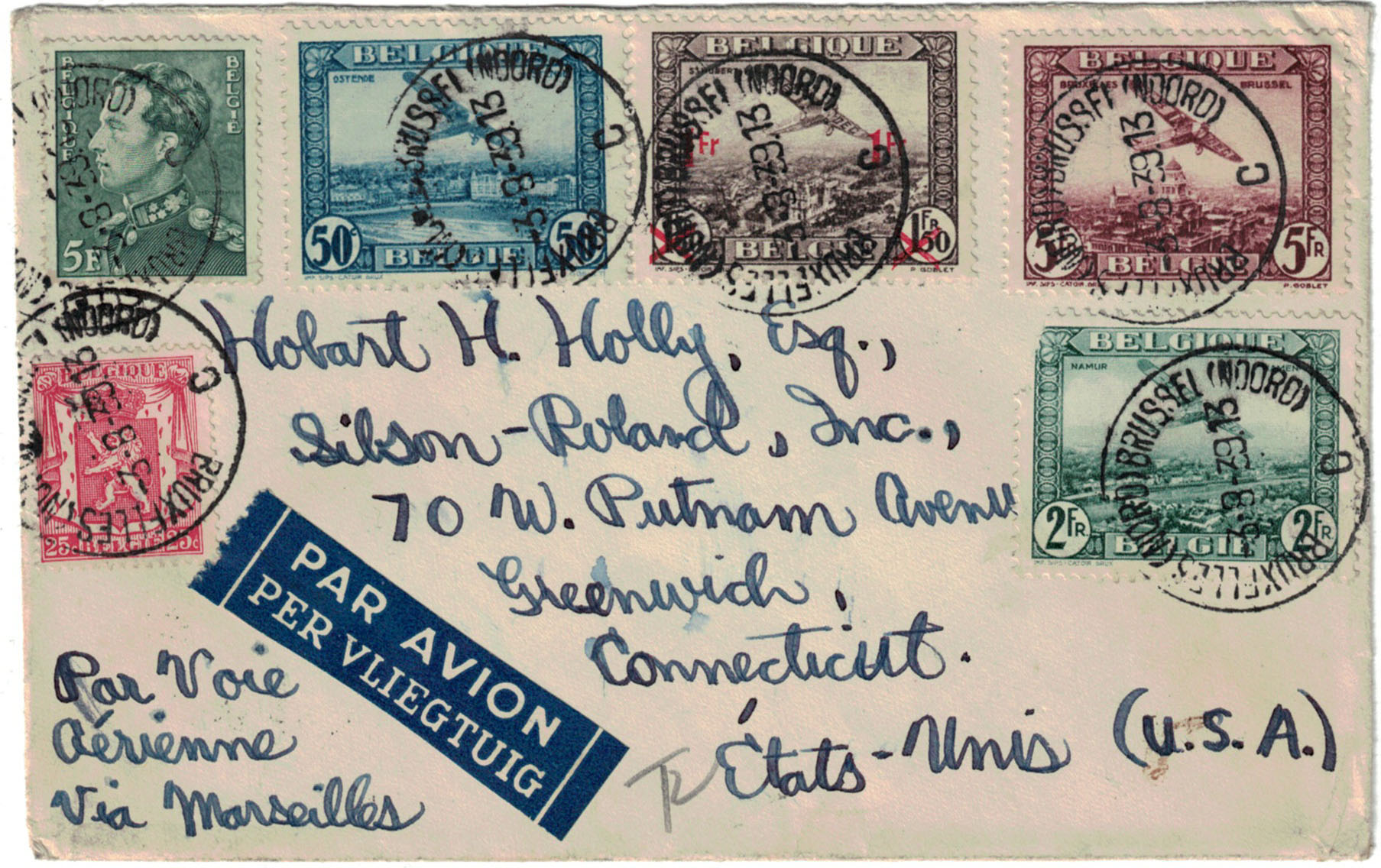 | |
| 108 | Germany invaded Poland on September 1 and World War II began on September 3. America neutrality barred PAA from the war zone. On September 6, Foynes and Lisbon became the European terminals of trans-Atlantic route. | 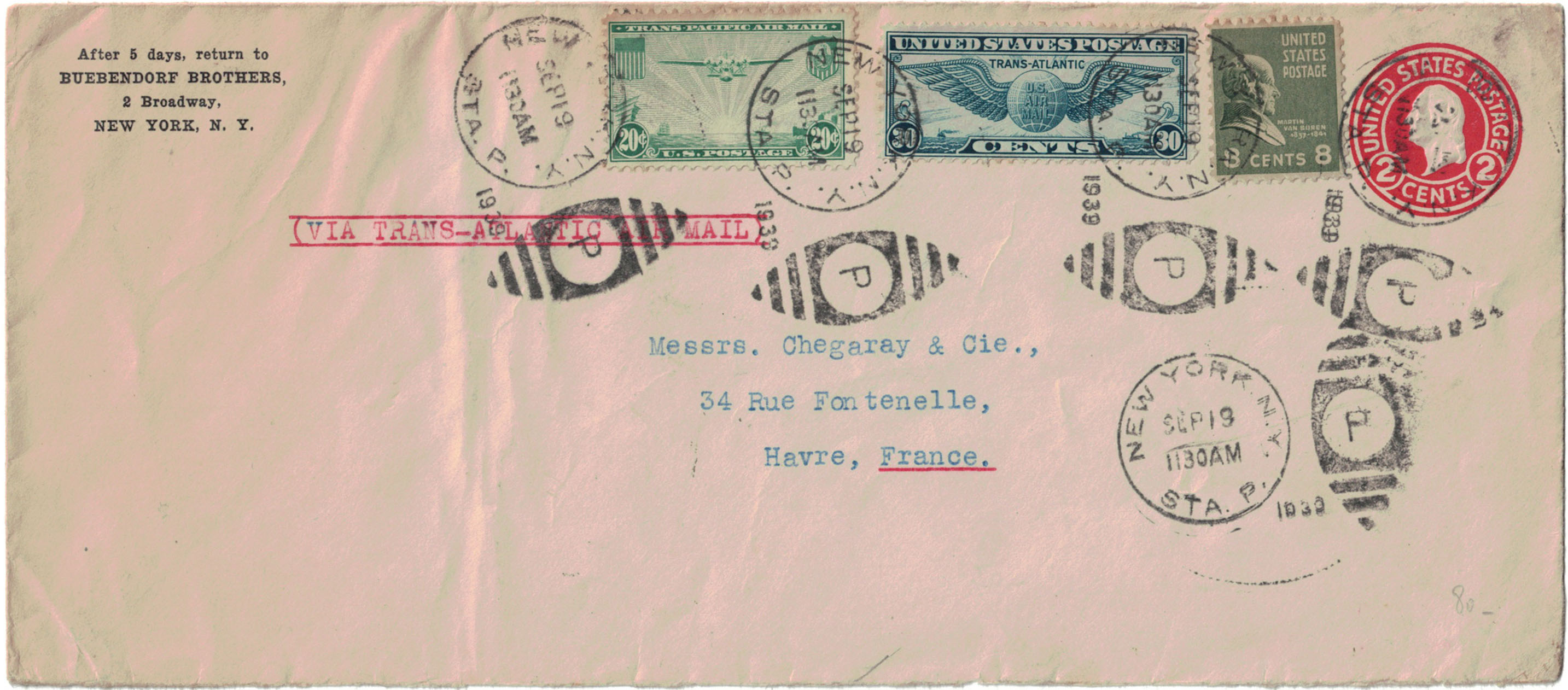 | |
| 109 | Frequent strong west-to-east headwinds during the winter season constituted a severe problem on the Lisbon - Horta - Bermuda - New York route. When such conditions prevailed flying the Bolama route, with shorter legs and more frequent refueling but heavier payloads, was an attractive alternative. The first flight via Bolama departed Lisbon on February 5, 1941. | 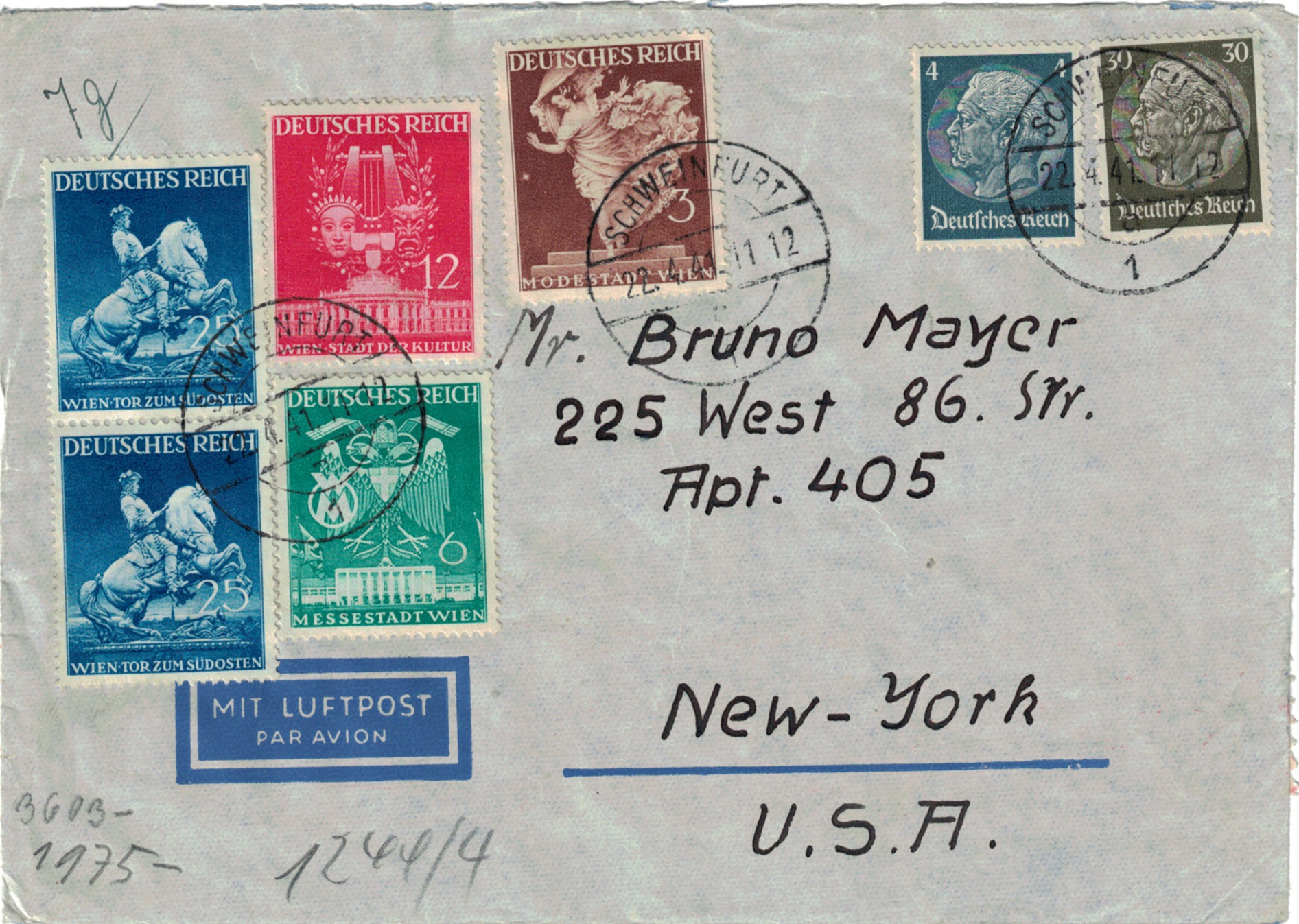 | |
| 110 | The old route (a single bidirectional route via Horta and Bermuda) was returned on 19 May 1942. | 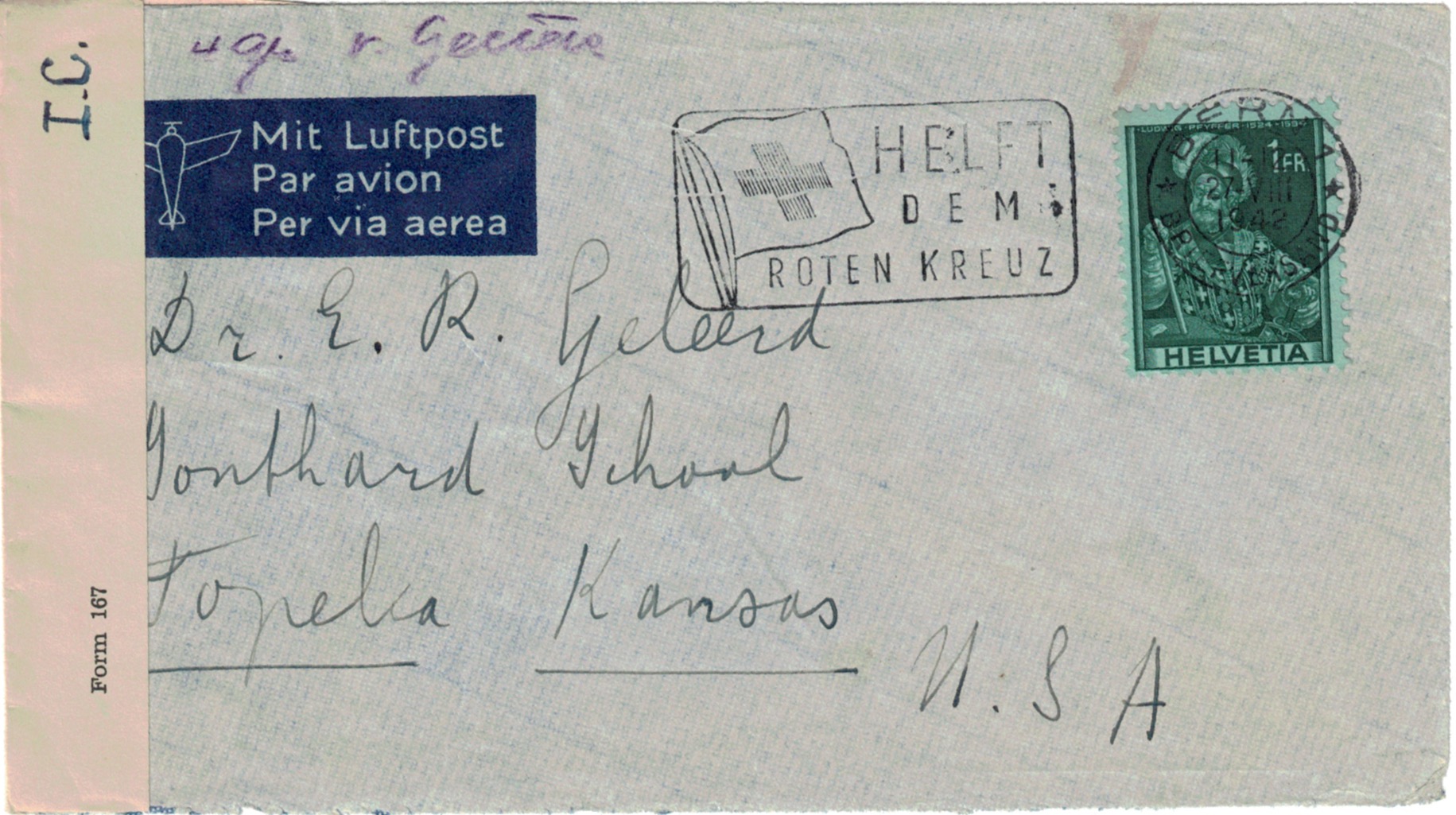 | |
| 111 | 17 October 1942 until 17 May 1943. Resumption of winter flights. America eastbound to Europe: New York - Lisbon. Europe westbound to America: Lisbon - West Africa - Caribean - New York. | 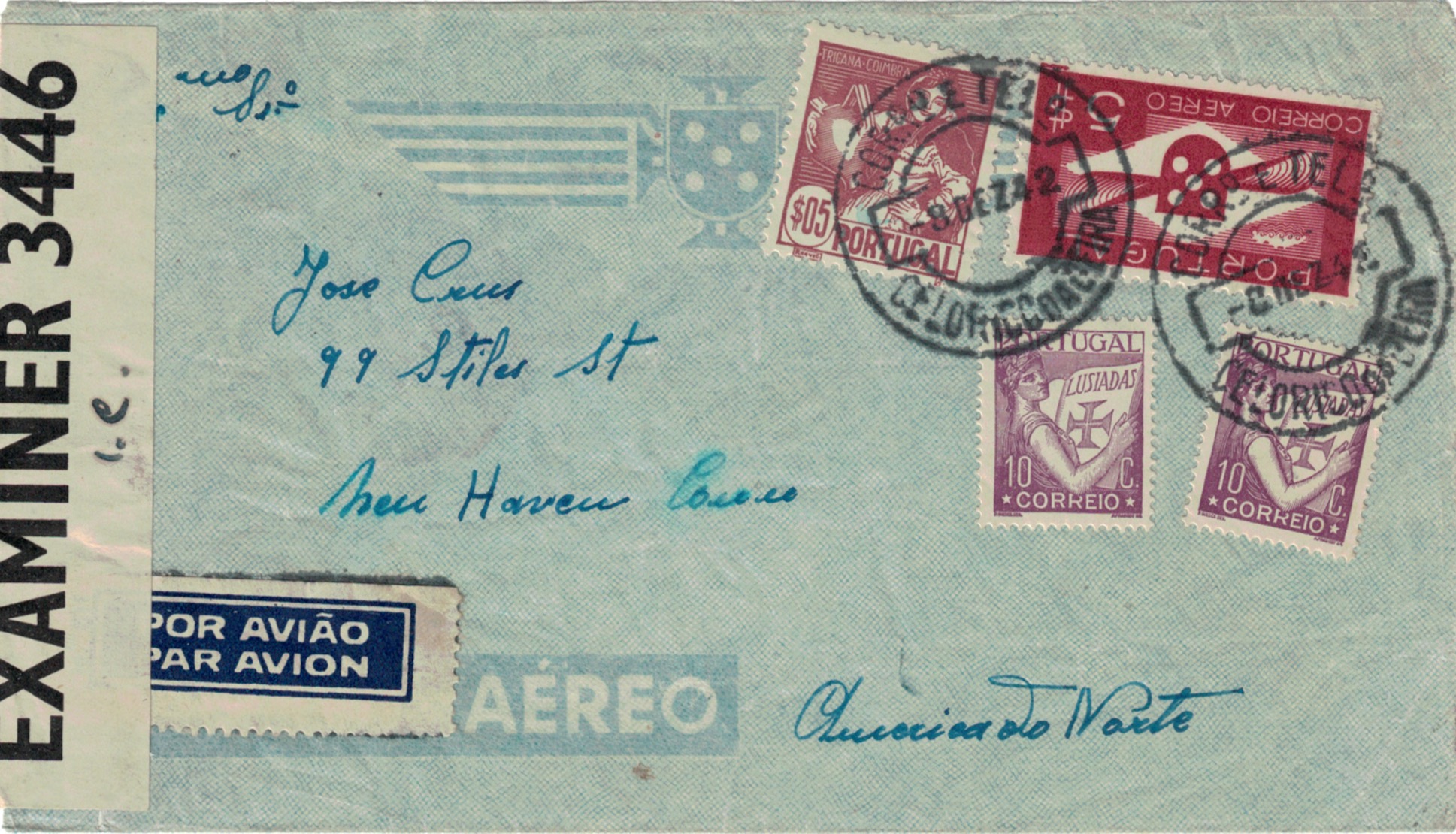 | |
| 112 | 13 June 1943 until 23 October 1943. A single bidirectional route New York - Lisbon. | 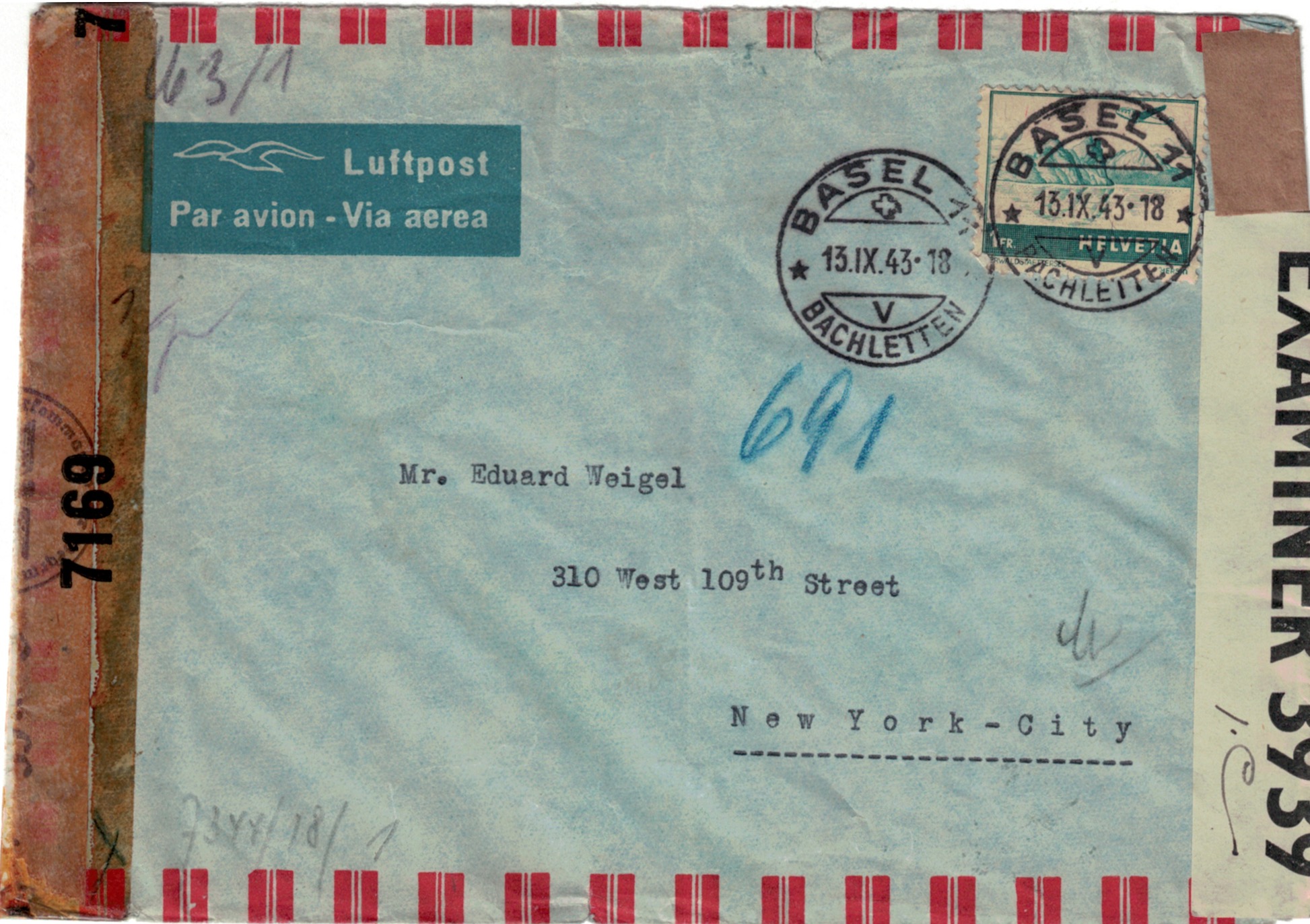 | |
| 113 | 24 October 1943 until 12 May 1944. Resumption of winter flights. America eastbound to Europe: New York - Lisbon. | 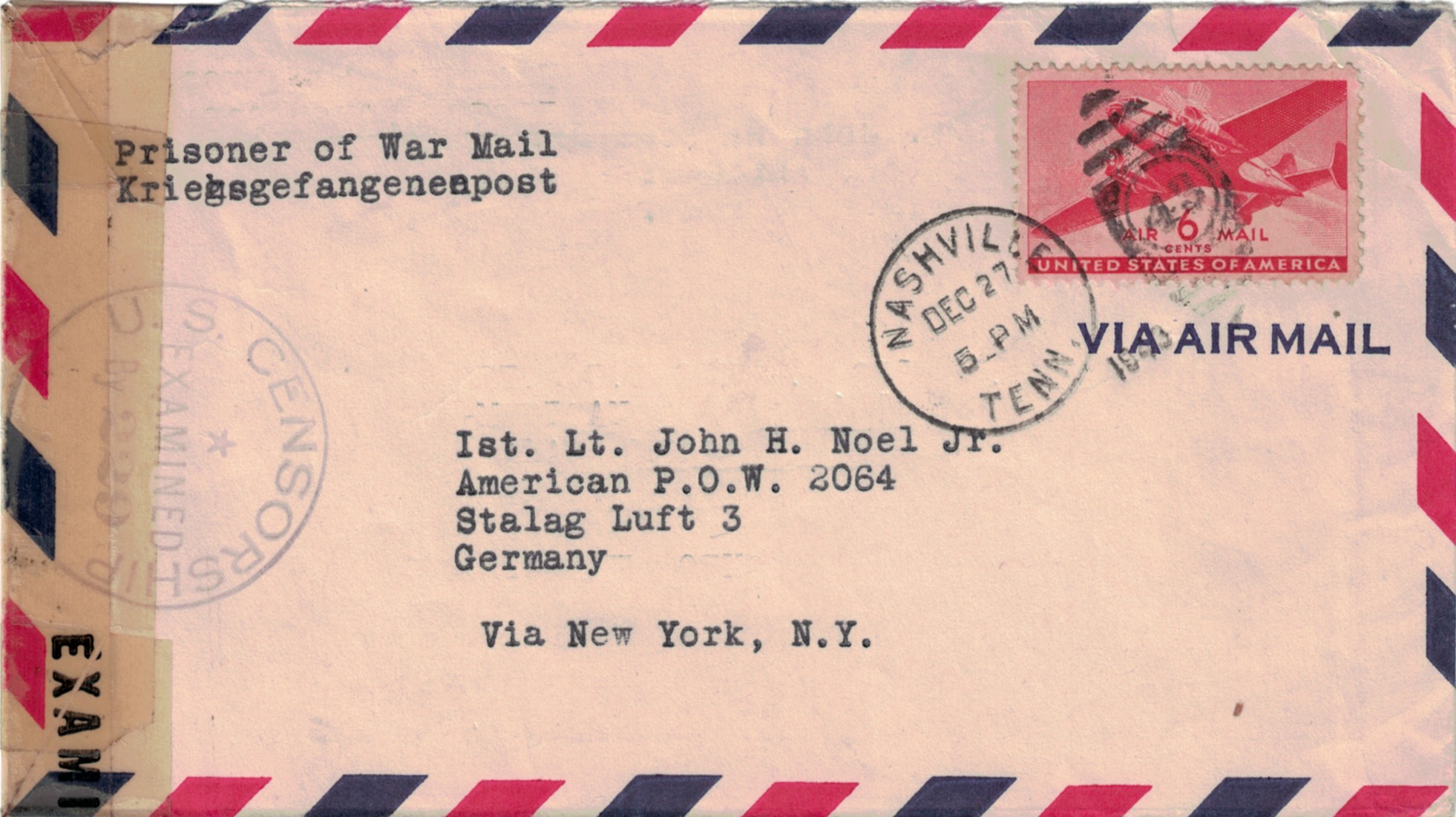 | |
| 114 | Europe westbound to America: Lisbon - West Africa - Caribean - New York. | 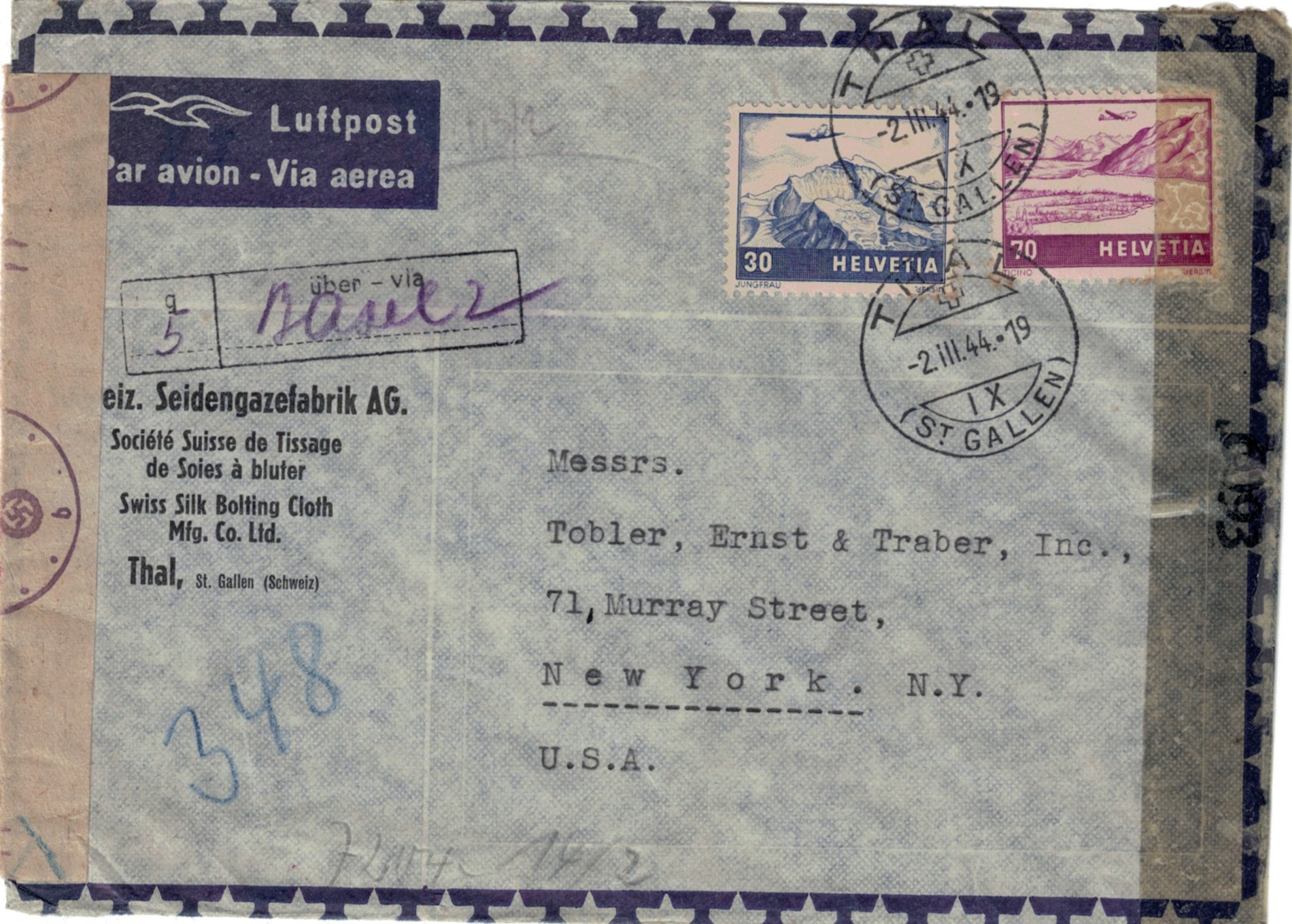 | |
| 115 | 15 May 1944 until 8 October 1944. A single bidirectional route New York - Lisbon. | 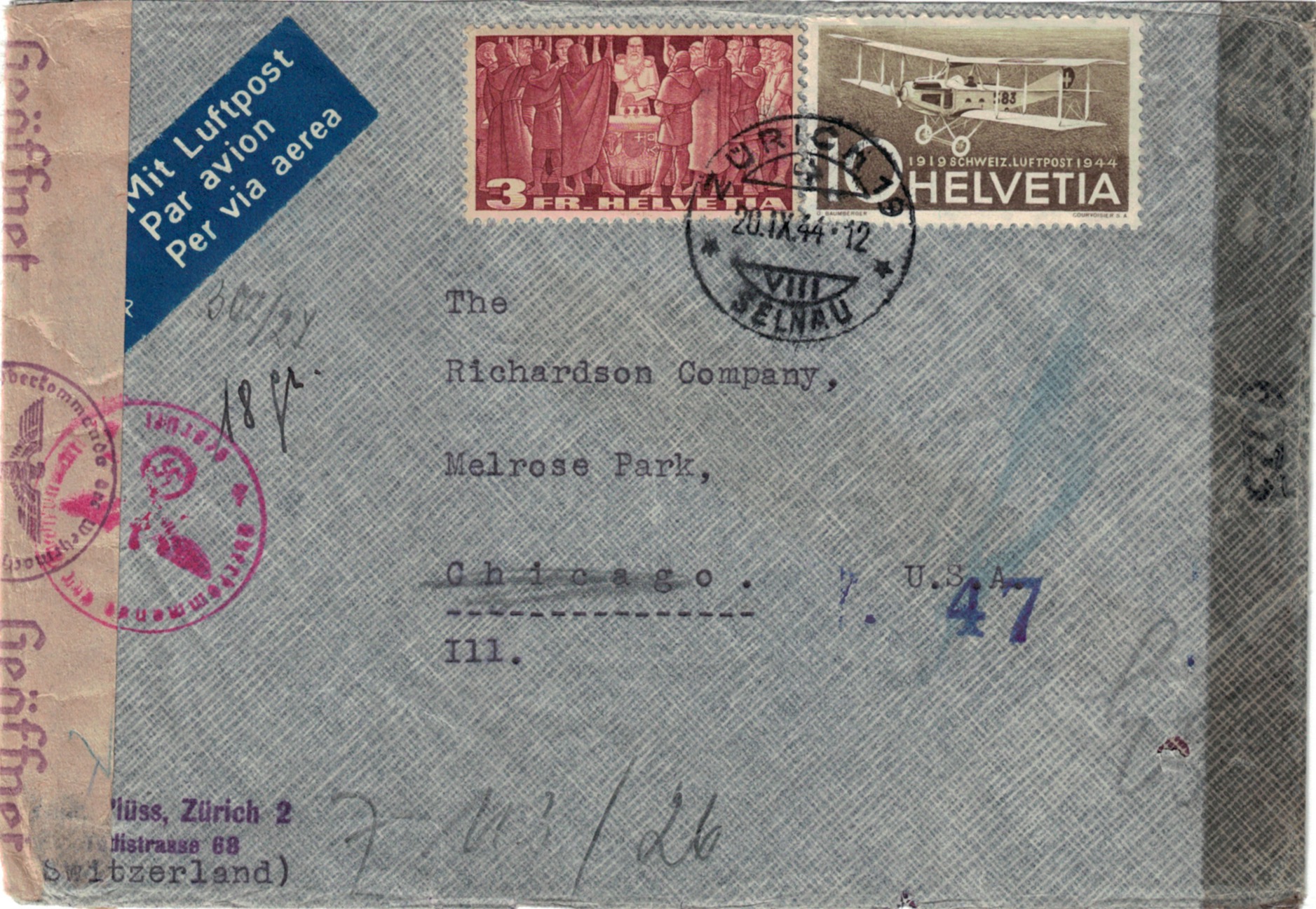 | |
| 116 | 22 October 1944 until 12 May 1945. Resumption of winter flights. America eastbound to Europe: New York - Lisbon. Europe westbound to America: Lisbon - West Africa - Caribean - New York. | 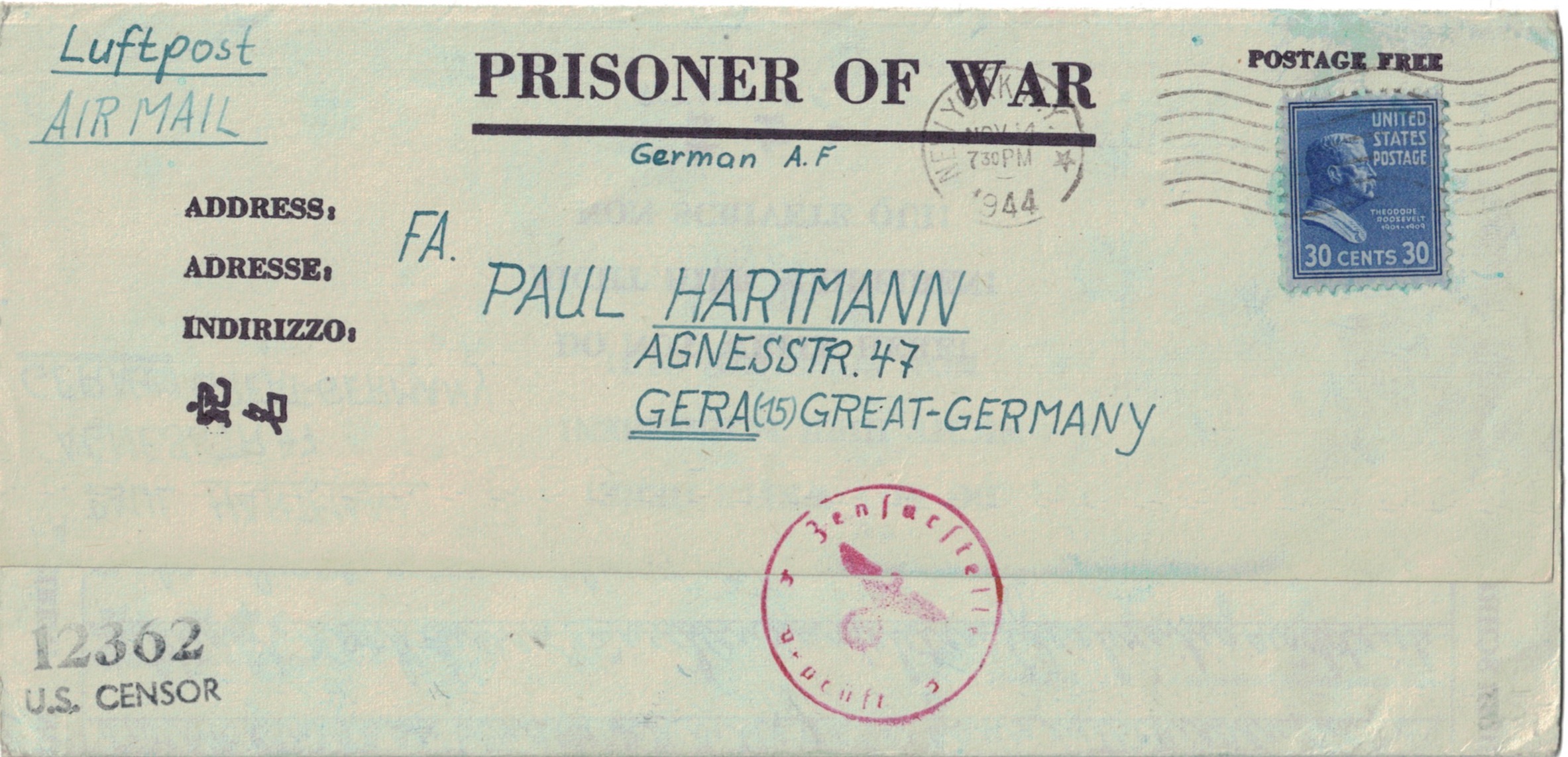 | |
| 117 | The old route (a single bidirectional route via Horta and Bermuda) was returned on May 1945. | 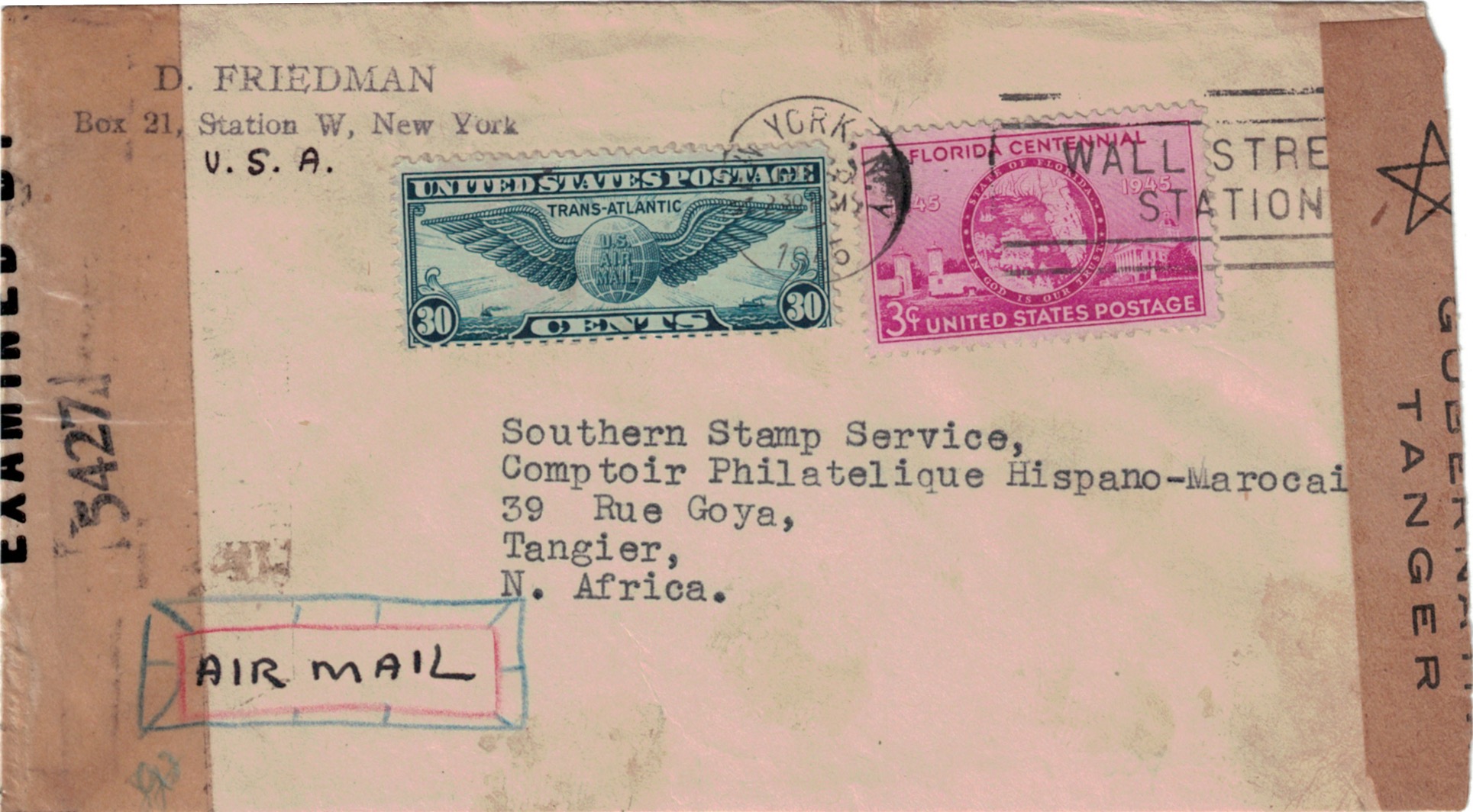 | |
| D.3. The flights by Syndicato Condor connected | |||
| 118 | The first British dispatches -- know overseas as ‘first British acceptances’ -- were flown to Marseilles where they connected with the second Marseilles-NY flight. | 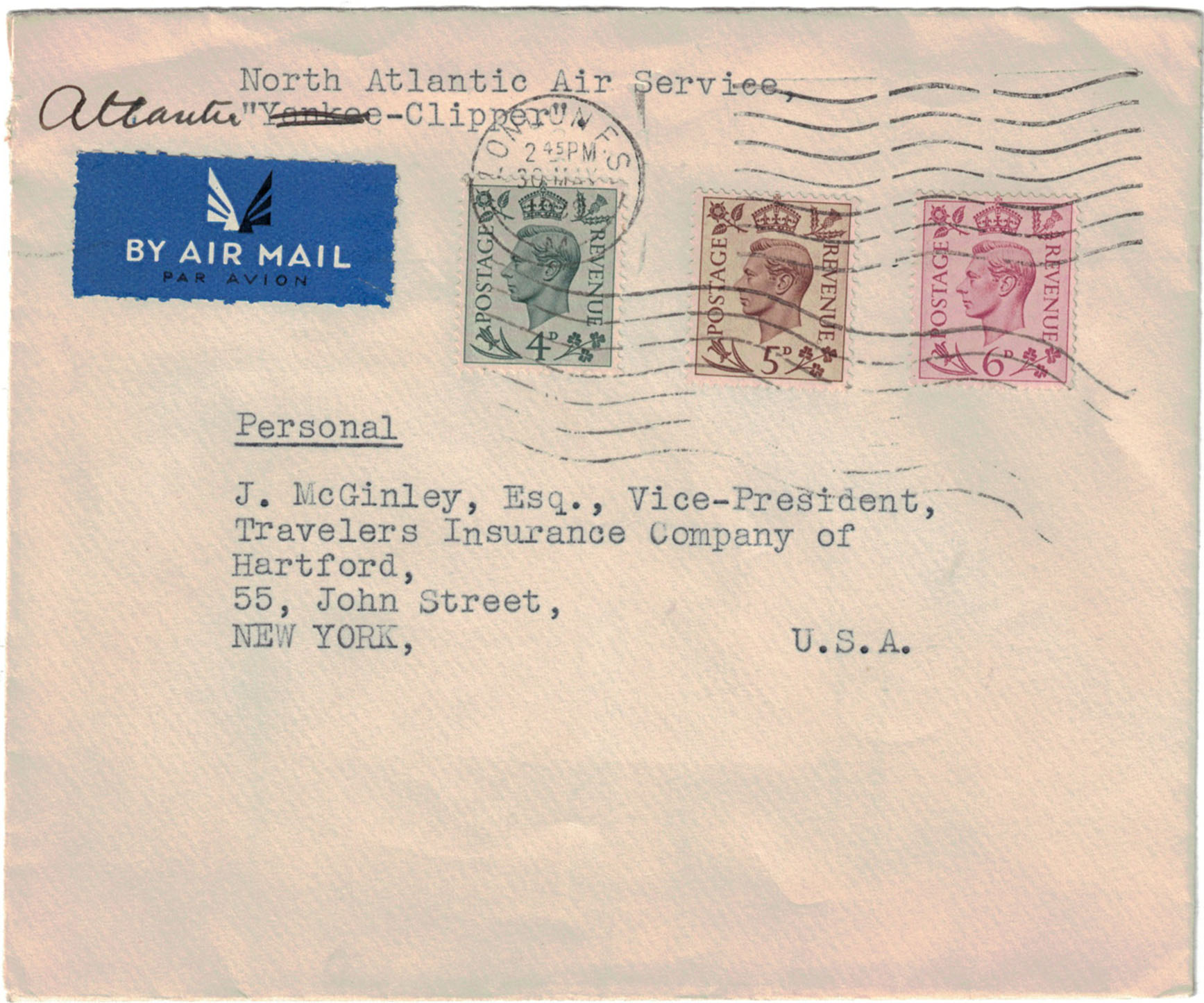 | |
| 119 | The ‘northern’ route, New York - Foynes (Ireland) - Southhampton (UK) took place on June 24, 1939. | 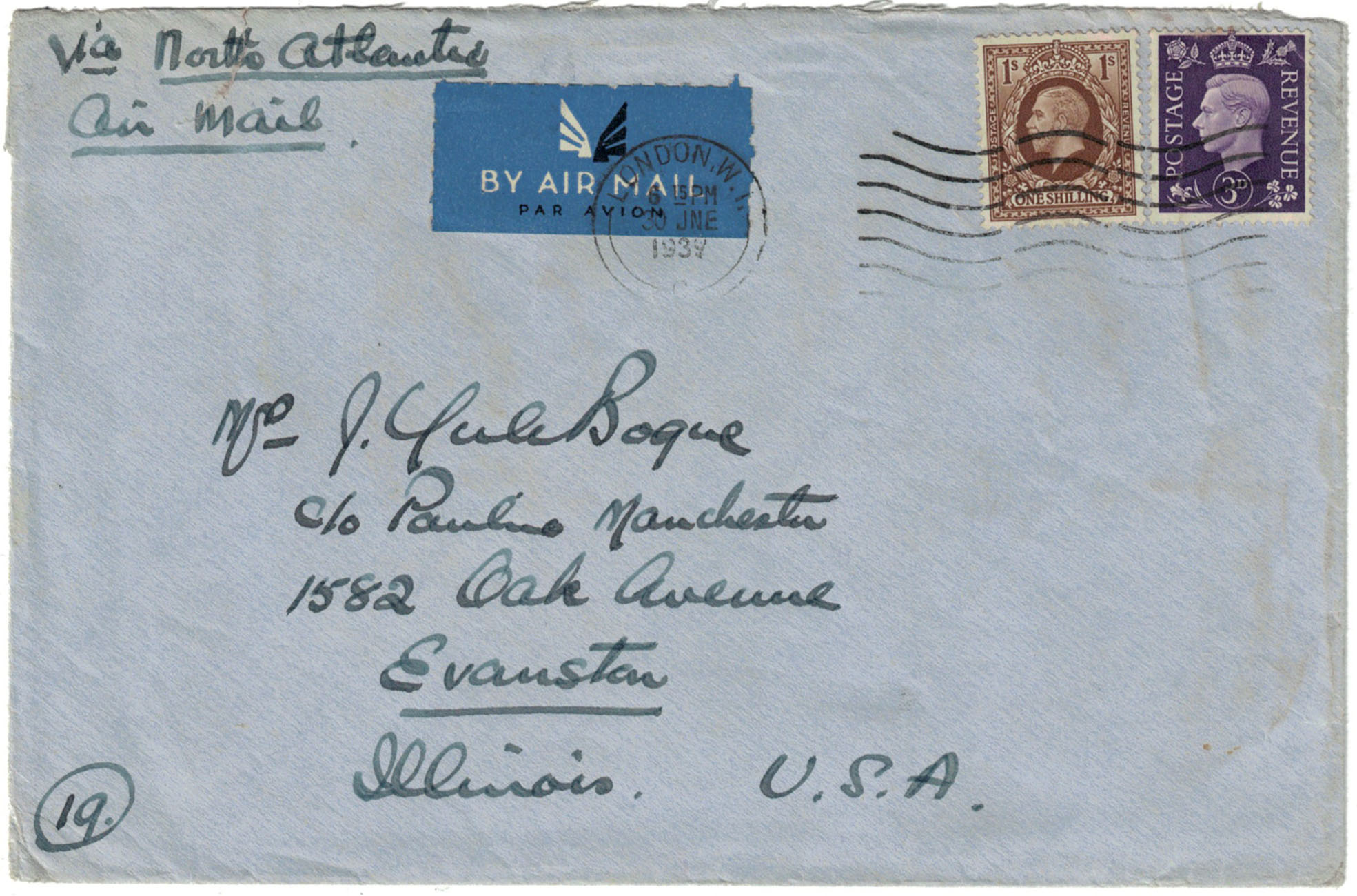 | |
| 120 | On August 5, 1939, Imperial Airways inaugurated service on the trans-Atlantic route, exercising its reciprocal rights to complement PAA’s northern Atlantic route. The route duplicated the northern route from Southampton. | 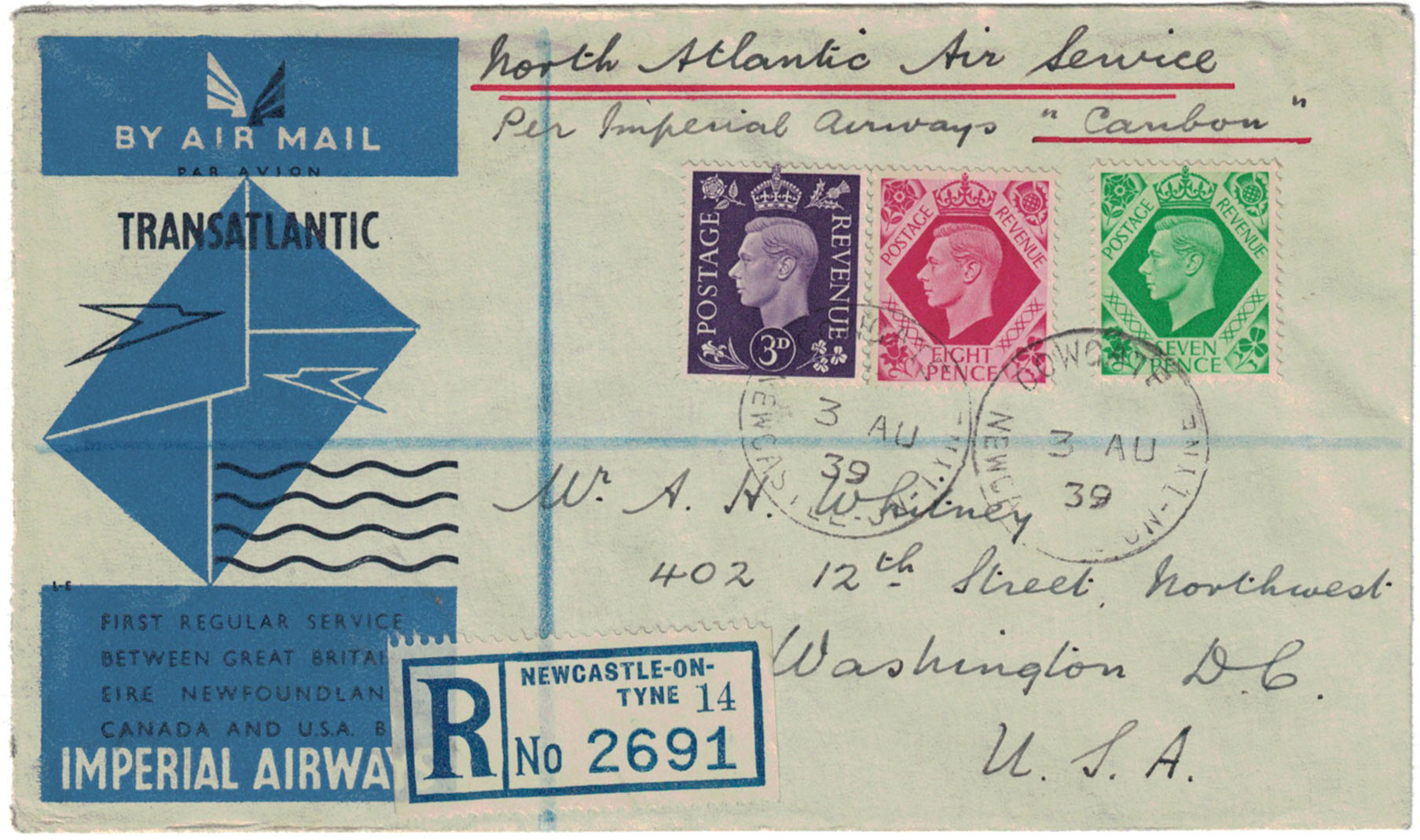 | |
| 121 | Germany invaded Poland on September 1 and World War II began on September 3. America neutrality barred PAA from the war zone. On September 6, Foynes became the terminal of trans-Atlantic route. | 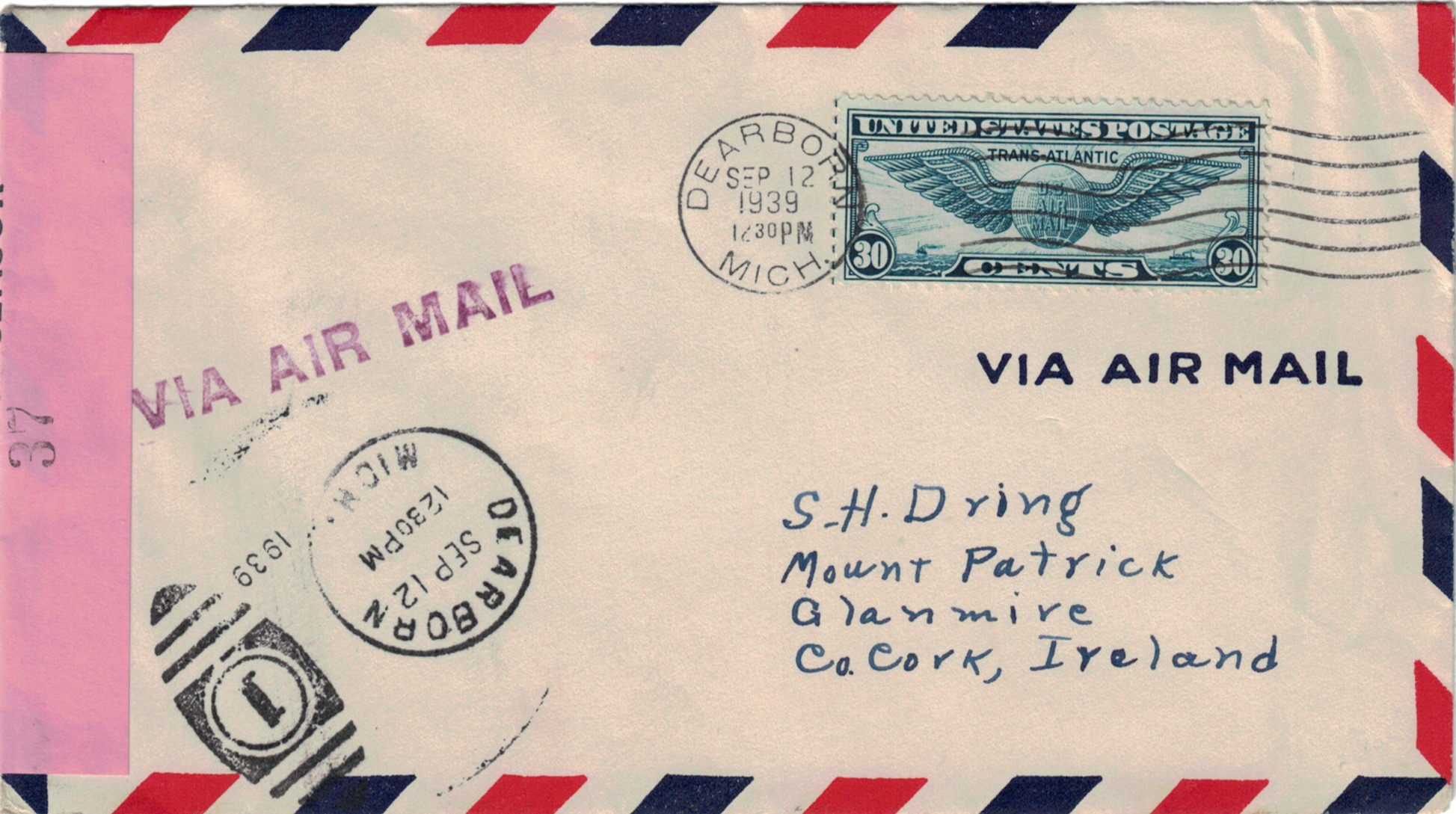 | |
| 122 | Imperial Airways made their last flight on September 30, 1939, and terminated trans-Atlantic operations. PAA’s last northern flight was on October 7, 1939. The resumption of the Northern route. 18 May 1942 until 13 October 1942. New York to UK via Botwood and Shediac, returning on the same track. | 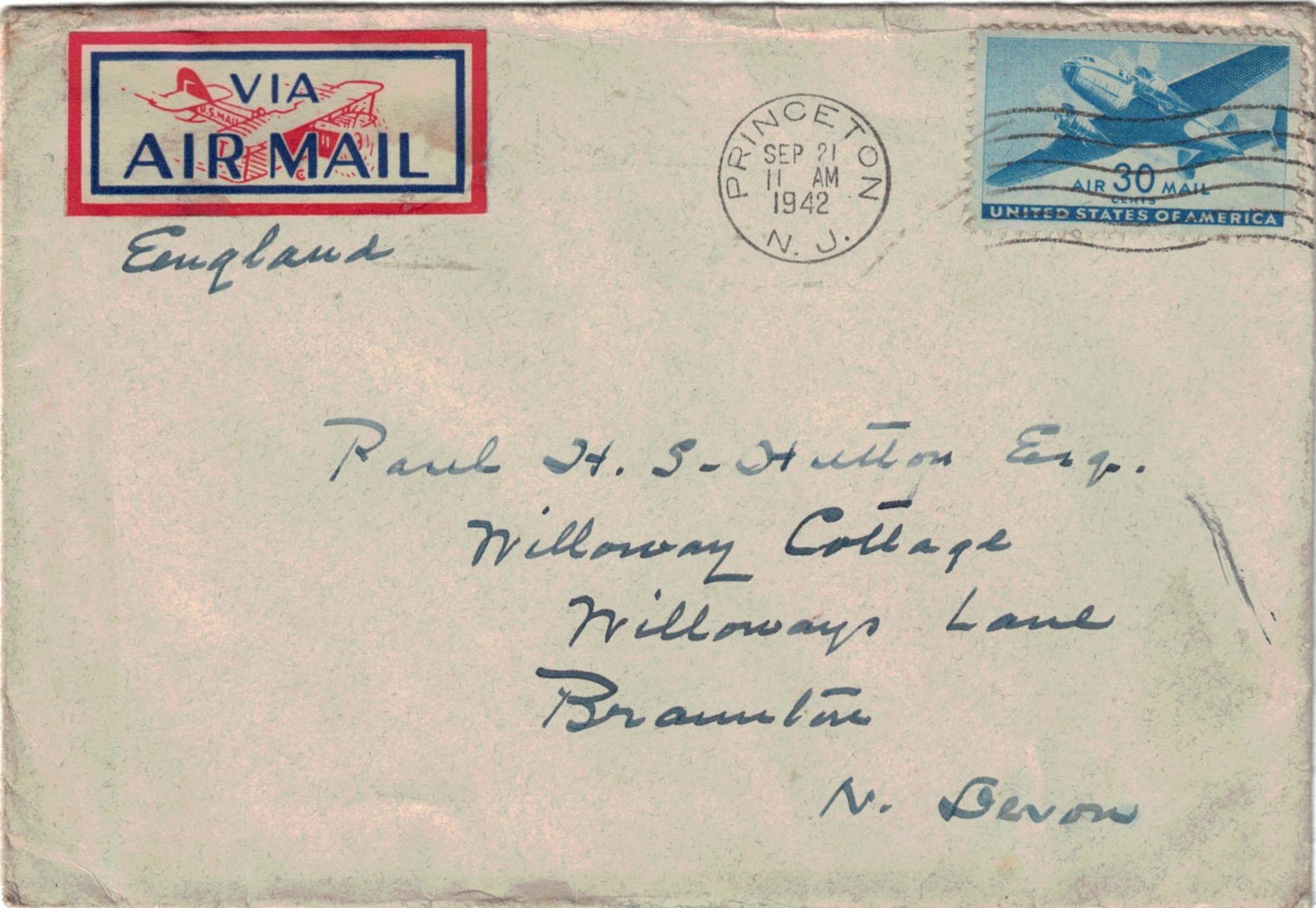 | |
| 123 | 17 October 1942 until 17 May 1943. Resumption of winter flights. America eastbound to UK: New York - Lisbon - Foynes. Europe westbound to America: Foynes - Lisbon - West Africa - Caribean - New York. | 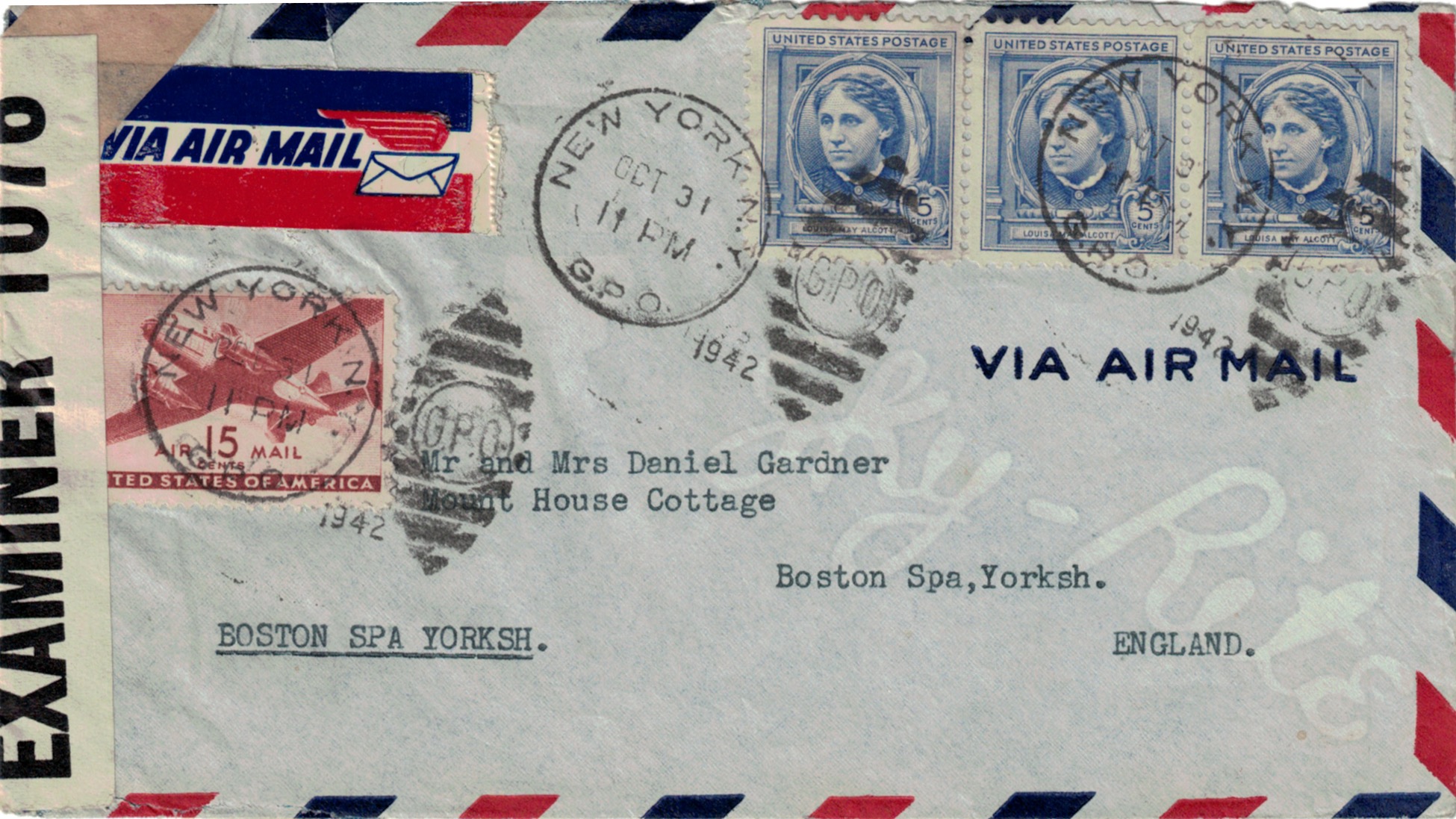 | |
| 124 | 28 May 1943 until 11 October 1943. New York to UK via Botwood and Shediac, returning on the same track. | 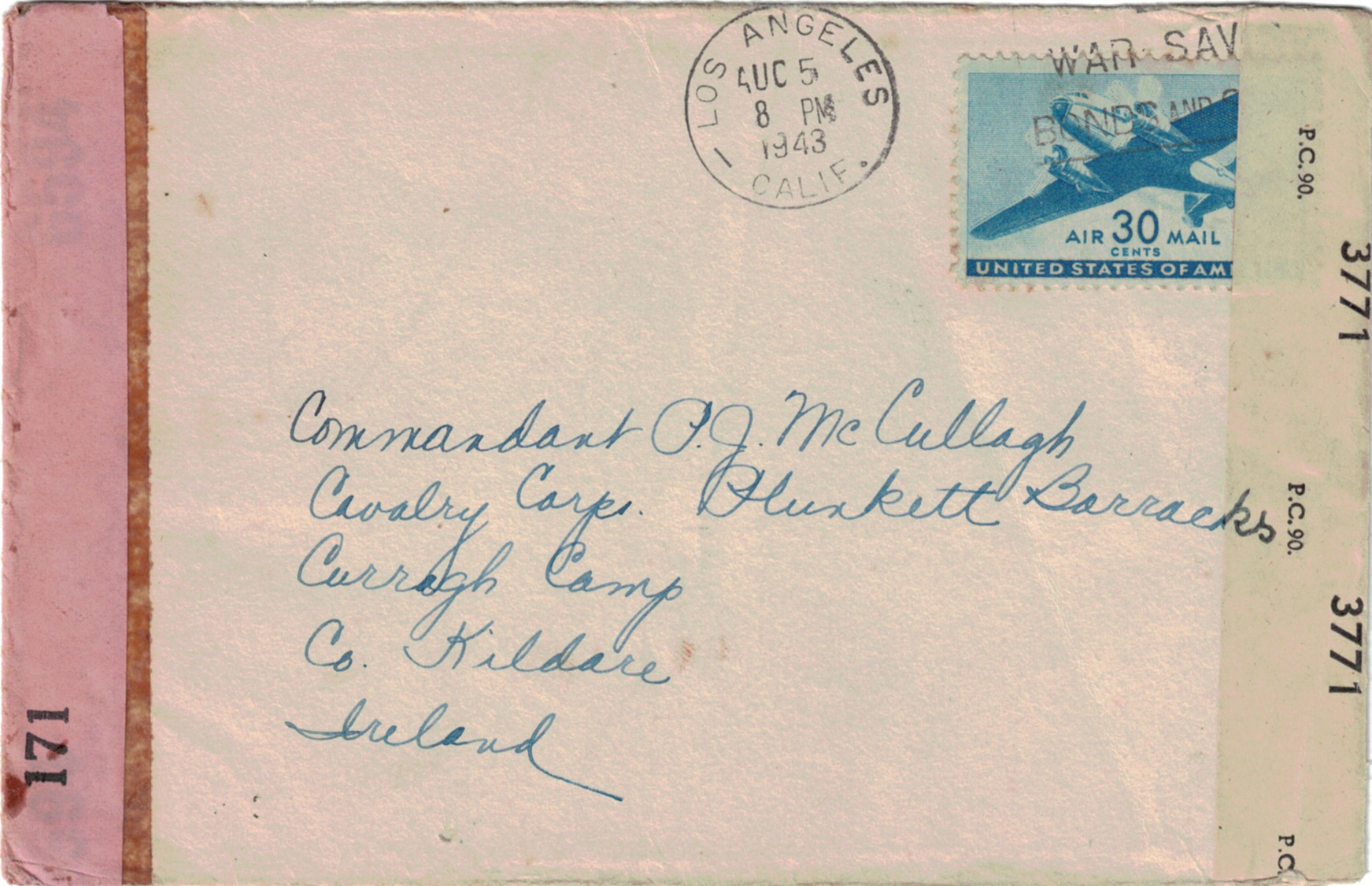 | |
| 125 | 24 October 1943 until 12 May 1944. Resumption of winter flights. America eastbound to UK: New York - Lisbon - Foynes. Europe westbound to America: Foynes - Lisbon - West Africa - Caribean - New York. | 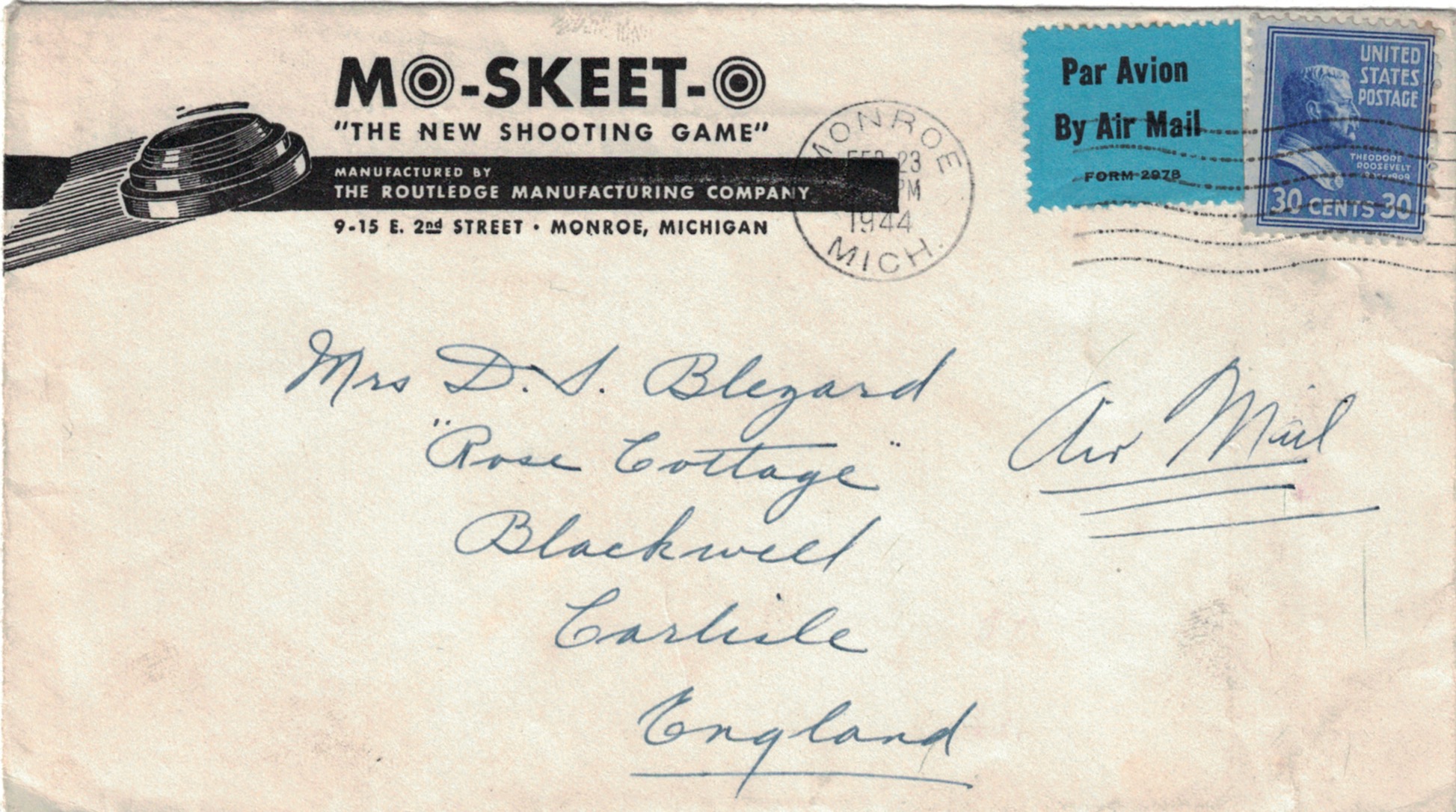 | |
| 126 | 15 May 1944 until 13 October 1944. A single bidirectional route New York - Foynes. | 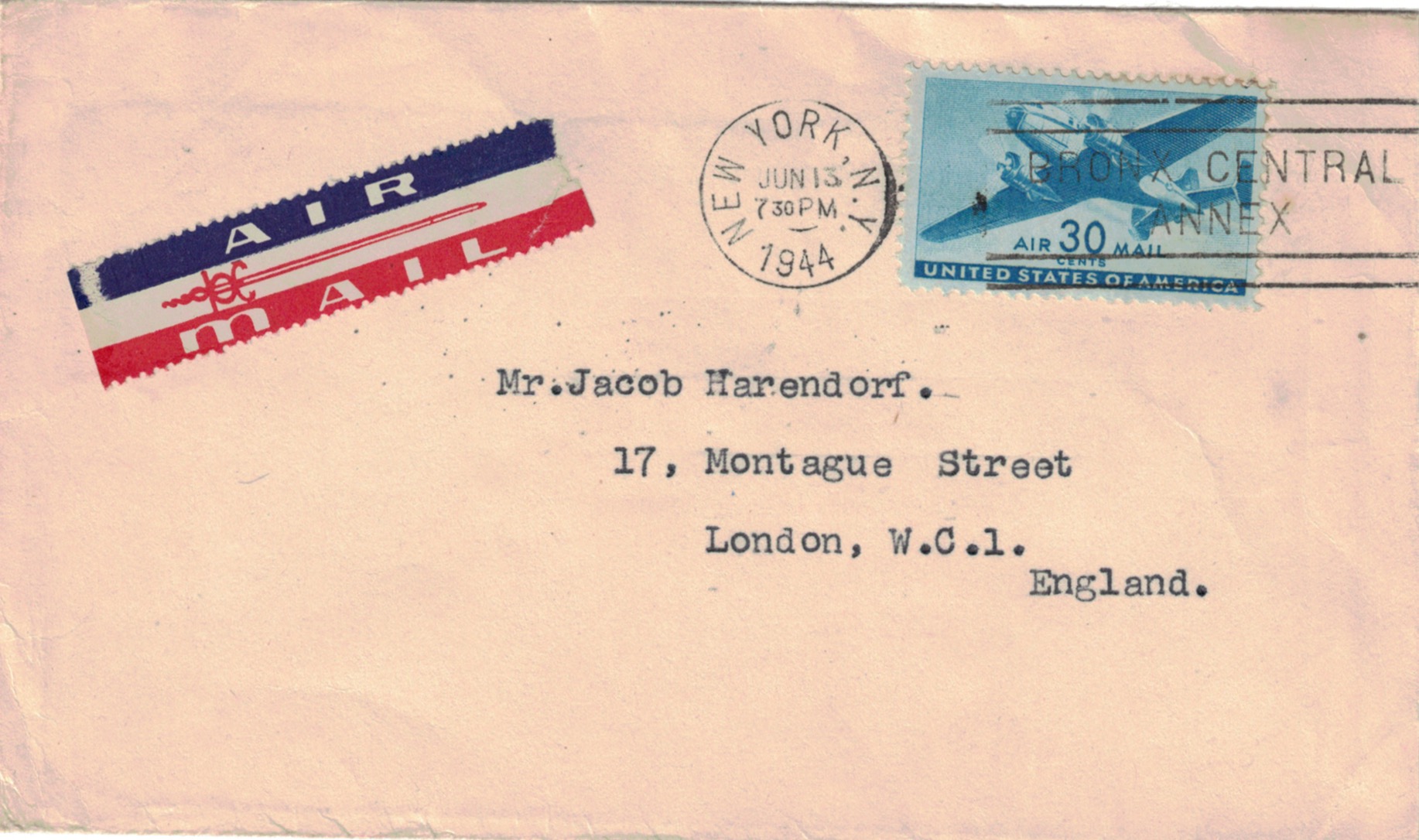 | |
| 127 | 22 October 1944 until 12 May 1945. Resumption of winter flights. America eastbound to UK: New York - Lisbon - Foynes. Europe westbound to America: Foynes - Lisbon - West Africa - Caribean - New York. | 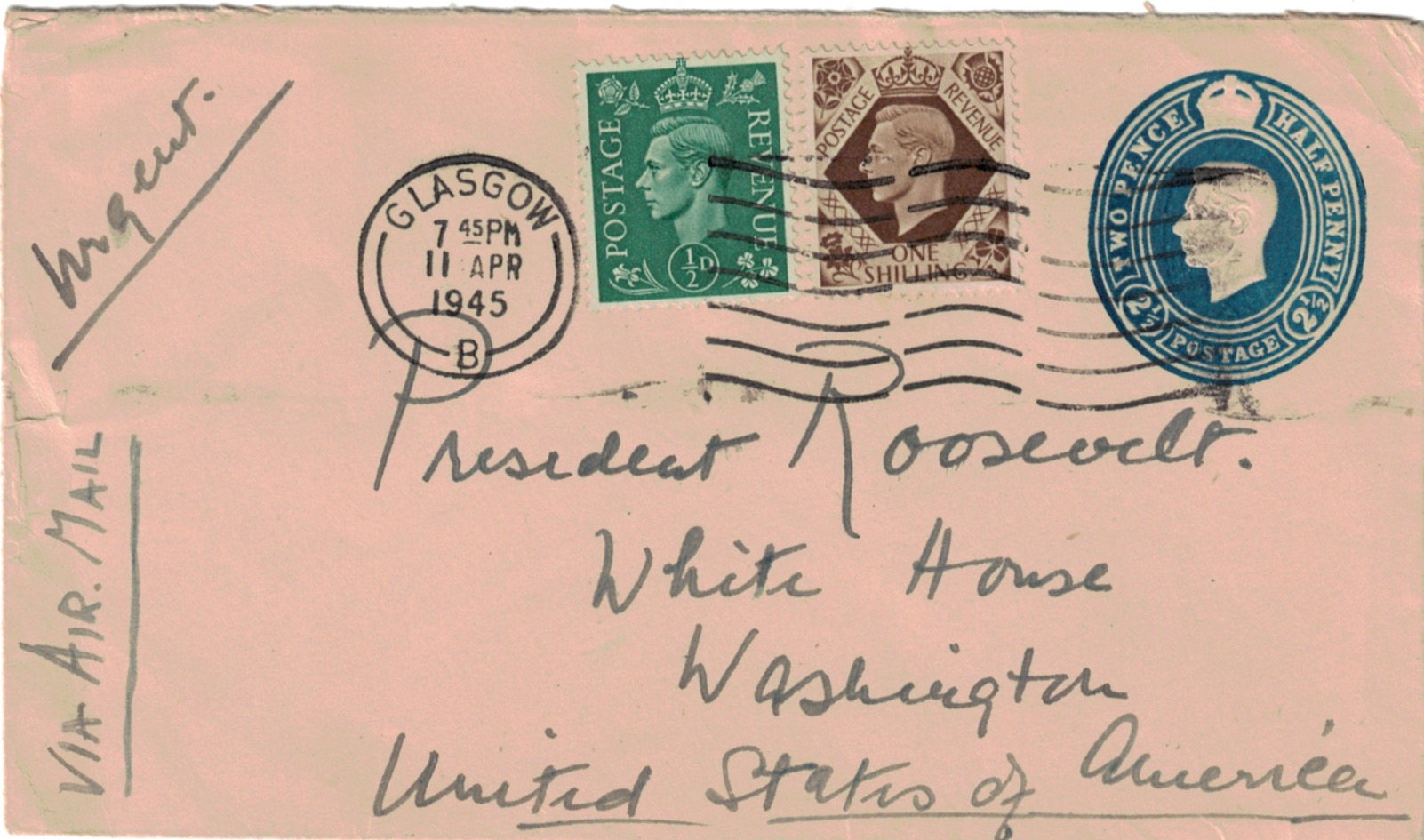 | |
| 128 | The old route (a single bidirectional route New York - Foynes) was returned on May 1945. | 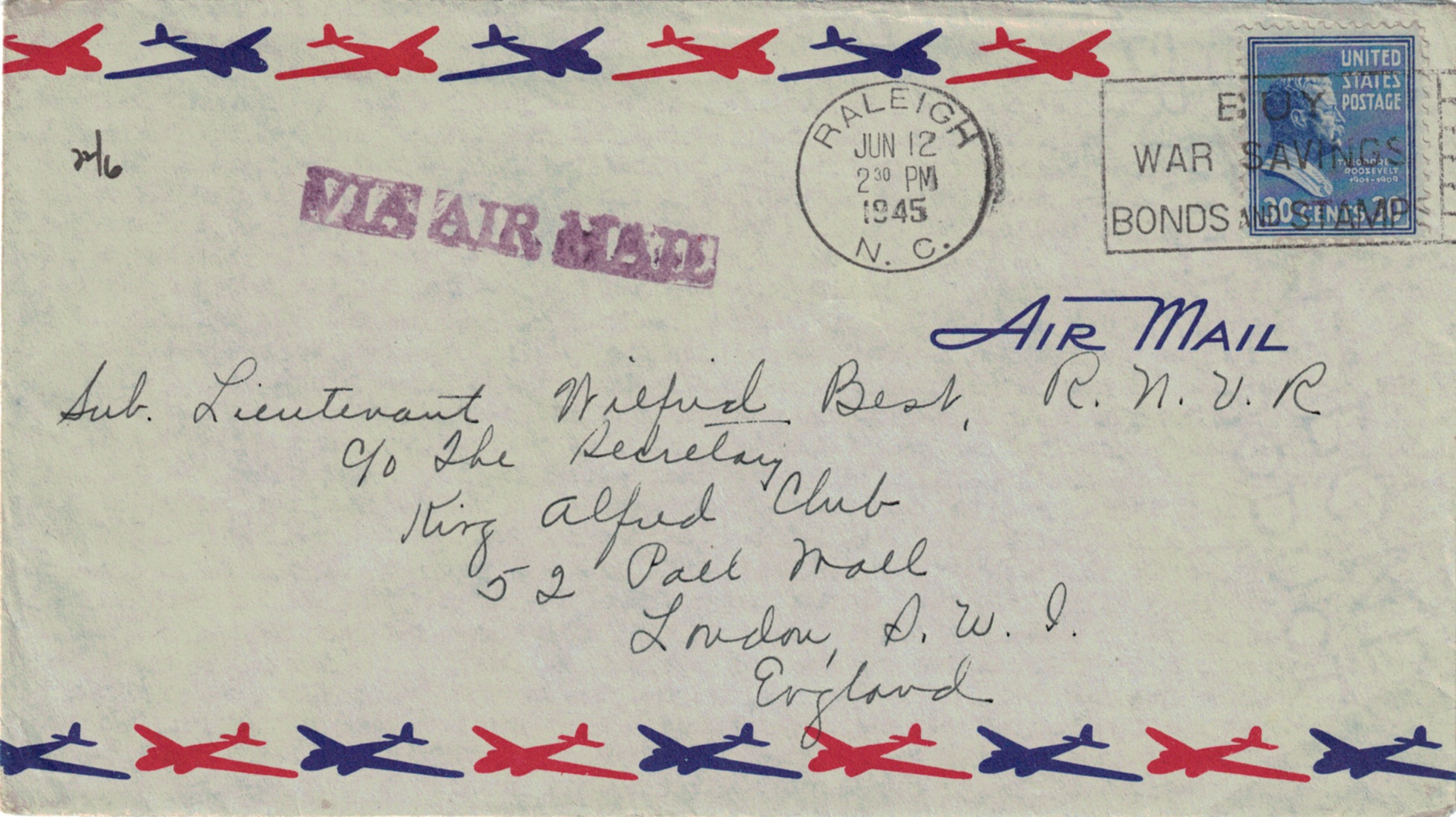 | |
E. BETWEEN EURASIA-AFRICA AND OCEANIA | |||
 | |||
| E.1. British and Australian Services | |||
| 129 | The England-India-Malaya service was extended to Australia commencing with the flight from London on 8 December 1934. | 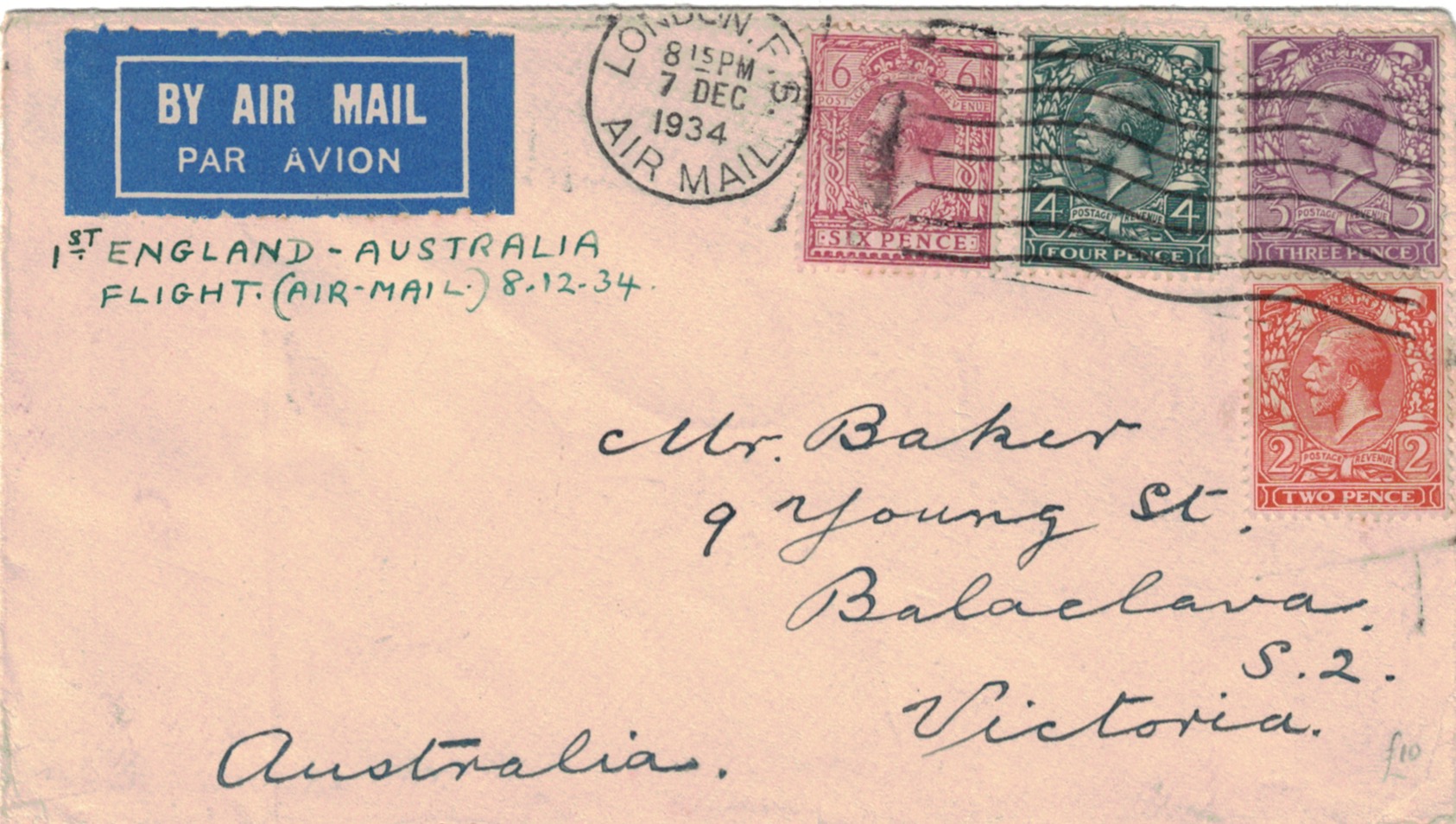 | |
| 130 | On 6 May 1936 the service was duplicated. Days of despatch were Wednesday and Saturday instead of Saturday only. | 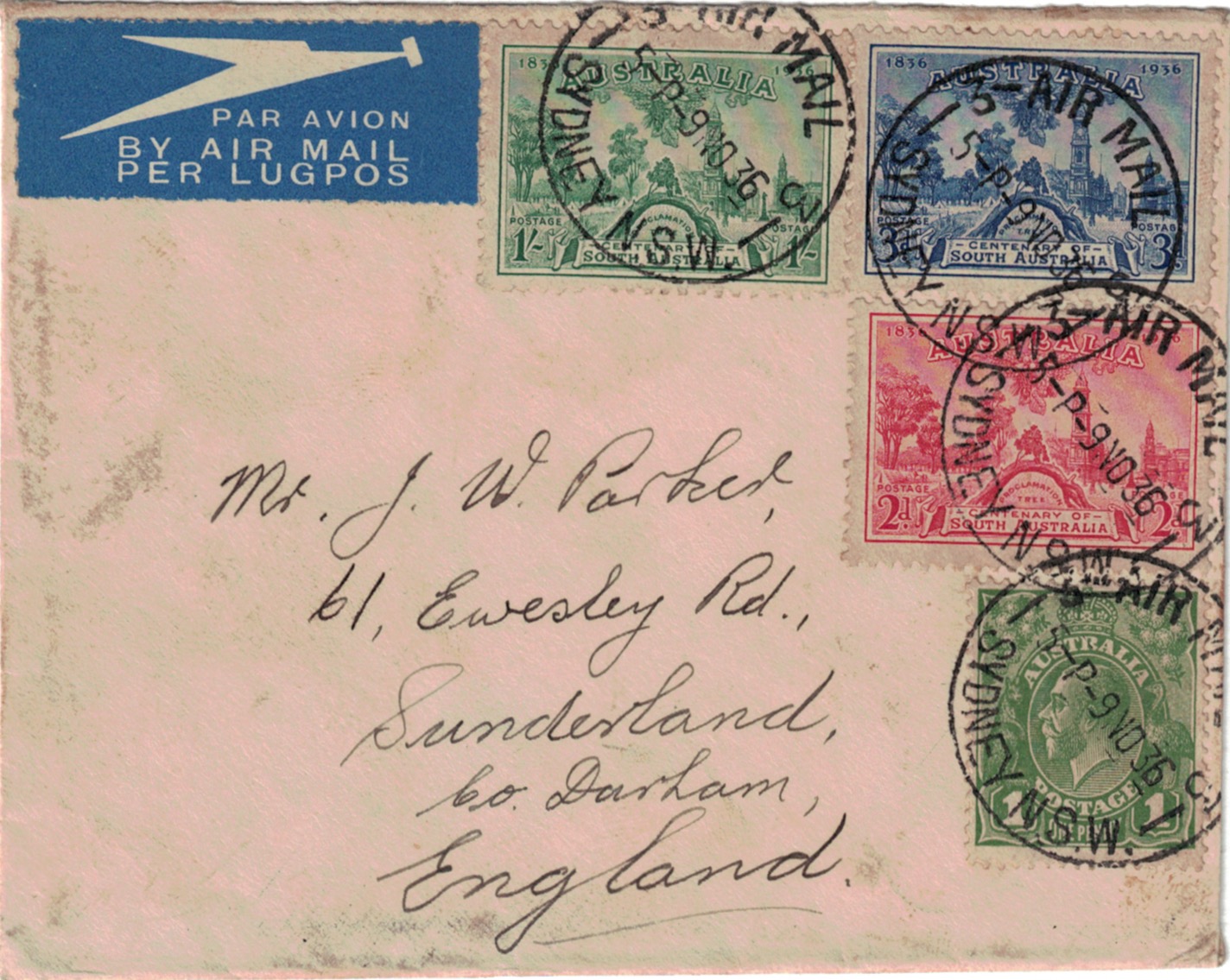 | |
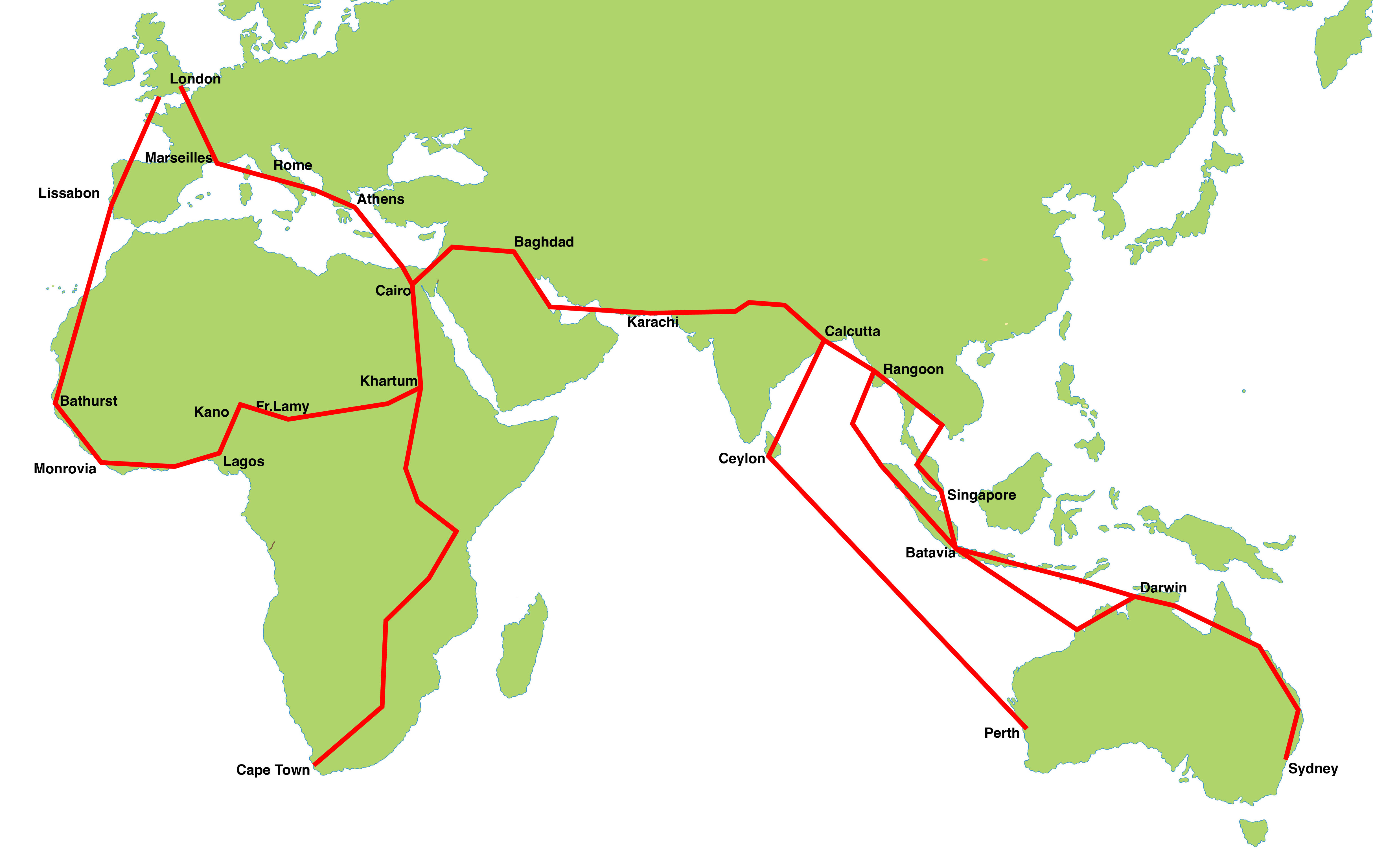
| 131 | After Italy entered World War II on 10 June 1940, mail could no longer be flown between Alexandria (Egypt) and the UK via the Mediterranean. The Australia - Alexandria and the Cairo - South Africa airmail services were still possible. The result was the Horseshoe Route whereby mail was flown from Sydney by the normal Eastern Route via Singapore and India to Cairo. From Cairo, it was flown to Durban in South Africa and from there to the UK by sea. The first dispatch from Durban on the Horseshoe Route was on Wednesday 19 June. | 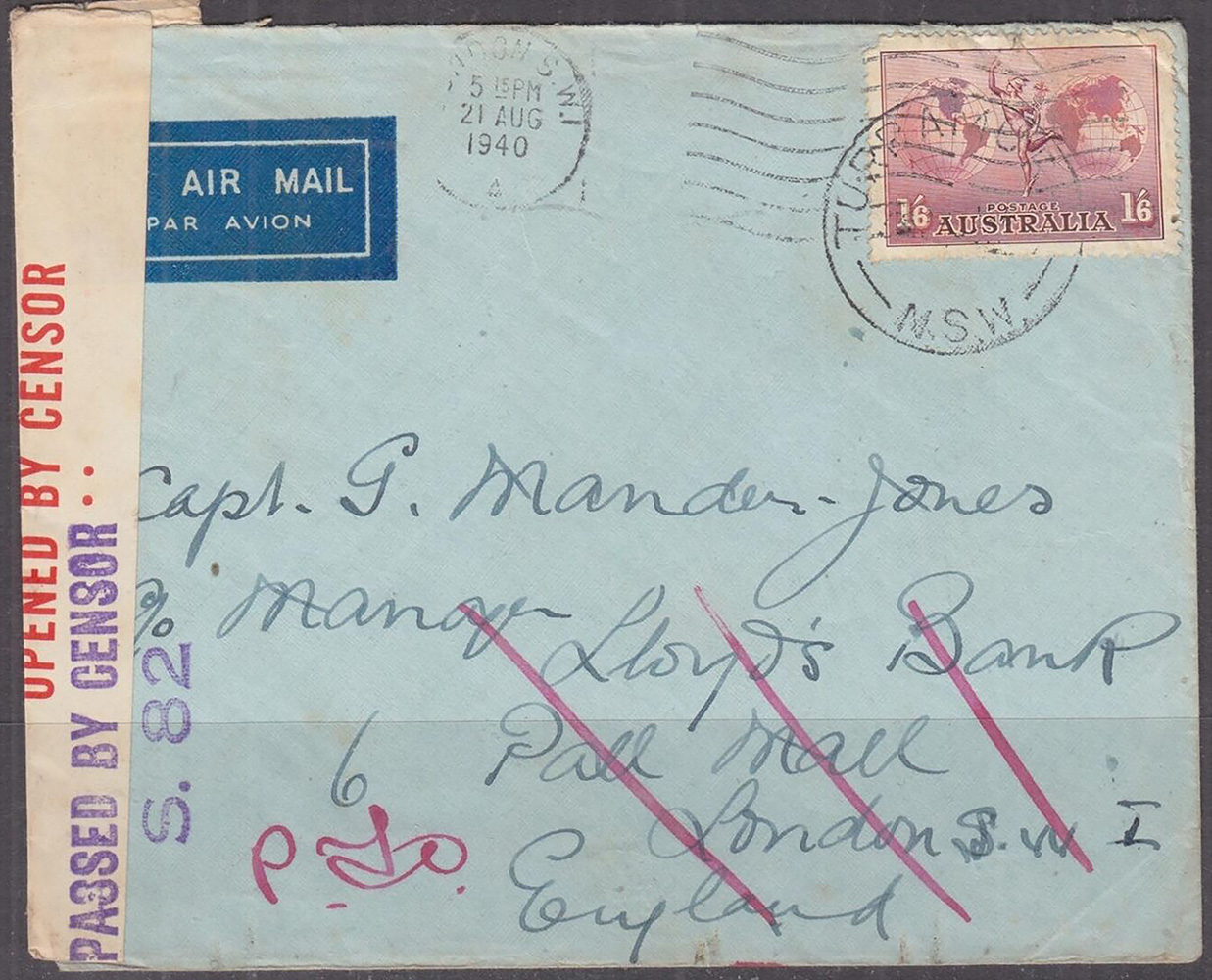 | |
| 132 | The new route were established in September 1940: the West African Coast Route on which BOAC used flying boats between England and Lagos, Gold Coast. The route began at Poole, England, to Lisbon then Lagos with stops along the West African coast. This route was flown weekly. | 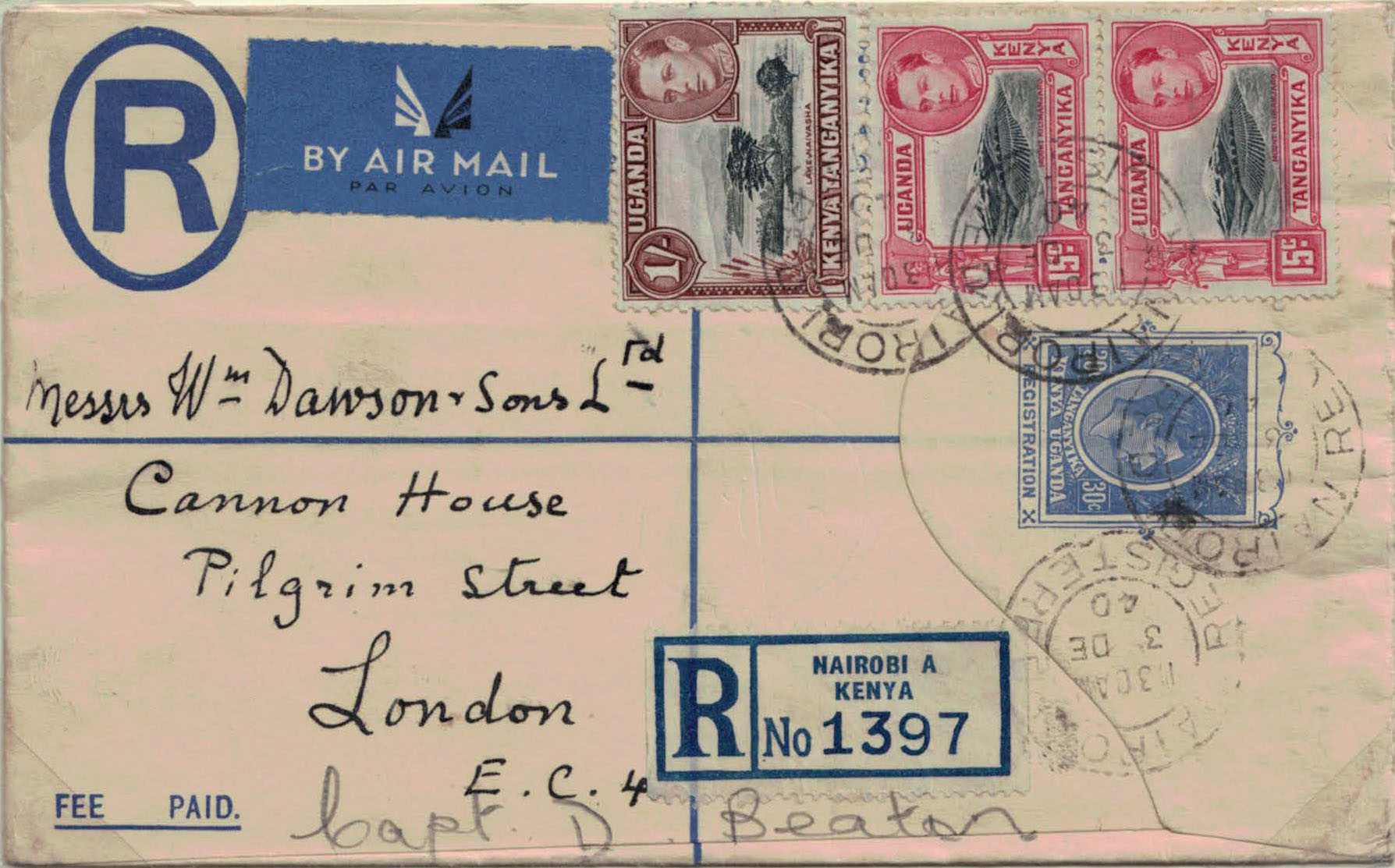 | |
| 133 | In October 1940, a regular flying boat service was established between the UK and Lagos, Nigeria via Lisbon, Bathurst in Gambia and Freetown in Sierra Leone. From Lagos there was a link with the Horseshoe Route at Khartoum via Kano and Fort Lamy. | 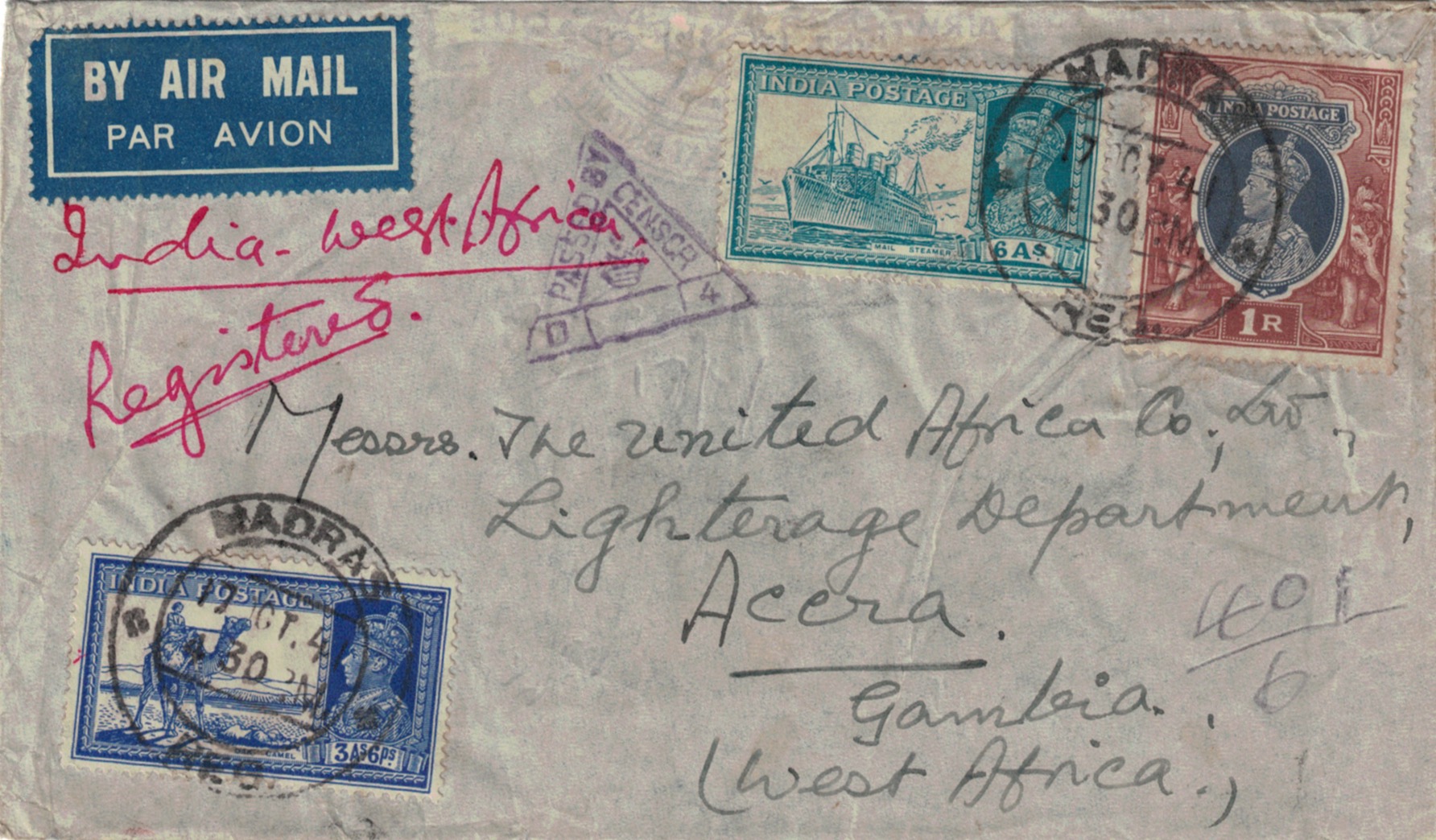 | |
| 134 | As the attack on Pearl Harbor both Siam and Malaya were attacked by the Japanese on 8 December 1941 and Siam surrendered later that day. Three reserve routes had been planned between Rangoon and Batavia, first to avoid Bangkok and then later to also avoid Malaya. After 8 December, reserve route 1 was used which was Rangoon - Port Blair (in the Andaman Islands in the Bay of Bengal) - Sabang (Sumatra) - Belawan (the port of Medan, Sumatra) - Singapore - Batavia. | 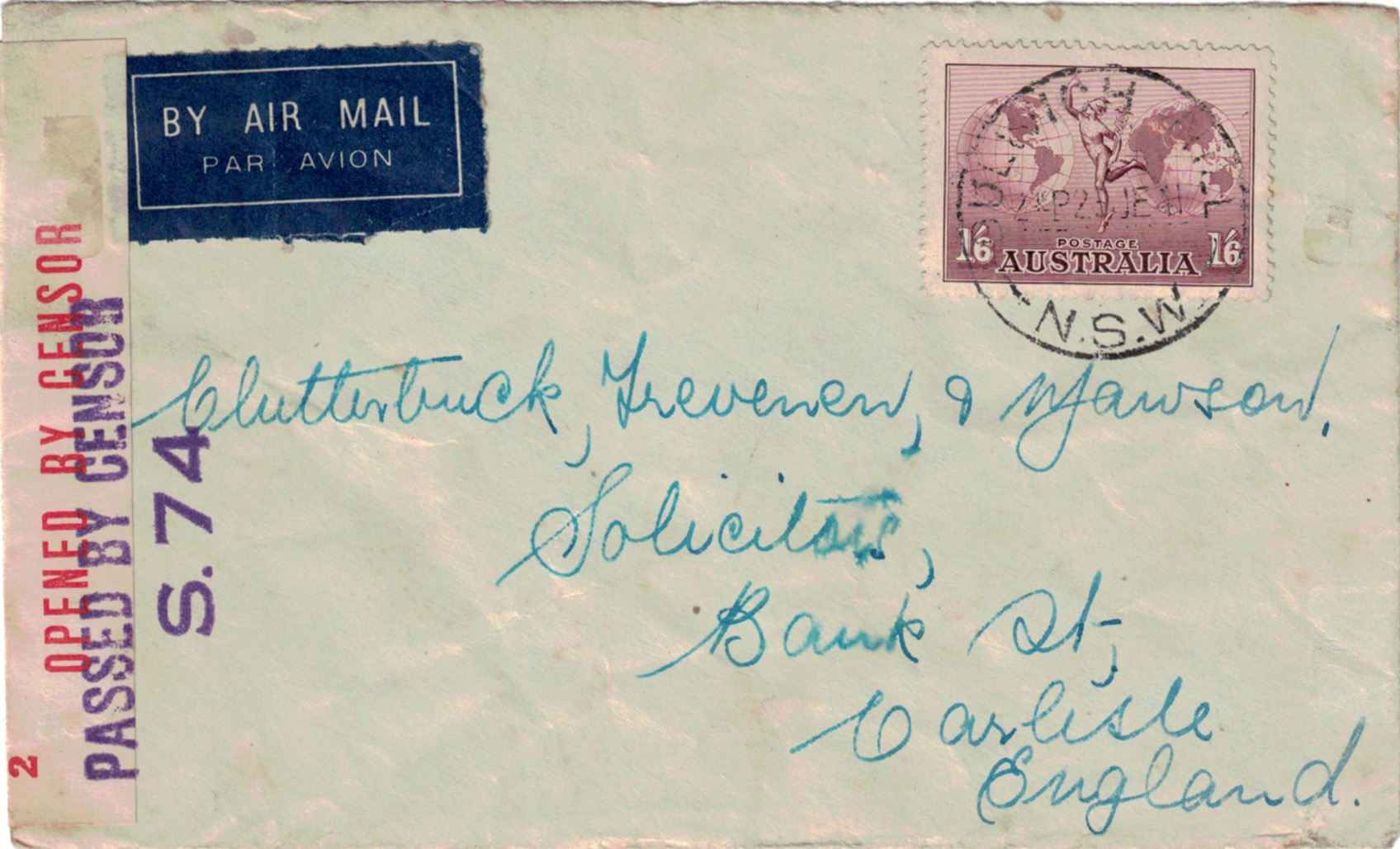 | |
| 135 | After 30 December, reserve route 2 was used and Malaya was also avoided. It was Rangoon - Port Blair - Sabang (Sumatra) - Padang (West Sumatra) - Batavia although a shuttle service operated between Batavia and Singapore. | 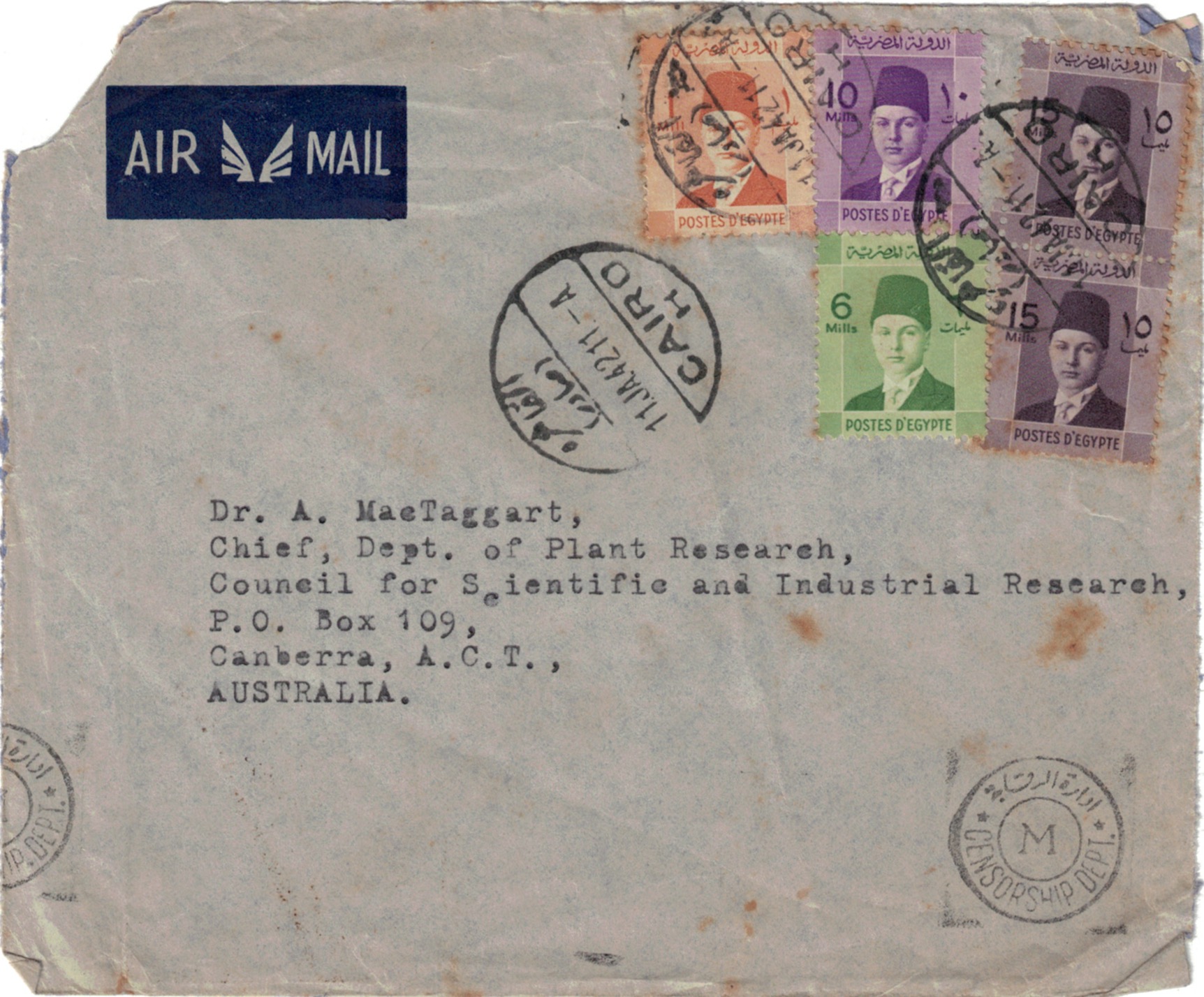 | |
| 136 | In late January / early February the route between Batavia and Darwin was changed so that it was via Tjilatjap and Broome. The route was cut in February 1942 and after that only operated between Durban and Calcutta. Singapore fell on 15th February 1942. | 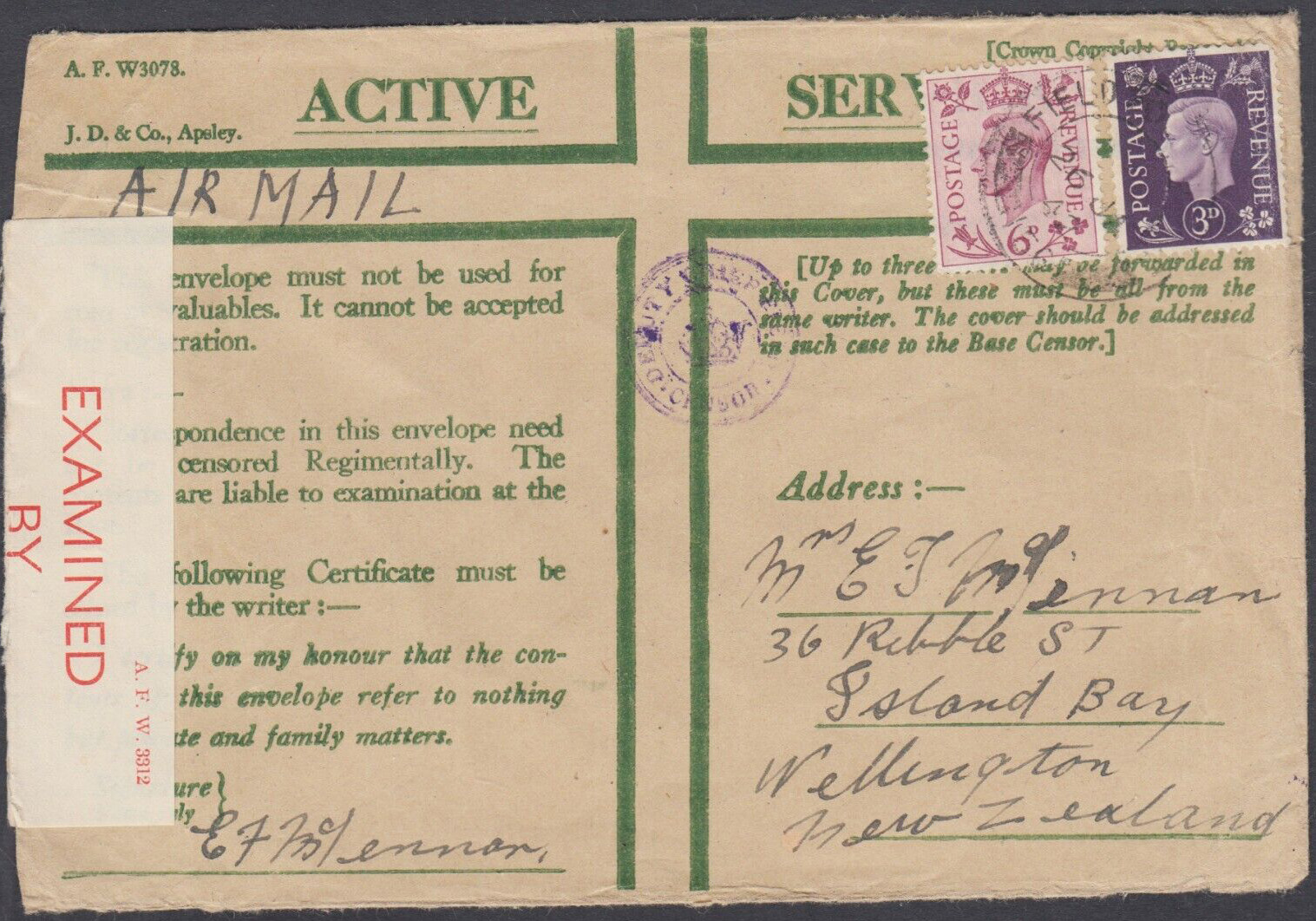 | |
| 137 | The route was cut in February 1942 and after that only operated between Durban and Calcuga. | 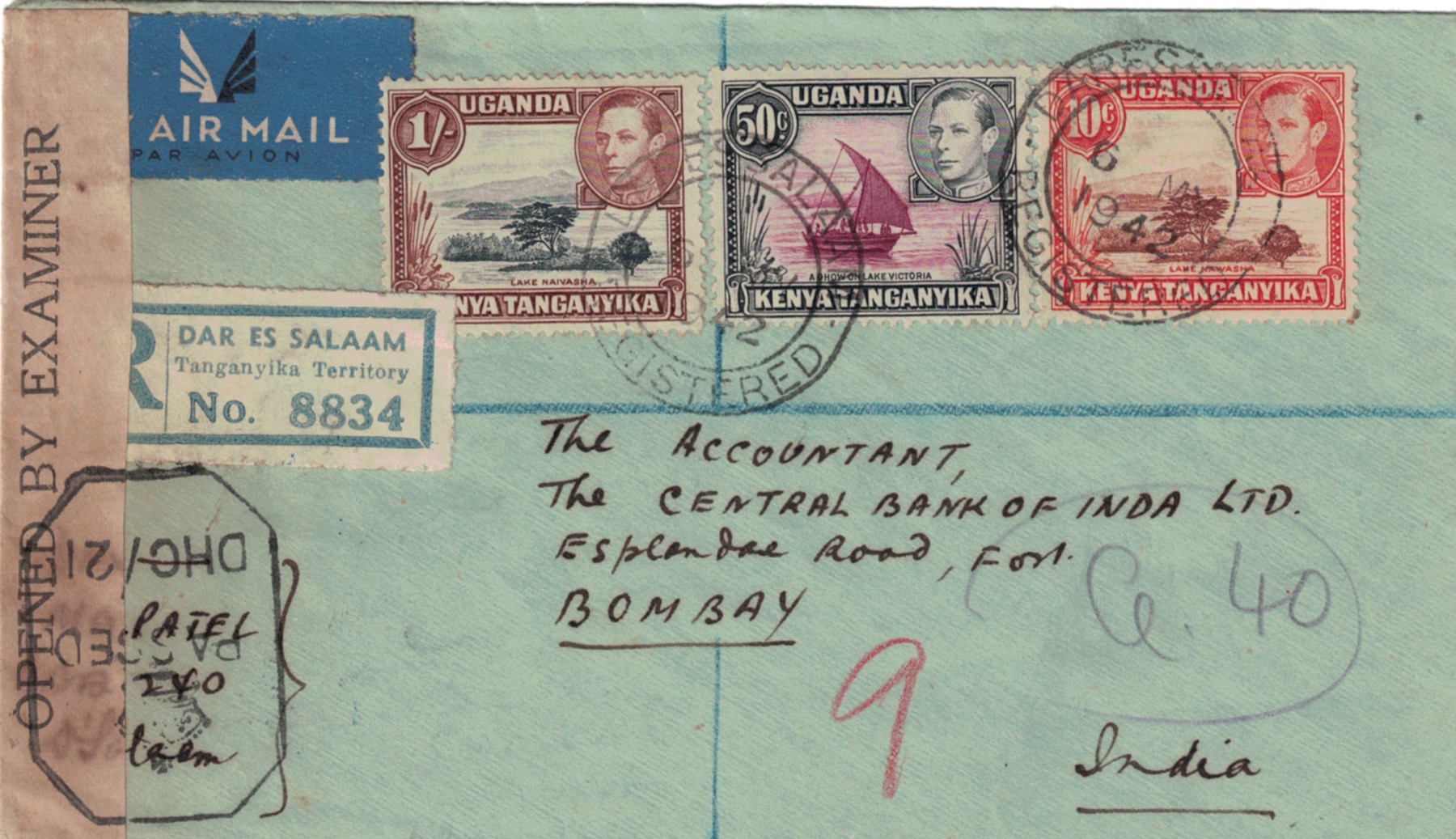 | |
| 138 | After February 11, 1942, airmail shipments from, for example, England to New Zealand and Australia traveled by air to the United States and from there on board. | 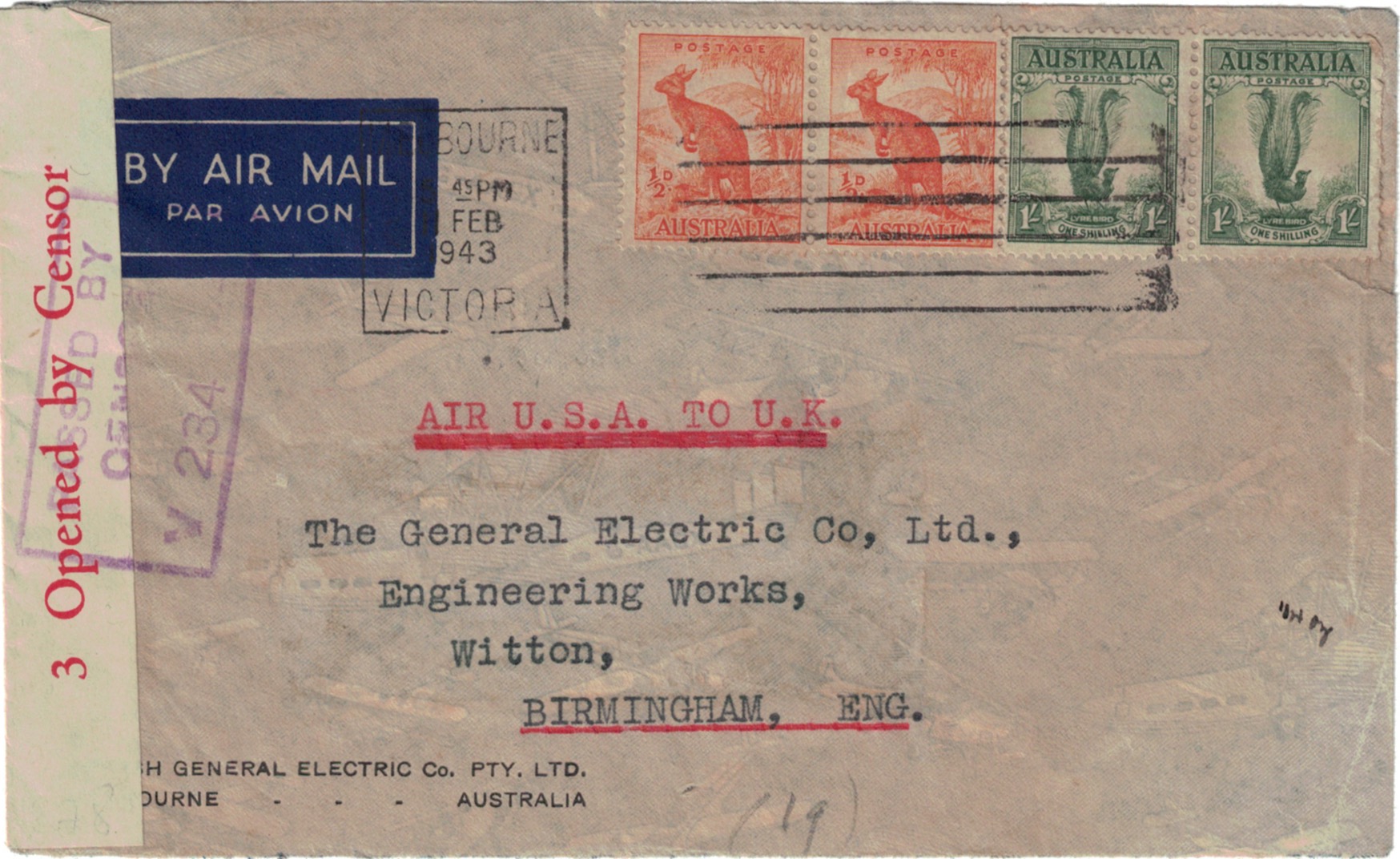 | |
| 139 | The route from Australia to the UK for high priority air mail and forces airgraphs in July 1943. The mail was flown across the Indian Ocean between Perth and Lake Koggola, Colombo. This service was kept secret | 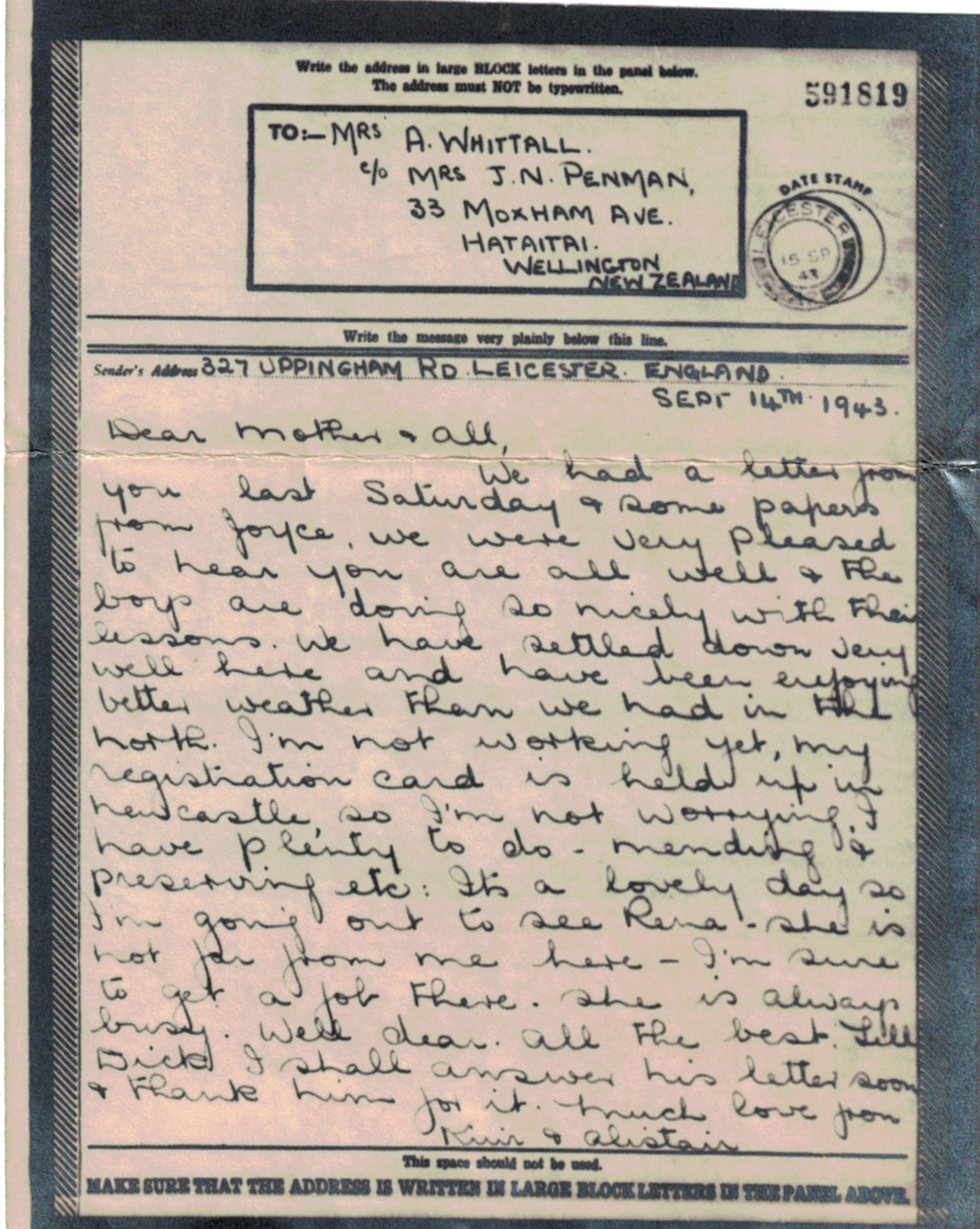 | |
| 140 | In July 1944, the route was re-opened for civilian airmail legers, but the mail was sent from Perth to Ceylon by sea. | 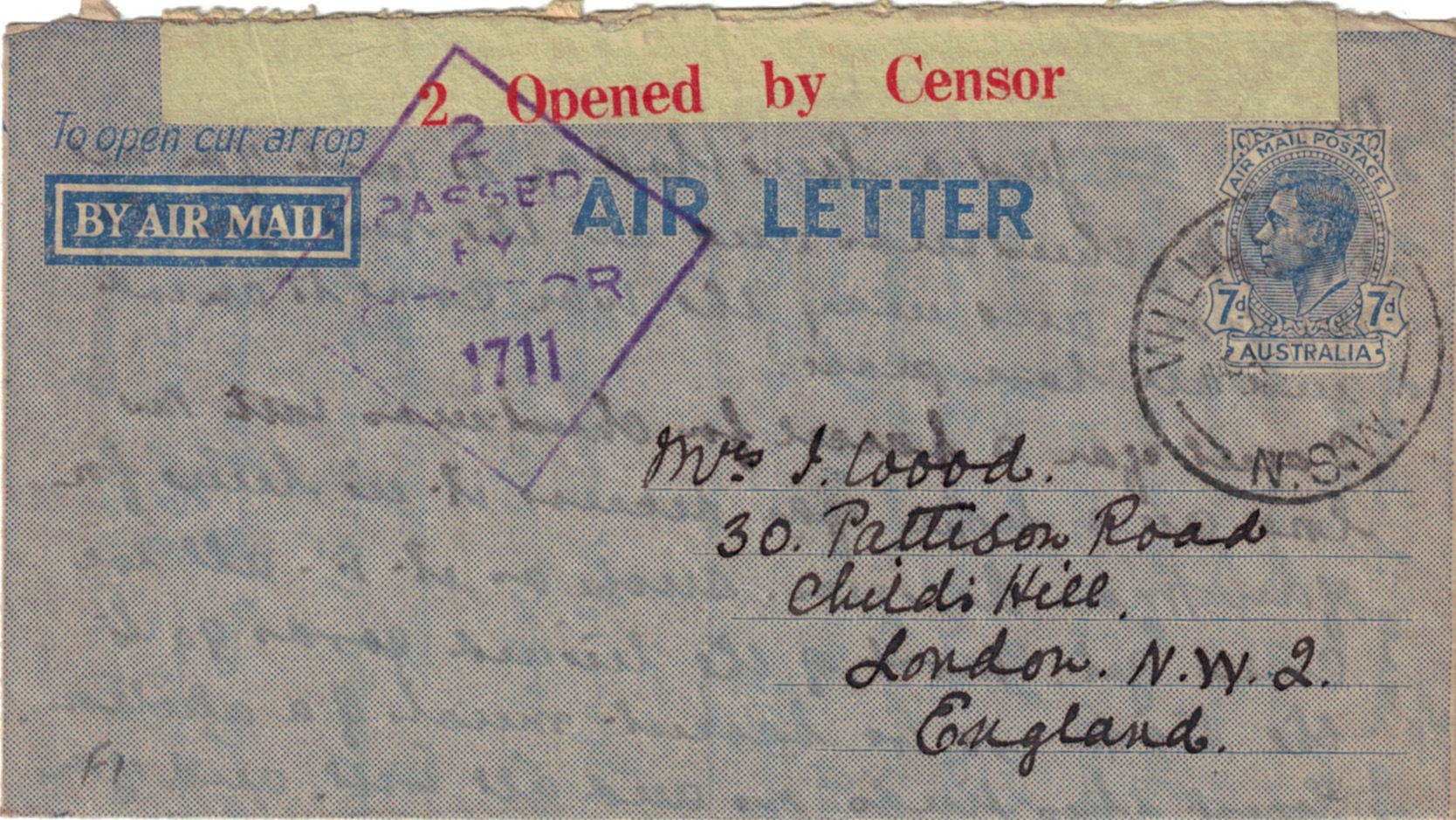 | |
| 141 | From August 1944, air letters were flown from Perth to Ceylon. | 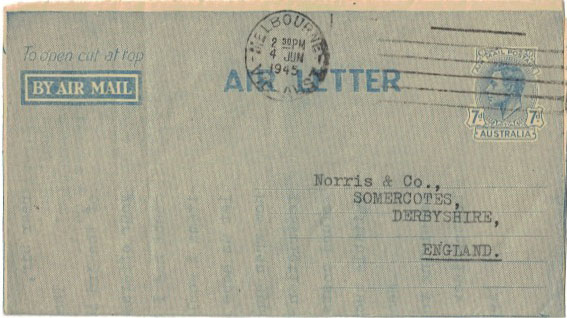 | |
| 142 | The last flight by a Catalina plane took place on 20 July 1945 when they were completely replaced by converted Liberator bombers. The better speed of the Liberators reduced the flying time by ten hours. | 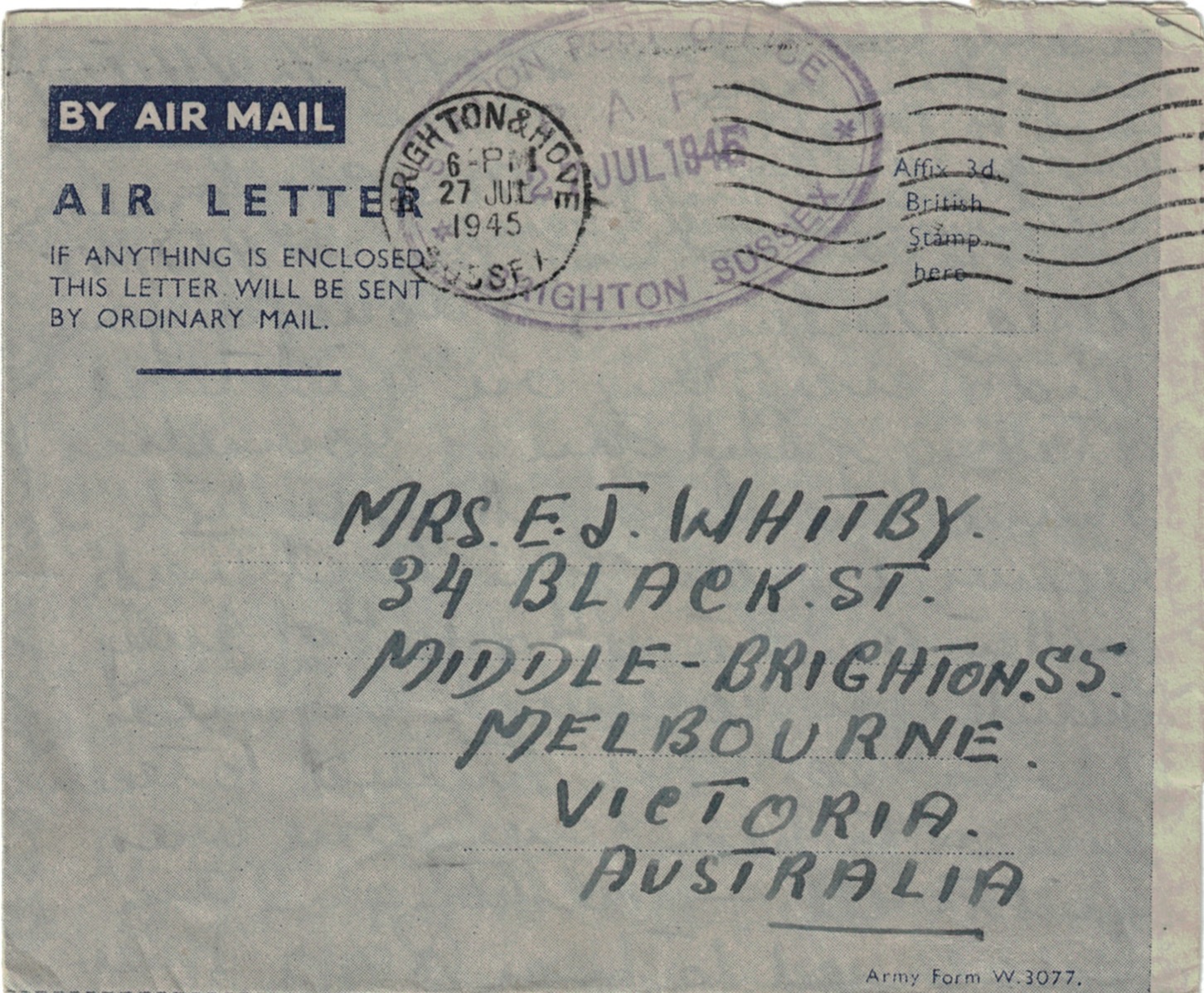 | |
| E.2. Service between Batavia and Australia | |||
| 143 | The first KNILM dispatches from Batavia to Autralia took place on the 3rd July 1938. The route was: Batavia (Dutch East Indies)-Sourabaya- Den Pasar- Kupang-Darwin (Australia)-Cloncurry-Longreach- Brisbane-Sydney. The departures from Batavia were on Sundays and on Thursdays with a flight schedule of three days. The departures from Sydney were on Thursdays and Sundays with a flight schedule of two days. | 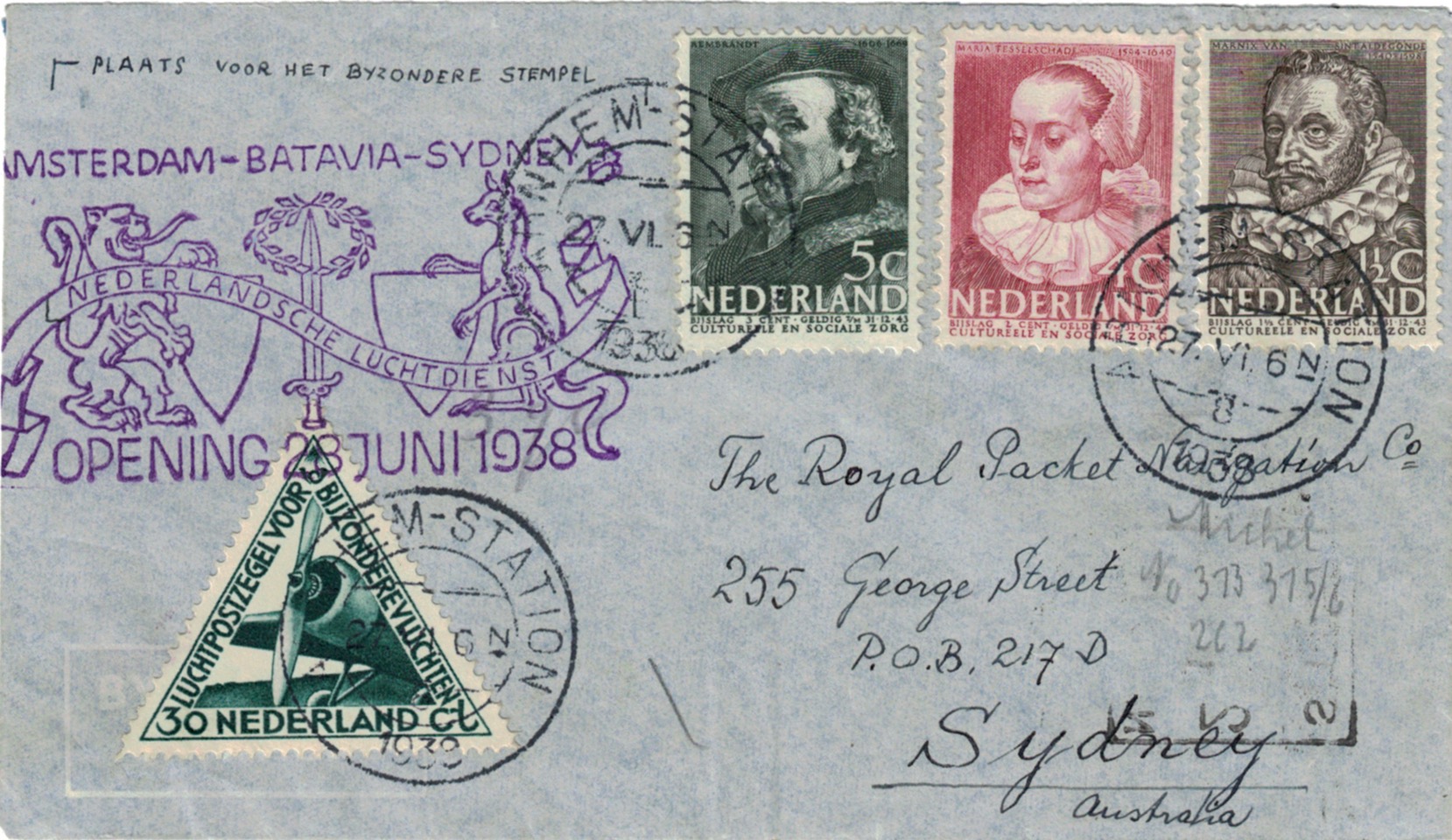 | |
| 144 | Commencing on Tuesday 1st August 1939 the service was reduced to once a week. | 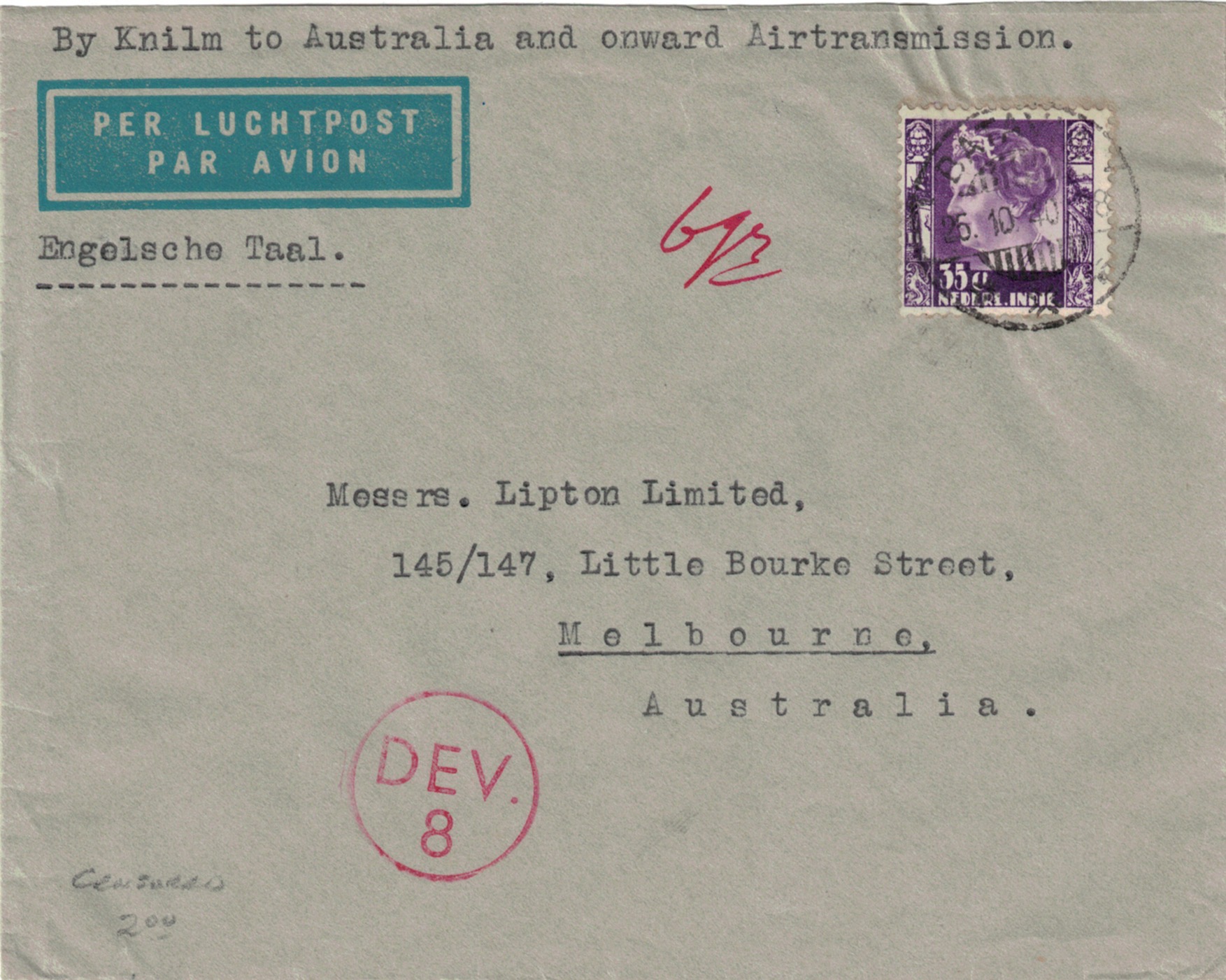 | |
| 145 | The mail transported by the Java-Austalia service did not meet the expectations of KNILM. In spite of the agreement between the Dutch East lndies and the Australian postal authorities KNILM could not carry Australian mail to the Dutch East Indies and other countries, this being blocked by the Australian government. On the 19th February 1942 the KNILM fleet pulled out of Australia and so the Java-Australia service came to an end. | 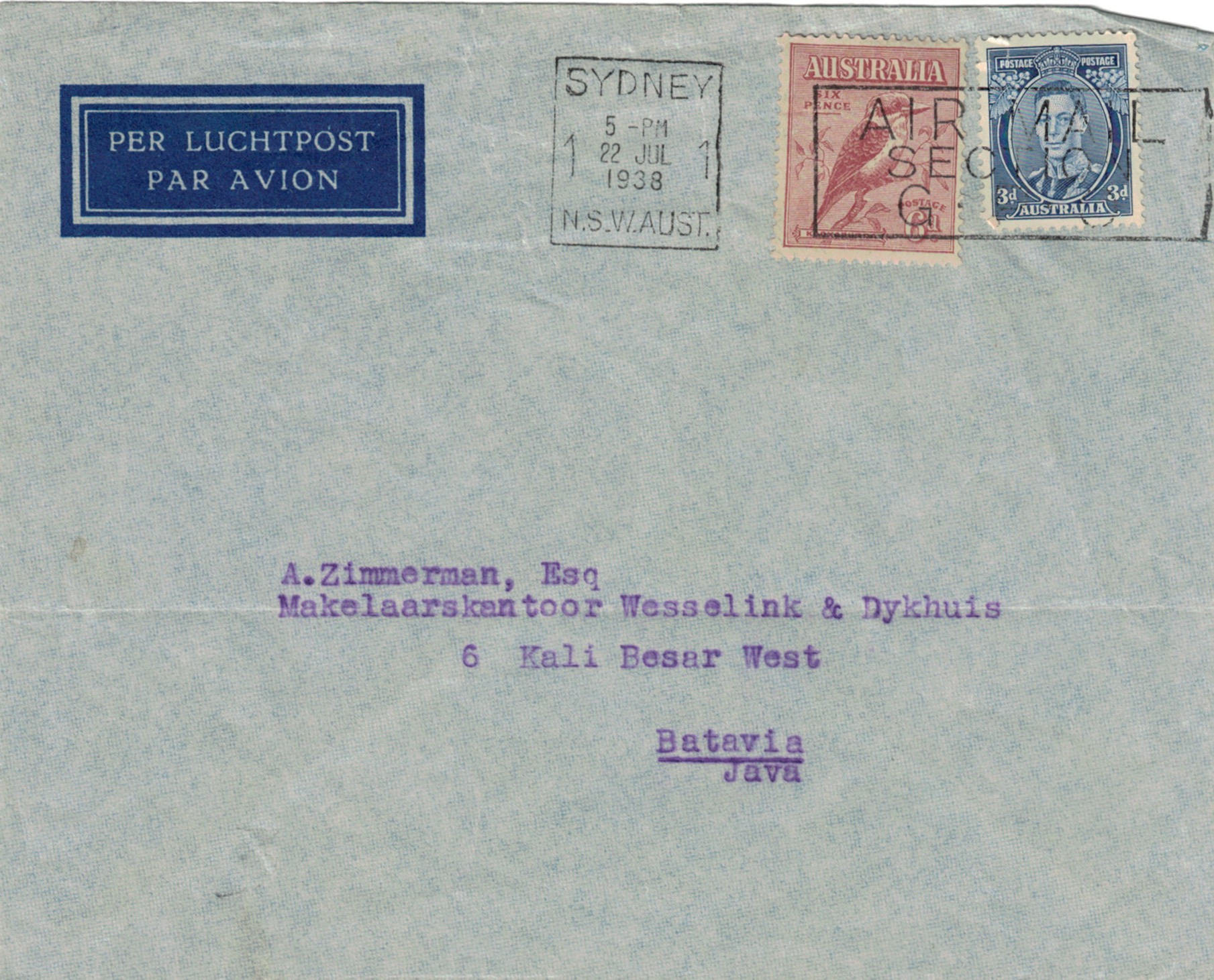 | |
F. TRANSPACIFIC AIRMAIL SERVICES 1935-1941 | |||
 | |||
| F.1. Foreign air mail route no. 14 | |||
| 146 | Pre-inaugural history -- Lack of progress in efforts to establish trans-Atlantic service during the early 1930s led Pan American Airways (PAA) to turn to the Pacific. The Pacific Division was established at Alameda, on San Francisco Bay, for the purpose of opening a mid-Pacific air route to China. Four astonishingly successful survey flights were conducted between April and October 1935: to Hawaii 16.-23.4., to Midway 12.-22.6., to Wake 9.-29.8. and to Guam 5.-24.10. | 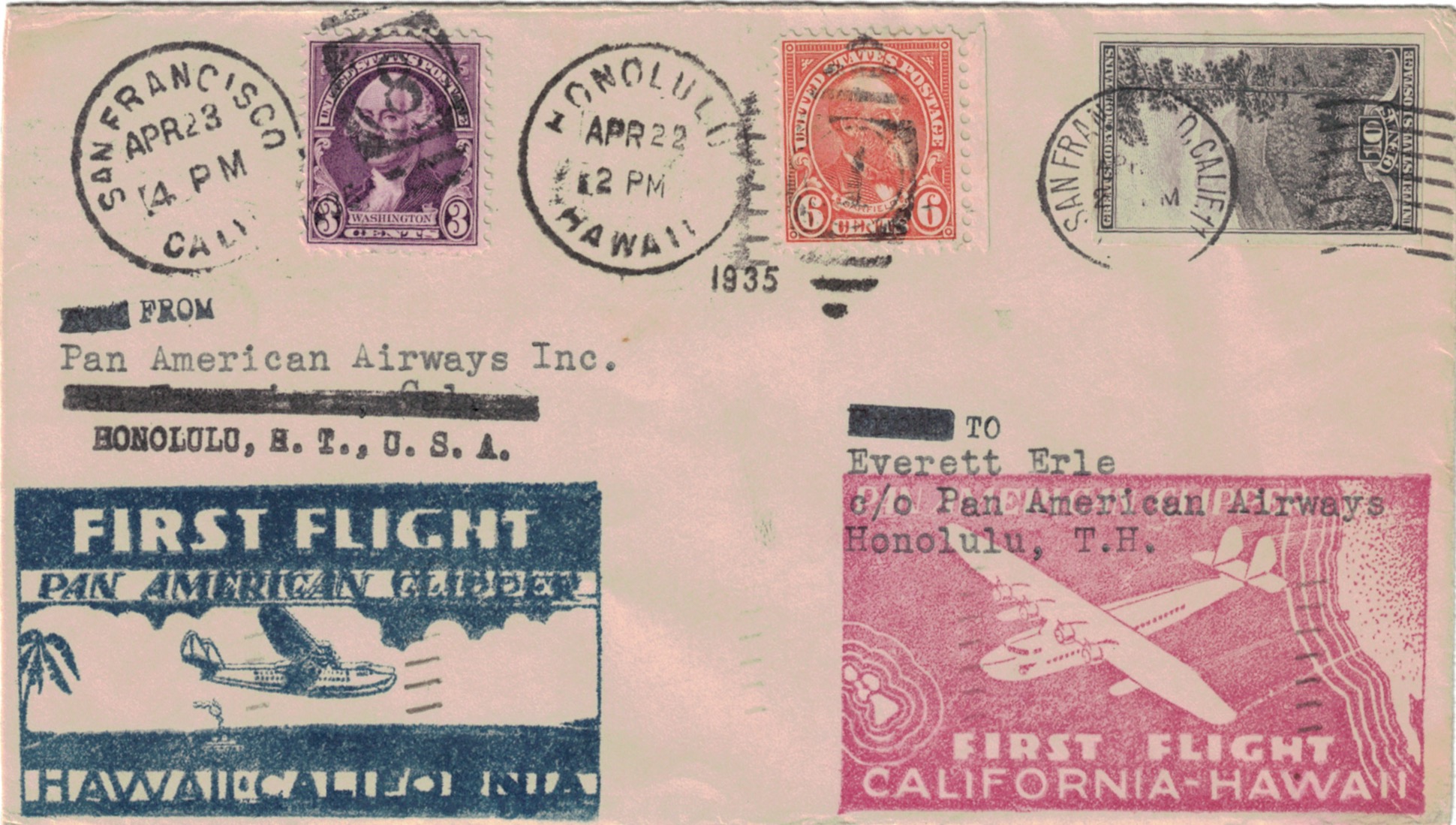 | |
| 147 | Inaugural service San Francisco – Manila 22.11.1935 PAA inaugurated Trans-Pacific Ocean flights in 22 November 1935 between Manila and San Francisco, by way of Honolulu, Wake Island (no postal service), Midway Island (no postal service) and Guam (no postal service). | 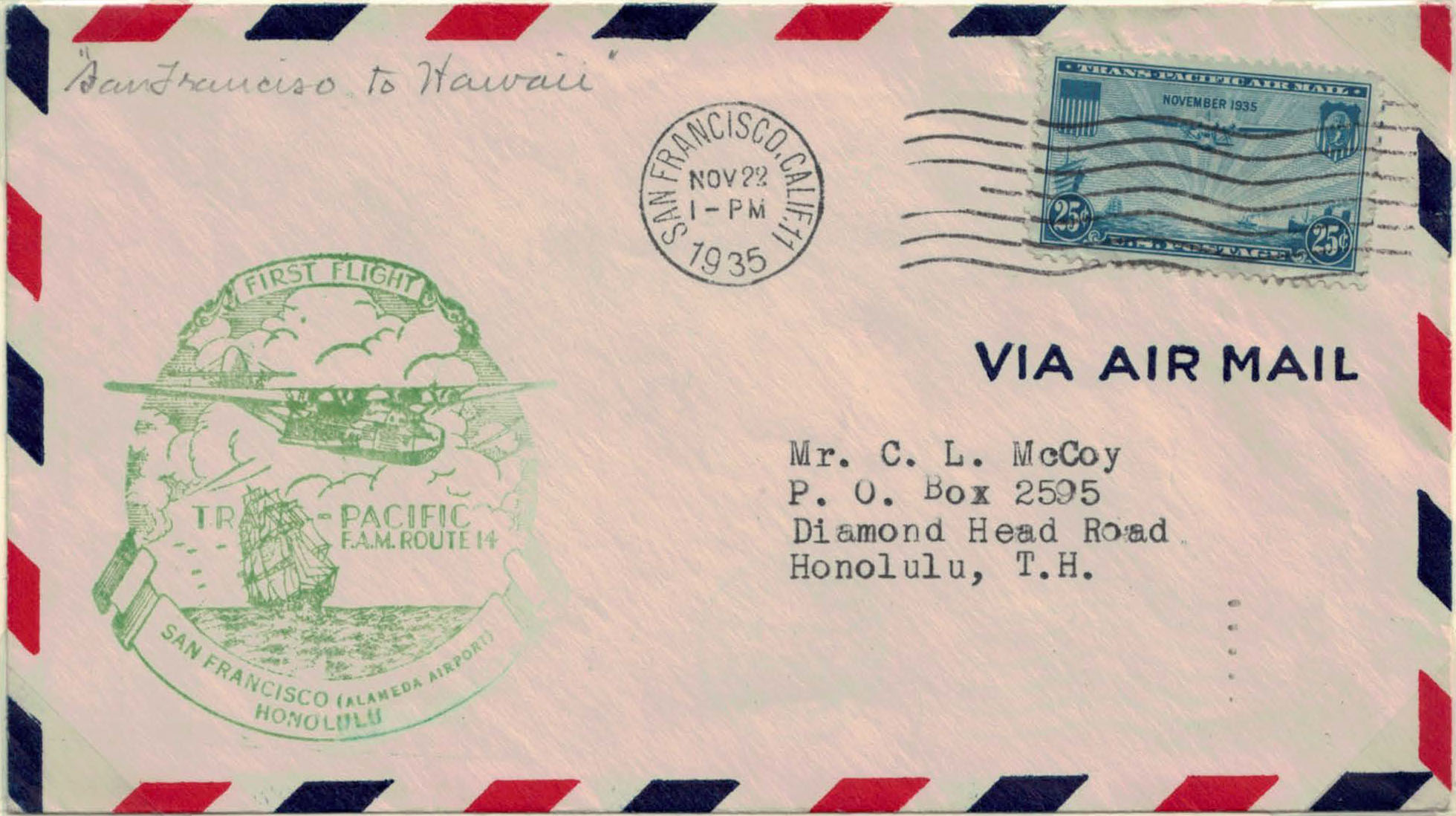 | |
| 148 | Postage rates up to 20.4.1937 -- The postage rate for the U.S. and its territories was 25¢ per leg, a leg being defined as a route segment that had post office as each end: San Francisco – Honolulu, Honolulu – Guam and Guam – Manila. Philippine Islands (Manila) postage rates were: to Guam 50 centavos, to the territory of Hawaii 1 peso and to the U.S. 1 peso 50 centavos. | 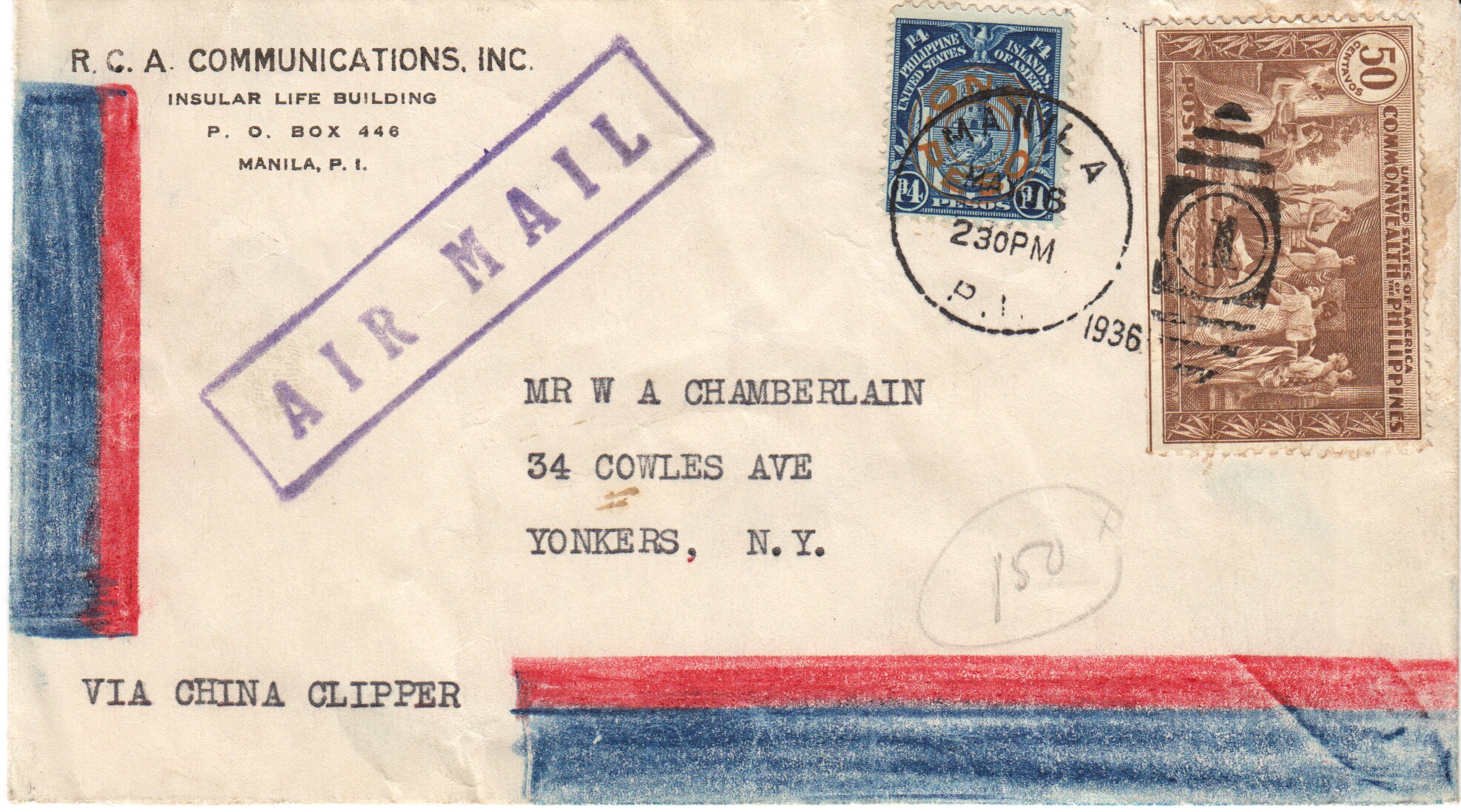 | |
| 149 | Extension to Macao and Hongkong -- On 21 April 1937 the route was extended to Macao and Hong Kong, where connections were made with the China National Aviation Corporation (CNAC) and Imperial Airways. | 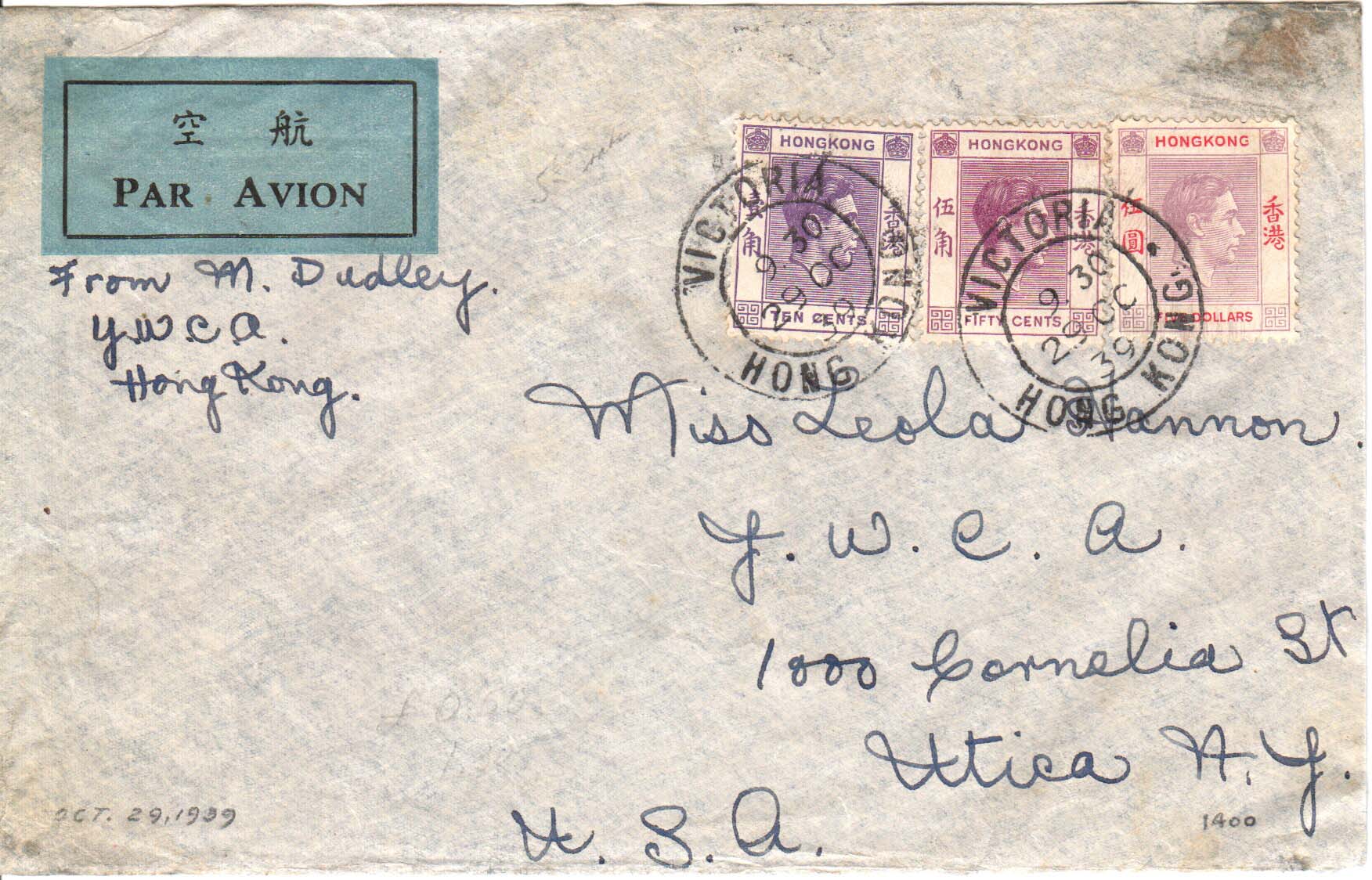 | |
| 150 | The connection with CNAC provided a connection between the Trans-Pacific route and the principal cities of central and southern China. | 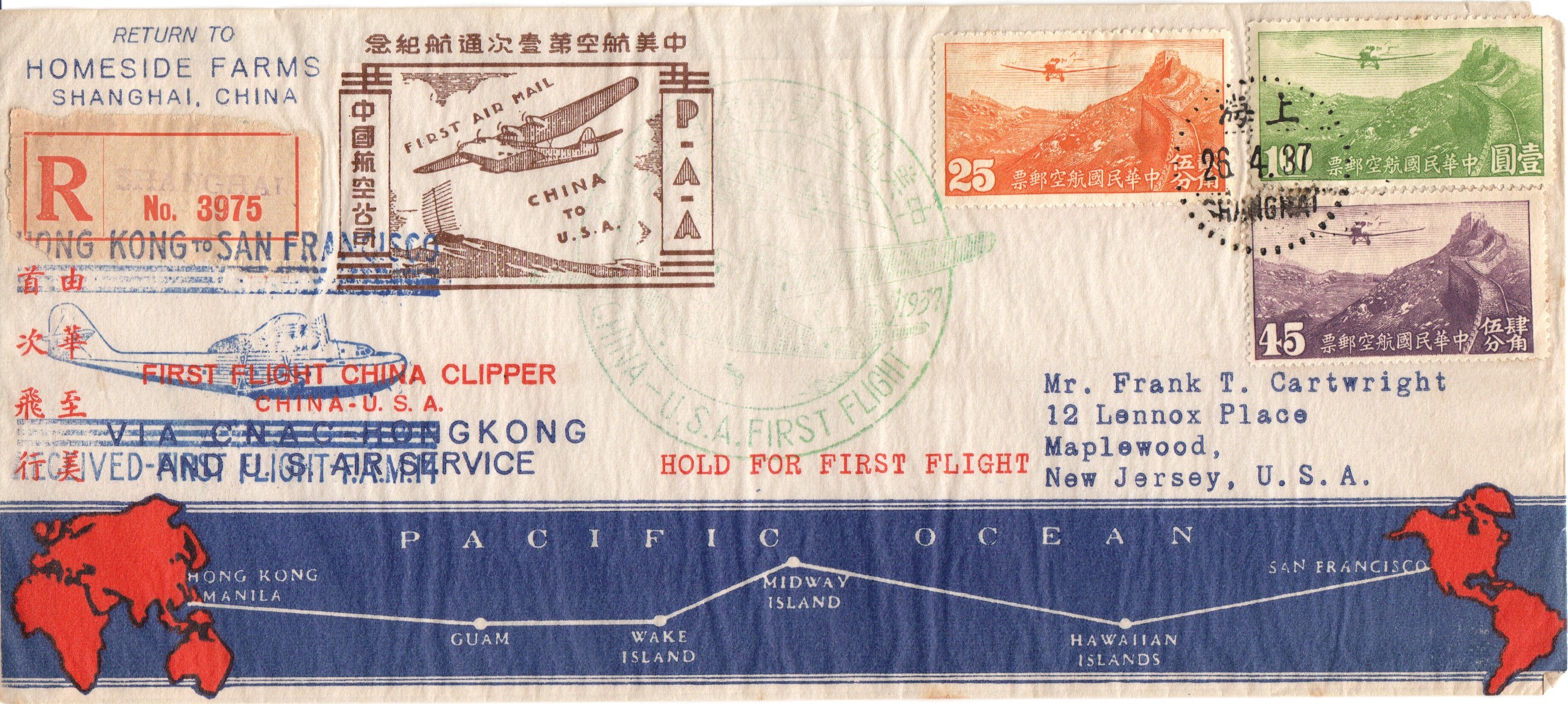 | |
| 151 | Secondary destinations -- Postal rates were also published for the following countries: Japan, Indochina, Straits Settlements, Siam, India, Dutch East India, Australia and New Zealand. | 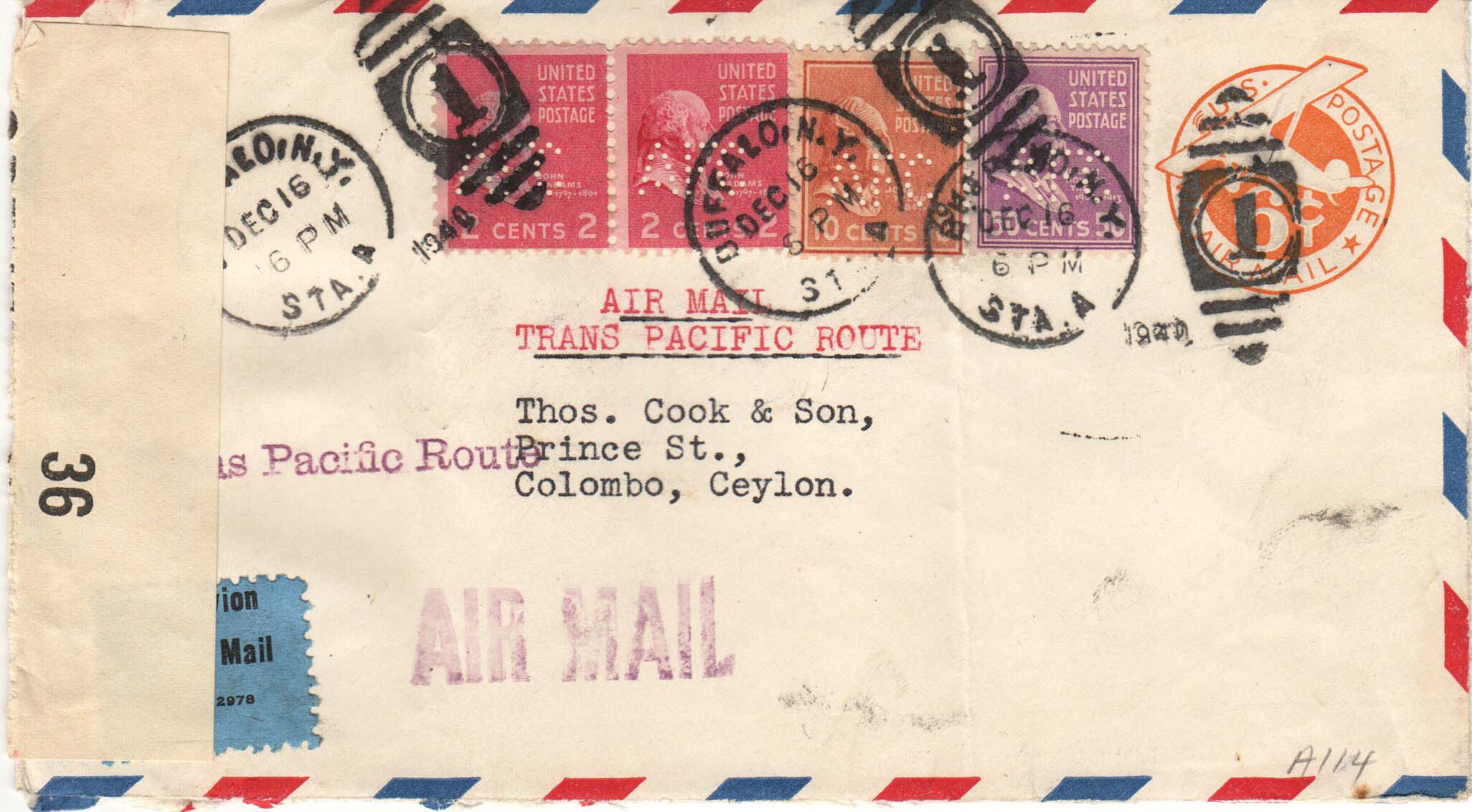 | |
| 152 | Extension from Manila to Singapore -- On 3 May 1941, after several survey flights, PAA added an extension from Manila to Singapore on the Trans-Pacific route. The new route connected with BOAC and KLM at Singapore, providing through air service from the U.S to India, the Dutch East Indies, etc. | 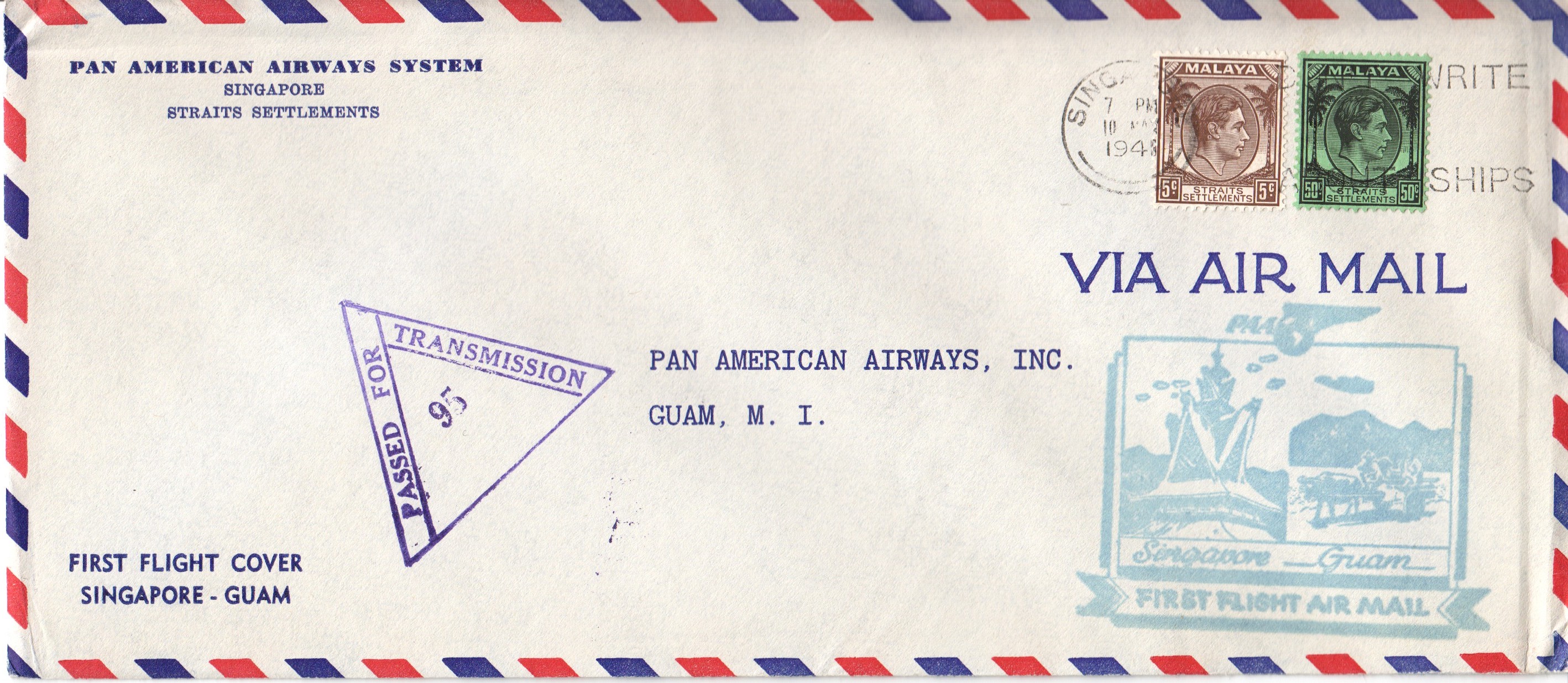 | |
| F.2. Foreign air mail route no. 19 | |||
| 153 | Pre-inaugural history -- Planning for PAA’s airmail route to New Zealand began in 1935, but in early 1937 no progress had been made. The first survey flight, Honolulu – New Zealand via Pago Pago, was made 23.3.-9.4.1937, second 23.12.1937-3.1.1938 and third 9.-11.1.1938. " The U.S. Post Office announced in December 1939 that mail could be sent to Hawaii by air, and then by ship each fourth Wednesday, to Australia and New Zealand. | 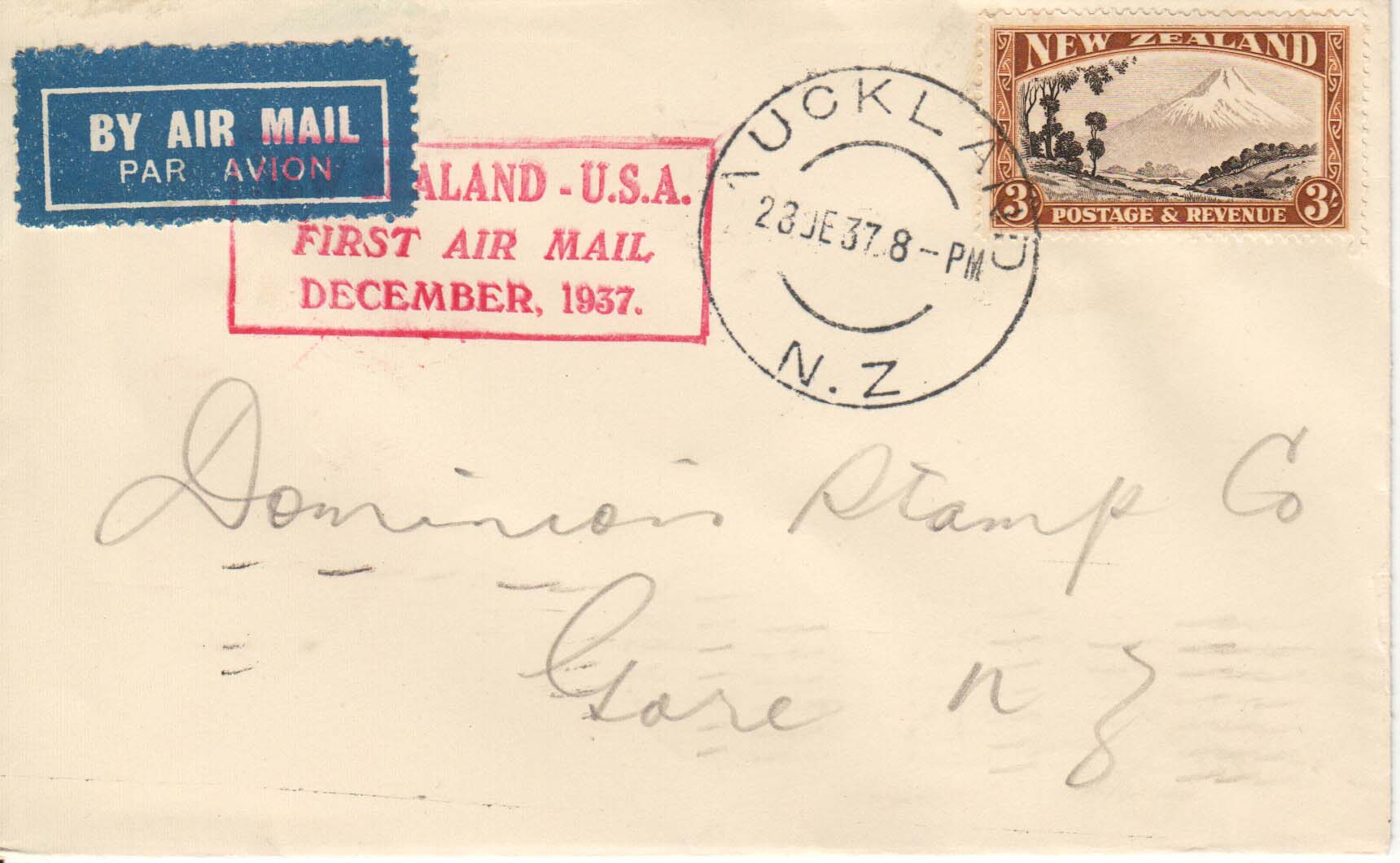 | |
| 154 | Inaugural Service San Francisco To Auckland -- On 12 July 1940 PAA began a new route from the U.S. to New Zealand. The route proceeded west to Hawaii, using the PAA base at Pearl Harbor fro a refueling stop. From Pearl Harbor, the original route proceeded to Canton Island, to Noumea, New Caledonia, and then to the PAA terminal at Auckland, New Zealand. | 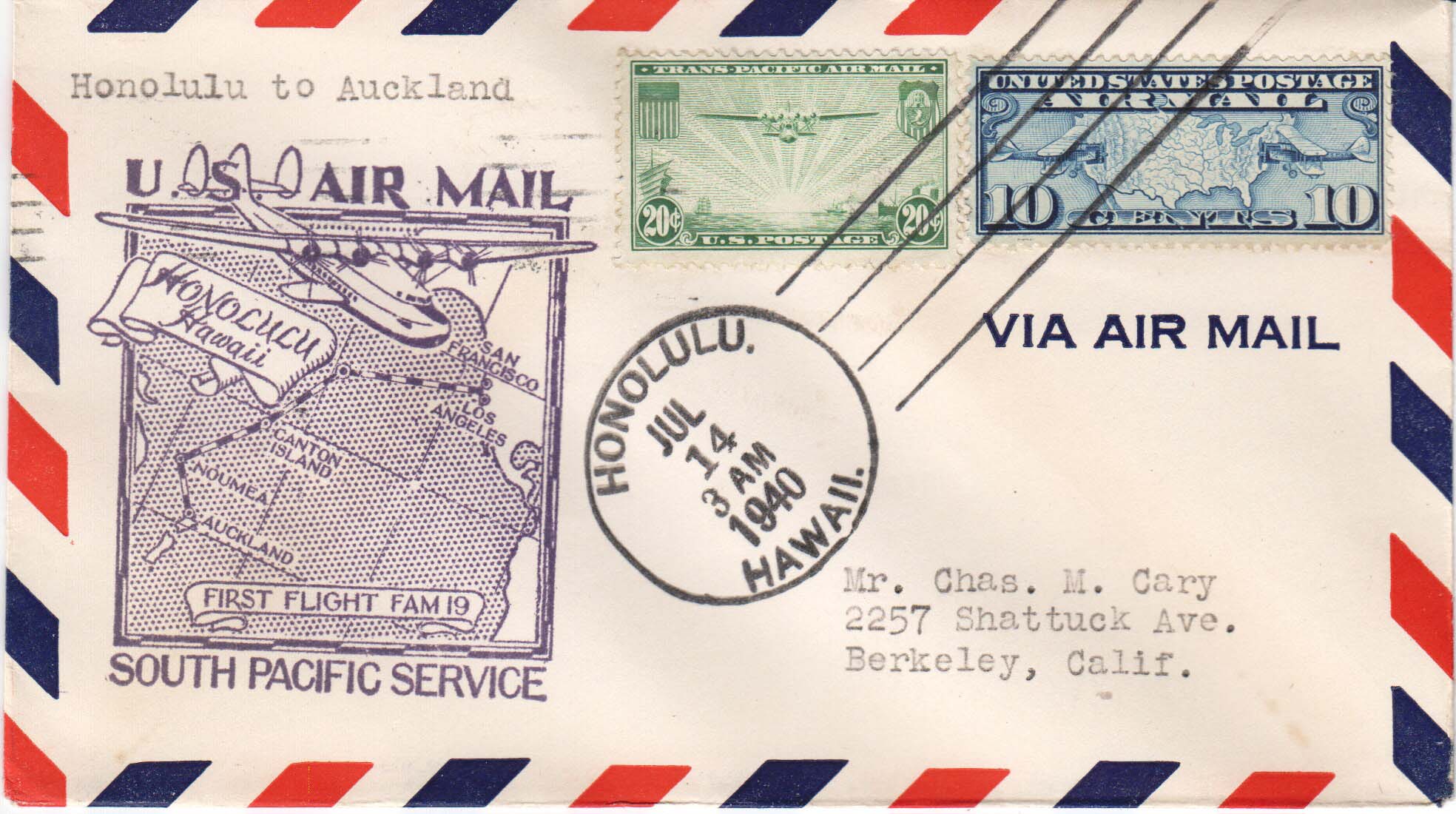 | |
| 155 | Australia connection -- There was connection between Auckland and Sydney operated by TEAL. | 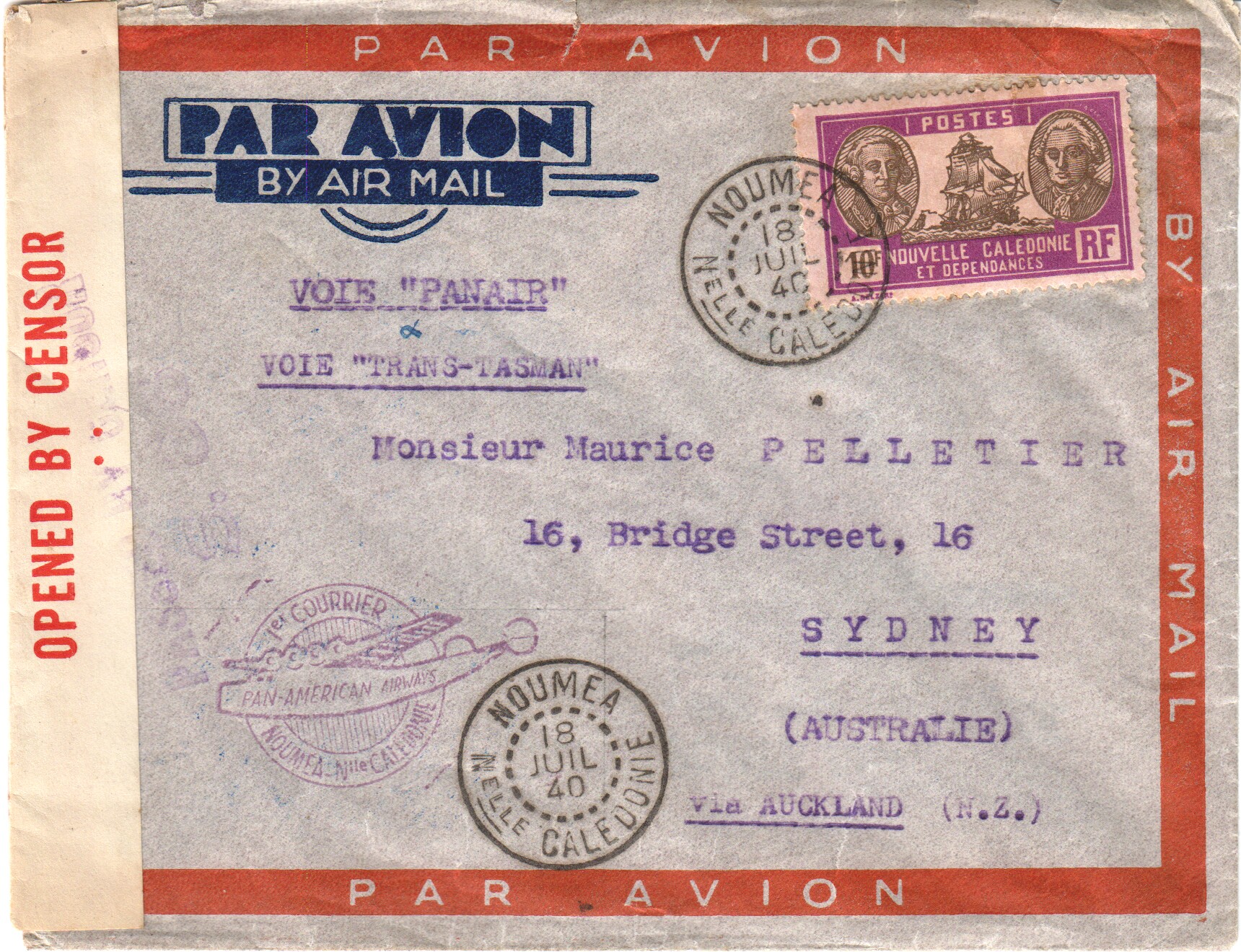 | |
| 156 | Addition of Suva -- In August 1940, the British authorities suggested that Suva in the Fiji Islands be used as a stop-over on the South Pacific route instead of Noumea, because of uncertainty about the status of New Caledonia following the French Surrender in June 1940. On 30.10.1941, Suva also became a refueling stop in addition to Noumea. | 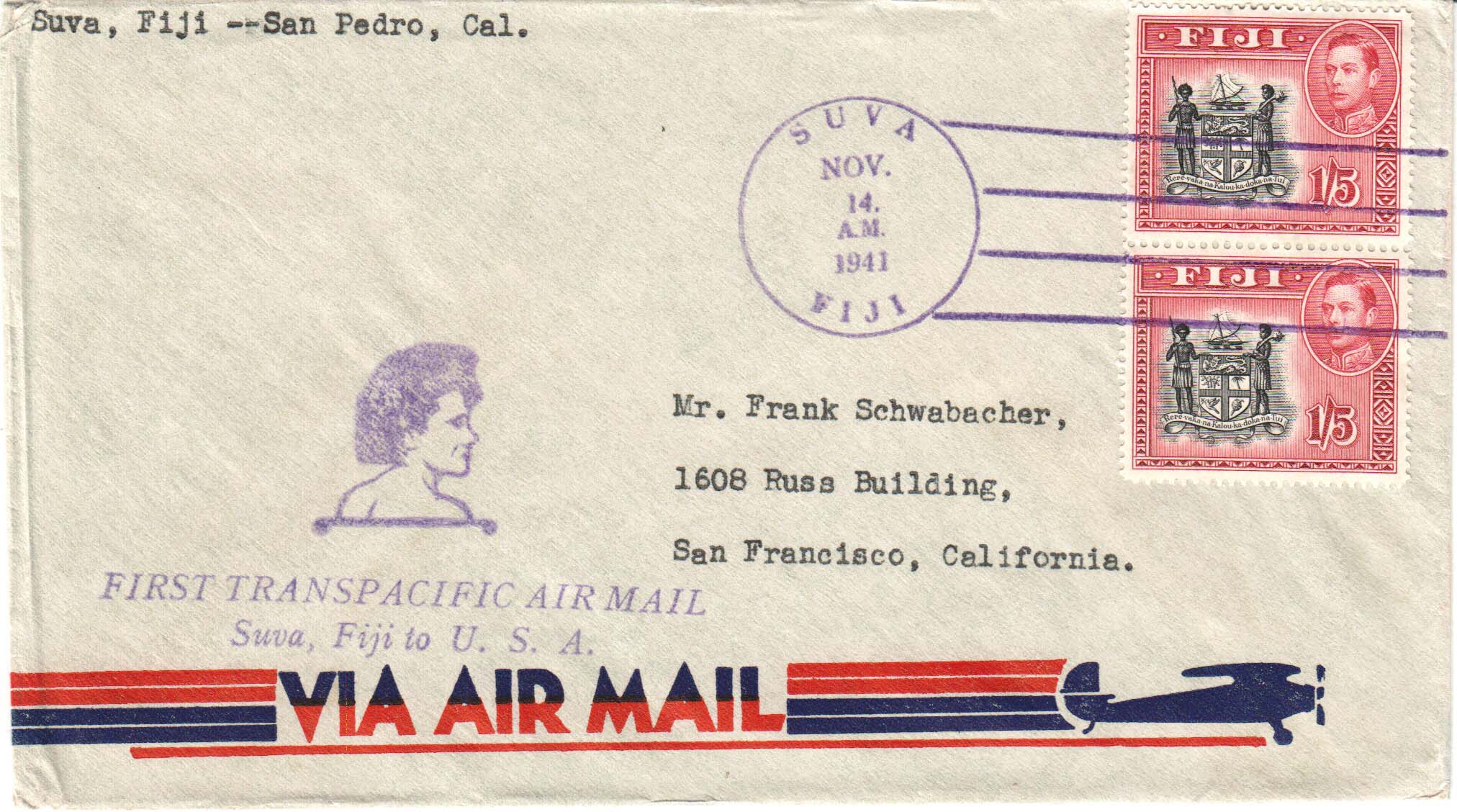 | |
| F.3. Alternative arrangements because of the war | |||
| 157 | The Mediterranean sea routes were closed in June 1940 by Italy’s entry into the war. The Trans-Pacific route of PAA was, for several months, the only all air route from the Middle East and Asia to Europe -- or vice versa -- until both the Horseshoe Route and the West African Coast routes were established and in full operation. Also some air mail from the Middle East to U.S. was sent eastward across the Pacific, not across the Atlantic. | 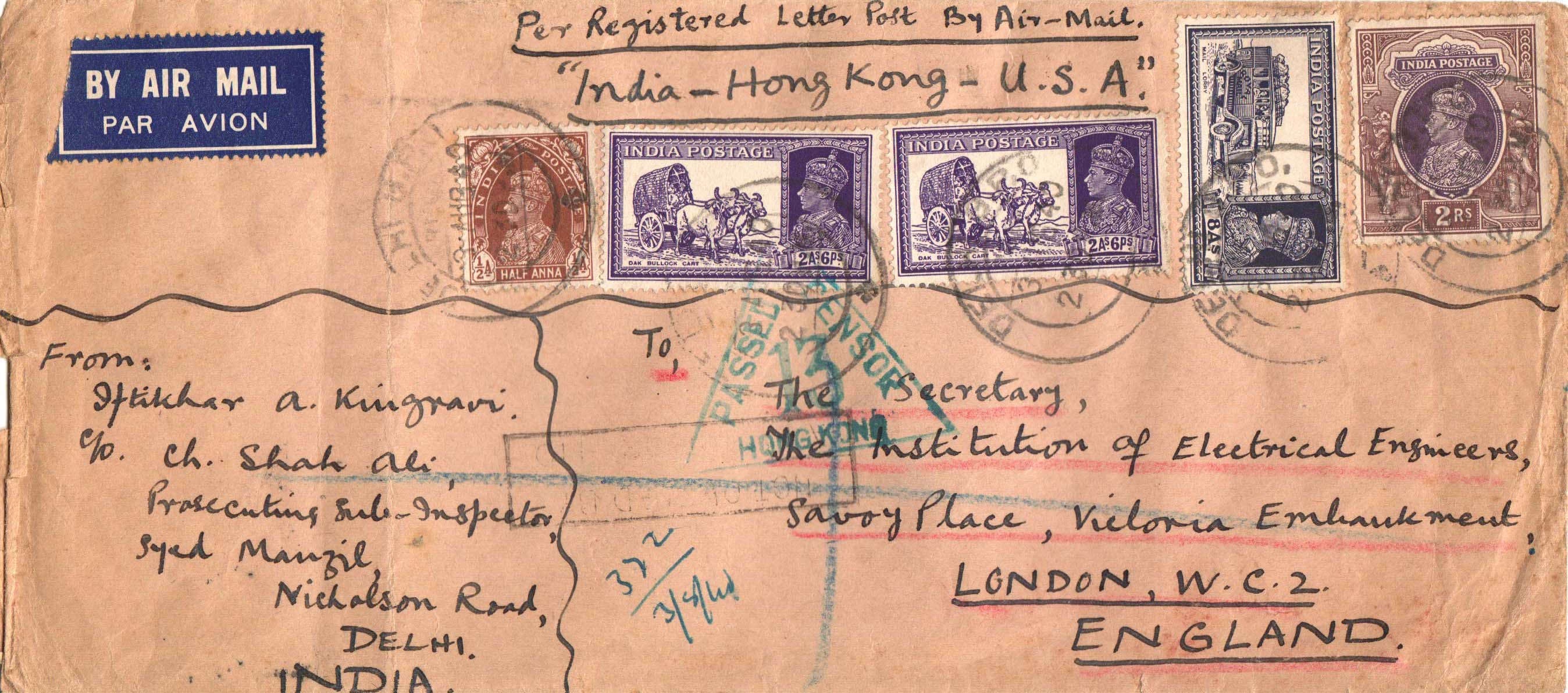 | |
| 158 | Because the Japanese attacked on Pearl Harbor on December 7, 1941 the service was suspend | 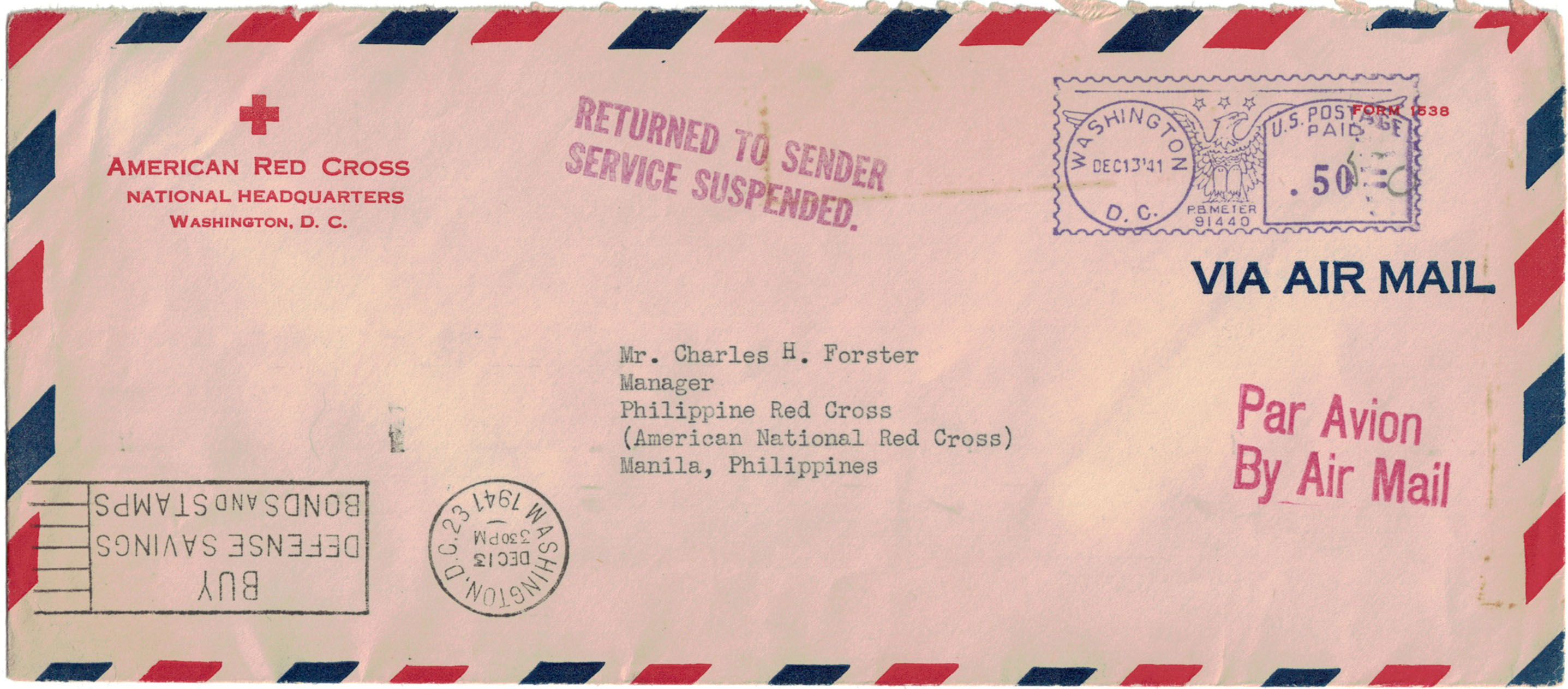 | |
G. BETWEEN SOUTH-AMERICA AND AFRICA | |||
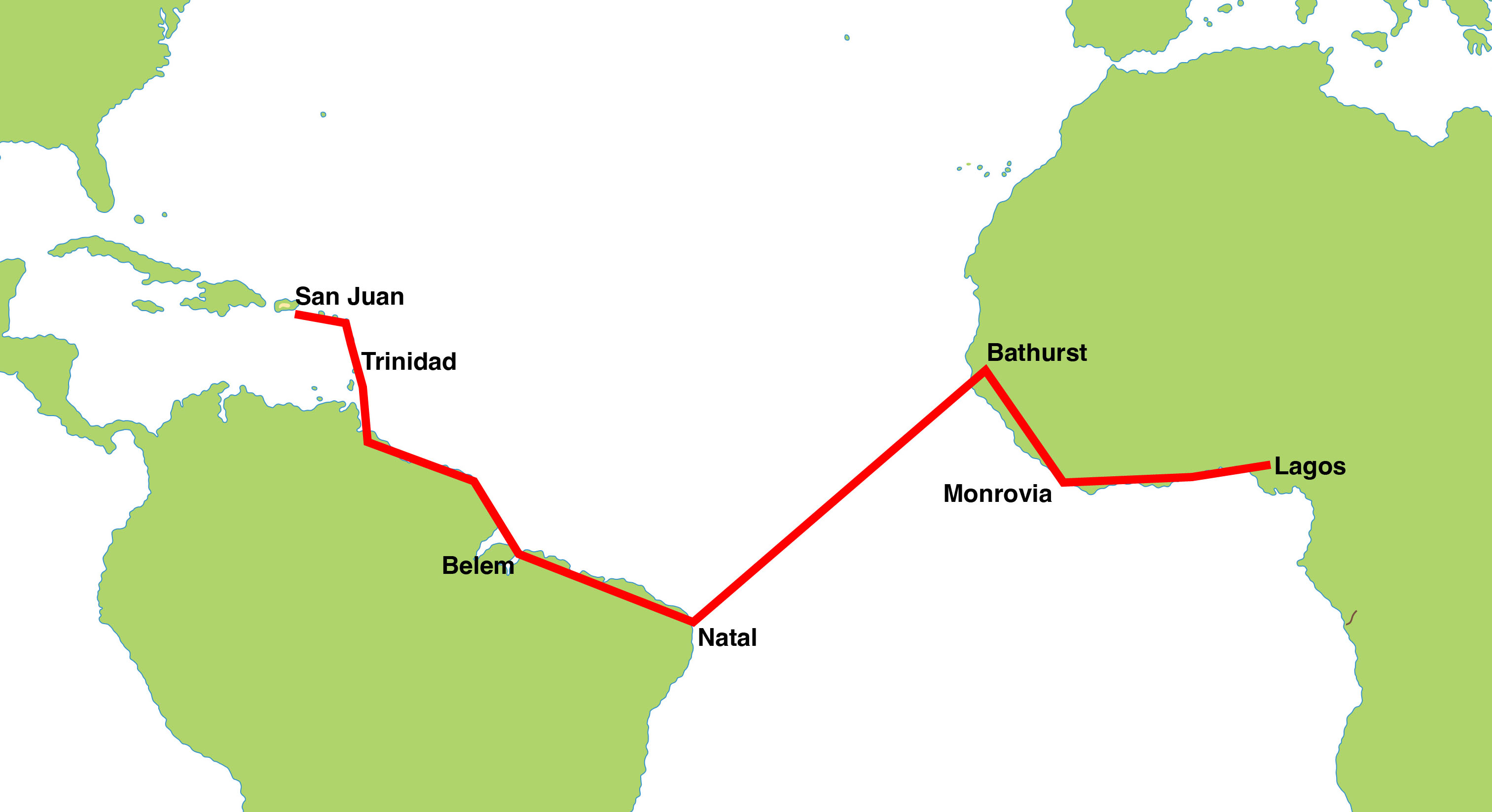 | |||
| 159 | The rapid expansion of German control in North Africa also generated serious concerns regarding a possible threat to the Western Hemisphere via West Africa to South America. The need to carry air freight, passenger and mail increased. A service was organized and its inaugural flight took place on December 6, 1941. | 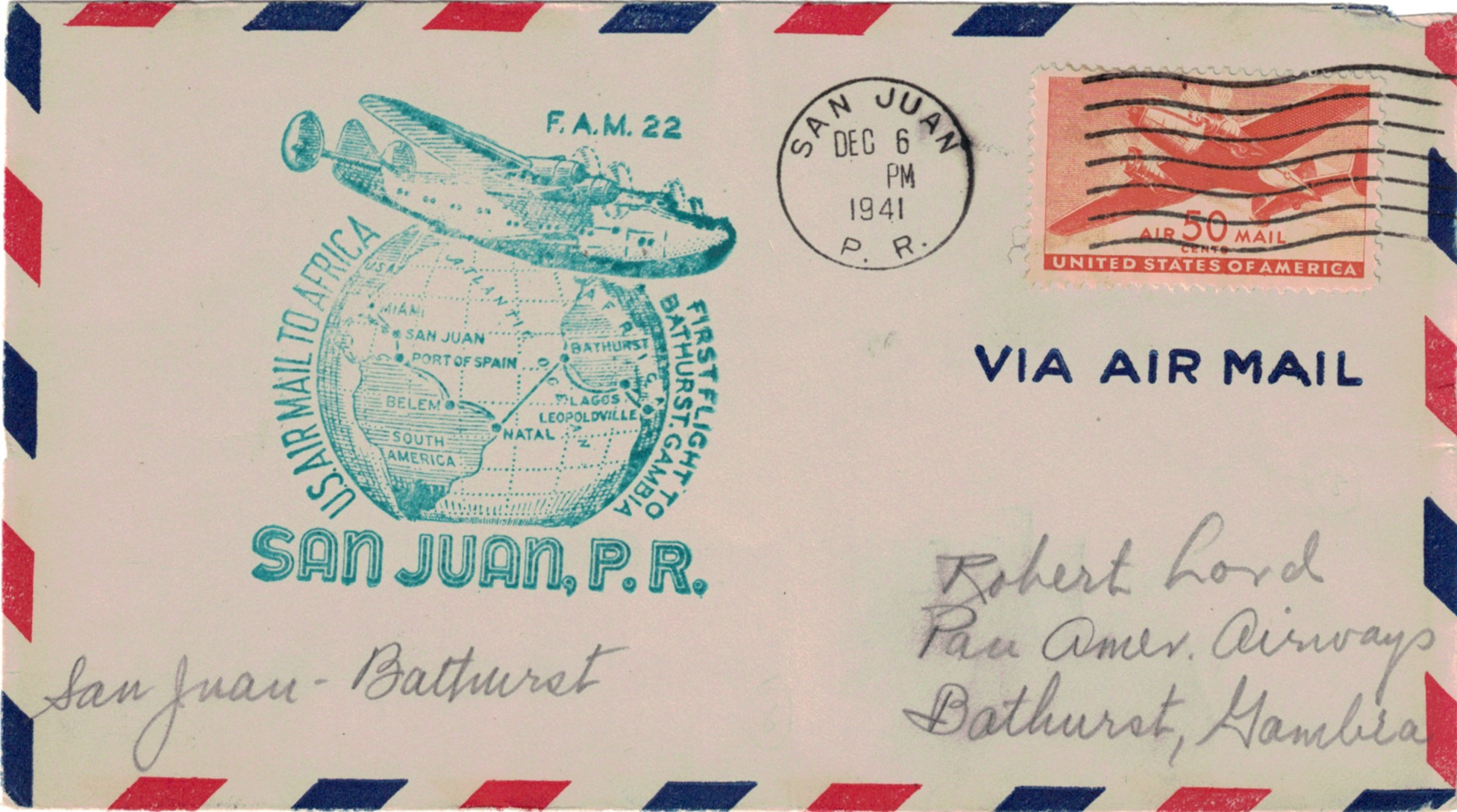 | |
| 160 | The U.S. Post Office Department advised that Monrovia, Liberia would become a stop with the flight from Miami, February 7 1942. | 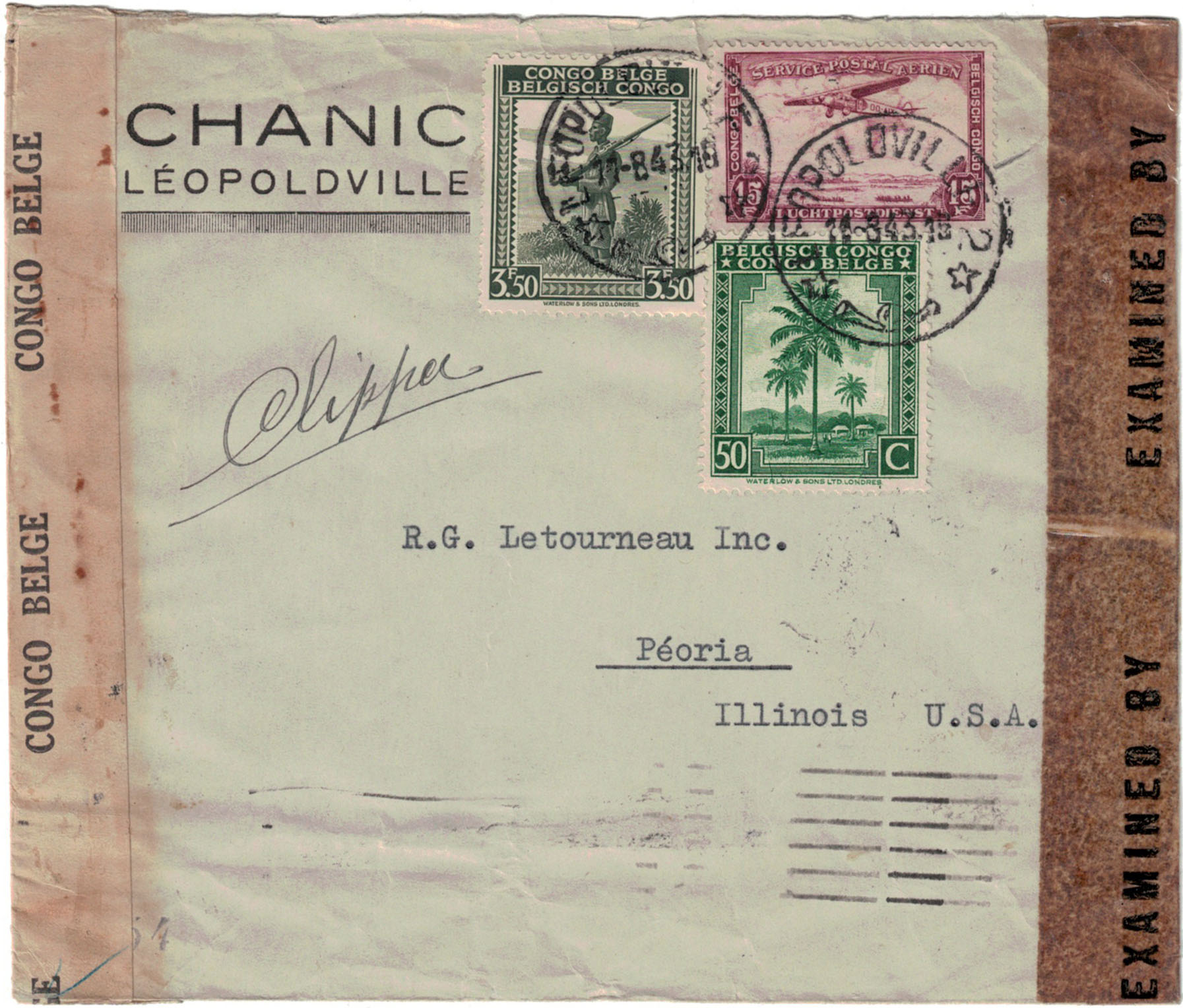 | |
| 161 | The United States officially became a belligerent in World War II on December 8, 1941. In Africa, landplanes based at Monrovia and Lagos served the Trans-African route to Sudan, with its branches to Egypt and Asia. | 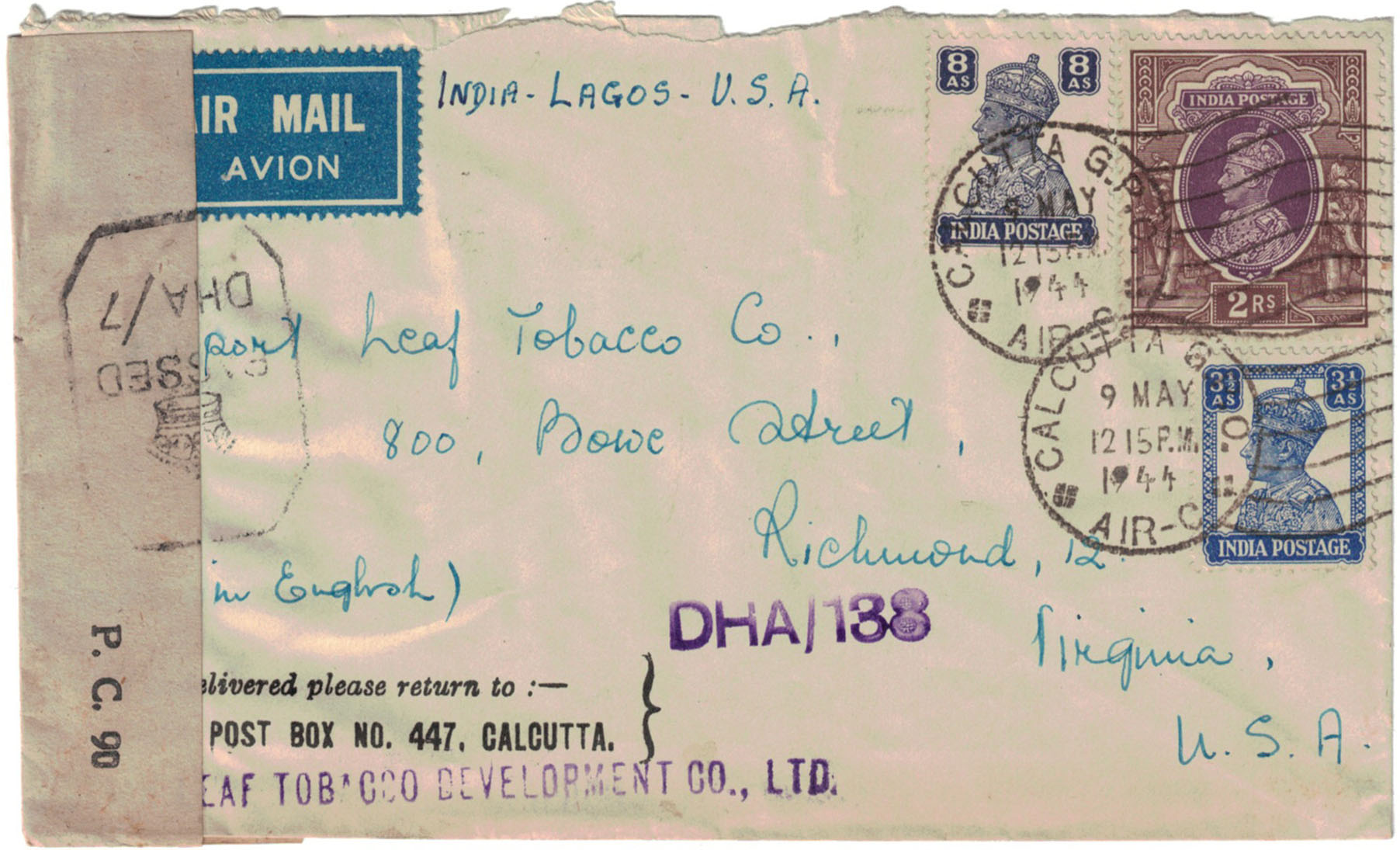 | |